
Covering grapes for the winter is an important step. The growth and development of the vine in the coming season depends on it. To preserve grapes during the cold winter, you need to know some of the features and rules of covering them. When covering, it's important to consider the varietal and climate characteristics, the age of the vine, and the timing and preparation procedures.
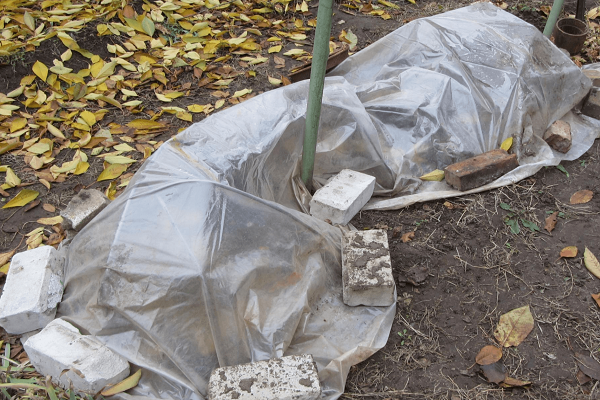
When should grapes be covered?
Grape roots can freeze at temperatures below -5°C, so all work is carried out before this point. If the root system freezes, the entire vine will die. When the aboveground portion freezes, the vines can be restored.
There are varieties that can withstand temperatures as low as -28°C, but even they can freeze at -20°C. If temperatures are forecast to drop to at least -4°C to -5°C, frost-sensitive grapes should be insulated.
Why is it important to strictly adhere to the timing of covering grapes for the winter:
- If you insulate too early, there is a risk of the plant rotting, becoming moldy, or creating condensation, which will cause the plant to die;
- If you delay in insulating, the roots will freeze.
Bush covering measures are carried out only in dry weather - there should be no signs of increased moisture on the soil or plant.
The main requirement is that the vines are hardened off, meaning they are allowed to survive the first frosts in the open air. This rule applies exclusively to mature plants.
Selecting dates based on geographic location
The time of insulation depends on the growing region of the crop:
- Moscow region and Leningrad region. The average daily air temperature should be no higher than -2°C, so the work process takes place from November 20th to December 10th. Preparations should begin in late September.
- Urals and Western Siberia. Preparatory activities begin in late August and early September. The shelter period runs from October to early November.
- Central Russia. The vine is covered 20-30 days after the leaves have completely fallen, i.e. in mid-November.
- Ukraine. These are relatively warm regions where the timing of grape harvesting shifts toward winter, especially with the late onset of "Indian summer." The optimal time is November; in southern Ukraine, it's December.
Preparing grapes for covering
Preparatory measures before covering grapes for the winter are considered an important factor. In the North, natural leaf fall does not occur until the first frost, so gardeners artificially remove leaves from grape vines and remove weeds from the trunk circle.
Processing times
Pruning and other winter preparations are carried out after the leaves have fallen. It is important to maintain a constant nighttime temperature between 0 and -2°C.
Top dressing
Fertilizers should be applied 2-3 weeks before the water supply. To ensure the grapes survive the winter properly and produce a bountiful harvest in the spring, nutrients must be added, but nitrogen supplementation is prohibited in the fall.
For autumn feeding of grape bushes, you can use the following composition:
- For 10 liters of water, take up to 15 g of potassium and 20 g of phosphorus.
- Add about 12-15 drops of pharmaceutical iodine to the solution.
- Add powdered boric acid (5 g) to the mixture.
Treatment against diseases
To prevent the spread of pests, spray the bush and surrounding area with copper sulfate (100 g of solution per 9-10 liters of water). The following compounds are used against diseases:
- From fungal and infectious diseases. For 9-10 liters of water, take 35-40 g of table salt, 15-20 g of soda, 7-10 drops of iodine.
- Against mildew and oidium. A pink solution of manganese or colloidal sulfur is used (10 g of powder per 9-10 liters of water).
Other events
What else needs to be done when preparing a grape bush for covering:
- Three days before insulating, perform a moisture recharge, as completely dry soil freezes more quickly. To do this, dig several holes for drainage. Water at a rate of 20 liters per year of the plant's life.
- Allow the branches to mature to a brown color. To do this, remove the shoots from the trellis and spread them out on the ground. This will allow light to reach all the branches.
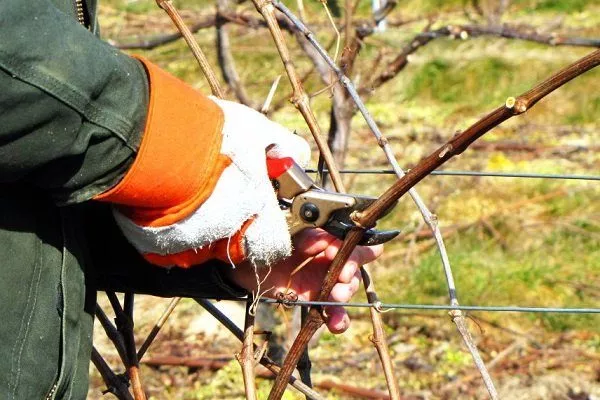
- Prune the bushes – remove diseased and damaged branches, thin shoots, and suckers (thick vertical branches from the old branch). From the young growth, leave up to 8 shoots that have become woody and developed 4 buds. Shorten last year's shoots until 12-15 buds remain.
- Perform a root-cutting operation – remove dewy roots located at a depth of up to 25 cm (they will freeze). To do this, dig a hole around the trunk, select horizontal root shoots, and cut them off at the base. Disinfect the cut areas with a weak solution of potassium permanganate.
- ✓ The vine should make a characteristic cracking sound when bent, but should not break.
- ✓ The color of the vine changes from green to brown or beige, depending on the variety.
What are the ways to cover grapes for the winter?
There are many methods for insulating grapes, but the basic rule is to cover the root system as much as possible. It's the roots that are most often exposed to freezing.
Hilling
This is the fastest and most cost-effective method. The key is loose and slightly moist soil. Sawdust can be added to increase heat retention.
How to properly hill grapes before winter – step-by-step instructions:
- Clear an area of 1 m around the bush.
- Use a garden tool to create a 13-15 cm high mound around the trunk.
- Treat the area with a weak solution of potassium permanganate.
- Place some mouse-repellent herbs.
When snow appears, pile it onto the mound. If the grapes are growing in northern latitudes, the mound should be at least 25 cm high and have a radius of 30-40 cm.
An experienced gardener will explain how to hill grapes in the following video:
Partial shelter
This method is suitable for regions with mild winters. It involves using soil and available materials, such as straw, fabric, burlap, film, agrofibre, hay, etc.
The process of partial insulation of grapes:
- Cover the bottom of the bush with a layer of soil (as when hilling).
- Tie the branches of the plant into one bundle using twine.
- Place covering material or straw on the ground.
- Place the grapes and press them down with boards or car tires.
- Cover it with film, for example.
Complete cover
This type of insulation is practical to use during severe frosts. Step-by-step instructions for full coverage:
- Remove the branches from the trellis, gather them into one bundle, tying them with rope.
- Dig a shallow trench deep enough to accommodate half the height of the tied vines. Fill it with sawdust (straw, hay, etc.).
- Wrap the branches with geotextile material.
- Press the branches into the ditch using gentle movements to avoid breaking the vines.
- Cover with soil.
- After the snow falls, sprinkle it over the structure.
Straw or reed
An eco-friendly and breathable way to insulate grapes for the winter. First, prepare reeds, cattails, or grain straw. First, thoroughly dry the material in the sun.
How to insulate a grape bush with straw or reeds:
- Gather the grape vines into a bunch.
- Place straw on the ground and press the grapes on top.
- Sprinkle with straw to a minimum depth of 20 cm.
- After a couple of weeks, add the same amount of covering material.
- Secure the structure with ropes, plastic ties, or cover it with netting to prevent the straw from flying away in strong winds.
You can also learn about covering grapes in the following video:
Using snow
This method is effective in Siberia and regions with prolonged periods of heavy winter precipitation. An important factor is that the grapes must be resistant to temperatures down to -10°C.
The process of creating a snow shelter:
- Tie the vines into a bundle.
- Place pieces of plywood or boards on the ground surface.
- Place the grapes on them and secure them with wire/staples.
- Cover with snow. The layer should be at least 40-50 cm thick.
- Compact carefully.
Throughout the winter, add snow and pack it down firmly. The deeper the layer, the warmer the plant will be.
Covering with slate
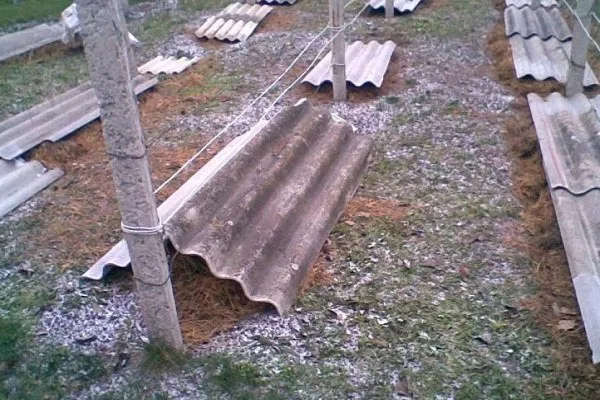
Slate is used as a makeshift material (if unavailable, boards, roofing felt, etc. can be substituted). How to make a trench shelter:
- Dig a trench the length of the branches you'll be laying in it, up to 30 cm deep.
- In very harsh climate conditions, insulate the ditch with boards on the sides and bottom.
- Tie the vine with twine and wrap it in burlap (agrofibre, etc.).
- Place the grapes in the trench and cover them with slate on top so that they protrude 15 cm on the sides.
- Sprinkle with soil to secure the structure.
Using spunbond
Spunbond is the technical name for a number of coverings, such as agrofibre, airlaid, fiberglass, and so on. The material is opaque and only allows moisture to pass through on one side. It is considered breathable, allowing plants to breathe underneath it.
Spunbond is suitable for all climates. Gardeners recommend combining the material with natural materials such as straw and hay. This material can be used to cover grapes directly on trellises, bent down to the ground:
- Tie the branches together and bend them to the ground, which is covered with leaves or straw.
- Secure with staples.
- Cover with spunbond.
- Strengthen the structure (cover with soil).
Helpful tips on covering grapes can be found in the video:
Shelter made of spruce branches
Of all the varieties of spruce branches, spruce is considered the best for insulating plants for the winter, but pine and fir branches can also be used.
The scheme for covering grape bushes is very simple to implement:
- Spread spruce branches on the soil.
- Place tied grapes on top.
- Cover with spruce branches to a height of 35-40 cm.
Using sawdust
The main requirement is dry materials. The procedure includes the following steps:
- Lay a plastic sheet on the ground.
- Place grape vines on top.
- Cover them generously with sawdust to a height of 30-40 cm.
- Place slate, boards or other hard material on top to prevent moisture from getting through.
Covering with foliage
To insulate grapes for winter, leaves are collected throughout the season, thoroughly dried, and stored in cloth bags. Leaves infected with pests or diseases should not be used.
Instructions:
- Dig a trench 18-22 cm deep.
- Place grape branches in it.
- Sprinkle with leaves to a height of 15 cm.
Basic rules for insulating grapes
Regardless of the chosen method of covering grape bushes for the winter, adhere to the following rules:
- do not place grape branches on bare ground without available materials;
- If the above-ground part remains open and the area is exposed to wind, be sure to install protective barriers on the side of the air flow;
- try to cover the maximum area around the bush (at least a radius of 50-60 cm);
- mulch the areas between the rows;
- disinfect insulation materials;
- To repel rodents, place other plants that do not like pests (tansy, black elderberry, wormwood, wild rosemary, calendula) near the grapes.
The nuances of covering grapes depending on the region
The peculiarities of climatic conditions require adherence to the following rules for covering grapes:
- Moscow region. Trenching is recommended. Dry materials (leaves, sawdust, spunbond) are recommended. Film should not be used.
- Leningrad region. Due to high humidity, the grapes are laid on the soil surface (without a trench). Due to stagnant meltwater in the spring, the vineyard is equipped with a drainage system in the fall. For insulation, spruce branches and agrofibre are preferred.
- Kuban. Given the warm climate, Kuban grapes rarely require insulation—only those growing in lowlands. Partial cover is sufficient.
- Volga region. The climate here is harsh, continental—with little snow, severe frosts in winter, and hot summers. Therefore, shelter must be complete and robust.
- Central Russia. The region is famous for its abundance of snow, so the best option is to insulate the grapes with snowdrifts and spruce branches.
- Black Earth Region. The sun often shines on winter days, warming the air to above-zero temperatures. Therefore, non-woven materials that don't allow air to pass through are prohibited, as condensation will occur. The best materials are agrofibre, spruce branches, leaves, etc.
Rules for covering grapes in other countries:
- Ukraine. In southern Ukraine, grapevines don't require insulation. In other regions, it's sufficient to create a cover of leaves, spruce branches, or spunbond, pinning the branches to the ground.
- Belarus. In countries with high humidity, trench structures are not used; grapes are laid on the ground or covered with trellises. The optimal material is spruce branches.
Features of covering young grapes for the winter
Before insulating young trees, pruning is not performed, but only the top is cut to roughen the wood. This is the main difference in pre-winter measures compared to mature grapevines. Watering ceases in August.
Features of insulation of young grapes:
- Remove any leaves that remain.
- Dig a shallow ditch.
- Roll the vine into a ring.
- Secure the grapes in the trench.
- Cover with straw (or other material).
- Cover the top with boards or slate.
You can watch a video about covering young grapes:
Which grape varieties do not require shelter?
| Name | Frost resistance | Productivity | Ripening period |
|---|---|---|---|
| Isabel | -28 °C | High | Late |
| Marusya | -28 °C | Average | Average |
| Saperavi | -28 °C | High | Late |
| Marquette | -42 °C | High | Early |
| Kishmish | -34 °C | High | Average |
| Svenson Red | -34 °C | Average | Late |
| Spartan | -34 °C | High | Early |
| Barsoom | -27 °C | Average | Average |
| Early golden | -30 °C | High | Early |
| Vatra | -30 °C | Average | Average |
| Catawba | -35 °C | High | Late |
| Vandal-Cliche | -35 °C | High | Late |
There are certain grape varieties that can withstand low temperatures:
- Isabella, Marusya and Saperavi. Frost resistance -28 °C.
- Marquette. Withstands temperatures down to -42°C.
- Kishmish, Svenson Red and Spartan. Easily tolerate temperatures down to -34 °C.
- Barsoom. Not afraid of cold temperatures down to -27 °C.
- Early golden and Vatra. Resistant to -30 °C.
- Catawba and Vandal-Cliche. Winters at temperatures of -35 °C.
If you carefully follow the winter protection technology for grapes, the plant will reward you with a bountiful harvest and large fruits. It's important to consider not only regional climate conditions but also the forecasted weather.
I liked the slate option—it looks very neat in the beds. And thank you so much for the tips on preparing for winter. I'm a novice winegrower, so I wasn't aware of these nuances.