
In spring, grapes, especially in the first few years of life, require increased attention. The future harvest depends on the timely removal of covering, pruning, and fertilizing of grape vines. Let's find out what work grapevine owners need to do this spring.
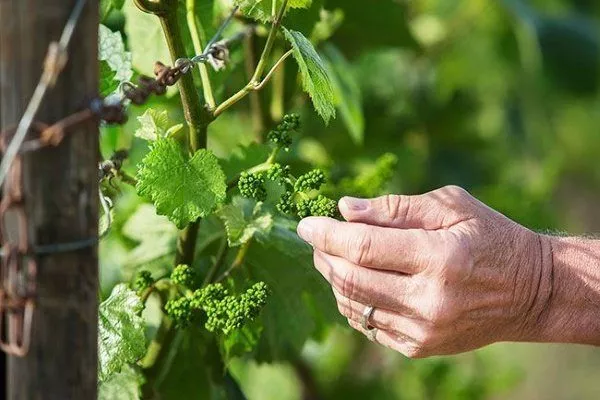
When do you start caring for grapes in spring?
Spring grape care involves a whole range of tasks, the timing of which depends on the climate, specific weather conditions, and the method of overwintering the grapes.
- ✓ The average daily temperature must consistently exceed 5 °C for at least a week.
- ✓ No frosts are predicted for the next 10 days.
The end of night frosts signals the start of spring work. To uncover the grapes, wait until the average daily temperature exceeds 5°C. Once stable warm weather sets in, uncover the grapes and begin the spring work.
What you need to know about starting spring care:
- Pruning of uncovered grapes can begin as early as the beginning of March, as soon as weather conditions permit.
- Pruning must be completed before the buds swell, otherwise the pruned bushes will dry out.
- Fertilizing can also begin in early March. However, it's not necessary to uncover the grapes for this.
In the temperate zone, varieties that can withstand temperatures down to -32°C are not covered. In the south, grapes that can withstand temperatures down to -25°C are grown without cover.
Inspection of grapes and troubleshooting possible problems
A visual inspection of the grape vines reveals any damage the vines have sustained during the winter. Some problems can be resolved on the spot, while others require drastic measures, such as replacing the damaged vines.
If the vine has dried out or rotted
Frequent temperature fluctuations that accompany winter thaws lead to shoot damage. One-year-old vines are particularly susceptible. Damage can include:
- The vine dried up. The bark of the shoots is cracked. When you lift a shoot to tie it up, you hear a distinct crunching sound.
- The vine has rotted. Rotted shoots are damp to the touch and darker in color than others, looking like damp wood. The bark may have a whitish coating and mold.
Such damage is not a reason to uproot the bush. Try to correct the situation:
- in black roofing felt film (50 x 50 cm), cut a hole in the middle with a diameter of 10 cm;
- open the shoots so that the heel roots are visible - dormant buds may well awaken on them and begin to grow;
- cover the seedling with film, pressing down its edges with something heavy, water the bush through the hole with water (temperature 45-55 °C);
- Add growth stimulator and biofertilizer to the water.
- Determine the extent of damage to the vine: dried out or rotted.
- Prepare materials for resuscitation: black roofing felt, growth stimulator, biofertilizer.
- Perform resuscitation procedure according to the steps described.
In 1-3 weeks the result should appear – shoots will begin to grow from the awakened buds.
Sudden spring frosts
For many crops, recurrent spring frosts pose a huge threat. When frost catches a plant "unawares"—after sap flow has begun—the consequences can be catastrophic. Vineyard owners risk losing part of their harvest, or even nothing at all. Frost kills all buds that have opened.
The winegrower's task is to prevent bud failure. Once the covering is removed, it's necessary to slow down their opening. To do this, spray the vines with a solution of ferrous sulfate. This solution will not only delay the growing season for two weeks but also prevent the development of many grape diseases.
Problems with condensation under the shelter
Condensation can accumulate under the cover due to soil and air humidity. This leads to mold and mildew growth. If the weather is cold and it's too early to remove the cover, it's helpful to provide daytime ventilation.
If ventilation isn't an option, and the grapes are at risk of rotting under cover, do the following:
- Remove the film. Do this on a warm, sunny day.
- Fill the area around the trunk with soil. Do not compact it. Two buckets of soil are enough for one bush. This procedure is carried out if the vine was not buried for the winter.
- A mound built around the bush will protect the grape roots from spring frosts.
- Pin the vine to the ground and cover it with fiberglass. This lightweight, breathable material will prevent moisture buildup, which can lead to rot and fungal infections.
Removing winter cover
The timing and technique for removing the covering depends on the regional climate. If spring weather is unstable, uncover the bushes gradually. As soon as the temperature rises above zero, holes are made in the covering material for ventilation. When a green cone appears, the covering is removed.
Swollen buds are not a reason to remove the covering. The appearance of shoots on the vine is a clear sign.
If bushes grow in lowlands or trenches, dig shallow channels to drain water. If you don't dig them, you'll have to scoop out the water from under the bushes, otherwise the roots will rot.
When and how to open a grape vine in early spring can be seen in the video below:
Garter
One of the first steps in spring grape care is staking the shoots. Dry tying of fruiting parts to trellises is done before green leaves and shoots begin to form.
If you delay gartering, the following problems may occur:
- insect and disease damage;
- complication of bush formation;
- a drop in yield and deterioration in the taste of berries.
For tying, use soft fabric, twine, or special equipment—these can be purchased at specialty stores. Fishing line or nylon rope are prohibited.
Features of tying up grapes in spring:
- For young bushes up to two years old, install a mesh net or a small vertical support. The vines climb along the netting on their own, and are tied to a stake as they grow.
- Fruit-bearing branches are bent toward the bottom row of trellises so that green shoots can grow upward. Further staking will be done as the shoots grow, every two weeks.
Irrigation schemes
The first time grapes are watered, it awakens them and stimulates growth. On the other hand, watering slightly delays bud break, preventing frost damage. The vines are watered with warm water. In anticipation of severe frosts, the grapes are recharged with cold water.
Features of watering grapes in spring:
- A mature grape bush requires 200-300 liters of water. The water, penetrating deep into the soil, will nourish the roots for several months.
- Subsequent waterings are less abundant – 20-30 liters per plant. The interval between waterings is 8-10 days.
- The second moisture-recharging watering is carried out at the end of spring – 3 weeks before flowering.
- Water is poured into holes near the stems - at a distance of half a meter, or grooves are dug 20 cm deep.
- It is recommended to combine watering with fertilizing. To achieve this, create special watering holes in the soil or install a drip irrigation system.
Before and during flowering, do not water the grapes excessively, as this may cause many flowers to fall off.
Drainage holes around the perimeter of the rhizome allow for effective irrigation of the grapes. How to set up an irrigation system:
- Drill 4 holes on different sides of the bush, each one a meter deep.
- The distance from the bush to the holes is determined by the length of the roots; it is 50-80 cm.
- Place a 200-liter barrel on a raised surface. Connect a hose to it. Attach an adapter to the end of the hose and attach four tubes.
This irrigation system allows for quick and thorough watering of the bush. This method is especially effective during the early stages of vegetation.
Loosening
The purpose of loosening is to improve soil aeration and permeability. Two types of loosening are performed in the spring:
- After removing the cover, loosen the soil deeply – 20-25 cm.
- Before the bushes enter the flowering phase. Depth – 10 cm.
You can’t loosen the soil too often, as this can disrupt the natural processes occurring in it.
When and how to mulch the soil?
Mulching involves covering the soil with various materials. This is done to improve the soil's properties. The benefits of mulching include:
- prevents the formation of an earth crust;
- the soil retains moisture well;
- the roots are protected from overheating and drying out;
- the soil remains loose for a long time;
- during rain and watering, soil particles that may contain pathogens do not fall on the leaves;
- the lower bunches remain clean after rain and are less covered with dust;
- prevents particles of fertile soil from being carried away by the wind;
- organic mulch is also a fertilizer that forms humus over time;
- prevents weed growth;
- The vineyard looks more attractive.
Mulching Mulching is a simple and inexpensive process. It's done in the spring, after watering. Various materials can be used as mulch. The soil is covered with straw, wood chips, sawdust, bark, pine needles, pine cones, and other suitable materials.
Top dressing and fertilization
For spring fertilization, organic and mineral fertilizers are used. Grapes can be fed with cow or horse manure, chicken manure, compost, and complex fertilizers containing nitrogen, phosphorus, and potassium. The fertilizer is applied into furrows 40 cm deep, made 50-80 cm apart around the trunks.
Timing and composition of grape fertilizing in spring:
| Feeding period | What to contribute? |
| Before removing the cover | Per bucket of water: 5 g of potassium, 10 g of ammonium nitrate, and 20 g of superphosphate. 10 liters of fertilizer per bush. |
| Beginning of April | Add manure or compost. Spread it around the trunk, and then dig up the soil. |
| Mid-May | Per bucket of water – 10 g of phosphorus, 30 g of nitrogen and the same amount of potassium. |
Trimming
Grapes are very heat-loving, so their vines often freeze even under cover. In spring, two types of pruning are performed:
- Sanitary. They begin immediately after removing the covering. Damaged and dead shoots are identified and immediately pruned.
- Formative. After sanitary pruning, bush shaping begins. This pruning is aimed at adjusting the length of the cordons and branches.
To ensure faster healing, cuts are made even, smooth, and neat. When pruning old branches to a ring, the stump should be small—no more than 1 cm high.
Cuts are made on the inner part of the bush. Four buds should be left on branches, and 12-14 on fruiting scapes. All basal shoots are removed to prevent them from draining the plant's nutrients and energy.
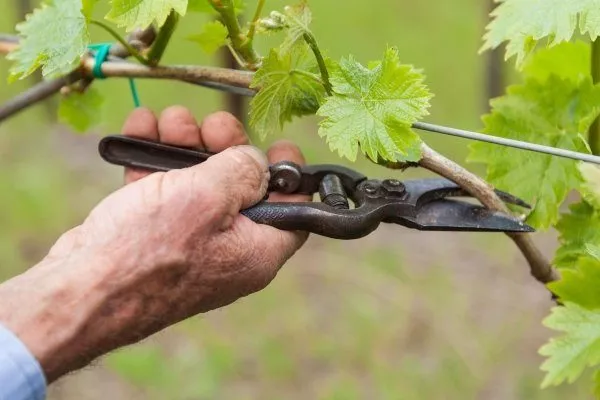
Proper pruning is the key to a high yield, proper vine development, and good-tasting berries.
Graft
Grafting is done to improve yield, frost resistance, and immunity. Cuttings 10-15 cm long are used for grafting. They should have 2-3 buds. They are cut in the fall and stored until spring, after being dipped in a solution of potassium permanganate, dried, and wrapped in plastic film. They are stored in a cellar or refrigerator.
To ensure successful spring grafting, graft varieties of similar vigor. Use only disinfected tools. Grafting methods include butt-joining, copulation, cleft, or semi-cleft grafting.
Disease prevention
Preventive measures in spring:
- To prevent mildew, tie the vines to the trellis immediately after removing the covering. Avoid allowing leaves and shoots to touch the ground and absorb moisture, as this promotes the spread of infection.
- After tying the tree, disinfect the soil. Treat the soil around the tree trunks with Bordeaux mixture, iron sulfate, Zineb, or Ridomil Gold. The latter is preferred as it is the least toxic.
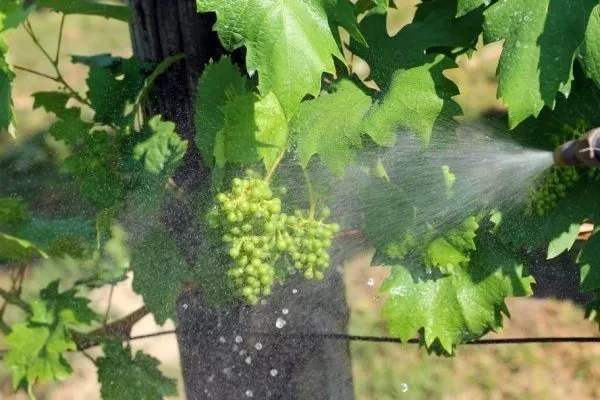
Spray the lower branches of the grapevine especially thoroughly, as the root zone is most susceptible to disease. The bushes can also be sprayed with biological preparations such as Fitosporin, Trichodermin, and Actofit.
Preventive spraying is carried out at intervals of 10-15 days or as recommended by the manufacturer of the preparation.
Find out more about how, When and with what to spray grapes in the spring on the pages of our website.
Pest control
Insect control usually begins after they appear. Insecticides are used, but preventative spraying is also used. For example, Nitrofen can kill virtually any pest. For prevention, spray the bushes with Nitrofen, diluting 200 g of the product in 10 liters of water.
The most dangerous pests for grapes are phylloxera, mealybugs, and spider mites. To prevent them, spray grapes with Karbofos. Use 15 liters of solution per 100 square meters. To prepare it, dissolve 60 g of the solution in 8 liters of water. Phylloxera can be controlled immediately with Zolon, Actellik, or Confidor.
Transfer
When transplanting grapes, you need to consider the size of the root system. The root depth is 60 cm. Here's the procedure for transplanting grapes:
- Dig around the plant within a radius of half a meter.
- Remove the bush from the ground. If the roots are very deep, trim them off.
- Clean the extracted rhizome from soil. Dip the roots in a clay slurry.
- Pour 10 liters of warm water into the hole dug for planting.
- Fill the hole with sand, clay and crushed stone.
- Place the plant's roots into the hole and cover them with fertile soil.
To improve the survival rate of grapes and enrich the soil with iron, 200 g of barley and two rusty nails are placed in the planting hole.
If a young plant is being transplanted, it is moved into the planting hole along with the root ball using the transshipment method.
Stopping the "weeping vine"
"Vine weeping" refers to the sap leaking from the cuts left after pruning. If the leakage is moderate, no action is needed—it's a normal process for grapes, indicating good metabolism and plant health.
The volume of liquid released during "weeping" depends on the size of the bush and ranges from 0.3 to 2 liters. If the flow is prolonged and excessive, the soil becomes depleted and dehydrated, so it should be stopped if necessary.
How to stop juice leakage:
- Add 5-10 g of complex non-mineral fertilizers to the trunk circle of all grape bushes.
- Loosen the soil thoroughly and water the plants.
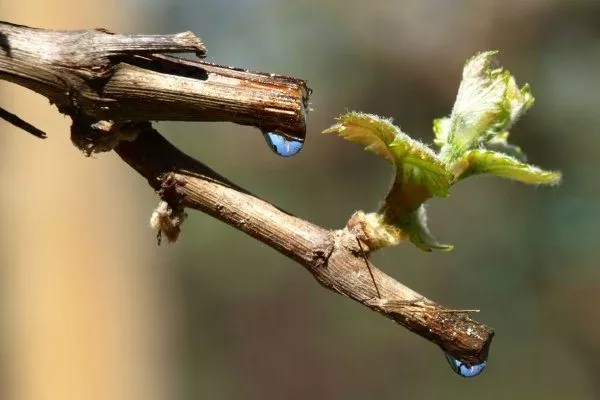
Table of step-by-step agricultural measures by month
Spring work is carried out in a specific sequence. The timing and details of agricultural procedures are adjusted to suit the local climate.
Spring work calendar:
| Month | List of works |
| March |
|
| April |
|
| May |
|
Spring care specifics depending on the region
Spring care depends on climatic conditions. The timing and order of agricultural interventions are influenced by humidity, temperature, soil structure, and other factors.
Features of spring grape care in different regions:
- Central Russia and Moscow region. Spring starts late here. There's a risk of recurrent frosts. Don't rush to remove the covering; it's removed at the end of April. First, remove the top covering, then the rest. Perform sanitary pruning. Fertilize after 10 days. Fertilize every two weeks until fruiting begins.
Local soils are deficient in magnesium. Mulch is applied and watered occasionally if there is no rain. Waterlogging is a local problem, which promotes the spread of fungi. To prevent disease, trellis vines are recommended. - Volga region. The cover is removed in late April or even early May. Removing the cover immediately is dangerous, as there remains a risk of night frosts. The grapes are still covered at night. Another option is to install an arched frame over which the film is stretched.
In this temporary greenhouse, grapes awaken quickly. Gradually removing the cover allows the plants to awaken and adapt safely and painlessly. After uncovering, the vines are sprayed to protect against fungi and insects. Watering is infrequent but deep, and fertilizer is added during loosening. - Siberia. Only the most winter-hardy, early-ripening varieties are cultivated here. White and pink hybrids are typically planted in Siberia, as dark grapes simply don't have time to ripen. In the Siberian climate, grapes are grown exclusively in greenhouses. The soils here are light and well-aerated.
With the arrival of spring, grapes are fed with complex mineral fertilizers. It's important not to overdo it with nitrogen fertilizers, as too much leads to intensive leaf and shoot growth, which hinders flowering and fruit formation. Pruning grapes in spring Only sanitary pruning is carried out; bush formation is postponed until autumn. - Ural. The climate here is less severe than in Siberia, but still unfavorable for grapes. Frost-resistant, hardy, and disease-resistant varieties are grown in the Urals. Coverings are not removed until May, protecting the vines from frost.
The vines are uncovered after the onset of stable warmth—when the temperature does not drop below 13-15 degrees Celsius. Before fully uncovering, the vines are ventilated to prevent condensation. The cover is slightly opened during the day and closed at night. Pruning is regular, but not severe. - Crimea. Here, the vines aren't covered for the winter, so they don't have to be removed from their trellises. Pruning begins in February. In the south, it's important to monitor soil moisture, as a lack of water causes the vines to dry out quickly.
The fate of the harvest depends largely on spring care. If each agricultural procedure is carried out correctly and on time, all the prerequisites for a full harvest will be created. It's especially important to remove the cover promptly; rushing it can cause irreparable damage to the plants.