
To ensure your grapevines produce a bountiful harvest next season, you'll need to invest considerable time and effort in the autumn months, preparing the plants for winter. The subtleties and nuances of caring for this perennial shrub have long been known and successfully applied. You can learn more about them by reading this article.
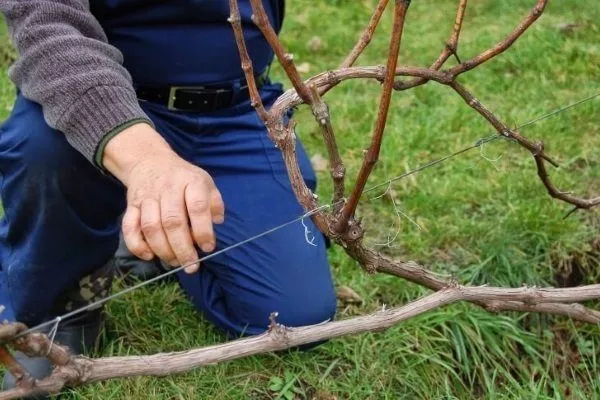
Basic care activities
To obtain a stable and abundant harvest, careful preparation is required in the autumn, enhancing the plant's protective properties.
| Name | Productivity | Disease resistance | Ripening period |
|---|---|---|---|
| Autumn watering | High | Average | Early |
| Processing and spraying grapes | Average | High | Average |
| Fertilizing grapes | High | High | Late |
Autumn watering
After the grapes have been harvested, there's no need to water the plants, especially if it's not too hot outside. However, watering the grape vines is essential in October.
Watering should be generous, allowing the water to moisten the top layers of soil. Autumn watering is crucial, as it helps the plant adapt to the approaching frosts.
- ✓ The optimal soil moisture depth should be at least 50 cm to ensure sufficient moisture reserves for the winter.
- ✓ The water temperature for irrigation should not be lower than +10°C to avoid stress on the root system.
To ensure the grapevine's root system receives the necessary amount of moisture, it's recommended to dig small trenches near each vine and insert plastic tubes into them. This will direct water directly to the roots.
During the first few days after moistening the soil, it's a good idea to monitor its density. If the soil becomes compacted, loosen it slightly.
Processing and spraying grapes
When harvesting, it's recommended to carefully examine the plant's condition. Are there any signs of disease or pests?
Preventative measures to eliminate pathogens are much easier in the fall. Since the berries have already been picked, you can safely use the most powerful products without risking damage to the harvest. As a preventative measure, it's recommended to treat grape vines with the following products: Amistar (for insects) and cumulus solution (for powdery mildew).
The processing process is carried out taking into account some nuances:
- Spraying should only be carried out on days without strong gusty winds. It is also acceptable to spray in the evening, after the sun has set.
- Spraying should never be carried out during rain or during the flowering period of the grapes.
- When spraying, shake the solution periodically. The grape leaves should be covered with a thin film of the solution, and no liquid should drip onto the soil.
If you didn’t have time to carry out the treatment in the fall, you can spray the grapes in spring.
Fertilizing grapes
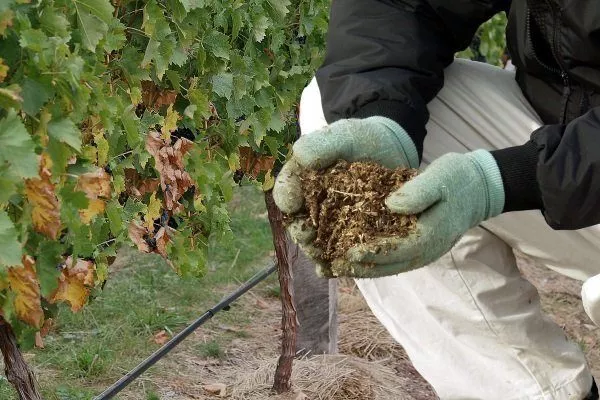
When the first days of autumn arrive, thoroughly dig up the soil around the grape vines. Then, mix in bird droppings with some compost or manure mixture. The organic nature of the fertilizer used improves the soil quality and also saturates it with oxygen. Afterwards, you can further loosen the soil.
Few people know that bird droppings, used as fertilizer, can be mixed into the soil in liquid form. Experienced gardeners recommend this even more. To achieve the desired consistency, it's recommended to prepare the mixture in advance.
Nine days before use, dilute the bird droppings with warm water at a ratio of 1:3. The resulting mixture is then placed in a dark, but not cool, place. Before use, dilute the fertilizer again with warm water, this time at a ratio of 1:8. Approximately 0.4 liters of liquid is required to treat one grape bush.
Pruning a grape bush
Shaping grapevine crowns through pruning is one of the most creative and challenging aspects of growing this fruit crop. The vines must be shaped to adapt to the local climate while still allowing for adequate winter cover.
Methods
There are several ways to prune grapevines. Let's look at each in more detail.
Short
This pruning method leaves no more than four buds on the shoots. These are called knots. Short pruning is performed exclusively on young grapevines to strengthen the root system. Because more than half of the one-year-old shoots are removed, the shoot develops dynamically from the bud.
Average
This method is one of the most common among vineyard owners. Medium pruning involves leaving no more than 10 buds on the shoots. The branches that bear the grape clusters can either take the form of a horizontal arch or lean heavily toward the ground.
This method of bush formation ensures high fruiting without reducing the quality of the berries.
Long
This method of pruning grapevines requires no more than 20 buds on the shoots. Long pruning is ideal for vigorous plants, often found in Central Asian grape varieties. When performed correctly, the grapes begin to bear fruit better the following season.
Mixed
Pruning to fruit links is an alternative term for mixed pruning. This method is often used in small vineyards. Systematic pruning of new shoots ensures high yields and juicy fruit.
- ✓ The presence of more than 50% damaged shoots requires short pruning to rejuvenate the bush.
- ✓ Vigorous varieties with high fruiting buds on the upper shoots are preferably pruned using the long method.
Pruning depending on the age of the grapes
One of the characteristics of grapevines is a cessation of vine growth. This occurs due to the formation of buds on the lower half of the plant, which triggers vigorous growth of shoots on the previous year's vines. The vines expand, and the distance from the root system to the crown becomes greater.
This situation leads to a deficiency of nutrients in the root system, which begins to wither. The solution was fall pruning, which is performed according to the plant's age.
First year
In the first months of spring, the plant should retain its two lower buds and remove the rest. These buds will eventually produce shoots, which should be secured so they point in different directions.
When autumn arrives, after the leaves have fallen from the vines, it's time to prune the shoots. One shoot is pruned short, while the next is left uncut. This leaves only four buds for the winter.
Second year
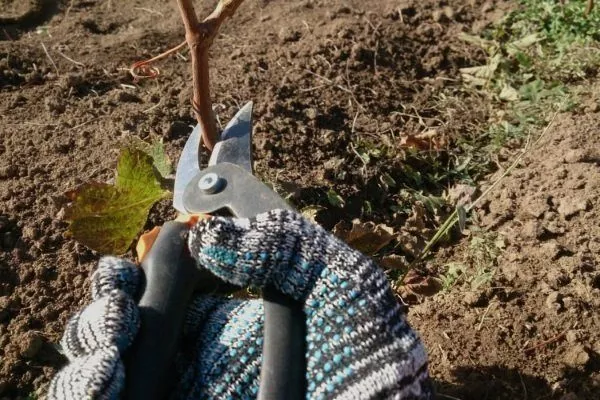
After the leaves have fallen, the long branches of the grapevine are pruned, leaving only two shoots. This ensures symmetry in the vines.
Next, they begin pruning the vertical stems, those located closer to the center. Again, all shoots are pruned except for two buds. These will serve as "replacement branches."
The remaining vertical stems located at the edges are also pruned. This time, it's necessary to leave four buds, which will serve as fruiting stems. After these steps, the grape bush can be prepared for winter.
Third and subsequent years
It's worth noting that when spring arrives, in the third year of grapevine growth, the newly developed fruiting shoots are secured in a horizontal position closer to the ground, while the tops of the bush are pulled vertically in different directions. The replacement shoot should also grow vertically.
Over the summer, the buds will produce new shoots in the form of young stems. By the end of August, the first pruning of the stems should take place at 15 cm. This procedure will soon result in an increase in the juiciness and volume of the ripe berries.
It is worth noting that pruning carried out before August contributes to the emergence of a large number of unnecessary shoots on the vines.
Within a few days after the leaves fall, each of them will need to be pruned from the fruiting vertical shoots. All four outer shoots are cut off. This leaves each branch of the bush with one link of two vertical shoots.
They are pruned in the same way as in the second year of grapevine growth. The shoots closest to the center are also pruned. Those in the center are cut back, leaving only two buds.
The outer shoots are also pruned, but this time four buds are left. Pruning in subsequent years will follow the same principle as described for the third year of the vine's growth.
If desired, you can leave more buds on the shoot. This is perfectly acceptable, as there's always a chance that some will be damaged by frost and inadequate cover. However, leaving more than 10 buds on a single shoot is not recommended, as this will encourage excessive vine growth.
Watch a video on how to tidy up a perennial grapevine by annually pruning excess vines and shaping all branches into classic fruiting links:
Fertilizing grapes for the winter
Every year, grapes draw large amounts of micronutrients from the soil to produce a bountiful and ripe harvest. If these nutrients aren't replenished in the autumn months, the grape vines won't have the energy for vigorous growth and development by spring. This can eventually lead to wilting. To prevent this, try the following:
- potassium solution, which promotes rapid ripening of berries and helps the plant survive the winter;
- copper solution, which increases the resistance of fruit crops to frost.
For organic fertilizers, you'll need compost (or manure), chicken manure, and wood ash. The fertilizer isn't poured under each grape bush. Instead, make small indentations around the entire diameter of the bush, 30 cm from the center of the rhizome. The fertilizer is then spread or poured into these grooves. This method of fertilizing is more effective.
More about autumn feeding of grapes Read in our other article.
Shelter for the winter
There are 2 popular methods for creating shelter for grape vines:
- To begin, remove the grapevine from the support beam and lay it on pre-laid pine branches. Then tie them together and secure them with any available wire or twine. Lay another 6-12 cm layer of pine branches on top of the plant. Next, carefully lay out the planks and cover with roofing felt. The latter can be replaced with regular industrial film.
- Secure two adjacent grapevines together and bend them toward the ground. This can be done using arches, which can be wooden or metal. The distance from the vine to the ground should be at least 8 cm. Place planks on the sides, and then several layers of reeds on top.
To prevent the structure from getting wet, wrap it in industrial film. This homemade shelter is very practical, as the reeds will prevent the grapes from freezing and rotting.
Features of preparation for winter
It's best to cover grape vines only after the first frost. The plant branches should be slightly hardened off. It's recommended to leave them uncovered for 3-4 days.
The acceptable temperature for hardening off grapes is between -6 and -9 degrees Celsius. Lower temperatures will cause the fruit to die. Bushes that have been hardened off will develop a brownish tint to their leaves. This indicates that the plant is mature and will survive the winter well.
In the first year
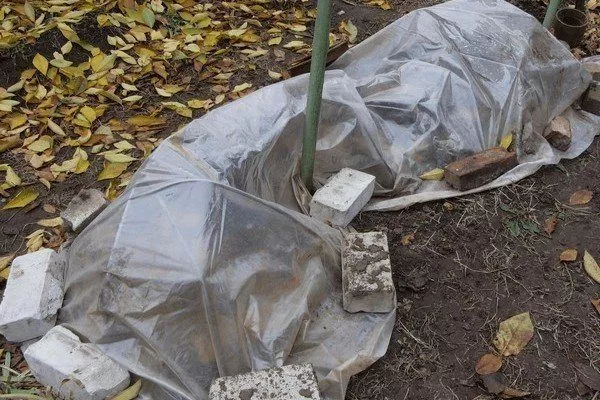
A young plant that will have to endure the first frosts must be covered. This can be done using any of the methods described above.
Young grapes are covered in the first days of November, when the plant is still flexible and easily laid down. Under no circumstances should the plant be bent too much, as this could damage the root system.
young bush
Grape vines that have successfully survived their first winter will still require a "house"-like shelter for the next frost, without bending the vines down to the ground. This is because the plants are still not strong enough and are susceptible to injury.
Before covering the grapes, it's a good idea to fertilize them with phosphorus and nitrogen fertilizer. This will allow the young plants to absorb nutrients and microelements, helping them survive the winter more easily. This recommendation is especially relevant for young plants.
Old grapes
For perennial grape vines that have adapted to frost over many years, partial shelter can be provided. Simply carefully lay the vines on pine branches and pile snow on top. Older vines often require pruning and crown shaping. If this isn't done before the first frost, the vines may become overgrown in the spring.
Grapes are a rather difficult fruit crop to care for. Autumn pre-winter preparation is a crucial step for any vineyard. The more thorough and meticulous the pruning, covering, and fertilization, treatment, and spraying against viruses and insect pests, the more abundant and tastier the grape clusters will be.