
Industrial grape varieties are used to make wine. When choosing a variety, particular attention is paid to its physical and chemical characteristics, while the appearance of the bunch is irrelevant. All varieties are divided into three broad groups: white, rosé, and black. This article will introduce the most popular of these and their key characteristics.
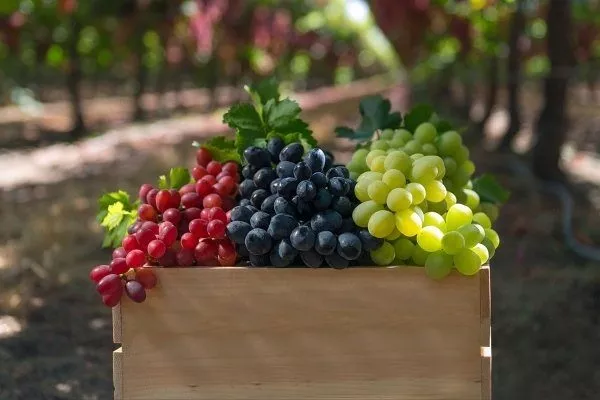
Whites
A distinctive feature of white grape varieties is the color of the berries, which can be white, yellow or green.
Comparative table of the main characteristics of white grape varieties:
| Name of the variety | Sugar content, % | Acidity, g/l | Weight of one bunch, g | Ripening period, days | Yield, c/ha |
| Crystal | 17-18 | 6-7 | 170-220 | 110-115 | 160-200 |
| Muscat of Odessa | 18-22 | 6-9 | 130-190 | 130-140 | Up to 200 |
| Platovsky | 18-20 | 7-9 | 180-200 | 110-115 | Up to 300 |
| Chardonnay | 23-26 | 8-12 | 90-95 | 135-140 | 80-120 |
| Aligote | 14-23 | 8-10 | 100-105 | 140-145 | 90-140 |
| White Kokur | 17-21 | 8-9 | 160-200 | 160-170 | 100-170 |
| Muscadelle | 19-21 | 7-8 | 100-150 | 133-142 | 30-60 |
| Riesling | 18-20 | 7-9 | 80-100 | 148-160 | 70-110 |
| White feteasca | 24-26 | 6-7 | 75-130 | 140-150 | 65-90 |
| Bianca | 20-28 | 7-9 | 90-120 | 110-120 | Up to 200 |
Crystal
This Hungarian-bred grape variety was created on the basis of the Amur, Challoczi Lajos and Villard Blanc varieties.
The shoots are of medium growth strength, the leaves are strongly cut, dark green in color.
The clusters are conical or cylindrical-conical, medium-sized, and of medium firmness. The fruits have a firm, yellow-green skin, are oval, and not very large. The flavor is characterized as harmonious, and the flesh is juicy.
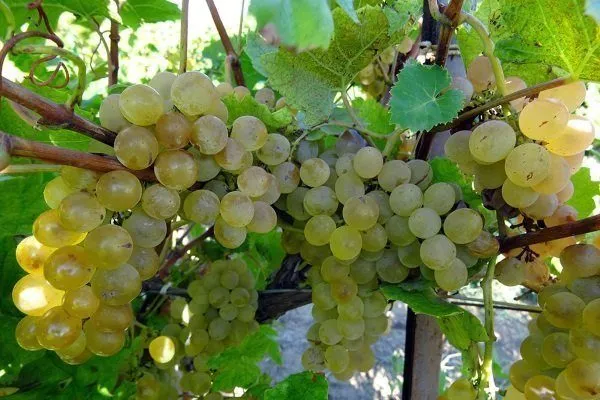
This variety is early ripening. Harvest occurs in the second half of August.
Advantages:
- ripening of one-year vines 90-100%;
- long-term preservation of ripe brushes on shoots, flesh until frost;
- high resistance to diseases, not affected by grey rot;
- frost resistance.
Flaws:
- reduction of acidity to 3.5-4 g/l with a slight accumulation of sugar, which significantly worsens the taste of the wine;
- When plantings are neglected, the ovaries fall off and the yield decreases sharply.
Muscat of Odessa
Developed by Ukrainian breeders from the Amur Muscat Blue Early and the European Pierrell.
The shoots have vigorous growth. The leaf is medium-sized, three-lobed, and dissected.
A single shoot can produce 2-3 clusters of medium density and weight. The clusters are cylindrical or conical in shape. The berries are round, covered with a thin but dense skin of a yellowish or greenish hue. The flesh is slimy and sweet.
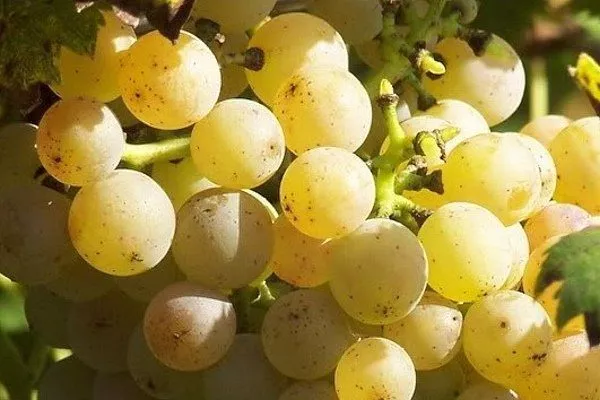
Muscat of Odessa ripens in the middle season. The harvest is at the end of September.
Advantages:
- high rates of shoot maturation;
- moderate disease resistance;
- frost resistance.
Flaws:
- requires constant treatment against parasites and putrefactive infections;
- demanding to soil composition;
- A drainage system is essential.
Platovsky
Developed by Russian breeders, the following varieties were used: Podarok Magarach and Zaladende.
The growth force of shoots is characterized as average.
The clusters are conical-cylindrical, moderately dense, and large. The berries are round and medium-sized. The fruit is white, tinged pink in the sun, and the skin is translucent and thin. The flesh is juicy and has a harmonious, sweet flavor.
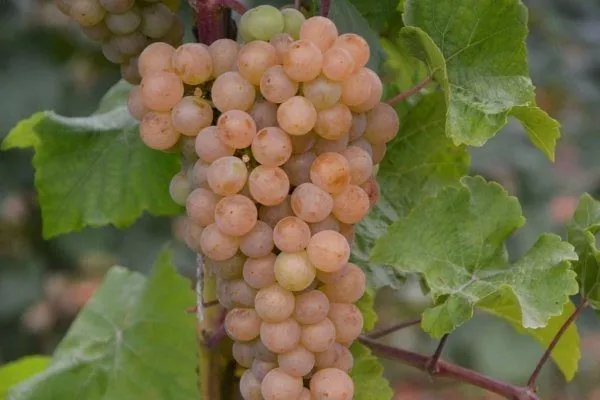
The Platovsky grape variety is a very early variety.
Advantages:
- high maturity of shoots;
- resistance to major diseases;
- the harvest can be stored on the bushes for up to 30 days without losing its taste;
- frost resistance.
Flaws:
- poor wood selection;
- does not develop well with more than 3 bunches per shoot, therefore it requires constant rationing;
- a special rootstock should be used – Kober 5BB;
- It is necessary to remove the leaves that cover the bunches.
Chardonnay
This world-famous grape variety is widespread in the provinces of Champagne and Burgundy, as well as in the USA, South America, New Zealand, South Africa, many European countries and Russia.
The bush is medium to vigorous. The shoots are brown, the leaves are green, turning golden and then bronze with age, with a noticeable grayish tint on young foliage.
The clusters are conical or cylindrical. They have a medium density and are characterized as loose due to early fruit fall. The berries are light green, covered with a waxy coating, taking on a golden hue on the sunny side, and are round and slightly elongated. The thin skin may have brown spots. The flesh is juicy.
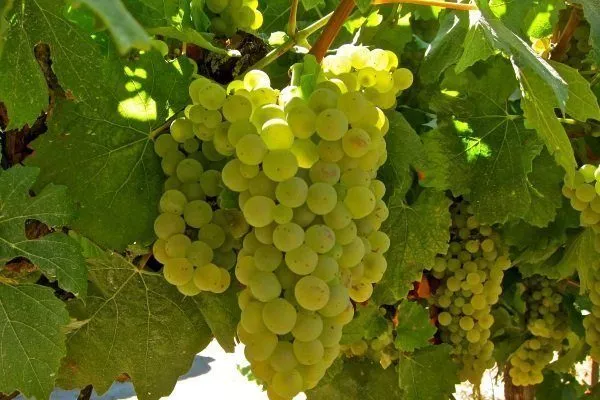
Ripening period: medium. Grows best in cool climates.
Advantages:
- excellent quality material for wine production;
- good frost resistance;
- drought resistance.
Flaws:
- unstable yield indicators;
- tendency to fungal diseases;
- berries may crack and rot;
- shoots can be destroyed by spring frosts;
- demanding soil composition.
Aligote
An ancient French variety, developed over 300 years ago by folk breeding. Belongs to the Western European group.
Growth vigor is rated as medium to vigorous. Externally, the bush is distinguished by its wine-red petioles and veins, smooth, almost rounded leaves with a matte surface and curled edges.
The clusters are medium-sized and heavy. The berries are tightly packed together, causing them to become deformed. They are yellowish-green in color and may have dark brown sun spots and brown specks. The skin is firm but not thick. The flesh is juicy, and the flavor is delicate and simple.
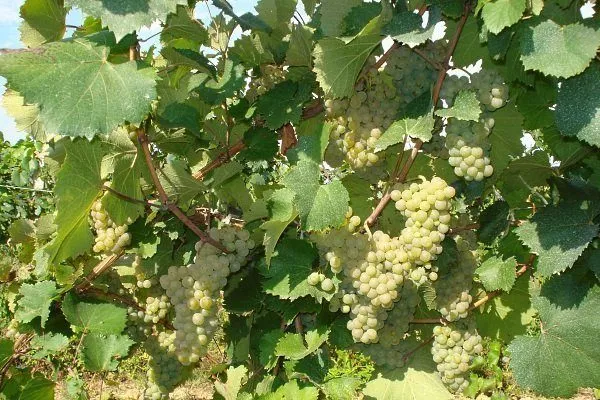
Aligote grows best on limestone soils with marl and clay. The ideal location for a vineyard is a mountainside high above sea level.
Ripening period: mid-early. Harvest period: second half of September.
Advantages:
- the yield is stable, with high indicators;
- high-quality material for the production of juice and wines, blended wine materials;
- relatively winter-hardy;
- minor shedding of ovaries and berries.
Flaws:
- sensitivity to early frosts in spring;
- in rainy weather it is susceptible to fungal diseases and grape pests;
- It is not possible to use mechanized harvesting methods.
White Kokur
The origin of the variety could not be determined; it belongs to the eco-geographical group of grape varieties of the Black Sea basin.
The bushes are vigorous. Seedlings are uniformly green, with one-year-old shoots taking on a light brown hue. The leaves are five-lobed, deeply dissected, and funnel-shaped. The undersides are covered with a web-like pubescence.
The clusters are medium in size and density, conical or cylindrical-conical in shape. The berries are large, elongated, and ovoid. The medium-dense skin is light green with a yellowish tint. The flesh has a pleasant, simple flavor and is juicy.
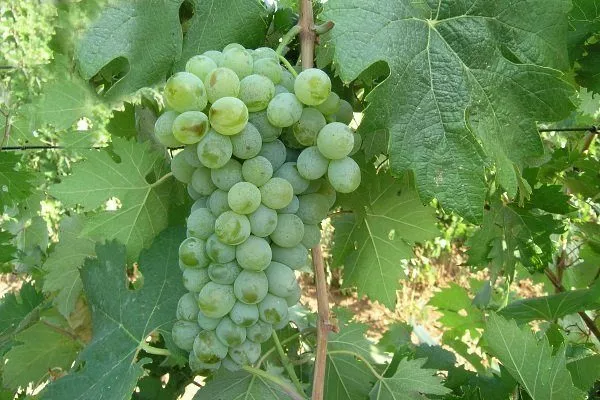
The Kokur White variety is a late-ripening variety. The harvest is in late September and early October.
Advantages:
- resistance to gray mold;
- minor shedding of flowers and berries;
- high drought resistance.
Flaws:
- winter hardiness is characterized as insufficient;
- low resistance to diseases;
- To get a high yield, irrigation is required.
Muscadelle
In the past, it grew exclusively on the southern coast of Crimea; now, it has been adapted for cultivation in other regions.
The growth rate is average. The shoots are green, medium thick, and flexible. Brown bark develops on annual plants. The leaves are slightly dissected, trilobate, and round.
The clusters are medium-sized and dense, cylindrical-conical in shape. The berries are round, medium-sized, and yellow-green, developing a pink tint when overripe. The skin is thin. The flesh is tender and juicy, with a flavor reminiscent of Muscat.
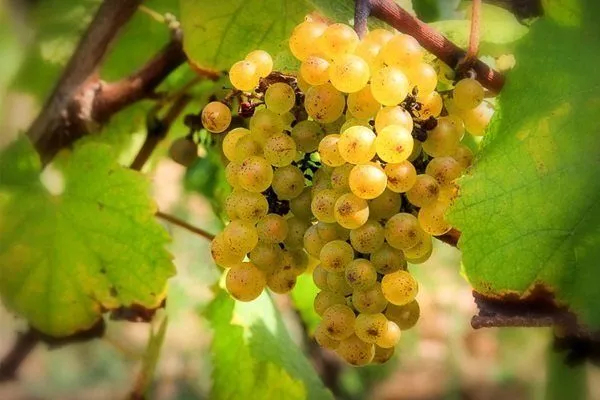
Vineyard sites are best chosen on south-facing slopes, slate and rocky soils, and are well-protected and warm. Adequate moisture supply is also essential.
Muscatel is a mid-early variety.
Advantages:
- above average yield;
- practically not affected by mildew;
- tendency to rapid accumulation of sugar and decreased acidity.
Flaws:
- low frost resistance, tendency to freeze;
- highly susceptible to powdery mildew;
- lack of moisture has a significant impact on crop yield;
- damage from berry rot during autumn rains.
Riesling
Belongs to the group of Western European grape varieties and is grown in many countries around the world.
It is distinguished by its vigorous branch and trunk development, and its growth rate is medium. The leaves are small, moderately dissected, round, dark green, and pubescent on both sides.
The cluster size is small to medium, cylindrical in shape. It is characterized as loose and dense. The berries are greenish-white with a yellow tint and brown spots, round, and the skin is thin and fairly strong. The flavor is pleasant and harmonious, and the flesh is juicy.
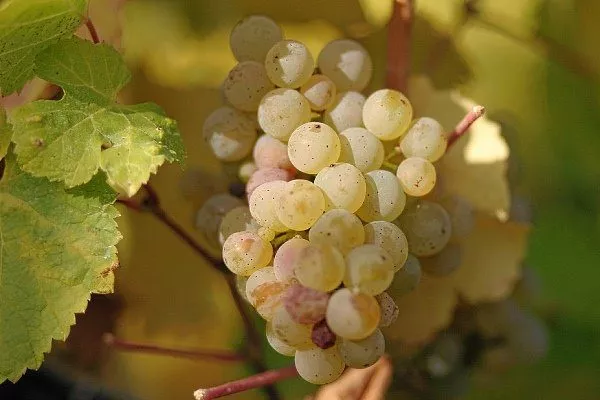
The vine ripens at the end of September and is considered good. It prefers dry regions.
Advantages:
- good development of fruit buds;
- cold-resistant, rarely freezes out during spring frosts;
- drought resistance, leaves do not dry out even during prolonged summer heat.
Flaws:
- berry rotting is observed during the autumn rains;
- the need for careful selection;
- low yield due to a large number of barren bushes.
White feteasca
The variety originates from Hungary and can often be found in the vineyards of Bulgaria, Hungary, and Romania.
The vine's growth vigor is medium. Young shoots are green-red, strong, and smooth. One-year-old shoots are light brown, with long internodes. The foliage is five-lobed, medium-sized, and pubescent on both sides.
The clusters are cylindrical-conical, medium-sized, and dense. The berries are yellow-green with a bluish tint, medium in size. A tan may develop on the sunny side. The skin is translucent, fairly thin, and firm. The flesh is juicy and has a pleasant, harmonious flavor.
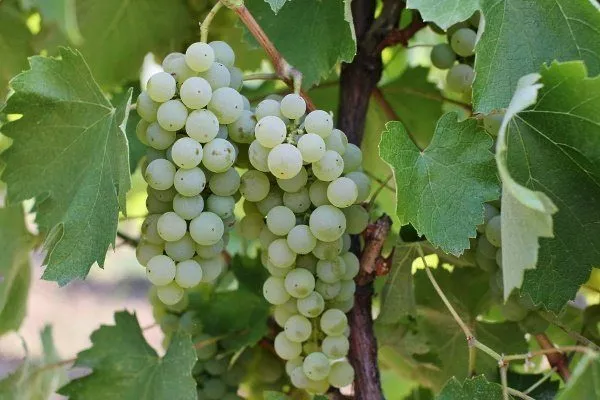
An early-mid-season grape variety. Harvest period: first half of September.
Advantages:
- good ripening of the vines;
- minor shedding and berry bruising;
- tolerates drought well due to deep roots;
- can be grown in any soil suitable for grapes.
Flaws:
- sensitivity to moisture, which causes berries to rot;
- susceptibility to disease;
- Mechanized harvesting is not permitted.
Bianca
Developed in Hungary, the crossbreeding involved the Villard Blanc and Chasselas Bouvier varieties. It grows in the southern regions.
Bianca bushes are medium-sized, have an openwork crown, and upright shoots. The leaves are smooth and green.
The clusters are cylindrical in shape, medium-dense, and small in size. The berries are yellow-green, small to medium, and round. The skin is thin, and the flesh is juicy with a harmonious flavor.
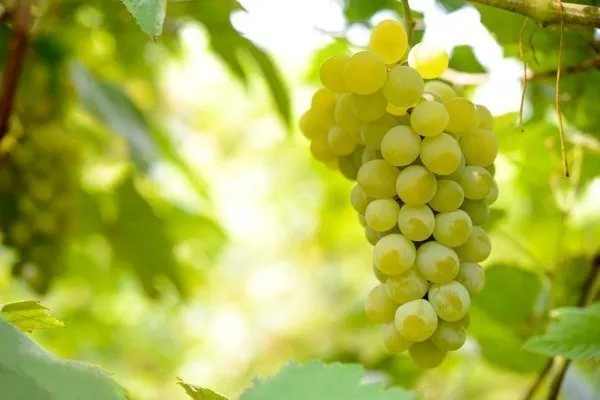
An early ripening variety, the harvest begins in early August.
Advantages:
- If you don't rush the harvest, you can reduce acidity and increase sugar levels;
- cold-resistant, does not require special shelter for the winter;
- easy to care for;
- resistant to major diseases;
- good ripening of shoots.
Flaws:
- wasps and birds love to eat berries, so they need to be covered with a protective net;
- may be affected by fungal diseases;
- It takes longer to harvest because the grapes have small bunches;
- requires standardization of the ovary.
Pink
Pink grapes are varieties whose berries range in color from white with a pink tint to a vibrant red-pink. These varieties are characterized by a rapid increase in sugar content.
Comparative table of the main characteristics of pink grape varieties:
| Name of the variety | Sugar content, % | Acidity, g/l | Weight of one bunch, g | Ripening period, days | Yield, c/ha |
| Diana | 17-21 | 6-9 | 180-250 | 105-115 | 145-150 |
| Lydia | 18-19 | 6-9 | 120-180 | 155-160 | 100-120 |
| Gurzuf pink | 25-29 | 6-7 | 230-250 | 125-130 | 145-150 |
| Pink Muscat | 24-35 | 5-9 | 110-205 | 135-140 | 60-80 |
| Gift of Magarach | 21-25
| 8-10 | 140-160 | 125-135 | 120-140 |
| Rkatsiteli Magaracha | 21-23 | 7-9 | 130-170 | 136-145 | 130-150 |
| Pink Traminer | 19-26 | 6-7 | 70-120 | 139-155 | 60-70 |
| Name | Disease resistance | Frost resistance | Ripening period |
|---|---|---|---|
| Diana | High | High | Early |
| Lydia | High | High | Average |
| Gurzuf pink | High | High | Early |
| Pink Muscat | Low | Low | Early |
| Gift of Magarach | High | High | Mid-early |
| Rkatsiteli Magaracha | High | High | Average |
| Pink Traminer | Average | Average | Late |
Diana
Country of origin: USA, New York State.
The bush has medium to weak growth vigor and ripens well. The leaf is entire, round, medium to small in size, and heavily pubescent at the base.
The cluster is cylindrical, medium-sized, and dense. The berries are round, medium to small in size, and dark pink in color. The flesh is slimy in consistency and slightly tart in taste. The skin is medium-thick and crisp.
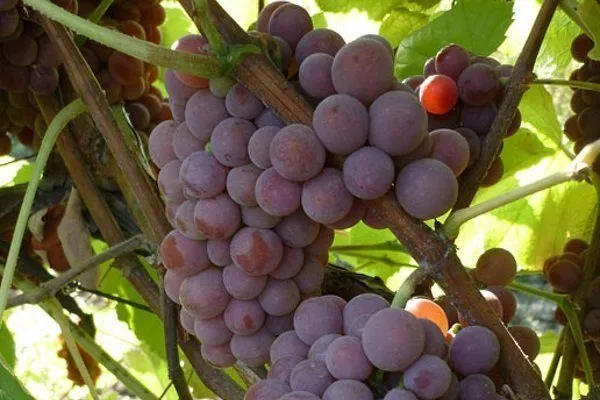
Yields are estimated to be average or higher. Ripening occurs early. Harvesting takes place in September.
Advantages:
- high transportability of bunches and storage ability;
- stable yield;
- The vine can withstand frost down to -30 °C without special cover.
Lydia
Homeland Lydia variety – North America, belongs to the Isabella group. Currently grown on small vineyards.
The bushes are tall, above average. They are often used for landscaping balconies, gazebos, walls, and canopies. The leaves are medium to large, moderately dissected, and densely pubescent below.
The clusters are conical, loose, and branched. The dark red-pink berries are covered with a lilac waxy coating, round, and have a firm skin. The slimy flesh has a strawberry flavor and aroma.
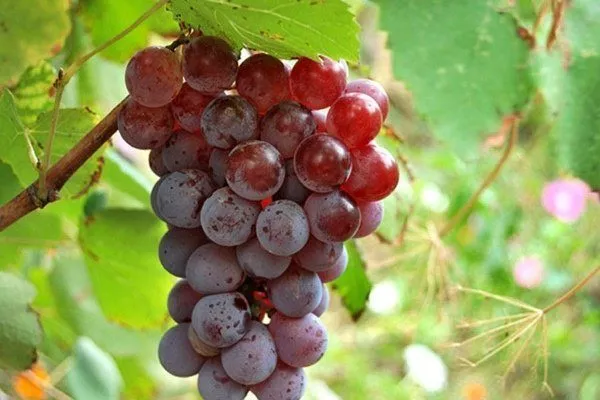
The ripening period is average. The harvest takes place at the end of September.
Advantages:
- frost resistance, in southern regions it winters without shelter;
- resistant to major diseases;
- tolerates high humidity well.
Flaws:
- pinching out the side shoots is necessary, as the bushes become very overgrown;
- The berry stalk weakens as it ripens, which should be taken into account during harvesting and in windy areas.
Gurzuf pink
Developed by the Ampelos Scientific and Vineyard over 30 years ago, the following varieties were used for breeding: Muscat, VIR, and Magarach. It grows well in Crimea, the Krasnodar Territory, and Central Asia.
The bush is vigorous, with brown branches that mature well in all weather conditions. The leaves are medium-sized, round, and green.
The clusters are cylindrical or conical in shape, medium in size, and loose. The berries are small and round. When ripe, the skin becomes dark red and firm. The flesh is juicy, fleshy, and has a muscat aroma.
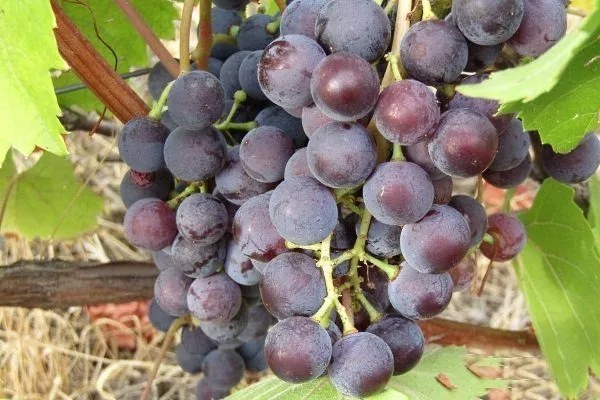
An early-ripening variety. Harvesting begins in August.
Advantages:
- adaptation to weather conditions, frost resistance;
- disease resistance;
- high yield.
Flaws:
- requires constant pruning to ensure that the fruits meet the variety's standards;
- protection of berries from birds and wasps is necessary;
- Preventive measures against leaf roller caterpillars should be taken.
Pink Muscat
The variety originated several centuries ago in southwestern Europe. Today, it is found everywhere.
The bush is medium-vigorous, rounded, and matures satisfactorily and well. The main shoots are yellow-brown and grow slightly downward. Secondary shoots often take less than one season to develop. The leaves are large, round, and slightly serrated at the edges. The upper surface of the leaf is smooth, while the lower surface is covered with fuzz.
The clusters are medium-sized and dense. The berries are round, medium-sized, dark red, and covered with a waxy coating. As the grapes ripen, their color deepens. The pulp is juicy, with a delicate flavor and muscat aroma. The skin is thin and firm.
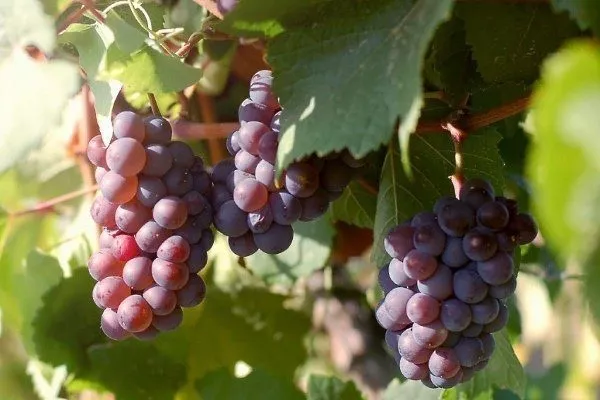
Pink Muscat is an early variety; the fruits are harvested starting in September, although it is important to remember that the grapes do not tolerate autumn frosts well.
Advantages:
- stable yield;
- increased sugar accumulation, especially in warm climates;
- not demanding in terms of soil moisture.
Flaws:
- susceptibility to disease;
- low resistance to low temperatures;
- demanding soil composition.
Gift of Magarach
It was bred by scientists at the Magarach Institute of Wine and Viticulture by crossing the Rkatsiteli variety and the technical hybrid form Magarach.
The bushes are tall or medium-sized. The leaves are five-lobed, weakly dissected, and green. There is no pubescence on the upper or lower surfaces, but a distinct network of wrinkles is visible.
The clusters are conical-cylindrical, not very dense, and medium-sized. The berries are white, turning pink when ripe, and have a white waxy coating. The skin is elastic and thin. The pulp is slimy, spreading when overripe, and has a pleasant taste but no distinctive aroma.
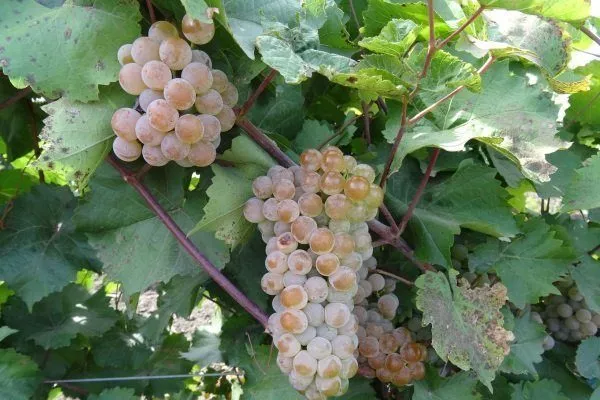
A mid-early variety, ripening in late August.
Advantages:
- high rates of sugar accumulation;
- high yield;
- disease resistance;
- resistance to low temperatures.
Flaws:
- If there is poor drainage and planting in clay soil, root rot may occur;
- It is necessary to regulate the ovary to prevent overloading the vine.
Rkatsiteli Magaracha
Developed by breeders of V&V Magarach based on the Rkatsiteli and Villard Blanc varieties.
This variety is characterized by moderate vigor and good ripening. The leaves are moderately dissected, rounded, and slightly funnel-shaped. The lower surface of the leaf is covered with bristly pubescence, while the upper surface is smooth.
The clusters are medium-sized and dense, cylindrical in shape. The berries are round, medium-sized, white with a pink tint. The flesh is juicy and has a harmonious flavor. The skin is elastic and thin.
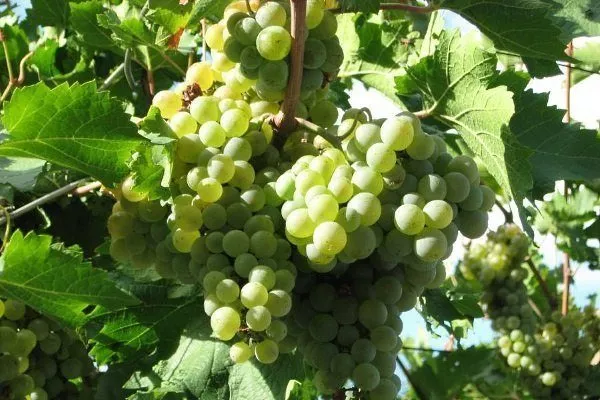
Rkatsiteli Magarach is a mid-season grape variety, ripening in the second ten days of September.
Advantages:
- frost resistance;
- increased resistance to fungal diseases;
- high yield.
Pink Traminer
Considered one of the most ancient grape varieties, it is genetically related to wild grapes and grows in many European countries.
The bushes are of medium vigor; dwarf specimens are often found in commercial cultivation. The leaves are light green with a red tint. The undersides are covered with a felty pubescence. They are rounded in shape, moderately dissected, and can be 3- or 5-lobed.
The clusters are small to medium-sized, dense, and winged. The berries are round, slightly oval, medium-sized, and light pink with a bluish tint. The skin is dense and thick. The flesh has a harmonious flavor, is tender and juicy.
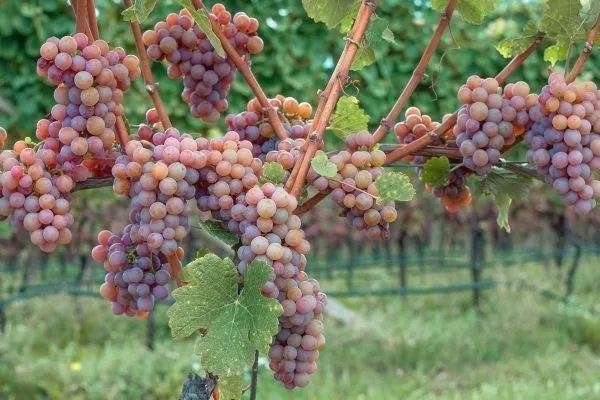
This is a late-ripening variety. Harvesting begins in late September and October. Yields are high, but not consistent.
Advantages:
- tolerates waterlogging well;
- good disease resistance;
- is one of the most valuable wine varieties.
Flaws:
- poor recovery after harsh winters;
- does not tolerate drought well;
- moderate frost resistance, requires mandatory shelter for the winter.
Blacks
Black grape varieties are the most common in commercial cultivation. They contain more nutrients than other varieties. A distinctive feature is the berry color, which ranges from blue to dark purple and black.
Comparative table of the main characteristics of black grape varieties:
| Name of the variety | Sugar content, % | Acidity, g/l | Weight of one bunch, g | Ripening period, days | Yield, c/ha |
| Isabel | 16-18 | 6-7 | 150-180 | 60-75 | |
| Augusta | 22-23 | 7-9 | 110-120 | 128-130 | 100-110 |
| Taiga | 18-20 | 7-9 | 120-140 | 90-100 | 100 kg from a 7-8 year old bush |
| Alievsky | 18-20 | 7-8 | 120-130 | 130-135 | 110-140 |
| Alpha | 15-16 | 10-11 | 150-250 | 110-145 | 150-180 |
| Muscat of Hamburg | 20-22 | 6-8 | 170-260 | 145-150 | 100-120 |
| Zilga | 18-20 | 4-7 | 200-400 | 102-110 | 300-400 |
| Cabernet Sauvignon | 19-21 | 8-9 | 70-75 | 145-165 | 60-90 |
| Aleatico | 17-22 | 5-7 | 130-140 | 160-165 | 75-170 |
| Saperavi | 16-23 | 8-12 | 95-100 | 150-160 | 90-110 |
| Regent | 20-22 | 8-9 | 150-180 | 135-140 | 150-190 |
| Pinot Noir | 17-19 | 7-8 | 65-120 | 140-150 | 50-60 |
| Name | Disease resistance | Frost resistance | Ripening period |
|---|---|---|---|
| Isabel | High | Average | Late |
| Augusta | High | High | Mid-early |
| Taiga | High | High | Early |
| Alievsky | High | High | Average |
| Alpha | High | High | Average |
| Muscat of Hamburg | Low | Low | Mid-late |
| Zilga | High | High | Very early |
| Cabernet Sauvignon | Very high | High | Late |
| Aleatico | Low | Low | Mid-late |
| Saperavi | Low | Average | Mid-late |
| Regent | High | High | Mid-late |
| Pinot Noir | Average | Average | Average |
Isabel
An old grape variety native to the United States. Widely grown throughout the CIS, it is often used for landscaping.
The bushes are vigorous. New shoots can emerge from old wood and from replacement buds. The leaves are large, dark green above, greenish-white below, and covered with dense pubescence.
The clusters are medium-sized, often cylindrical, of medium density, and sometimes loose. The berries are medium-sized, round or oval, black, and covered with a thick, waxy coating. The skin is firm and thick. The pulp is slimy and has a strawberry aroma.
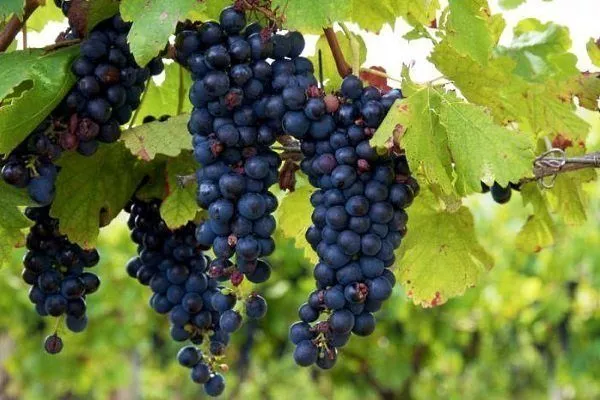
It's a late-ripening variety. Harvest occurs in late September or early October, depending on the growing region.
Advantages:
- good yield;
- disease resistance;
- tolerates waterlogging well.
Flaws:
- It is necessary to constantly regulate the growth of shoots in order to prevent them from becoming overgrown;
- does not tolerate drought well;
- It is not advisable to grow in northern regions.
Augusta
Developed by breeders at the Potapenko Research Institute of Viticulture, it is widely grown in the southern regions.
The bushes grow vigorously. Cuttings root quickly. The leaves are round, entire, reticulate-wrinkled, and quite dense.
The cluster is small, cone-shaped, loose to medium-dense. The berries are a rich dark blue, round, and small. The flesh is juicy and meaty, with a slight muscat flavor.
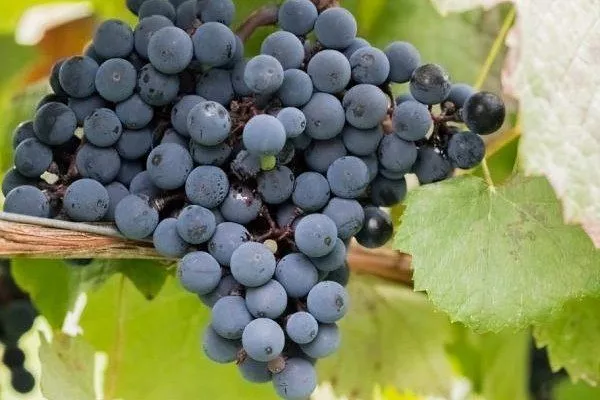
The ripening period is considered mid-early. The harvest ripens by the end of August to the beginning of September.
Advantages:
- does not require winter cover at temperatures down to -25 °C;
- disease resistance.
Flaws:
- does not tolerate over-watering and drought;
- It is necessary to constantly remove stepchildren so as not to overload the bush.
Taiga
A wild grape variety native to the Amur taiga. Widely cultivated in the northern regions.
The bushes are vigorous and can grow up to 7 m per year. The leaves are medium-sized, rounded, and without cuts.
The clusters are medium-sized and conical. The berries are small, round, and dark blue to black in color. They have a rich, sweet and sour flavor.
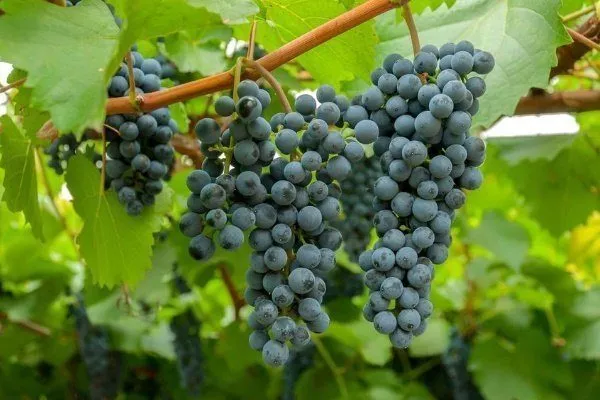
Ripening is early. Harvesting begins in late August.
Advantages:
- resistance to cold weather conditions;
- ripening in northern summer conditions;
- disease resistance;
- high yield;
- The brushes can remain on the vine until frost.
Flaws:
- blooms according to the female type, therefore requires pollination;
- in the first year it is often affected by mildew;
- autumn pruning can cause freezing;
- are not grown on an industrial scale.
Alievsky
Developed by Russian breeders by crossing the Startovy variety with the Viorica variety.
The bush is medium-sized. The vine ripens well. The leaves are large, lightly dissected, green, and slightly pubescent on the underside.
The cluster is dense, cylindrical-conical in shape. The berries have thick skin, are blue-black in color, and covered with a pruinose bloom. The flesh is soft, without much flavor.
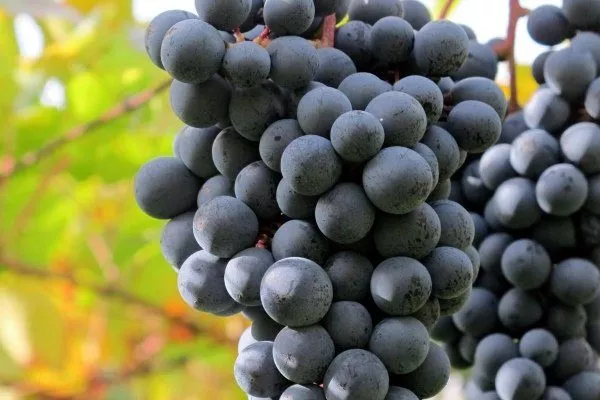
The variety is considered medium-ripening in terms of ripening time. The berries ripen in mid-September.
Advantages:
- disease resistance;
- frost resistance;
- good ripening of shoots.
Disadvantages not found.
Alpha
Developed by crossing the Riparia and Labrusca varieties, it has been grown in Russia for many years, most commonly found in the Primorsky Krai. It is often used for landscaping.
The bush is vigorous. The leaves are trilobed, rounded, and not deeply dissected.
The clusters are medium-sized and dense, sometimes winged, and cylindrical in shape. The berries are medium-sized, round, and can be reddish-brown or purple in color, covered with a waxy coating. The flesh is slimy and sour.
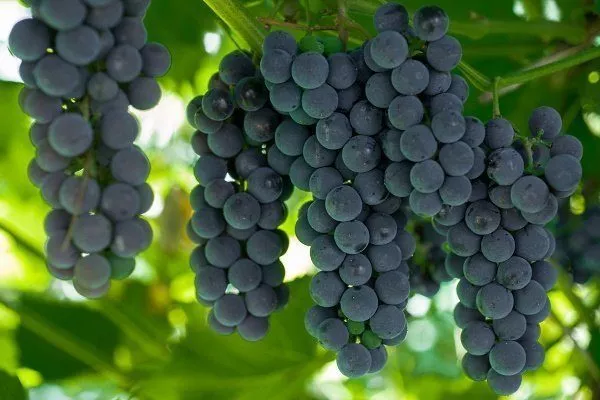
The ripening period is average; harvesting begins in mid-September.
Advantages:
- frost resistance;
- disease resistance;
- used for pollination of other varieties.
Flaws:
- requires good watering, especially in the first year;
- high acidity.
Muscat of Hamburg
Originating in England, it was developed around the 19th century. Today, it is widespread in many wine-producing countries.
The vine is characterized by medium to vigorous growth. The bushes are medium-sized. The leaves are heart-shaped, with corrugated edges, and medium in size.
The clusters can be described as large or medium in size, conical in shape, loose, and sometimes winged. The grapes are large, round, and blue-violet in color with a thick bloom. The skin is dense, and the flesh is fleshy and juicy.
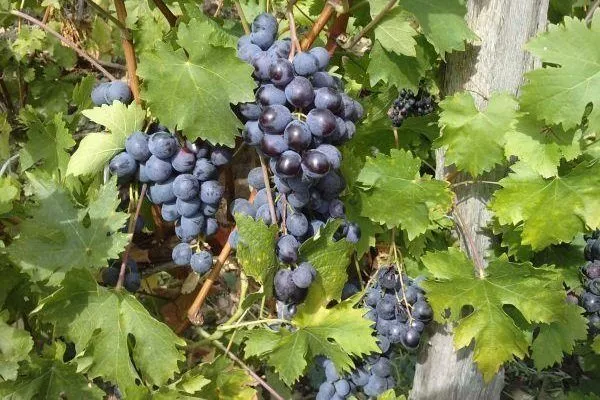
Muscat Hamburg is a mid-late variety, ripening by the end of September.
Advantages:
- high yield;
- high sugar accumulation;
- long storage period of the harvested crop and good transport tolerance.
Flaws:
- low frost resistance;
- low resistance to diseases;
- tendency to berry blindness.
Zilga
The variety was bred in Latvia using such varieties as Smuglyanka, Dvietes, and Yubileiny Novgorod.
This variety is distinguished by its vigorous growth. The leaves are medium-sized and trilobed.
The cluster is large, dense, and winged. The berries are oval, large, and blue. The pulp is slimy and has an Isabella aroma.
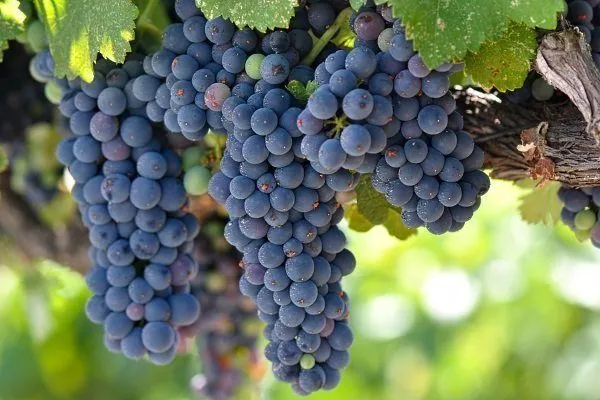
It ripens in late July-early August, so it is considered very early.
Advantages:
- frost resistance;
- resistance to major diseases;
- ripened bunches can remain on the bush for a long time without losing their quality;
- good transportability.
Flaws:
- it is necessary to take care of protection from the wind;
- A site with close groundwater levels is not suitable for planting.
Carbene Sauvignon
This variety originates from the Bordeaux region of France and is grown in many countries around the world.
The vine roots well and matures quickly, with vigorous shoot growth. The bush is spreading. The leaves are round, with reddish teeth at the tips.
The clusters are long, loose, and cone-shaped. The berries are round, rough-skinned, blue, and covered with a bloom. The flavor is pleasant, reminiscent of nightshade. The flesh is juicy.
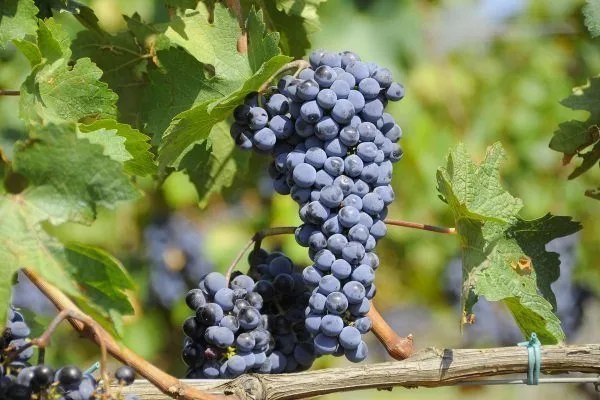
The ripening period is late. The harvest ripens by the end of September - beginning of October.
Advantages:
- drought resistance;
- resistance to decay;
- frost-resistant;
- very high resistance to diseases;
- adaptability to climatic conditions;
- Mechanized harvesting is possible.
Flaws:
- berry picking;
- shedding in strong winds.
Aleatico
The variety belongs to the Western European eco-geographical group, originally from Italy.
The seedlings are spreading. The bush grows to medium to vigorous growth. The leaves have fine, hollow teeth, and the central lobe is folded into a groove. The apical leaves have crimson spots.
The cluster is cylindrical-conical, medium-sized, dense or of medium looseness. The berries are black with a bluish bloom, round, and medium-sized. The flesh is juicy with a mild muscat flavor.
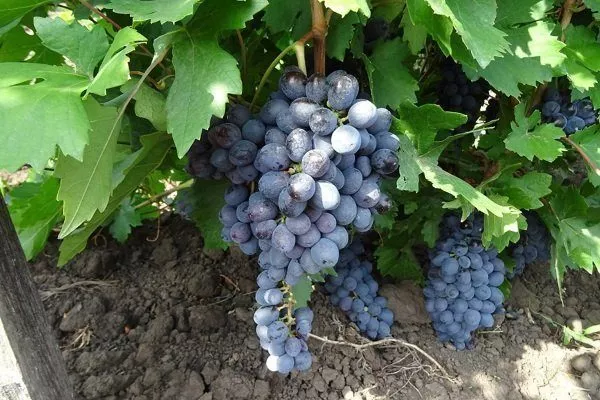
Ripens in the 3rd decade of September and is a mid-late variety.
Advantages:
- high yield with good care;
- resistant to grape leaf roller.
Flaws:
- not resistant to diseases;
- increased heat requirements;
- fungal diseases develop in conditions of high humidity;
- does not tolerate drought.
Saperavi
An ancient Georgian variety. Belongs to the Black Sea Basin grape group.
The bush grows at a medium rate. The leaves are ovate, slightly dissected, light green, and covered with dense, web-like pubescence.
The cluster is medium-sized, conical with a wide base, loose, and often branched. The berries are oval, dark blue, medium-sized, and covered with a waxy coating. The skin is thin but firm. The flesh is juicy.
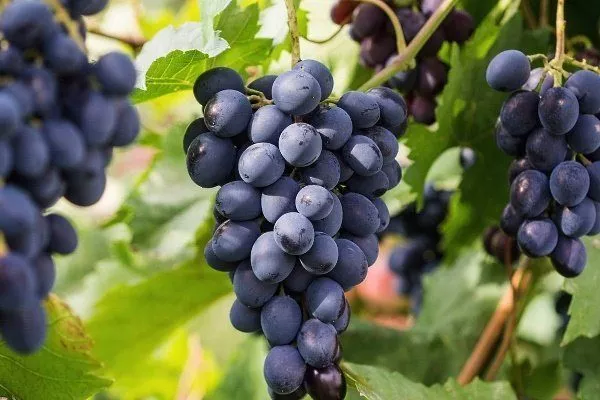
The ripening period is mid-late. The harvesting period lasts from late September to mid-October.
Advantages:
- damage from grape leaf roller is lower than in other varieties;
- accumulates sugar well.
Flaws:
- significant shedding of flowers and berries;
- weak resistance to diseases.
Regent
Regent is an interspecific hybrid developed by German breeders using the Diana and Chambourcin varieties.
The bush's growth rate is described as average, with little side shoot formation. The leaves are small, rounded, and dissected.
The cluster is medium-sized, conical, and moderately dense. The berries are round, not very large, and black. The flesh is juicy, with a harmonious flavor and herbal notes.
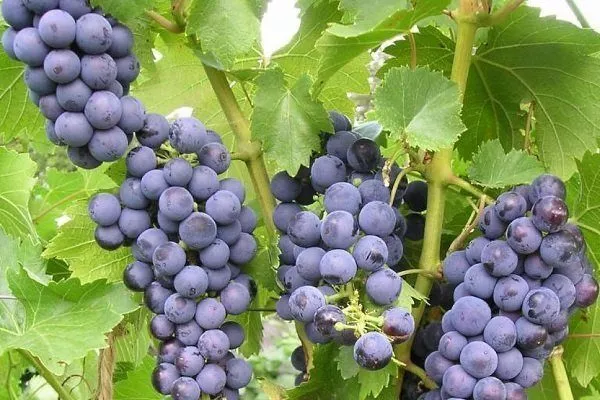
The vine ripens mid-late, and is harvested in the second half of September.
You shouldn't leave ripe grapes on the bushes for a long time, as the acidity decreases and the stem weakens.
Advantages:
- frost-resistant;
- has good resistance to major diseases.
Flaws:
- very sensitive to the content of nutrients in the soil;
- when ripening, the berries fall off;
- Mechanical cleaning is not permitted.
Pinot Noir
This variety originates from the Burgundy region of France and is cultivated in many countries around the world.
Pinot Noir bushes are medium-sized. The leaves are rounded, not large, with a wide central lobe. Slight pubescence can be seen on the underside.
The clusters are small to medium-sized, dense to very dense, and cylindrical in shape. The berries are round, can be deformed, dark blue with a bluish bloom, and medium in size. The skin is firm and thin. The flesh is juicy with a delicate, harmonious flavor.
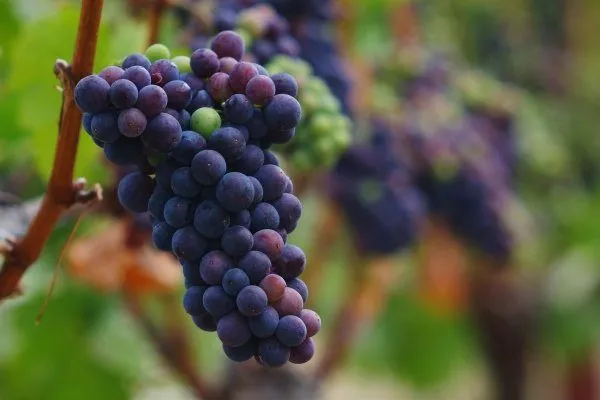
Ripening time is average. The harvest is collected by the end of September.
Advantages:
- relatively high frost resistance;
- good development of shoots from replacement buds when the main ones freeze;
- resistance to gray mold.
Flaws:
- does not like low-lying planting sites and flat terrain;
- stunning of berries in unfavorable weather conditions.
Each industrial grape variety has unique characteristics that impart a distinctive flavor and aroma to the wine made from it. From a vast array of varieties, every winegrower can choose one that suits their personal preferences and growing conditions, whether they're growing a small plot or a large commercial vineyard.