
Talisman grapes are a table grape variety widely used in both amateur and commercial viticulture. Breeders have strived to maximize the qualities prized in grapes in this green-and-white variety. Let's find out what makes Talisman so special and how to grow it.
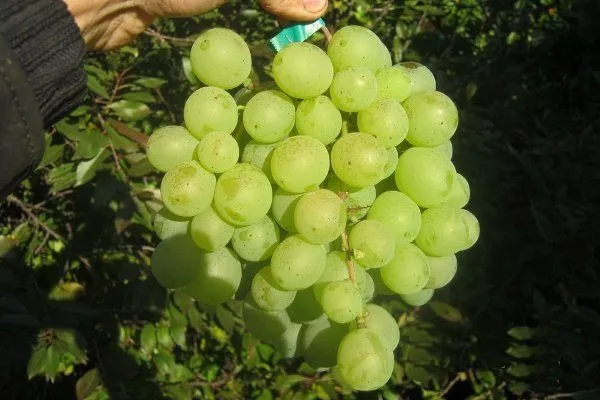
grape variety "Talisman"
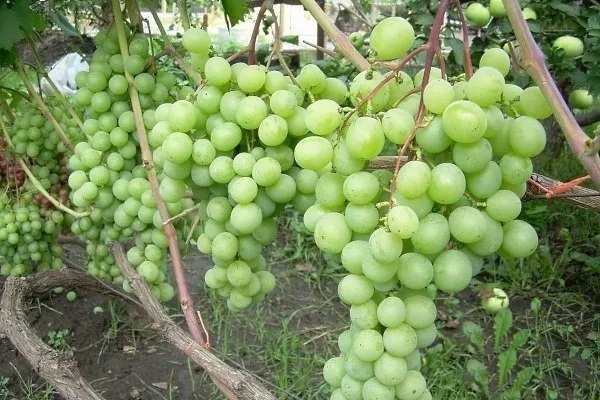
The Talisman variety has a key advantage: beautiful and sweet berries
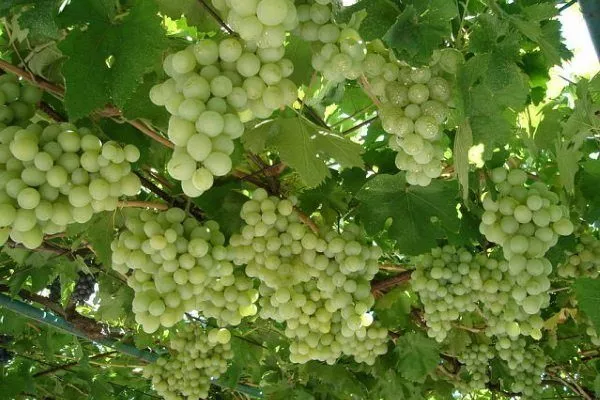
The Talisman grape variety has a strong immune system, high yields and large fruit characteristics.
How did the variety originate?
The Talisman variety was developed by domestic breeders by crossing the "Vostorg" grape variety with the "Belaya Krasavitsa" grape variety. The variety was created at the Novocherkassk All-Russian Research Institute of Viticulture and Winemaking. It was developed in 1990.
While developing Talisman, breeders sought to create a large-fruited variety with high immunity and yield. "Vostorg," and later "Talisman," became the basis for developing new grape varieties for amateur gardening.
Botanical description of grapes
Talisman grapes have vigorous vines with numerous fruiting shoots. Each shoot produces 1-2 clusters. Excess clusters are pruned to prevent branch breakage and smaller berries. It's recommended to maintain 24-32 buds per vine.
Peduncles
Talisman produces only female flower stalks, so it requires pollinators with male or universal flower stalks to produce fruit. To ensure pollination, plant two grapevines with flowers of both sexes nearby.
Brushes
Talisman grape clusters are large. The average weight of a single bunch is 0.8 kg. The maximum is 1.5-2 kg. Cluster size is influenced by cultivation practices such as watering, fertilizing, etc.
Characteristics and features of brushes:
- shape – conical;
- dense or slightly loose;
- If the flower stalks are not fully pollinated, bare areas appear on the brushes, which spoil the marketable appearance of the brushes – they become unsuitable for sale.
Berries
Talisman fruits are large, weighing up to 20 g. Other characteristics of the berries:
- shape – oval;
- average weight – 12-15 g;
- diameter – 3.5 cm;
- color – pale green, with an amber tint and a waxy coating;
- the pulp is tender and elastic;
- berries exposed to the sun turn yellow;
- the skin is dense and thin.
Among winegrowers, Talisman is also known under the names Kesha-1, Kesha-2, super-Kesha and Kesha Muscat.
Talisman Characteristics
Features and characteristics of the Talisman variety:
- Ripening periods. This variety is considered mid-early. It takes 140 days from the start of the growing season until ripe berries appear. The exact timing varies by region: in the south, ripening occurs 20 days earlier, in the north, 20 days later. In the temperate zone, Talisman ripens in early September.
- Fruiting. This variety is characterized by rapid growth—the first harvest is collected two years after planting one-year-old seedlings. The ripened bunches hang, retaining their flavor, until frost.
- Reproduction. By cuttings and grafting. It has a high rooting rate.
- Frost resistance. It tolerates Russian winters well, withstanding temperatures down to -25°C. It requires winter protection.
- Taste. The berries have a muscat aftertaste and aroma—but these are present only in fully ripe berries. The pulp is rich in juice. The sugar content is 24%.
- Disease resistance. Resistant to the most dangerous grape diseases – gray mold, oidium, mildew.
- Marketability. This variety is commercial. It has excellent appearance and flavor, transports easily over short distances, and the clusters do not fall apart, nor do the berries crack. The clusters can be stored in refrigerators at 8°C for 4-6 months.
The video below provides an overview of the Talisman grape variety:
Advantages and disadvantages of the variety
Talisman is preferred by summer residents for its following advantages:
- large-fruited;
- large clusters;
- excellent taste with a nutmeg aroma;
- easy to transport;
- cuttings take root well;
- excellent presentation of bunches;
- high immunity to diseases;
- high frost resistance;
- high yield;
- good adaptability – easily adapts to different climates.
Today, the variety is losing ground, losing many characteristics to newer grape varieties. Gardeners' waning interest in Talisman has also been affected by its shortcomings:
- need for pollinators;
- rationing the harvest by cutting off excess inflorescences - so that the branches do not break under the weight of the bunches;
- the berries are eaten by birds, wasps and hornets;
- the vines have to be cut back – the shoots are growing too strong;
- the need for large feeding areas;
- We need high-strength trellises.
Landing features
Talisman's cultivation practices are standard—it's grown like other modern table grape varieties. The main thing is to consider the size of the Talisman vines—they're very large—and leave them plenty of space to grow. There should be at least 3 meters between the vines and neighboring plantings.
Choosing a landing site
Recommendations for choosing a site:
- The best soils are black soil, but the variety also grows well in other types of soil, provided it is fertilized with organic and mineral fertilizers. It is not recommended to plant grapes in lowlands, marshy or uneven areas, or anywhere where water stagnates. Excess moisture causes root rot.
- If the soil is highly acidic, it must be neutralized with wood ash.
- The plot should be located on a south or southwest side to ensure the grapes receive maximum heat and light. Grapes should be planted in the sunniest spot.
- The site should be free of drafts and piercing winds. It is recommended to plant the grapes so that they are protected from the north by walls or trees.
- The groundwater level should not be less than 2.5 m from the ground surface.
Talisman grows in various climates, but its main requirements for productivity are warmth and light. This variety thrives in hot, sunny summers.
Soil preparation
Grapes are planted in spring or fall. In either case, planting holes are prepared in advance. If planting in spring, the holes are dug in the fall; for fall planting, the holes are dug 2-3 weeks before planting.
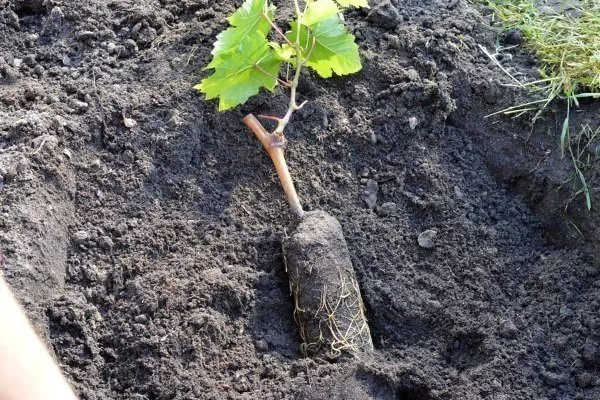
Cubic holes with sides of 70-80 cm are dug for grape seedlings. The holes are filled halfway with soil mixture. To prepare the soil mixture, the top fertile layer is mixed with:
- rotted manure - 2 buckets;
- ash - 2 buckets;
- superphosphate – 300 g.
Place crushed rock or pebbles at the bottom of the hole to provide a drainage layer, protecting the root system from excess moisture. A tube can be installed in the planting hole to provide watering for the roots.
Planting pattern of bushes
The planting pattern for the Talisman seedlings takes into account the characteristics of the variety. Large bushes planted in rows are spaced 4 meters apart. This space is just enough for shoots to grow and roots to develop.
If the soil isn't particularly fertile, increase the distance between vines to 4.5-5 meters. This will increase the area the vines can feed on. When planting grapes in rows, it's recommended to maintain a 5-6 meter spacing between vines.
Planting weeds and favorable days
The optimal time to plant Talisman grapes is considered mid-autumn. However, spring is also an option. There's no significant difference between spring and fall planting. Typically, the choice of planting time depends on when the seedlings were purchased.
The timing of planting is also influenced by the characteristics of the planting material:
- Early spring. At the end of March, it is customary to plant “dormant” seedlings, graft cuttings and propagate grapes by layering.
- Mid-spring. In April, it is time to plant green seedlings and graft the cuttings “green to green”.
Features of different planting times:
- Spring planting. Allows seedlings to easily adapt to a new location, take root well, and grow. These seedlings enter their first winter strong and have every chance of surviving the cold.
- Autumn planting. It's most often used for planting dormant seedlings and cuttings. The best time for planting is mid-October. The exact timing varies depending on climate and weather. A disadvantage of fall planting is the risk of frost damage. To prevent this, young plants need to be covered.
Experienced grape growers and gardeners rely on the lunar calendar when planting seedlings. In 2019, favorable planting days are as follows:
- March – 2, 3, 8-13, 16, 23-25;
- April – 2, 3, 7-13, 17, 22-24;
- September – 2-8, 12, 17-19, 30.
Proper care
Caring for the Talisman consists of standard procedures—this variety doesn't require anything special. The only thing to consider when pruning is the large size of the bushes. Regular watering, loosening the soil, and removing weeds are essential. mulch the soil, feed, prune, and, if necessary, cover for the winter.
- ✓ Yellowing of leaves between the veins may indicate a magnesium deficiency.
- ✓ Slow shoot growth and small leaves may be a sign of nitrogen deficiency.
Top dressing
Talisman requires regular fertilizing—the vigorous bushes with large clusters consume a significant amount of nutrients during the growing season. From spring to winter, apply five root feedings and two foliar feedings.
Grape fertilizing schedule:
| Top dressing | Period | What do they feed them? | The purpose of feeding |
| First root | 1-2 weeks before flowering | Add 40-50 g of nitrophoska per 1 sq. m. | Pollination improves and bunches grow larger. |
| First foliar | 2-3 days before flowering begins | Boric acid (10-20 g), copper sulfate (2-3 g), and iron sulfate (2-3 g) are dissolved in a bucket of water. The mixture is mixed with fungicides. | Pollination improves, fewer ovaries fall off. |
| Second root | 2 weeks after flowering | Add 30-60 g of nitrophoska per 1 sq. m. | Maintaining intensive growth of shoots and berries. |
| Second foliar | during the period of formation of small berries | For 1 sq. m add urea – 30-40 g, ferrous sulfate – 10-15 g, potassium permanganate – 1 g, citric acid – 20 g. | Prevention of chlorosis and comb paralysis. |
| Third root | 1-2 weeks before harvesting | Superphosphate – 20 g, potassium salt – 15 g, potassium magnesium sulfate – 1 tbsp. | Prevents fruit cracking, improves taste, and accelerates ripening. |
| The fourth root | before ripening | Infusion of ash with micronutrients (1-2 tablets) – per bucket of water. | Prevention of gray mold, improvement of berry taste. |
| Fifth root | after cleaning | Potassium sulfate – 20-30 g, superphosphate – 30-40 g. | Improving shoot maturation. |
Trimming
Pruning is the most difficult agricultural technique in grapevine care. Winegrowers learn this skill through hands-on work. Pruning frequency:
- Spring. They begin before the sap begins to flow. They prune shoots that have died and been damaged over the winter. Read more about spring pruning of grapes. Here.
- Summer. Pruning aimed at shaping the bush continues throughout the summer. Young shoots, excess growth, and suckers growing in the leaf axils are promptly removed.
- Autumn. After the leaves have fallen, when the structure of the bush is clearly visible, the main pruning is carried out. Talisman shoots are shortened to seven buds. The bush should have no more than 32 buds left in total.
In the fall, the shoots are removed from the trellises, tied into bundles, spread on the ground, and covered with spruce branches. In northern regions, slate or roofing felt is laid over the spruce branches. The cover is removed early in the spring—in March.
Diseases and pests
Talisman is fairly resistant to major grape diseases. It is rarely affected by common diseases such as gray and white mold, powdery mildew, anthracnose, and mildew. With timely preventative spraying, this variety will not have any problems.
Preventative spraying with a ferrous sulfate solution is recommended in early spring. This provides reliable protection against fungal infections. There are diseases and insects to which Talisman lacks sufficient immunity. If these cannot be prevented, treatment is necessary.
Pest and disease control measures for Talisman:
| Pests/diseases | Symptoms/harm | What to do? |
| Black spot | Black spots appear on the leaves and then on the shoots. This is a fungal disease. | After leaf fall, spray with 3% copper sulfate.
In the phase of 3-5 leaves, budding and in the “small pea” phase – treatment with fungicides, for example Quadris. |
| Phylloxera | Aphids are 1-1.5 mm in size and attack all parts of the plant. | Maintaining quarantine upon planting. Treatment with Karbofos, Confidor, etc. |
| Spider mite | Arachnids up to 0.5 mm in size. They parasitize leaves, causing them to turn yellow, red, and die. | Treatment with Akarin and Actellic. Destruction of infected shoots. |
Wasps pose a particular threat to the harvest, as they can ruin entire bunches of grapes. Talisman berries are attractive to wasps due to their high sugar content. If the insects are few in number, sweet water laced with poison is placed near the bushes. If the infestation is severe, protective netting must be placed over each bunch.
Methods of reproduction
The variety is propagated by seedlings, cuttings, and layering. The most popular method is planting seedlings. This ensures the fastest possible plant growth and a quick harvest. The survival rate of seedlings is several times higher than that of layering and cuttings.
Secrets of pollination
To ensure successful fruiting of the Talisman grape, winegrowers must ensure high-quality pollination of its flowers. Pollination tips:
- Varieties with bisexual flowers and flowering times similar to Talisman are planted near the vineyard. Recommended grape varieties include Odesskiy Souvenir, Isabella, and others.
- Before flowering, the plantings are treated with preparations containing zinc and boron - "Ovary", "BoroPlus" and others.
- It's helpful to spray the bushes with Hederelin during flowering (50 ml per liter). This treatment prevents ovary shedding and promotes the ripening of seedless fruits.
- ✓ For optimal pollination, the distance between the Talisman and pollinators should not exceed 50 meters.
- ✓ The flowering time of pollinators must completely coincide with the flowering period of Talisman.
Uses of berries
Talisman berries are beautiful and delicious, with few, and small, seeds. Most importantly, the fruits of this variety are very sweet, containing up to 23% sucrose.
The talisman is universal and suitable for any purpose. Its berries are used for:
- fresh consumption;
- wine making;
- culinary purposes – fruits are added to salads, appetizers, etc.;
- canning - used to make various preparations, added to marinades.
Reviews of the Talisman variety
Despite a slight decline in popularity, Talisman remains popular – its low maintenance, high yield, and marketable fruit consistently attract gardeners and farmers. The variety is versatile in both its uses and climate – it can be grown even in northern regions.