
The Tayozhny grape is a real find for gardeners who grow this crop in temperate climates. This variety is extremely hardy, rarely prone to disease, and tolerates low temperatures well. Most importantly, it's versatile, suitable for both eating and winemaking.
Description
This variety is characterized by vigorous growth and rapid shoot growth. The vine length increases by 4-6 meters annually. Its cuttings take root well, so propagation is straightforward.
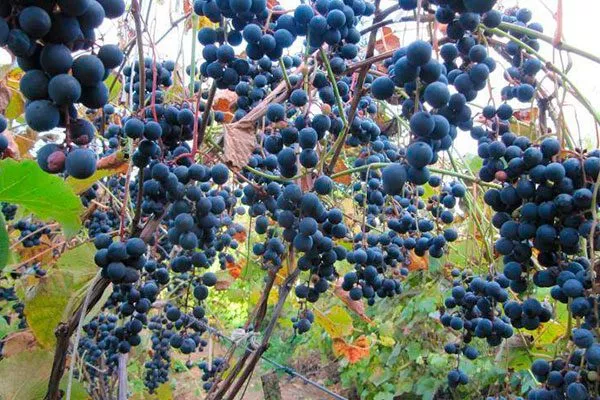
Brief description:
- Bushes. Spreading, with strong, vigorous branches, shoots reach 8-10 m in length.
- EscapesStrong and durable, long, thin.
- Leaves. Large, round, smooth and glossy.
- FlowersFemale. This variety is often used for pollination of ultra-early grapes of other varieties.
- ClustersMedium-sized, loose, conical in shape. Weight: 250-300 g. Maximum bunch weight: 400 g. Cluster fullness: average.
- Berries. Small, round, dark blue, almost black, with a purple tint. The berries are up to 20 mm in diameter and weigh up to 4 g.
Specifications and Features
The Tayozhny grape variety can be grown in a wide range of climates and tolerates virtually any soil type. It's a truly undemanding and hardy grape variety, growing well in central and even northern regions.
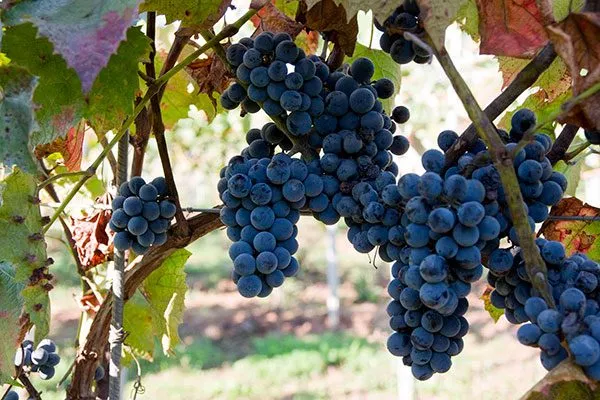
Characteristics of the Taiga variety:
- Productivity. High yield. Approximately 100 kg per bush. Peak yields are reached 7-8 years after planting.
- Frost resistance. High. The variety can withstand temperatures down to -32°C. In regions with harsh winters, the vines need to be covered.
- Drought resistance.
- Ripening periods. Early. Between 90 and 95 days pass between bud break and technical fruit ripeness.
- Application. This variety is a table grape. It's suitable for fresh consumption and for making juices and red wines. It's also used to make liqueurs, compotes, and tinctures. The fruits contain a lot of sugar and pectin, making them ideal for making pastila and marmalade.
- Transportability. Good.
- Taste. Slightly tart, tart, and astringent, pleasant. If the summer is dry, muscat notes emerge in the berries' flavor.
- Sugar content - 20%.
- Disease resistance. Very high.
- ✓ Ability to withstand temperatures down to -32°C without loss of yield.
- ✓ The fruits have a high sugar and pectin content, making them ideal for processing.
The fruits contain a lot of pectin, so they are very useful for people suffering from gastrointestinal diseases.
Chemical composition of fruits
Tayozhny grapes are rich in minerals, micro-, and macroelements. They contain virtually all the B vitamins, essential and nonessential amino acids, and ripe berries are also rich in ascorbic acid (vitamin C), beta-carotene, biotin, iron, and potassium.
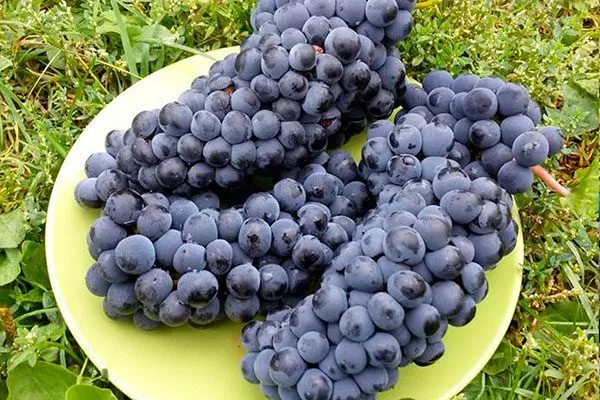
100 g of Taiga grapes contain:
- proteins - 0.8 g;
- carbohydrates - 15.4 g;
- fats - 0.6 g;
- sugar (fructose and glucose) - 14.5 g;
- fiber - 0.9 g;
- ash - 0.6 g;
- water - 83 g.
History of creation
Almost nothing is known about the origins of the Tayozhny grape variety. It is believed to be a native grape. It first appeared in Primorsky Krai and then spread to other regions.
Advantages and disadvantages
The Tayozhny grape variety is popular among Russian gardeners for good reason. It has many advantages and almost no disadvantages. It's a good idea to learn about these advantages before planting the seedlings; this will help you determine whether this variety is suitable for your needs.
Landing conditions
There are no special requirements or secrets for growing Tayozhny grapes, but there are some points that require special attention. First and foremost, it's essential to plant the seedlings correctly. The subsequent growth and development of the vine, as well as its yield, depend on how well this is done.
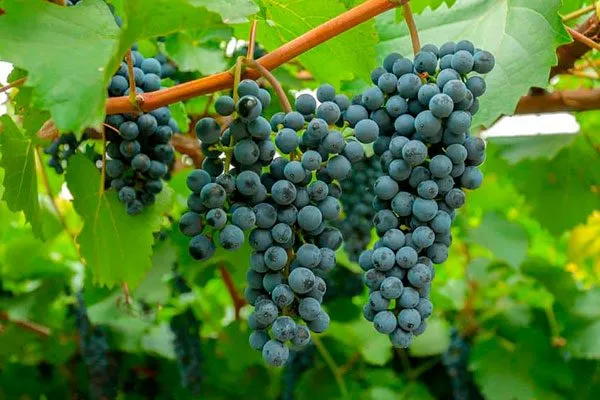
- ✓ The soil temperature should be at least +12°C for optimal rooting of seedlings.
- ✓ The distance between seedlings should be 1.5-2 m to provide sufficient space for the root system to grow.
Landing features
- When to plant. In the north and central regions, the Tayozhny variety is best planted in the spring, when the soil and air have warmed up to 12°C and 14°C, respectively. In the fall, grapes are planted primarily in the south of the country, where winters are mild and warm.
- Where to plant. Taiga grapes will grow best in a warm and sunny area, protected from strong winds and drafts.
- Neighbours. Several varieties with similar flowering times should be planted near the Tayozhny grapevine. This ensures good pollination and fruiting. A number of vegetables, including peppers, eggplants, cucumbers, and radishes, grow well near grapevines. It's important to ensure that the growing vines don't shade the planted crops.
- Selection of planting material. Seedlings should be purchased from nurseries or gardeners who have been growing this variety for many years. The seedlings should have well-developed roots, which should be the same length as the above-ground part. The vines should have at least 4-5 buds—this is a good point to check.
To determine whether the buds are viable, press them lightly. If they quickly return to their original shape, the seedling is ready to harvest. Grafted specimens are best, as they yield well and are resistant to phylloxera (small insects that attack grape roots). - Preparing seedlings. Before planting, the roots of the seedlings are soaked in water or a growth stimulator solution for 24 hours.
- Preparing the pit. For the Tayozhny grape, large holes are dug because of its long roots and vines. The recommended hole dimensions are 100 x 100 x 100 cm. Add 20 cm of river sand or crushed stone to the bottom, and 10 cm of wood shavings on top. Then lay down black plastic film to ensure the substrate is well-heated.
- Preparing the soil mixture. To fill the planting hole, prepare a mixture of humus (10 l), wood ash (1 l), and oats or wheat (0.25 l). Pour the mixture into a mound and cover with plastic wrap to warm it up.
- Landing. The day before, pour the prepared soil mixture into the hole. Make a hole in the center, approximately 30 cm deep, and plant the grape seedling. Cover the roots with soil, then water the grapes generously. Supports or trellises are installed near the seedling.
If several seedlings are being planted, maintain intervals of 1.5-2 m between them. When planting in large numbers, maintain a distance of 3 m between rows.
Care
To ensure good yields from the Tayozhny grape variety, it requires proper care. This variety isn't fussy, but it does require careful consideration for its challenging growing conditions—damp and cold climates, frosty winters, etc. If properly managed, the Tayozhny variety produces good yields even under the most adverse conditions.
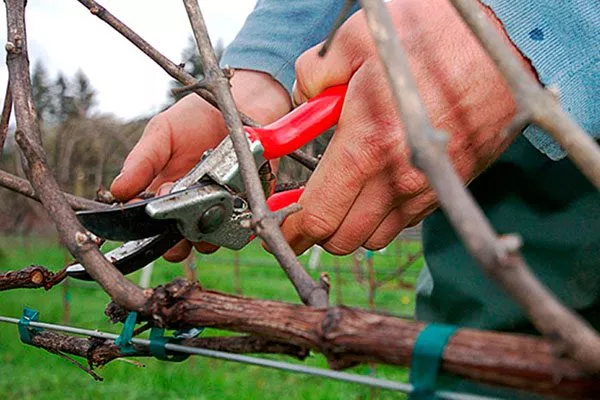
How to care for Taiga grapes:
- Watering. Immediately after planting, the grapevines are watered every other day until the cuttings take root. Reduce watering during rainy weather. From the second year onward, grapevines require less moisture; water the vines once a week during hot, dry weather. Mature grapevines can be watered only once a week, as overwatering is extremely harmful to this variety.
- Trimming. Pruning is carried out in spring and fall. In northern regions, bushes are pruned minimally before winter, removing only damaged and dry shoots to minimize stress from the procedure. In fall, it's best not to damage the vines, as pruning can cause frost damage. Pruning is only done if shelter is provided.
In spring, a thorough pruning is carried out to shape the bushes. Fruiting shoots are shortened by 4-5 buds. In summer, growing green shoots are regularly pruned. The variety requires moderate cultivation. Only 2-3 clusters are left on each shoot. - Fertilizer. Tayozhny grapes require only two fertilizing sessions per season. In the fall, it's recommended to add organic matter—rotted manure, compost, wood ash, or well-rotted manure. In the spring, mineral fertilizers are preferred.
For spring feeding, it is recommended to prepare a nutrient mixture by mixing superphosphate (20 g), potassium salt (5 g), and ammonium nitrate (10 g). This mixture is diluted in 10 liters of water and poured under the roots. - Shelter for the winter. In regions with harsh winters, providing shelter is essential. First, a base—boards, roofing felt, etc.—is laid on the ground. The vines are laid on top of this, secured with metal arches or tied together. Then, the vines are covered with a covering material, such as agrofibre, roofing felt, or tarpaulin, and then topped with soil.
Grapes overwinter most successfully under a layer of snow. As soon as sufficient snow falls, additional cover—snow—is applied. Using a shovel or other suitable tool, snow is raked onto the laid and covered vines.
Diseases and pests
Tayozhny grapes are virtually disease-free, with the only risk being mildew in the first year of life. However, this has virtually no effect on the growth of young seedlings or subsequent harvest quality. The acidity present in the grapes prevents the development of fungi that attack the fruit.
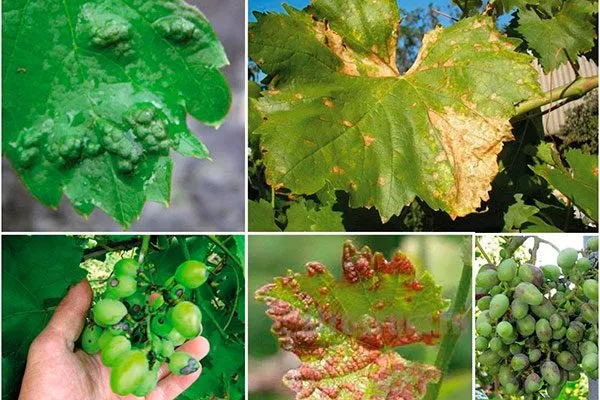
To prevent fungal infections, grapes are sprayed with Bordeaux mixture in early spring.
Under unfavorable circumstances and severe violations of agricultural practices, Taiga grapes may become infected with:
- Alternaria. Silvery spots appear on the leaves, and the stems crack. The disease is caused by high humidity and heat. Trichoderma Verde is used to combat the disease.
- Apolexia. It primarily affects older bushes, causing their wood to become rotten, dark, and wrinkled. The cause is damage to the vine. Rejuvenation pruning, which involves cutting off all old vines, is recommended. It's also important to use disinfected tools.
- Cercospora. It is accompanied by the appearance of a plaque, premature leaf drop, and fruit discoloration. Copper-containing preparations are used to combat the problem.
Harvesting
Bunches are cut in dry weather. There's no need to rush the harvest—ripe grapes don't fall off, the fruit doesn't rot, and they tolerate rain well. On the vine, the bunches can safely retain their marketable appearance and flavor right up until the frost.
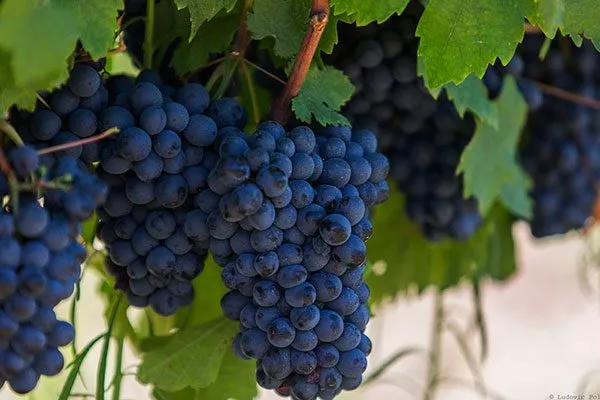
Taiga grapes are unlikely to be of interest to gardeners in southern regions, as they can grow virtually any variety available in the world today. However, they are in high demand in areas with harsh climates, where Taiga grapes are prized for their ability to survive and bear fruit in conditions unsuitable for other varieties.