
The Super Extra variety requires little care. It does have a tendency to overload its fruiting shoots, but this drawback is insignificant given its many characteristics. With timely and proper monitoring of the growth and development of the berry bushes, you can guarantee a high-quality and abundant grape harvest.
History of the variety's creation
Created by amateur breeder E. G. Pavlovsky by crossing two grape varieties: Talisman and Cardinal, it is characterized by its early ripening period and is ideal for growing in cool climates.
Description of the variety
It has characteristics that can lead to confusion with another hybrid known as Arcadia. However, if you taste the berries, you'll easily notice the differences in flavor.
Formation of bushes
Characterized by vigorous growth, its shoots range from light brown to bright green. The leaves are slightly dissected, five-lobed, and rich green.
Clusters and berries
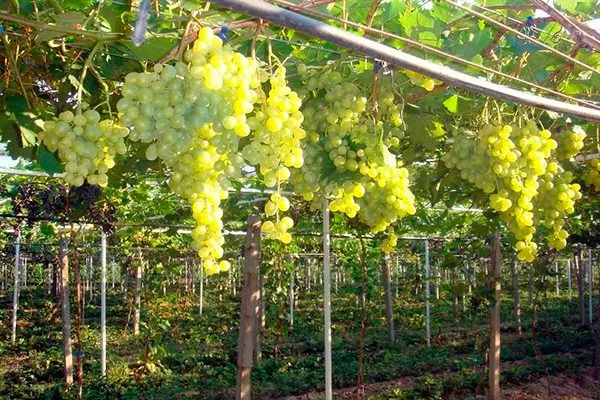
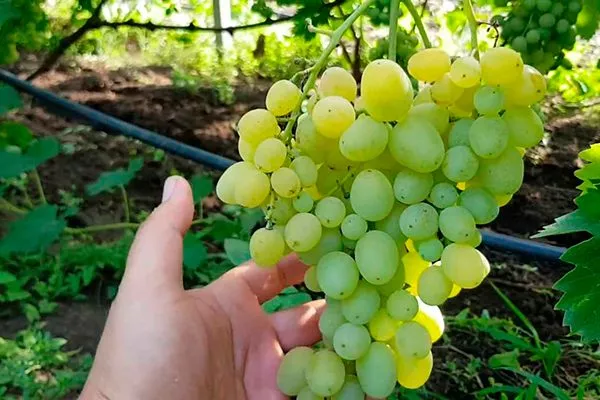
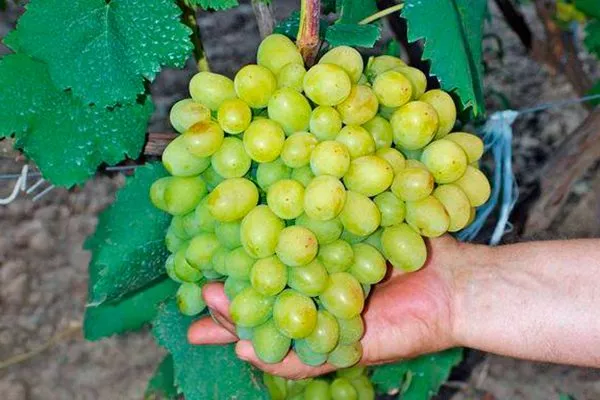
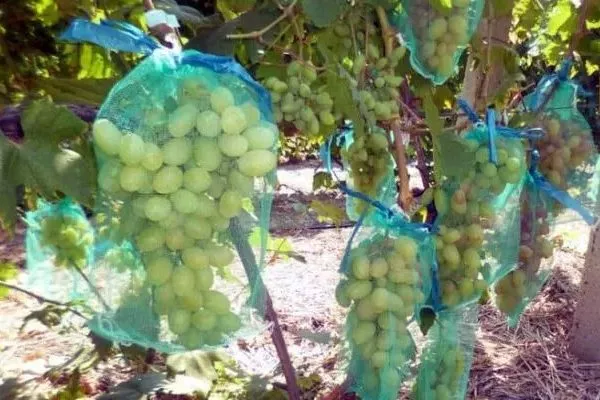
The clusters are slightly loose, reaching a weight of 400 to 900 g. Under favorable conditions, some bunches can reach 1.6 kg. The grapes are quite large, white, and turn yellow as they ripen. They have an elongated, ovoid shape and weigh approximately 9-14 g.
Taste
It has a sweet, harmonious flavor. Optimal flavor is achieved in late July and early August. The berries disintegrate easily in the mouth and have no pronounced aftertaste or strong aroma.
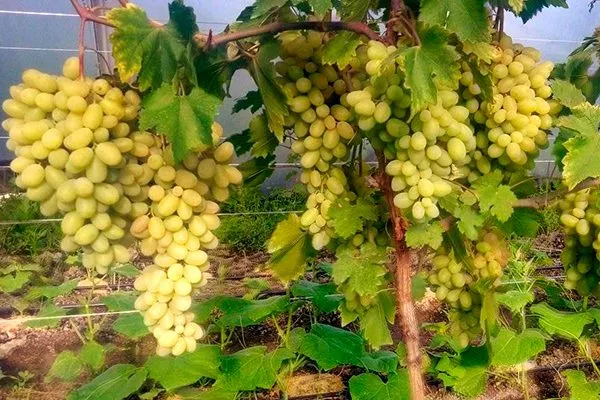
The pulp is fleshy, juicy, and sweet. Unripe fruits may have a slightly sour taste, and the thick skin can make chewing and swallowing the berries difficult.
Brief description
Super Extra has excellent characteristics, making it a popular choice for even novice winegrowers and eager to grow in their own plots.
Growing regions, winter hardiness
It has increased frost resistance. It tolerates temperatures down to -24°C, allowing residents of the southern and central regions of the country to grow it without the need for shelter during the cold season. It can even be successfully grown in northern regions, making it widespread throughout Russia.
Productivity and ripening time
It reaches maturity 90-105 days after flowering. It can be harvested as early as mid-July. Although the harvest is only once, it is impressive. A single vine can yield up to 25 kg. It only begins to bear fruit fully in the fourth year.
Drought resistance
It has good drought tolerance, making it ideal for growing in dry climates. It can survive for some time without additional irrigation thanks to its extensive root system, which extracts moisture from deep soil layers.
Pollination
It produces flowers of both sexes on its own shoots, making it self-pollinating. It doesn't require additional plantings for cross-pollination.
Application of fruits
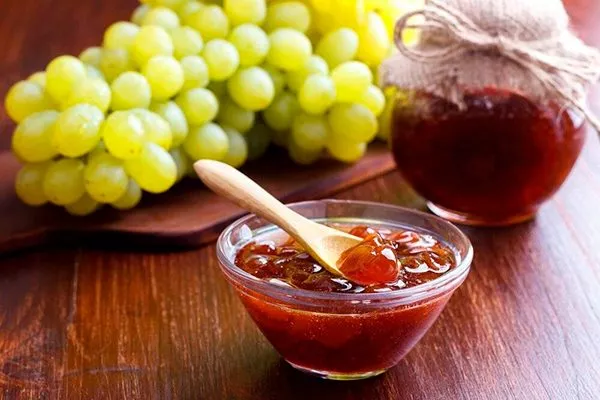
It is mostly grown for fresh consumption. Its pleasant flavor makes it a popular choice at grocery stores. It is also often grown commercially. It can be used for processing, making compotes, jams, preserves, and other delicacies. It is not suitable for winemaking.
Transportability
Its characteristics make it easy to transport. The fruits are resistant to damage and keep well after harvesting.
Disease resistance
Valued for its resistance to fungal diseases, it is less susceptible to attack by aphids and spider mites. There is a high risk of infection if bushes are planted in damp and poorly ventilated areas, which promote the growth of fungi and viruses.
Advantages and disadvantages
The main advantage is its early fruiting and early ripening. The plant is adaptable to various climatic conditions.
It has other positive characteristics:
How to plant?
For planting, choose the sunniest spot on the site. The groundwater level should be at least 1.5 meters below the surface. Avoid choosing a site in the shade of trees.
- ✓ The optimal soil acidity for the Super Extra variety should be within 6.0-7.0 pH.
- ✓ To prevent overloading of fruit shoots, it is recommended to leave no more than 20 buds per bush.
Growing recommendations:
- Maintain a distance of 2 to 2.5 m between bushes and rows.
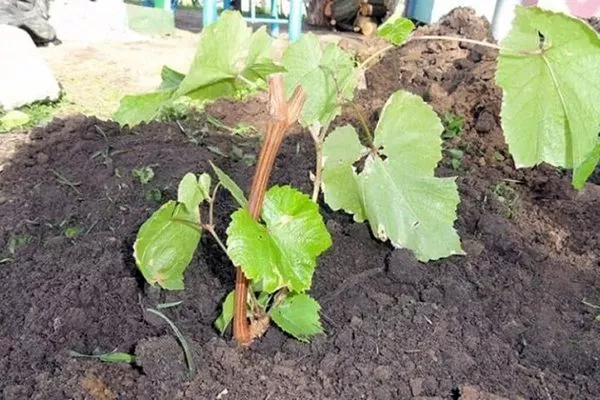
- For planting, prepare a nutrient mixture; the size of the planting hole is 60x60x60 cm.
- Place about 15 cm of nutrient mixture at the bottom of the hole, then sprinkle some black soil on top to avoid direct contact of the roots with the nutrient mixture.
- Place the seedling, placing the roots in different directions and covering them with soil.
- Sprinkle the roots with Vallar to protect against cockchafer larvae.
Fill the hole with soil to a depth of about 10-15 cm, but not completely, so the soil warms up and the seedling can root faster. Water the plant generously with warm water. Shade the seedling for the first two weeks.
Care
The crop doesn't require complex care, but to obtain a good harvest, it's important to adhere to certain growing conditions. Follow these agricultural recommendations:
- Watering. During the first month after planting, the vine requires regular watering once a week—approximately 30-40 liters of water per plant. After two months, reduce watering to twice every 14 days. To prevent weeds, mulch the area after watering. Use moss, wood shavings, or mulched straw. The mulch layer should not exceed 4 cm.
- Top dressing. Apply fertilizer early in the growing season using organic fertilizers. It's best to combine organic fertilizers with phosphate-containing fertilizers.
- Trimming. The bushes require regular pruning and crop control. Leave about 30 buds per plant and no more than 2-3 clusters per shoot. Pruning should be done every fall, removing damaged and dead vines.
- Preparing for winter. If winters in northern regions are harsh, cover the bushes with various materials, such as straw, agrofibre, or spruce branches, before the onset of winter. In the spring, after removing the covering, tie the shoots to the support.
Reproduction
New seedlings can be obtained from existing plants in the garden. There are several propagation methods that can increase their number:
- Seeds. This method does not guarantee the preservation of varietal properties and characteristics. More often than not, the seeds produce wild plants.
- Cuttings. In the spring, take cuttings from a mature plant: divide long, strong shoots into equal parts, each with 3-4 buds or leaves. Plant the cuttings in containers, then transfer them to individual holes in the fall.
- By layering. In early summer, select a strong lower shoot, bend it down to the ground, and cover it with soil, leaving the tip exposed. Water and feed the cutting throughout the season, and in the fall, transfer it to the hole to allow it to grow independently.
- Graft. By grafting a cutting onto an old rootstock, you can rejuvenate the grapes and obtain new, strong plants capable of bearing fruit.
| Method | Time until the first harvest | Preservation of varietal properties |
|---|---|---|
| Seeds | 5-7 years | No |
| Cuttings | 3-4 years | Yes |
| Layering | 3-4 years | Yes |
| Graft | 2-3 years | Yes |
Choose the most optimal propagation method for yourself to grow even more grapes on your plot.
Harvesting and storage
The ripening time depends on the region where the crop is grown. In southern regions, the harvest begins in early August, but the peak ripening period begins in mid-September. In the temperate climate of the central zone, harvesting occurs in early September.
After harvesting, grape clusters can be stored for a long time, preserving their flavor and attractive appearance. In specially equipped storage facilities, the shelf life reaches 2.5-3 months.
Reviews
One of the most popular grape varieties among amateur gardeners is Super Extra. This hybrid has gained popularity due to its early ripening, high yield, and excellent taste. Before planting, it's important to research the grape's characteristics and follow the growing and care recommendations.