
The Slava hybrid is considered one of the best early varieties. It boasts large, rich, and sweet berries, making it an excellent choice for both beginning gardeners and large commercial vineyards.
History of selection and authors
It was created by crossing various species, the names of which remain unknown. Ukrainian breeder Nikolai Pavlovich Vishnevetsky worked on its development.
Description of the variety
This variety is used for technical purposes. It has an alternative name, Pleros. It is popular with both novice and experienced gardeners.
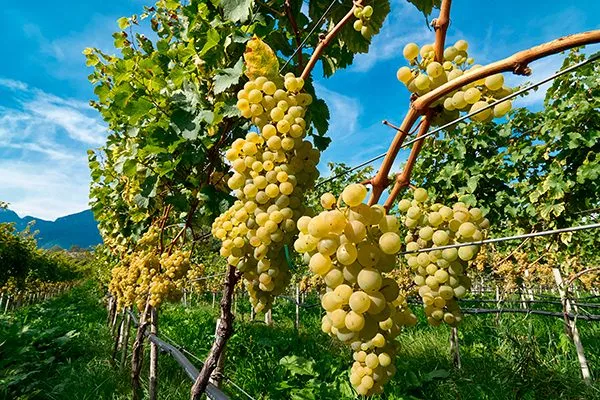
Bushes
A healthy, vigorous growing bush is covered with medium-density, rich green leaves. This promotes good air circulation and prevents disease.
Berries
They are oval in shape and white in color. Each grape weighs approximately 12 grams. They have soft skin, which gives them a pleasant flavor. They contain 2-4 seeds. The pulp has a fleshy texture.
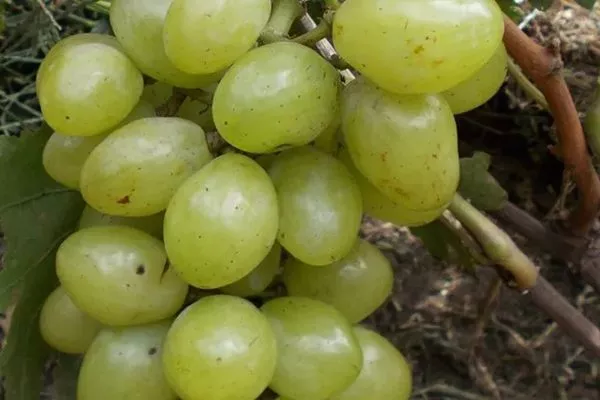
Clusters
They are characterized by a cylindrical-conical shape and moderate compactness. The weight of a single cluster varies from 500 g to 1.5 kg. Larger specimens are occasionally encountered.
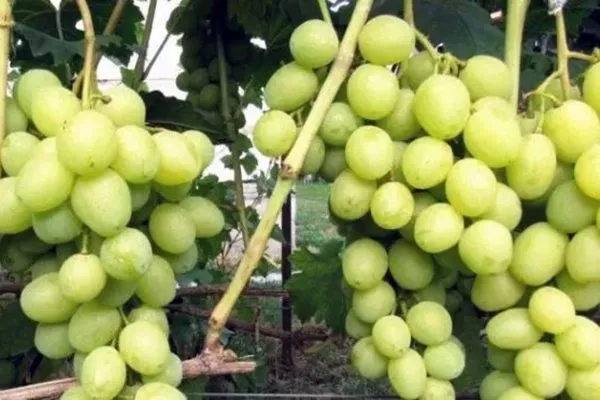
Taste
The berries have a rich flavor without any pronounced accents. Sweetness predominates, making the acidity almost imperceptible. Light hints of Muscat are noticeable. The variety is suitable for fresh consumption, compotes, and raisins. Some winemakers make homemade table wine.
Brief description
Slava grapes stand out not only for their excellent taste but also for their attractive appearance. The bushes grow vigorously upward, so understanding planting techniques and other nuances is crucial.
Drought resistance, frost resistance
It can tolerate temperatures down to -24°C, but requires additional protection to prevent roots from freezing. It is drought-intolerant. Insufficient watering can lead to root desiccation and, ultimately, death.
Resistance to diseases and pests
Experienced winegrowers highly rate the variety's resistance to diseases and pests. However, they recommend preventative measures to maintain plant health.
Pollination, flowering period and ripening time
Pollination is not required, as it produces flowers of both sexes. Ripening occurs relatively quickly: harvesting can begin as early as the first half of August. The vine reaches full maturity in 100 days.
Productivity and fruiting
It is known for its abundant fruiting. With proper care, a single bush can yield up to 20 kg of berries.
Chemical composition of berries
The caloric value of 100 grams of grapes is 60 kcal. The chemical composition is presented below:
- proteins: 0.70 g;
- fats: 0.16 g;
- carbohydrates: 18 g;
- Vitamin C: 10 mg;
- Vitamin A: 22 mcg;
- Folic acid: 2 mcg;
- potassium: 191 mg;
- calcium: 10 mg;
- phosphorus: 20 mg;
- iron: 0.36 mg;
- magnesium: 7 mg.
Advantages and disadvantages
It has numerous positive qualities. Before planting, it's important to consider the negative aspects of the variety. The Slava grape variety has the following advantages:
Landing
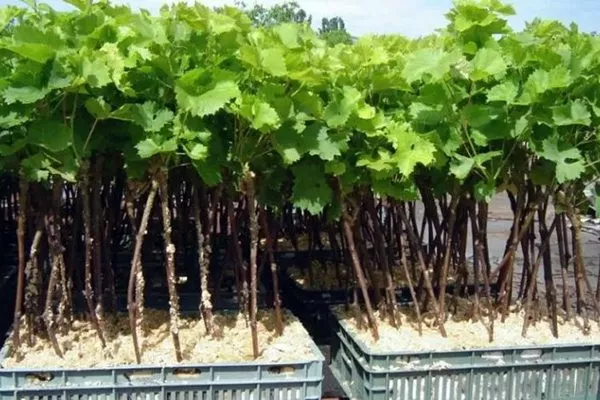
Grapes are most often propagated on rootstocks, but planting in the ground is also possible. If the root system is too dry, soak the seedling first. By following all planting and care guidelines, you can achieve a high yield:
- Planting dates. Autumn or spring. In spring, wait for consistently warm weather (+15°C). In autumn, plant no later than two weeks before the first frost, when the soil temperature is at least +10°C.
- Selecting a location. The site should be well-lit. Protect the north side with a fence from drafts and cold winds. Avoid placing large trees close to the site.
- Selection of planting material. Buy seedlings from reputable stores or experienced gardeners. Check the root system and avoid weak bushes with signs of disease. Trim off excess roots.
- Site preparation. Fertilize the soil before planting. Use ash, superphosphate, and sand.
- ✓ The seedling planting depth should be at least 50 cm to ensure stability and access to moisture.
- ✓ The distance between bushes should be 2-2.5 m to provide sufficient space for root growth and air circulation.
Growing and care
With proper care, the crop produces fruit well. The shrubs are easy to grow, but basic care is required to achieve excellent results:
- Watering. Provide regular care—every two weeks. Water should be sufficient to saturate the soil to a depth of 40-50 cm. Water young seedlings more frequently—once a week. A lack of moisture can lead to root death.
Do not water the crop during flowering and berry coloring to avoid loss of sugar content in the fruit. - Fertilizers. To ensure a bountiful harvest, fertilizing is required. Apply fertilizer three times a season at specific times: before flowering, after leaf formation, and before fruit set. Use organic fertilizers, adding manure to the soil to provide nutrition and oxygen to the root system.
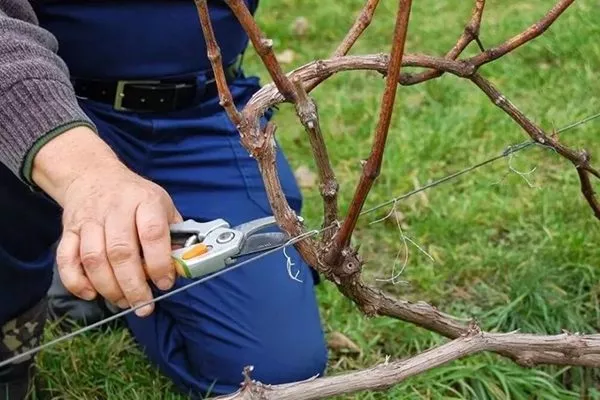
- Trimming. In the first year of fruiting, it's enough to keep just one cluster. In the second year, pay attention to the overall condition of the bush: if it's weak, again leave only a small number of clusters, while if the vine is actively growing and there's a risk of fattening, there should be 3-4 clusters per vertical shoot.
Pest and disease control
It has moderate resistance to mildew and oidium, requiring three preventative measures. The general treatment plan for the entire bush is universal and helps maintain the cleanliness of both the bunches and the vines:
- The first treatment is carried out when 4-5 leaves are formed on each shoot, using 1% Bordeaux mixture.
- The second treatment is carried out a few days before flowering. Use Ridomil Gold for mildew (25 g/10 l of water) and Falcon (5 ml/10 l) or Topaz (2 ml/10 l) for powdery mildew.
- The third treatment, repeating the second, is carried out at the pea stage.
Some rules and useful tips:
- If your grapes have been affected by spider mites or strawberry mites in previous seasons, add an acaricide to each treatment. Suitable products include Actellic, Sanmite, Omite, Nissoran, and Neoron.
- For treatments, use a tank mixture of preparations that are mixed in a sprayer before treatment.
- A month before harvest, suspend all treatments. During this period, you can either accept the presence of certain diseases or use safe remedies, such as pharmacy potassium iodide (2-3 g/10 l of water) or, in extreme cases, Horus, at intervals of 7-10 days.
Spider mites are easy to spot—pimples and fine webbing appear on the leaves. Powdery mildew causes a white powder to form on the leaves and berries. Mildew causes oily yellow spots on the leaves.
- ✓ Spider mites leave fine webbing and pimples on the leaves.
- ✓ Oidium appears as a white powder on leaves and berries.
Reproduction
To obtain several new grapevines, the simplest method is to use cuttings. This is especially convenient during autumn pruning, when a significant amount of material can be obtained.
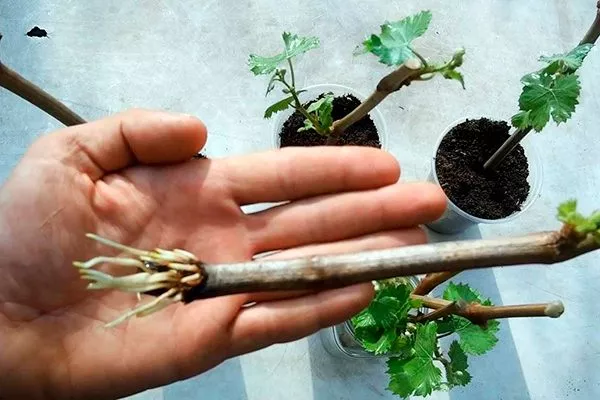
The process is quite simple: trim the cuttings to 3-4 buds, seal them in a bag, and then store them in the refrigerator or cellar. Root them in the spring.
If you need to get 1-2 new plants, use vegetative propagation. The procedure is simple: bury the shoot, keep the soil moist, and the vine will root successfully.
Reviews
Grapes are not only a beautiful addition to the garden but also a valuable plant, delighting with juicy and delicious bunches. Among the many varieties, the noble and popular Slava hybrid stands out. It's important to understand the growing, care, and characteristics of this grape to ensure a bountiful harvest.