
Shiraz is an ancient wine grape variety widely used to make red wines. In popularity rankings based on cultivated area, it ranks fourth, behind only Cabernet Sauvignon, Merlot, and Tempranillo.
The history of the Shiraz grape variety
The Shiraz grape is an old, time-tested variety. It is mentioned in manuscripts dating back to 1781, describing the vineyards of the French Hermitage Museum. There is no precise information about the origin of this variety, only speculation.
Many researchers believe that Shiraz originated in Iran, in the city of the same name. It is also suggested that this variety originated in Syria, as mentioned in Pliny the Elder's Natural History.
DNA testing revealed that Shiraz originated from a cross between the red Durez grape and the white Mondeuse Blanche grape. Scientists believe this occurred in southeastern France (Northern Rhône). The variety has many other names, including Seri, Hermitage, Servan Noir, and Entournerin.
Spreading
Shiraz, or Syrah, grapes are grown today on over 190,000 hectares worldwide. Plantations of this grape exist in France, Australia, New Zealand, South Africa, Italy, Spain, Russia, and Latin America.
Most Shiraz is grown in French vineyards, with approximately 64,000 hectares devoted to it. In France, Shiraz is second in popularity only to the famous Merlot and Grenache.
Australia ranks second, with 40,000 hectares devoted to Shiraz, and Spain ranks third, with this variety grown on 20,000 hectares.
Description of the variety
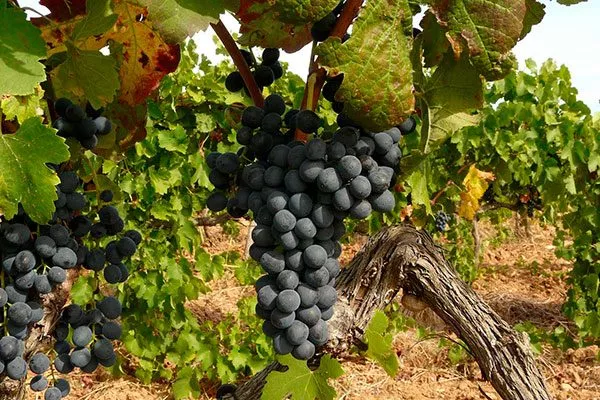
Shiraz grapevines are medium-sized, with medium-sized leaves, rounded, and 3- or 5-lobed. The leaf blades are glossy, bright green, slightly pubescent, moderately dissected, and have light veins. This variety produces bisexual flowers.
Clusters and fruits
The Shiraz grape variety produces small but dense clusters of conical-cylindrical shape. The average bunch weight is 15-150 g.
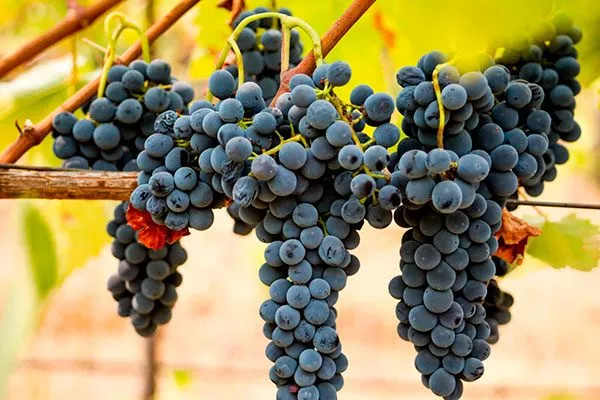
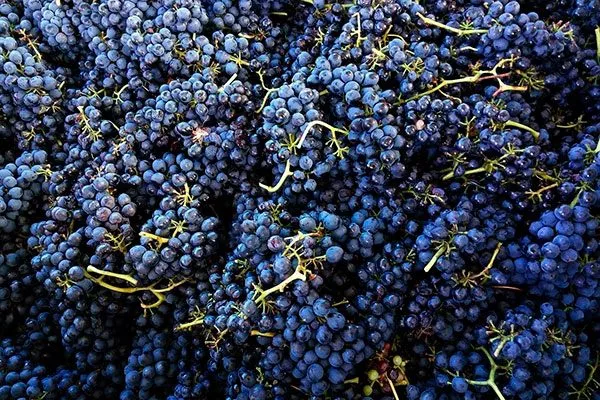
The berries are blue-black, medium-sized, oval-shaped, with a waxy coating and thick, tannin-rich skin. This skin is what gives Shiraz wines their dark color. The diameter of the berries is 1.2-2 g, and they weigh 1.3-2.3 g. The flesh inside the black berries is completely light-colored, with small seeds. The berries are juicy, with juice accounting for 75% of their total weight.
The taste of the fruit
Shiraz grapes have a harmonious, rich flavor. The aroma and aftertaste feature blackberry notes. The fruit is characterized by high sugar content—200 g/dm3. The acidity is 5.5–6.5 g/dm3.
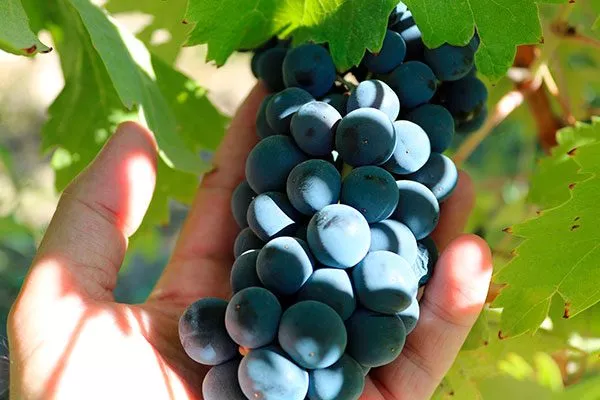
The flavor changes with the age of the vine. Young grapes have spicy, peppery notes. The flavor only improves with age. Shiraz vines bear fruit for over a hundred years, and the older they are, the more valuable their juice becomes.
Productivity and ripening time
Shiraz is currently grown exclusively for winemaking. Compared to modern winemaking varieties, this grape has a relatively low yield. A single vine produces 2 to 3 bunches. The fruit formation period averages 150 days.
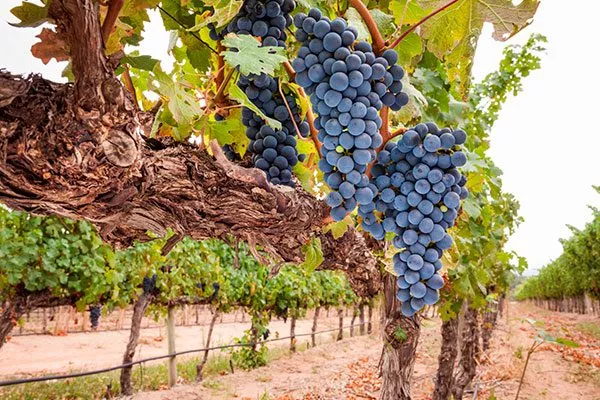
The variety has a mid-season ripening period, with the first bunches harvested in August. Under favorable conditions—stored in a cool, dark place—the grapes can be stored for 4-5 months.
Frost resistance
This variety has fairly good frost resistance, but it's not suitable for growing in temperate climates. The vine can withstand temperatures as low as -18°C. It also has satisfactory resistance to fungal diseases.
Pros and cons
Before planting a popular old variety in your garden, it's helpful to evaluate all its advantages and disadvantages. It's possible this grape isn't suited to your needs or your specific climate.
Features of cultivation
In order for Shiraz grapes to grow and develop well, and for their yield to match the stated target, it is necessary to create the most favorable conditions for the vines.
Growing features:
- For successful cultivation of Shiraz grapes, warm weather is required – the average daily temperature should be +17 °C.
- Any soil is suitable for growing, but the composition of the soil affects the flavor of the berries, and subsequently the wine made from them. This grape grows best in limestone-rich soils.
- Planting is recommended in warm, well-lit areas. In areas with high groundwater levels, drainage is necessary.
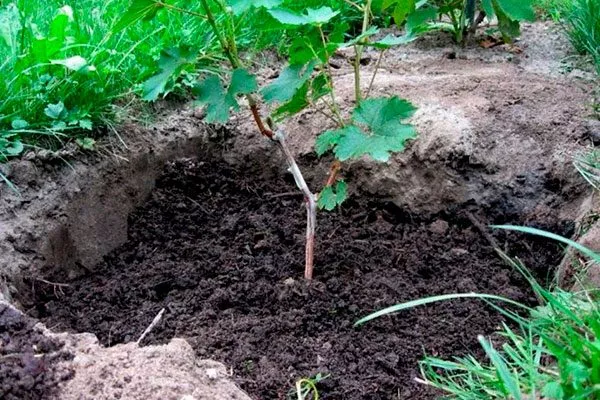
- Seedlings are planted in the spring or fall. Planting follows a standard pattern, adding organic fertilizers such as humus or compost, as well as potassium-containing compounds, to the planting holes.
Care
Shiraz grapes require a certain amount of care; without watering, fertilizing, pruning, and timely spraying, it is difficult to get a decent harvest.
- ✓ Watering frequency: once every 2 weeks, 40-50 liters per bush.
- ✓ The length of the shoots after pinching should not exceed 1.7 m.
Care features:
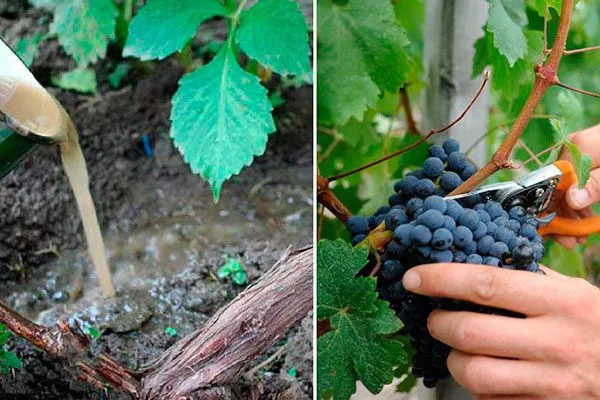
- The vines are fertilized several times during the season. First, in the spring, before bud swelling, then after flowering, and again after fruit set. After harvest, the vines are fertilized with diluted manure, pouring the solution under the roots.
- This variety loves warmth and doesn't tolerate frost well. It is recommended to cover it for the winter. The vines are laid on slatted structures and then covered with a suitable material, such as geotextile.
- Pruning is done before the buds swell. Frost-damaged, dry, and damaged vines are removed. In summer, the tips are pinched to prevent shoots from growing longer than 1.7 m. Vines are also pruned after harvesting, and a short pruning is performed for the winter.
- This variety loves moisture and does not tolerate soil moisture deficits. The average watering frequency is once every two weeks. The recommended watering rate is 40-50 liters per plant. Drip irrigation is the optimal method.
Diseases and pests
Shiraz grapes have reasonable resistance to fungal diseases, so under unfavorable conditions and poor agricultural practices, they can be attacked by various fungi. Preventative spraying during bud swelling and before and after flowering helps prevent this problem.
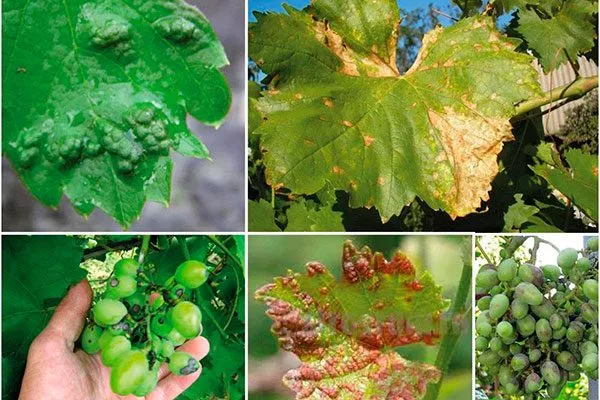
Most often, the variety is affected by chlorosis and gray mold, and the greatest danger of insect pests is spider mites, against which insectoacaricides are used.
For spraying, you can use copper sulfate, fungicides such as Silar and Bronex, and the biofungicide Trichoderma Veride. Insecticides such as Fitoverm, Aktara, and their equivalents are effective against pests.
Application and food pairings
Shiraz grapes are used to produce red and rosé wines with medium ripening periods. The resulting wines have a wide variety of flavors and aromas, depending on the growing region.
Shiraz wines are distinguished by their deep, rich color and excellent shelf-life. They rival Cabernet Sauvignon in flavor, color, and aroma, and even surpass it in tannin content and lack of transparency.
Shiraz wines have a powerful aromatic potential, revealing a wide range of notes – pepper, cream, spice, smoke, coffee, violet, sausage, tar, and fruit.
French Shiraz wines pair best with game, duck, mushrooms, vegetable stews, pasta, and veal. Australian Shiraz pairs well with kebabs and burgers. High-alcohol wines pair best with beef, lamb, and other grilled meats.
The ancient Shiraz grape will appeal to lovers of red and rosé wines. It's less suitable for fresh consumption, though it has a pleasant, balanced flavor. The main difficulty in growing this grape is its heat-loving nature, so it's best grown in the southern regions of the country.