
Shine Muscat, native to Japanese vineyards, quickly gained popularity thanks to its early ripening, aromatic flavor, and large berries. Reliable and abundant harvests are possible with timely and proper care. Let's look at the characteristics of this grape and care tips.
The History of Shine Muscat Grapes
This green, seedless variety was developed in Japan in the late 1980s and introduced to the global market in the early 2000s. Created in Hiroshima Prefecture by crossing Akitsu-21 and Hakunan, it is widely distributed in China and is available at a variety of retail outlets, from online stores and traditional supermarkets to fruit stands and food markets.
The area allocated for planting in China exceeds 33,000 hectares, accounting for approximately 10% of the country's total planted area. In 2018 alone, over 2 million seedlings were sold, successfully grown in key regions of the country and available for purchase virtually year-round.
What characteristics distinguish this variety?
In terms of climate, the variety is partially cold-hardy and requires winter shelter in our climate. It retains its characteristic berry color even in hot summer weather. In colder regions, greenhouse cultivation is possible, ensuring an early harvest. Gibberellin is used to produce seedless fruits.
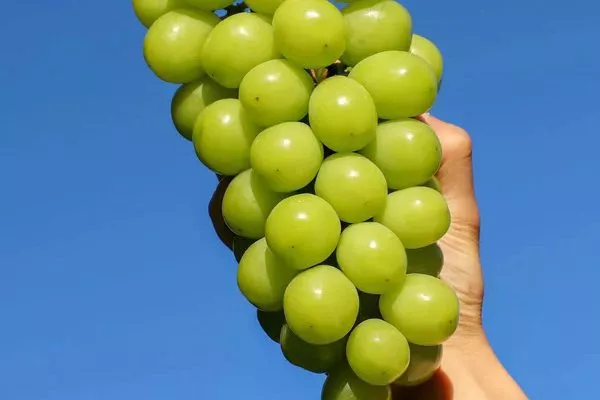
After harvesting, thanks to cold storage, the produce can be sold until mid-January. To obtain high-quality bunches, certain cultivation techniques are required, including thinning with scissors, which increases fruit size by up to 40%.
Description
This table variety is distinguished by its attractive appearance and low maintenance. Many gardeners choose it for growing in their plots due to its large berries and excellent characteristics.
Ripening period
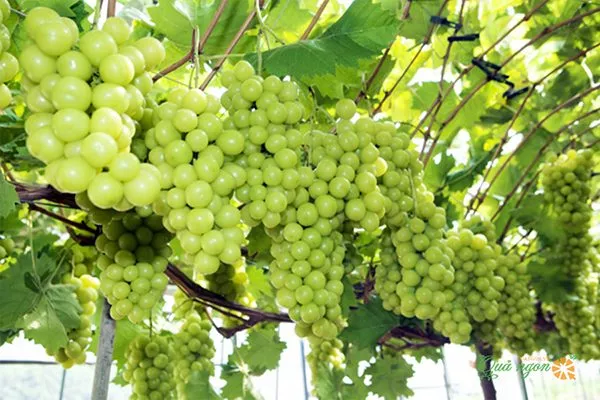
Classified as a mid-early variety, it takes 130-140 days from flowering to full fruit ripening. It stands out as one of the fastest-ripening varieties.
Berries
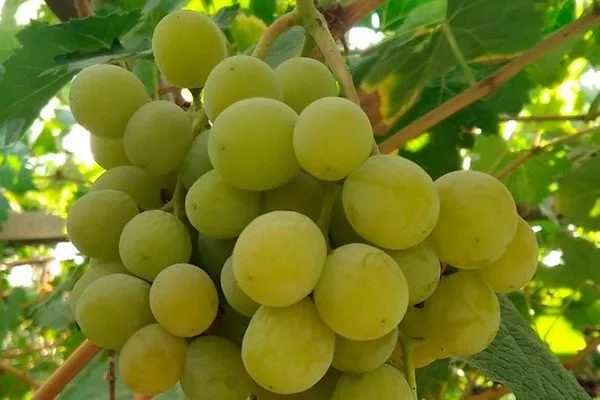
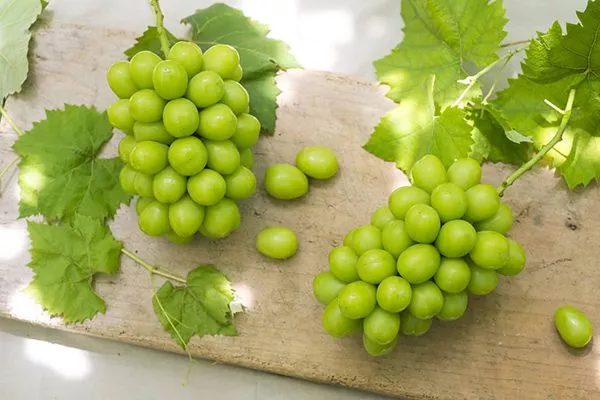
Its main characteristic is its unique fruits. They are oval in shape and substantial in size, weighing between 10 and 12 grams each. The skin is tough, making it resistant to damage during transportation. The skin color can vary from green to greenish-yellow.
Taste
One of the main advantages is considered to be the aromatic, sweet taste. It is characterized by pronounced muscat notes, which impart a rich, full-bodied flavor. Sugar content is approximately 20 g/100 cu. dm, and acidity ranges from 3-4 g/cu. dm.
- ✓ The optimal temperature for the growth and development of Shine Muscat grapes is 25-30°C during the day and not lower than 15°C at night.
- ✓ To achieve maximum berry size, it is necessary to provide the plant with potassium and phosphorus in a ratio of 3:2 during cluster formation.
Features of cultivation
Growing this crop requires no experience or special skills. Even novice gardeners who have never planted anything before can handle the process.
Selection of planting material
Purchase seedlings from reputable suppliers. Avoid purchasing plants with signs of disease or damage. Seedlings are most often offered with bare or closed root systems. The choice depends on the time of year and your preferences. Young seedlings take root better, but mature ones may produce a harvest faster.
Planting and care features
Choose a sunny, wind-protected area. The soil should be well-drained. Clear the area of weeds and rocks. Loosen the soil to a depth of about 40 cm and amend it with organic fertilizer. Space the seedlings 2-3 m apart. Leave the same distance between rows.

Dig holes about 50 cm deep and wide. Fill them with a mixture of soil and compost. Spread the seedling's roots in the hole and cover them with soil. Attach the seedling to the support and water thoroughly.
Care involves the implementation of agricultural measures:
- Fertilizers. Apply fertilizer at the beginning of the growing season and in midsummer. Use organic and mineral fertilizers.
- Trimming. Perform formative pruning in the spring to control growth. Remove excess shoots and maintain a certain number of buds.
- Protection from diseases and pests. Regularly inspect the plant for signs of disease and pests. Apply protective measures as needed.
- Shelter for the winter. In cold regions, cover the plant for the winter to prevent the root system from freezing. Use dried leaves.
- Stop watering a month before the onset of persistent frost to slow down the growth of shoots.
- After the leaves have fallen, carry out sanitary pruning, removing all immature shoots.
- Insulate the root zone with a 10-15 cm layer of mulch made from dry leaves or straw.
Follow these planting and care guidelines to create conditions for healthy growth and a bountiful harvest.
Irrigation schemes
Maintain a regular watering regimen, especially during the active growth periods of spring and summer. Insufficient moisture can affect cluster formation and crop quality. Monitor soil moisture, especially in the top layer. If it dries out, this may signal the need for further watering.
Thinning the bunch as a key to quality
Thinning grape clusters is not only a technical procedure but also an art of balancing the quantity and quality of the harvest. Removing some berries allows the remaining fruit to develop more fully, producing large, tasty bunches.
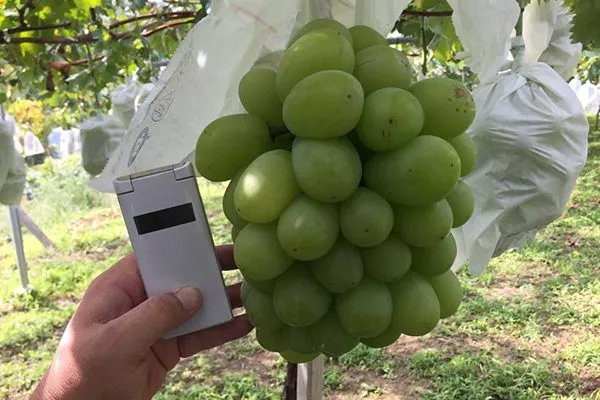
Step-by-step instructions:
- Carry out the procedure in the spring, when the clusters are just beginning to form. Select healthy, strong plants for thinning. Remove weak, diseased, or damaged branches.
- The goal of thinning is to achieve optimal plant load to improve fruit quality. Only those clusters that have sufficient space and resources for full development should be retained.
- Leave large, mature clusters, removing small or unevenly developing ones. Ensure there is sufficient space between the remaining clusters to ensure good ventilation and prevent disease.
- If necessary, remove extra branches that may compete for nutrients with the main clusters.
Shine Muscat is an exceptional experience for gourmets and connoisseurs of fine grapes. Its combination of early ripening and large, aromatic berries makes it a true gem among grape varieties.