
Chardonnay is a wine grape variety known to farmers as early as the Middle Ages. This popular variety has remained popular for hundreds of years and is widely used in white winemaking.
History of origin
Chardonnay is intended for processing and is one of the most widely grown grape varieties in the world. Its history goes back centuries and is quite controversial. Another popular name is White Burgundy. The variety has many varieties and clones.
There's no definitive evidence regarding Chardonnay's origins. Some say it was brought to Europe by Crusaders from Lebanon, while others believe the famous variety was developed by French monks. Experts, however, suggest that Chardonnay was a cross between Pyrot Noir and Gouais Blanc.
Description
Chardonnay grapes grow in spreading vines with numerous shoots. The plants are vigorous, with some specimens reaching up to 5 meters in length.
Brief description:
- EscapesOne-year-old vines have a greenish tint; by the second season they acquire a brown color.
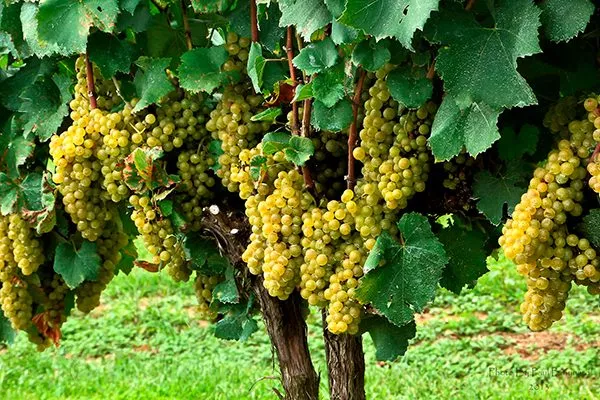
- Leaves. They are wrinkled, with five rounded lobes and serrated edges. Young foliage is light green with a silvery tint, later taking on a yellowish hue, and in autumn, the bushes turn lemon yellow.
- Flowers. Bisexual.
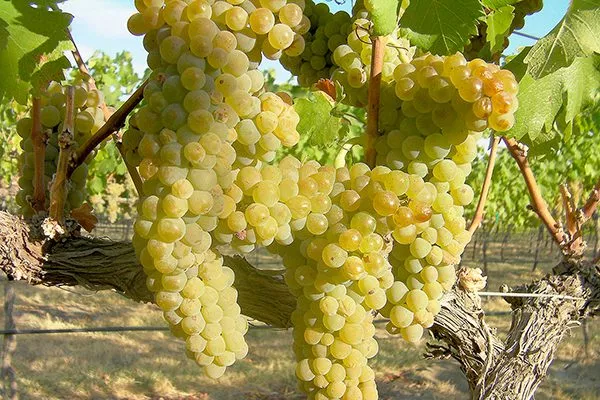
- ClustersThey are quite compact, almost square, with a medium density of berries. The clusters average 11 cm in length and 10 cm in width. The cluster shape is conical-cylindrical.
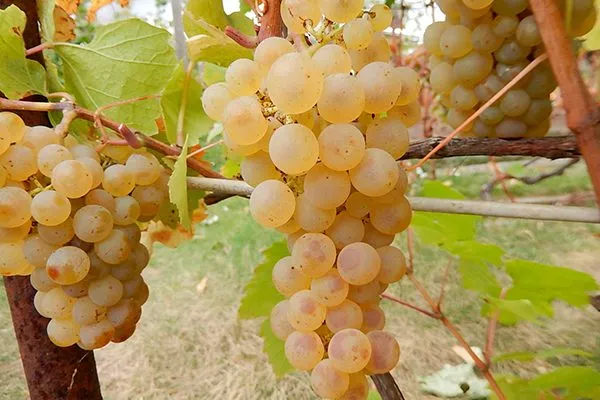
- Berries. They are round and greenish-white in color. The skin is covered with a thin waxy coating. In the sun, the greenish fruits acquire a golden hue. They have a thin, strong skin, and inside are several (2-3) seeds that easily separate from the juicy pulp. The berries are 15-16 mm in diameter and weigh up to 4 g.
Characteristics
The early-ripening Chardonnay grape has fairly good, though not ideal, characteristics. It is recommended to plant this variety in regions that optimally suit its growing conditions.
Characteristics of the Chardonnay variety:
- Productivity. Only 40% of the shoots produce fruit. Up to three clusters grow on a single shoot.
- Frost resistance. It can withstand temperatures down to -20°C. In temperate latitudes, where winters are harsh, the plant requires shelter.
- Drought resistance. Not tall.
- Ripening periods. In the southern regions, bunches ripen in late August or early September. The growing season lasts approximately 140 days.
Taste and aroma of fruits
Chardonnay grapes have a pleasant, slightly sweet flavor and an equally interesting aroma. Ripe berries exude stunning citrus and floral notes, revealing aromatic notes of orange, lemon, pineapple, melon, nut, and spring flowers.
Composition and beneficial properties of fruits
Chardonnay, although a wine grape, boasts a unique composition of beneficial components. It is rich in vitamins A, C, and K, iron, and potassium. It also contains melatonin, glycolic acid, and phenolic compounds.
The unique composition makes Chardonnay grapes very beneficial for the body, they:
- have a beneficial effect on the functioning of the heart, lymph, gastrointestinal tract and nervous system;
- thins the blood and increases the production of red blood cells.
The acidity of the berries ranges from 8.2 to 11.6 g/l. Sugar content is 180-229 g/dm³. Caloric content of fresh berries: 60.33 kcal per 100 g.
Growing regions
Chardonnay is considered to have originated in France, specifically its historical provinces of Burgundy and Champagne. Today, the Chardonnay grape is found throughout almost the entire world. This heat-loving grape grows in Europe, Asia, North and South America, Australia, and South Africa.
Chardonnay is grown primarily in its historical homeland, France. Chardonnay vineyards can also be found in Northern Italy and several other European countries, and the variety is also grown in California (USA).
Growing conditions greatly influence the quality of the fruit, and subsequently the wine. Expert tasters can easily distinguish between Chardonnay wines grown in hot Burgundy and cooler Champagne.
Pros and cons
Chardonnay's long history in winemaking is the best testimony to its unique qualities and virtues. They are so profound that winegrowers and winemakers are willing to accept all of this variety's shortcomings, though they are not insignificant.
Landing features
Chardonnay grapes thrive in sunny locations. To ensure a good harvest and tasty, sugary fruit, they require plenty of light. Shaded areas are absolutely unsuitable. The best solution is a south-facing garden or a slope. Ideally, the soil should be rich in humus; Chardonnay will not be able to fully demonstrate its varietal potential in poor soils.
- ✓ Soil pH should be between 6.0-7.5 for optimal nutrient absorption.
- ✓ The depth of groundwater is at least 1.5 m to prevent root rot.
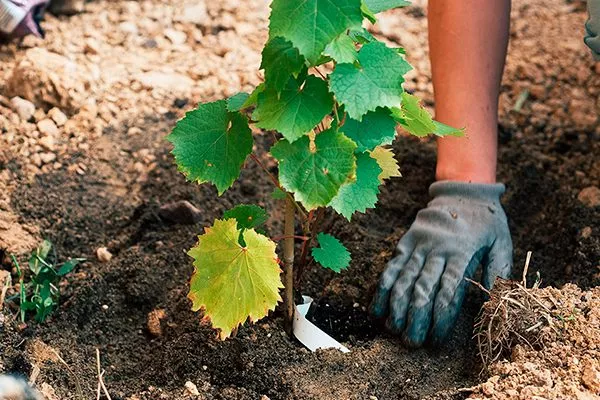
Maintain a certain distance between adjacent seedlings to prevent them from interfering with each other. The optimal planting pattern for Chardonnay bushes is 3 x 1.00–1.5 m.
In southern regions, excessively dense planting prevents the tree from receiving the required amount of sunlight, but in regions with a cool climate, dense planting, on the contrary, is welcomed.
Care
Chardonnay grapes are considered easy to grow and don't require much care. Much more important are suitable growing conditions and climate. This Western European variety thrives in mild, warm climates, but it doesn't tolerate heat well, so the main thing to pay attention to is watering.
Features of Chardonnay grape care:
- Watering. This variety requires moderate watering. Drought negatively impacts the grapevines, reducing their growth and fruiting. Mature plants should be watered every two weeks, young ones once a week. It is recommended to water with water warmed to ambient temperature. The recommended watering rate is 20 liters per plant.
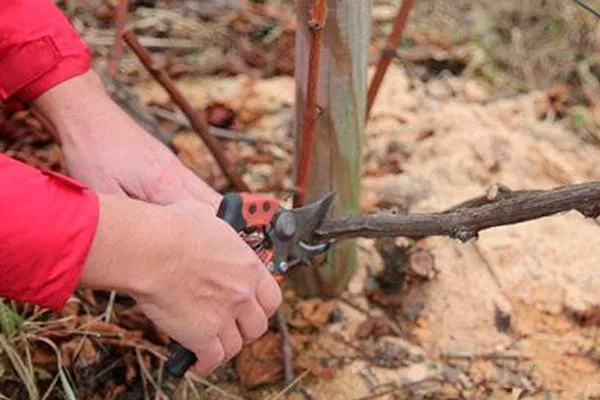
The frequency of watering depends on weather conditions. If it rains, water the grapes less frequently and with less intensity. When the berries begin to ripen, watering is temporarily stopped. Then it is resumed and continued until the end of November. - Trimming. Like any wine grape, Chardonnay requires careful vine training. When pruning, growers retain no more than 80% of the fruiting canes, as excessive strain reduces the quality and quantity of the harvest. Five to seven buds are retained per cane, which are then used to form clusters. The vines are trained on a 1-1.2 m tall stem, with green shoots hanging freely.
To ensure the necessary amount of light and air for the ripening fruit, the bushes are pruned in a standard fan pattern. In summer, the crowns are also carefully thinned—this procedure promotes ripening of the bunches. - Mulching. It provides grape vines with more comfortable growing conditions, protecting the soil from excessive drying out. This procedure is carried out in early spring or a week after planting the cuttings. The following can be used as mulch:
- sawdust;
- straw;
- mown grass;
- coconut bark;
- polymer fiber.
- Top dressing. In spring, grapes can be fed with an aqueous solution of mullein or chicken manure; during flowering and fruit setting, with potassium and phosphorus fertilizers; after harvest, with organic or mineral complex compounds.
- Shelter for the winter. In southern regions, Chardonnay doesn't require covering. In all other regions, mulching is essential, for example, with a thick layer of straw. The shoots are also bent to the ground, covered with leaves, and then covered with agrofibre and plastic film. The material is pressed firmly around the perimeter. The covering is removed in mid-April.
- Loosening. Every 1-2 weeks, loosen the soil around the plants to ensure adequate air circulation in the root system. This procedure is carried out with extreme care to avoid damaging the roots and trunk. It's best to loosen moist soil, as this allows it to absorb water and oxygen more quickly.
Pests and diseases
Under unfavorable growing conditions and if agricultural practices are not followed, the Chardonnay variety can be susceptible to diseases, most commonly mildew and oidium. Chardonnay has moderate resistance to these diseases.
- ✓ The appearance of oily spots on the upper side of the leaves with white fluff underneath.
- ✓ Rapid spread of the disease in conditions of high humidity and temperatures of +20°C to +25°C.
The variety doesn't tolerate rain well; if it occurs during the ripening stage, the berries begin to rot. Flower and ovary drop isn't necessarily due to disease; it can be caused by windy, cold, or rainy weather in early summer.
Chardonnay grapes can also be affected by:
- anthracnose;
- chlorosis;
- bacteriosis;
- rubella;
- bacterial cancer.
Timely preventative spraying with fungicidal preparations, such as Aerophos, Topaz, Topsin, Horus, etc., helps prevent the occurrence of these and other diseases.
Chardonnay can be susceptible to aphids, spider mites, and scale insects. When these insects appear, leaves dry out, curl, and fall off, and spots and damage appear on leaves and shoots. Powerful insecticides, such as Bitoxybacillin, Ortus, Apollo, Demitan, and others, can help control these pests.
Harvesting
Harvesting is carried out with careful consideration of the berry's taste and ripeness—these parameters directly influence the wine's flavor. Winemakers begin tasting the fruit early, checking its sugar and acid content to ensure the grapes are picked early and not missed.
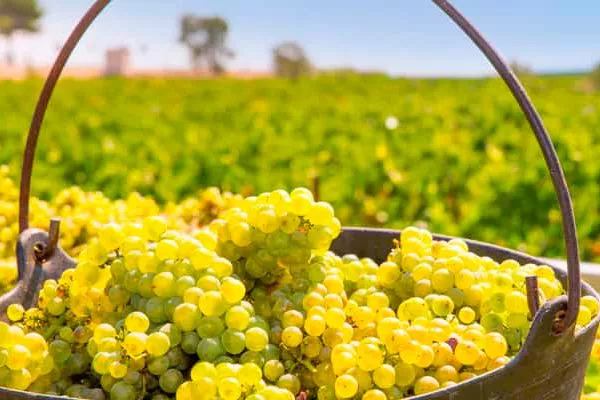
Harvesting must be done in bright sunshine; rain during the harvest is wine's worst enemy. In southern Russia, Chardonnay harvesting begins in early to mid-September. If it's delayed, the berries begin to mold and/or fall off, losing their shape and becoming cracked.
Application
The juice pressed from Chardonnay grapes is used to produce white wines of varying strengths, both sparkling and regular, with a variety of flavors. Chardonnay is one of the three grape varieties used to make true French champagne. Overripe berries acquire a slight sweetness and are not used for winemaking.
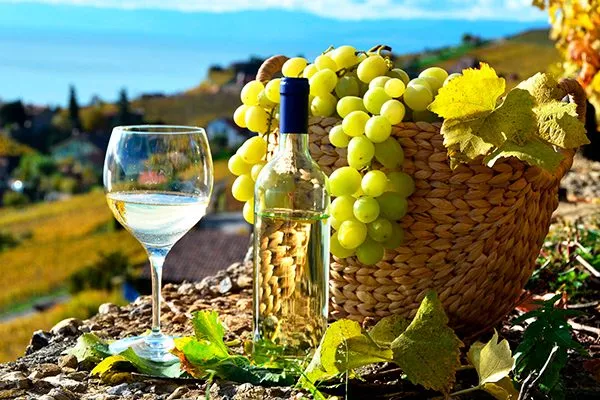
Chardonnay produces high-quality white table wine with fruity aromas of apple, lemon, and citrus. Aging in oak barrels imparts vanilla, smoky, and oaky notes to the wines. This French grape is also widely used to enhance the quality of Champagne base wines.
Chardonnay is an old, proven variety that needs little introduction. It's relatively easy to grow and reliable, but it does require proper care and favorable growing conditions—these are crucial to the quality of the future wine.