
Sangiovese grapes are a popular Italian variety widely used in winemaking. This grape is prized for its distinctive berry aroma, which gives its wines a unique flavor. The variety is relatively easy to grow, making it suitable for any gardener with basic grapevine care skills.
History of creation
The Sangiovese grape has been known since the 16th century. It is believed that early prototypes of Sangiovese may have appeared as early as 900 BC. However, the first mention of it dates back to 1590. Even then, it was established that this variety is ideal for blending.
A genetic analysis conducted at the Italian Agricultural Institute of San Michele all'Adige revealed that the ancestors of the Sangiovese grape are the ancient Ciliegiolo and Calabrese Montenuovo varieties. The former is an ancient Tuscan grape, while the latter is an extinct variety from the Italian wine region of Calabria.
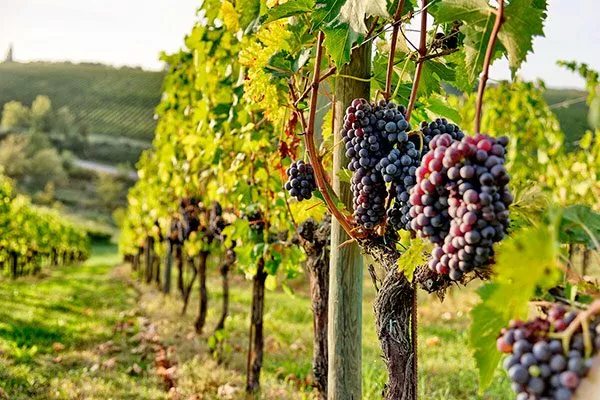
This red grape gets its pompous name from the Latin Sanguis Jovis ("blood of Jupiter"). There are 14 officially recognized varieties of Sangiovese, the most famous of which are Brunello, Cassano, Calabrese, Chiantino, and Liliano.
Spreading
The Sangiovese grape is widespread throughout Italy, especially in Tuscany, but also grows in Sicily, Campania, Lazio, and Emilia-Romagna. The variety is also widely grown in France, Australia, and Argentina.
- ✓ High drought resistance due to deep root system.
- ✓ Tendency to grow quickly, requiring regular pruning to form a bush.
Description and characteristics
Sangiovese grapevines tend to grow quickly and vigorously. This variety's leaves are medium-sized, deeply dissected, with 3-5 lobes. They have a slight, bristly pubescence.
Clusters
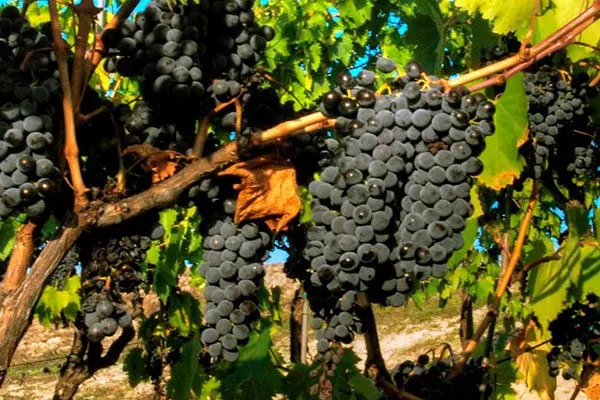
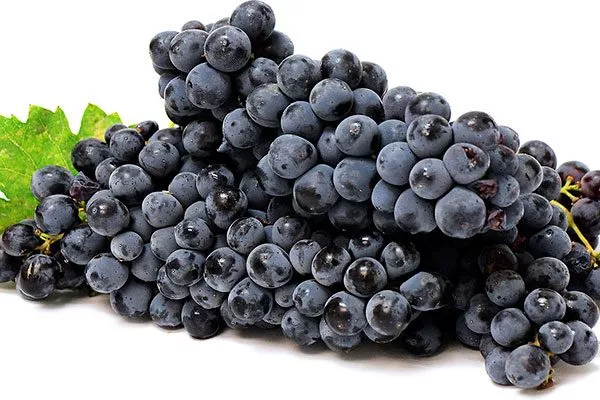
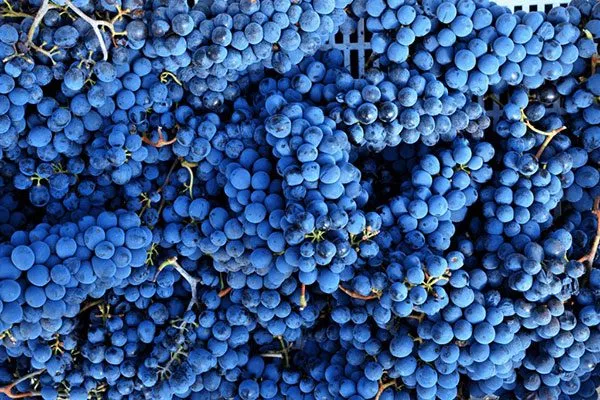
Sangiovese grapes produce dense, conical clusters that transition from cylindrical to conical. They are medium-sized, but very large clusters can also occur. The clusters often have wings. The average weight is 250 g.
Berries
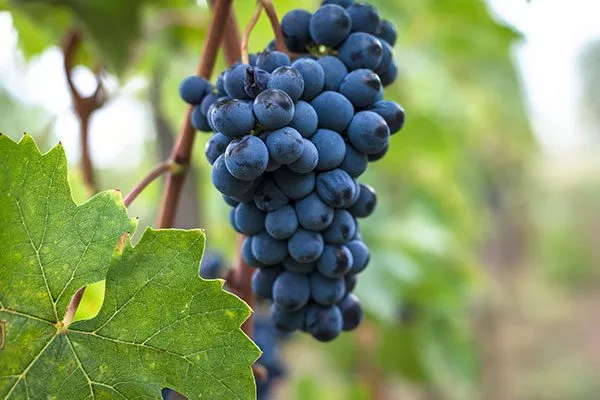
Sangiovese grapes are sweet, deep black, dark blue, or vibrant purple. The hue is determined by growing conditions, and the berries can vary in color from region to region. The fruit is round, medium-sized, and thin-skinned. The berries have a pleasant, rich flavor that fully develops during fermentation.
Ripening time and yield
The Sangiovese variety has a mid-season ripening period. Its bisexuality positively impacts yield. The average yield is 104 centners per 2 hectares.
Harvesting
The bunches are cut immediately after ripening, otherwise the berries will begin to fall off. The berries are processed immediately after harvesting, as they spoil very quickly.
Pros and cons
The Sangiovese variety has been known to people for a long time, its popularity is due to both its excellent consumer qualities and other advantages that this grape has.
Landing features
Successful Sangiovese grape growing depends largely on proper planting. When planting this variety, it's important to pay attention to the planting site, proximity, quality of the planting material, and other nuances.
- ✓ The seedling planting depth should be at least 50 cm to ensure stability and access to moisture.
- ✓ The distance between seedlings should be at least 2.5 m to ensure sufficient space for root system growth.
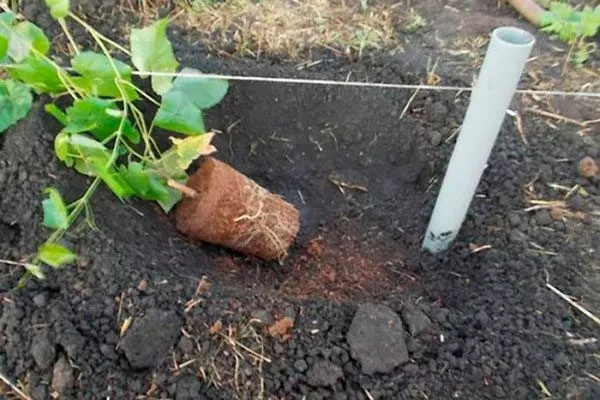
Features of planting Sangiovese grapes:
- Selecting a landing site. It requires warm, sunny sites protected from winds. It's recommended to plant this variety near fences, which will save time and effort on providing supports. A high elevation is ideal, as this will protect the plant roots from meltwater. This variety grows well in any soil, but prefers black soil and loamy soils.
- Planting dates. The variety is heat-loving, so it's usually planted in the spring to avoid exposing young seedlings to harsh winter temperatures. Grapes are typically planted in the fall, typically in southern regions. Planting occurs around the end of September. The remaining time before frost allows the seedlings time to establish, root, and adapt to their new location.
- Neighborhood. Sangiovese grows well alongside any other grape variety. The key is to maintain proper spacing—at least 2 meters from neighboring crops.
- Selection of planting material. Seedlings should be purchased from nurseries, where they are treated with special fungicides and insecticides. They should have leaves and well-developed buds. The roots should be light brown, without dry or rotten shoots. If cuttings are taken at home, they need to be prepared for planting:
- remove damaged areas of roots;
- treat the roots with a solution of Epin or Kornevin.
- Site preparation. It is recommended to add at least 10 liters of humus per 1 sq.m. during digging.
- Preparing the pit. The recommended depth is 50 cm. Place a drainage layer of broken brick or expanded clay at the bottom. Top with a soil mixture of black soil and humus (2:1) with the addition of superphosphate (30 g).
- Landing produced using standard technology.
Care
Caring for Sangiovese grapes is not difficult. Simply follow standard agricultural practices, tailored to the specific needs of the particular variety.
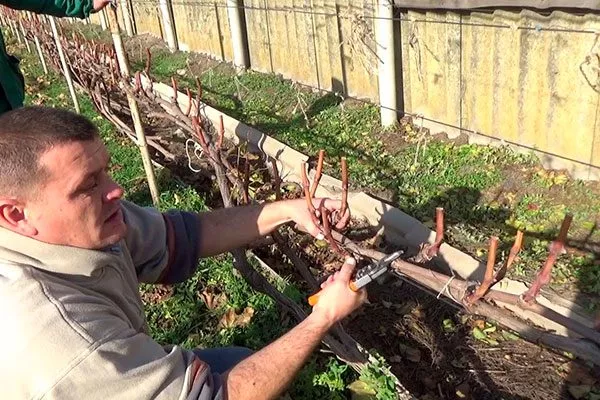
Care features:
- Watering Watering is carried out every 5-6 days. It is important not to allow the soil to dry out. In the fall, water the bushes half as often. Stop watering completely two weeks before the first frost. In the summer, misting with warm water is recommended. This is done in the evenings, after sunset.
- Top dressing Fertilization begins in the third year after planting. Fertilizers are then applied according to a set schedule: nitrogen is given to the bushes in early spring, a complex fertilizer is applied after flowering, potassium-phosphorus compounds are applied in the summer, and organic matter is applied in the fall, after the harvest.
- Trimming This is carried out starting in the third year after planting. Lateral shoots are removed, leaving three skeletal branches to form the bush. Bushes are pruned in the spring, shortening the lateral shoots to two or three buds. The skeletal branches are left alone.
- Towards winter The grapes are harvested starting in late September. The root zone is covered with humus, the vines are laid down, and covered with a suitable material (agrofibre, roofing felt, etc.).
Diseases and pests
To prevent Sangiovese grapes from being attacked by pests and fungal diseases, it's important to carry out preventative treatments on time. Sprays applied in early spring protect the plants throughout the season.
If agricultural practices are not followed and weather conditions are unfavorable, the variety may be affected by:
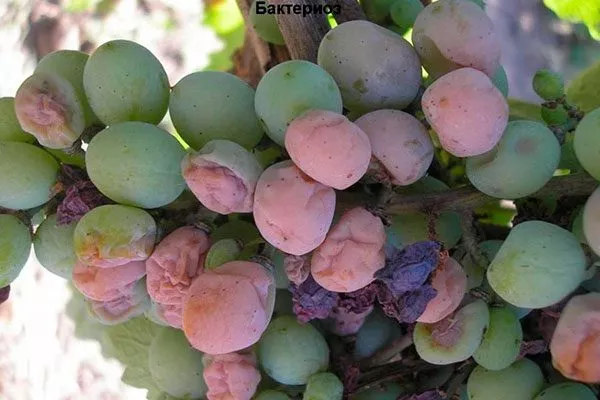
- Bacteriosis. This viral disease appears during the ripening stage. Affected fruits become covered with a dark coating and then fall off. The disease is incurable. Prevention is necessary. The recommended treatment is Fitolavin.

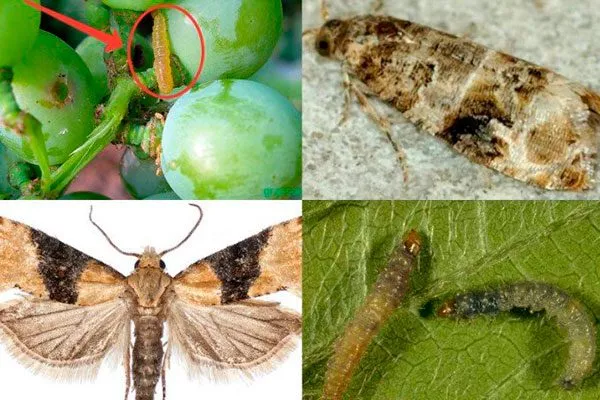
- Leaf roller. The insect lays eggs, which hatch into larvae that eat the leaves. Recommended treatments are Iskra or Alfacin.
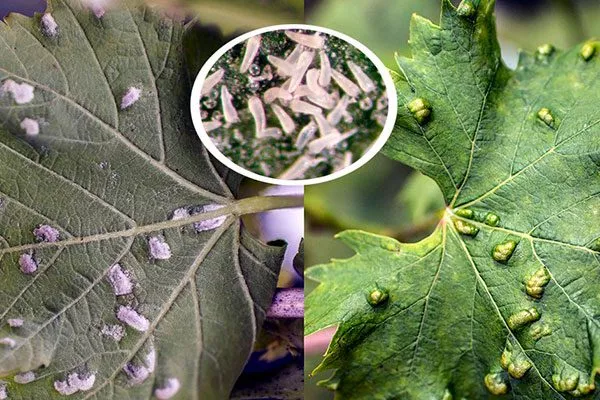
- With a felt tick. These insects hide on the undersides of leaves, sucking their juices. Mite infestations have a severely negative impact on yield. As a preventative measure, grapes are treated twice—in spring and fall. Recommended products include Thiovit, Zolon, or Demitan.
Application and winemaking
Sangiovese is used to make Brunello di Montalcino, Nobile di Montepulcano, and Rosso di Montalcino. This grape is also used to make Chianti and Carmignano, as well as modern super wines like Tignanello.
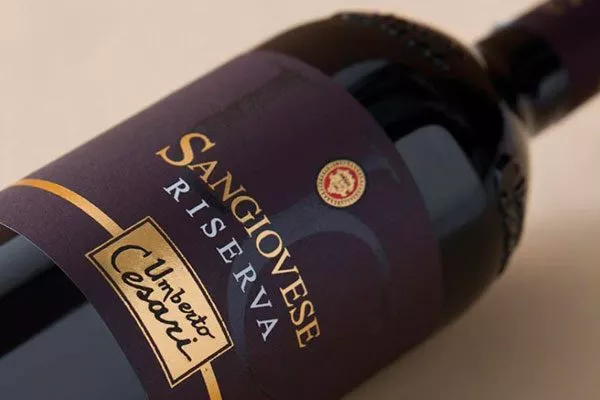
Sangiovese wines are relatively light in color, light and fresh, with a slightly acidic flavor and well-defined tannins. Their aromas reveal a wide range of notes, including cherry, tobacco, and fruit. Plum, licorice, violet, smoke, natural leather, and clay can also be detected in the flavors and aromas.
Sangiovese's bouquet lends itself very well to food pairings. It pairs particularly well with Italian dishes made with tomatoes and tomato sauce. It's often served with smoked meats and hard cheeses, spaghetti, pasta, and other dishes.
Sangiovese grapes are a true classic of Italian winemaking and a relatively easy-to-grow variety, easily grown by even inexperienced gardeners.