
Pink grapes have always attracted gardeners with their colorful appearance and excellent taste. Let's explore the best varieties of this fruit plant and their characteristics.
| Name | Ripening period | Productivity | Disease resistance |
|---|---|---|---|
| Pink peach | 115–125 days | High | Resistant to mildew |
| Original | 135-145 days | Average | Good resistance |
| Taifi pink | 165-170 days | High | Drought-resistant |
| Pink haze | 115-125 days | Good | Resistant to gray mold |
| Azalea | 105-120 days | High | High resistance |
| Anyuta | 140 days | High | Not afraid of wasps |
| Angelica | 120 days | High | Disease resistance |
| Arched | 115-120 days | High | No peas |
| Victor | 100-110 days | Stable | Resistance to fungi |
| Pink Timur | 115-130 days | High | Disease resistance |
| Early gourmet | 115-125 days | High | Wasp resistant |
| Dubovsky pink | Early | High | Self-pollination |
| Kishmish Veles | 95-105 days | High | Self-pollination |
| Radiant Kishmish | 125-130 days | High | Self-pollination |
| Libya | 105-110 days | Stable | Self-pollination |
| Transfiguration | 105-110 days | High | Resistance to gray mold |
| Rumba | 85-115 days | High | Self-pollination |
| Early Russian | 105-115 days | High | Self-pollination |
| Sensation | Up to 100 days | High | Excellent resistance |
| Somerset Seedless | Very early | Average | Disease resistance |
| Sofia | 110-115 days | High | Excellent taste |
| Novocherkassk's anniversary | 110-120 days | High | Self-pollination |
| Julian | 95-105 days | Good | High level of stability |
| Daya | Late August – early September | High | Self-pollination |
| Kandahar | 115-125 days | High | Not bad resistance |
| Beauty of the North | 110-115 days | High | Bisexual flowers |
| Pereyaslav Rada | Early | High | High resistance to rot |
| Motley | The first days of August | High | Self-pollination |
| Rosemary | Beginning of August | Good | Self-pollination |
Pink Peach
The Pink Peach grape variety was bred by N.V. Kraynov. This variety is characterized by large clusters, which can reach 1.5 kg. The average berry weight is 12-14 g.
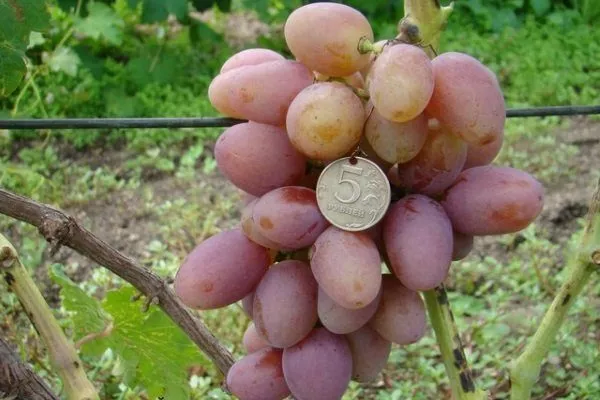
Advantages of the variety:
- bisexual flower;
- ability to withstand frosts down to -23 degrees;
- mildew resistance;
- good ripening;
- pleasant taste.
It's worth noting that the bunches of this grape shouldn't be overfed with fertilizer, otherwise they become fat. Overloading also causes the berries to become smaller, which affects their flavor and marketability.
Original
This variety was bred from the parent pair of Damask Rose and Datier de Saint-Vallier. The clusters typically weigh 400-600 g, and the berries weigh 6-9 g. The flavor is simple, yet balanced and juicy. The berry skin is dense. There are few seeds—only 1-2.
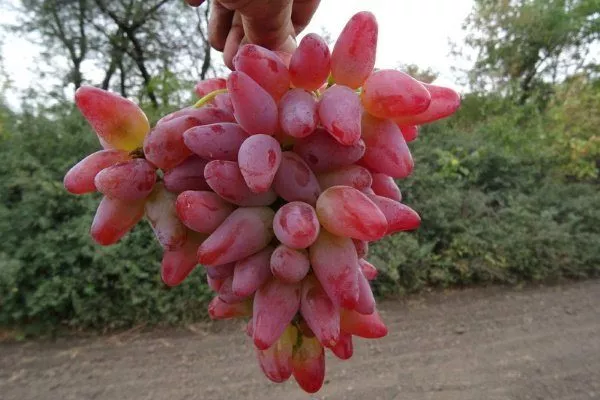
Advantages of the variety:
- frost resistance down to -21 degrees;
- good resistance to diseases;
- not afraid of wasps;
- the ability of berries to stay on the bush until the first frost without losing their taste;
- presentable appearance.
This variety requires pollination and is prone to pea-shaped fruit. However, it's very easy to care for. You can plant it and practically avoid worrying about treating the plant for common grape diseases.
Taifi Pink
This grape belongs to the Asian group. Its clusters are very large, and the oval-oblong berries weigh 4-8 g. The fruit skin is dense. The flavor is pleasant and sweet. Inside the berry there are 2-3 small seeds.

Advantages of the variety:
- bisexual flower;
- good load tolerance;
- quite drought-resistant;
- can hang on the bush for a long time;
- good transportability.
Pink Haze
This variety is a hybrid of Talisman and Kishmish Radiant. The clusters are medium-dense, weighing an average of 700 g (some bunches can reach 1.5 kg). The berries are oval, weighing 12-14 g, and have thin skin. The flavor is balanced and pleasant, with a hint of tartness.
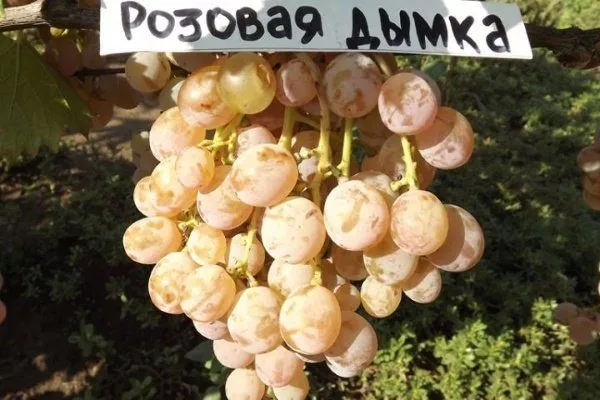
Advantages of the variety:
- bisexual flower;
- frost resistance;
- absence of peas;
- resistance to gray mold and mildew;
- good transportability.
Azalea
This variety was developed by crossing Nadezhda Aksayskaya, Taifi Ustoichios, and Vostorg Krasnoye (Red) grapes. The grape clusters are large, weighing approximately 700 g (sometimes reaching 1-1.2 kg). The oval berries have a thin skin and juicy flesh. The fruit weighs 10-14 g.
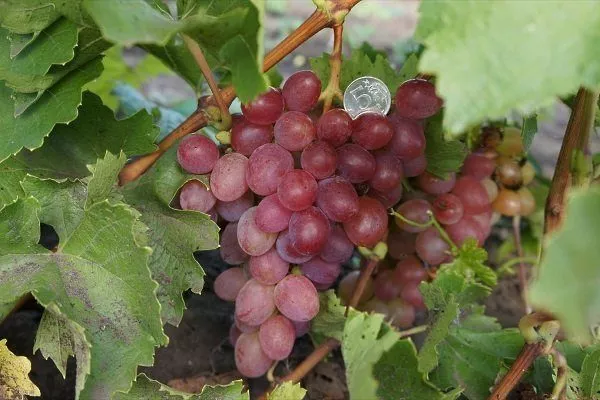
Advantages of the variety:
- bisexual flowers;
- good yield level;
- resistance to peas;
- high resistance to common grape diseases;
- excellent transportability.
Anyuta
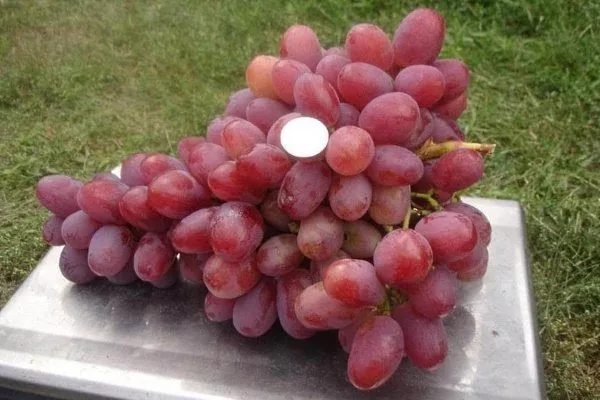
A hybrid created from Talisman (Kesha-1) and Kishmish Radiant. The clusters are quite large, weighing 700-800 g. The fruits are oval-shaped. Their skin is quite dense, and they weigh 10-20 g.
Advantages of the variety:
- bisexual flowers;
- absence of peas;
- not afraid of wasps;
- does not spoil during transportation.
This variety requires careful control over the load on the clusters. Sometimes the fruits ripen unevenly and turn color before they develop flavor. This variety also contains seeds inside the berries—approximately four per grape.
Anyuta-2
Little is currently known about this variety, and its exact name is debated. Like the Anyuta variety, Anyuta-2 was bred by V.N. Kraynov. This variety is sometimes called Anyuta Rannaya (early) because it has been known to ripen earlier than Anyuta. However, some gardeners have observed, conversely, that this variety ripens later.
Reviews from those who have grown this variety indicate that Anyuta-2 has attractive grape clusters and excellent berry flavor. However, disease resistance is somewhat weak. The fruit is susceptible to gray mold.
Watch the video below for a review of the Anyuta-2 variety:
Angelica
This hybrid variety also has a second name, Ksenia. It was developed by V.N. Kraynov by crossing the Radiant Kishmish and Talisman varieties. In 2006, breeder Voronyuk recognized the variety's potential and, deciding to develop it further, renamed it Angelica.
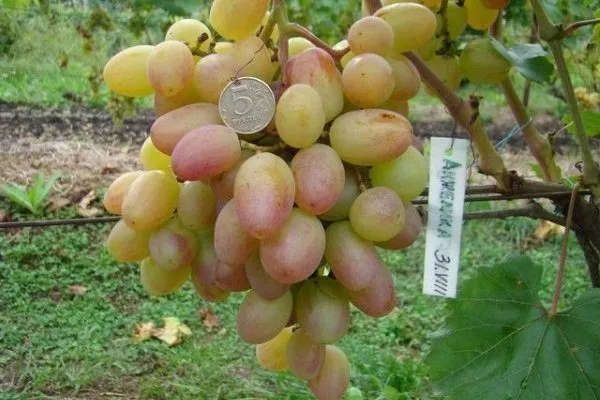
The large oval fruits of this grape are usually gathered in loose clusters, weighing up to 1-2 kg. A single berry can weigh up to 30 g. The skin of the fruit is thin and imperceptible when bitten. It is prone to pea-shaped fruit.
Advantages of the variety:
- bisexual flowers;
- excellent rooting rate of cuttings;
- ability to withstand frosts down to -25 degrees;
- resistance to various diseases;
- long shelf life;
- good transportability.
Arched (Friendship pink, Colored)
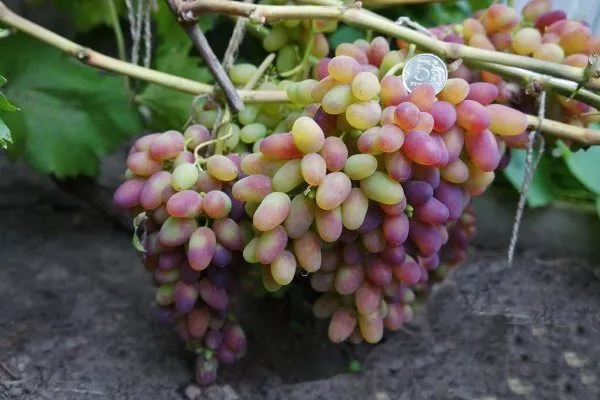
This variety was obtained by crossing the Druzhba and Intervitis Magaracha varieties. The clusters of these grapes are large, weighing 400-600 g, and dense. The fruits are large, oval-shaped, and have a fairly dense skin.
Advantages of the variety:
- bisexual flower;
- frost resistance down to -25 degrees;
- absence of peas;
- high yield;
- the ability of brushes to hang on the bushes for a long time;
- good transportability.
Gardeners note that this variety responds well to increased fertilizer doses. However, it is also a favorite among wasps. As for the flavor, some may find it rich, while others may find it too simple and "grassy."
Victor
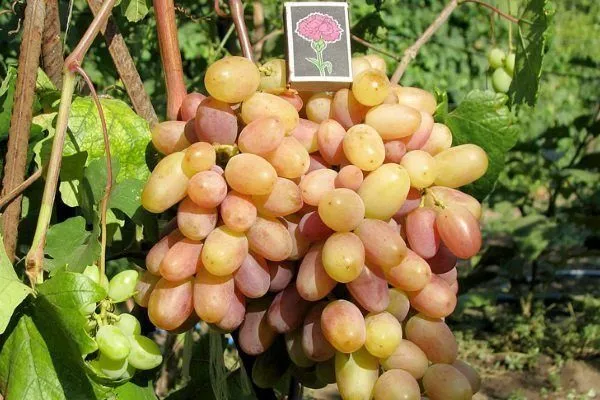
This variety was bred by V.N. Kraynov. The bunches of these grapes are large (up to 2 kg) and medium-dense. The berries are oval-shaped with a pointed end and weigh around 10-20 g. The grape skins are thin, and the flavor is pleasant.
Advantages of the variety:
- bisexual flowers;
- stable harvest;
- absence of peas;
- resistance to fungal diseases;
- ability to tolerate low temperatures;
- excellent appearance.
Victor flowers very early. While this is a good thing, it also increases the risk of damage to the buds if a late spring frost occurs. Wasps also "love" it.
Pink Timur
This grape variety was bred by crossing Timur White and Vostorg Red. The clusters are large, cone-shaped, and weigh approximately 800 g. The grapes themselves are large, elongated, and can weigh up to 9 g. The grape skins are dense, but they do not obscure the aromatic muscat flavor of the fruit.
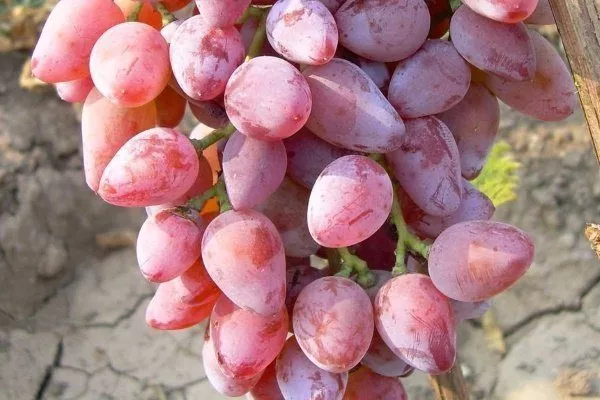
Advantages of the variety:
- bisexual flowers;
- good yield;
- absence of peas;
- frost resistance down to -25 degrees;
- disease resistance;
- grows well in different soils;
- marketable appearance and good transportability.
Early Gourmet (Novocherkassky Red 1-12)
This variety was created by crossing Kishmish Radiant and Talisman. The flowers are female. The clusters are typically cylindrical and fairly large, weighing between 500 and 900 g (some clusters reach 1.2-1.3 kg). The fruits are pink, oval, and weigh 7-9 g.
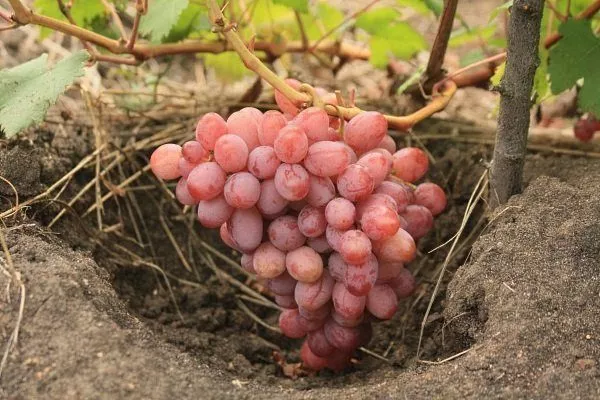
Advantages of the variety:
- wasp resistant;
- increased resistance to gray mold and mildew;
- presentation;
- good transportability.
Dubovsky pink
This grape variety was created by crossing the Yubiley Novocherkasska and Vostorg Krasny varieties. The clusters are large, weighing 500-800 g (they can grow up to 1.2-1.5 kg). The fruits are also large, oval-elongated, weighing 14-16 g. The grapes have a balanced flavor.
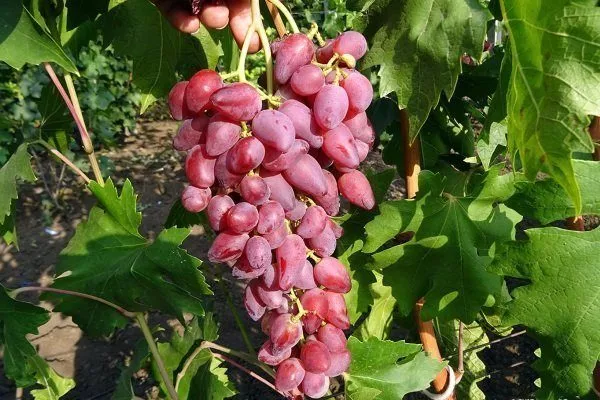
Advantages of the variety:
- self-pollination;
- frost resistance down to -24 degrees;
- high yield;
- good transportability;
- pleasant taste.
Kishmish Veles (Veles)
This seedless grape variety is a hybrid of Rusbol and Sofia. The clusters grow cone-shaped and weigh up to 3 kg (usually 0.9-1.7 kg). The fruits are oval-shaped, weighing 4-5 g. The skin is thin, and the flavor is sweet.
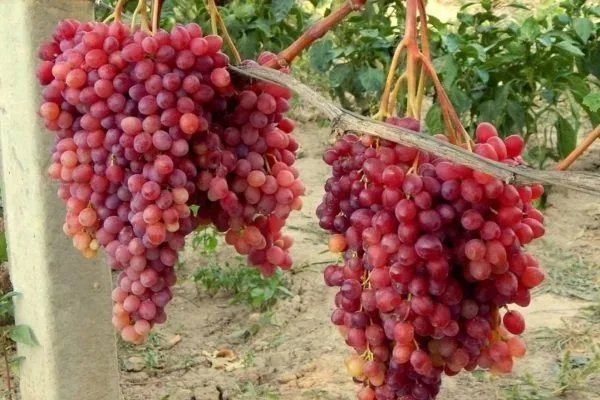
Advantages of the variety:
- high yield;
- self-pollination;
- long shelf life.
Kishmish Veles is very similar to Kishmish Radiant in its characteristics. The flavor and color of the berries are very similar, and the yield is approximately the same. The difference between these two varieties lies in the ripening time.
Radiant Kishmish
This grape variety was bred from a pair of parents: Cardinal and Kishmish Pink. Clusters of grapes are approximately 400-600 g each, but can reach 1-1.5 kg. The berries typically weigh 2.5-4 g. The grapes are seedless and have a balanced, pleasant flavor.
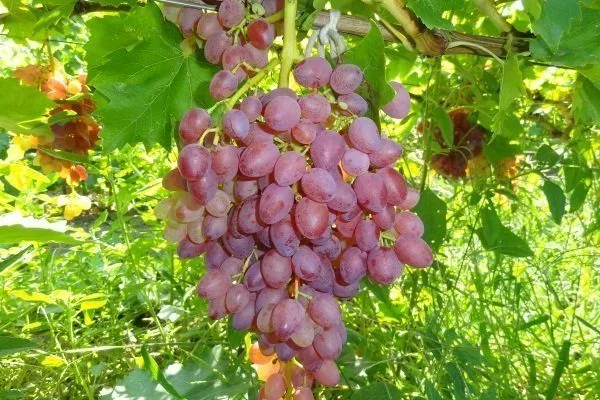
Advantages of the variety:
- self-pollination;
- absence of peas;
- presentation;
- excellent transportation;
- long shelf life;
- interesting, balanced taste.
Libya
This hybrid grape variety was bred from the Arcadia and Flamingo varieties. The plant's clusters are large and cylindrical. The berries typically weigh 10-15 g. Each fruit contains no more than three seeds. The variety is very aromatic and retains its flavor for up to a month during storage.
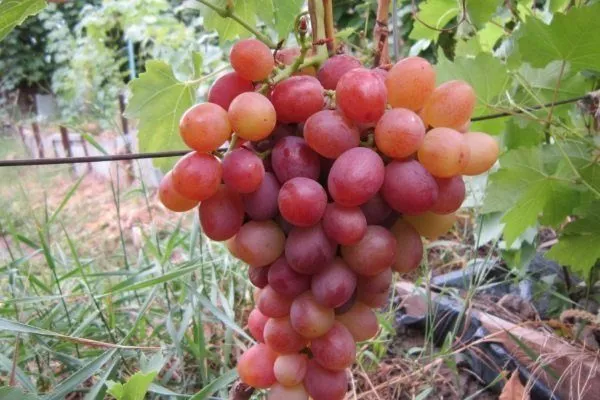
Advantages of the variety:
- self-pollination;
- obtaining a stable harvest;
- excellent transportability;
- excellent presentation.
This variety is characterized by the uneven coloring of its berries. When they first emerge from the vines, the grapes have a delicate pink hue, but as they ripen, they acquire a richer color. Moreover, the coloring of the bunches occurs at different times.
Transfiguration
This is a hybrid variety, the bunches of which are obtained without any specific shape or in the form of a cone, weighing 700-1500 g. The berries are large, oval, weighing 10-14 g. The taste is balanced.
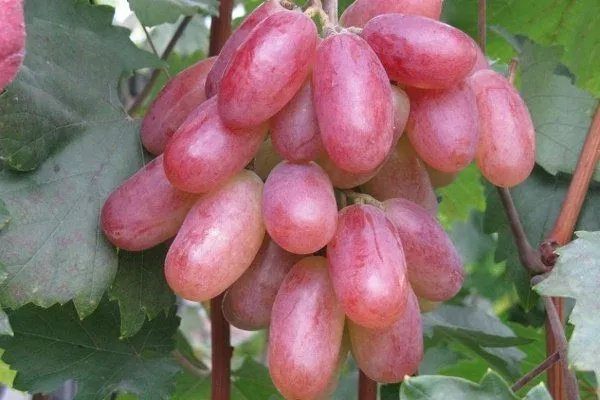
Advantages of the variety:
- bisexual flowers;
- resistance to gray mold;
- absence of peas;
- excellent transportability;
- marketable appearance.
Avoid planting Preobrazhenie too close to shrubs and trees, as this variety does not tolerate such proximity. Also, monitor the vine's weight to prevent grape spoilage.
Rumba
This grape variety is a cross between Red Delight and Charreli. The clusters are large, cylindrical, and weigh 470-900 g or more. The grapes are beautiful and large, weighing 8-10 g.
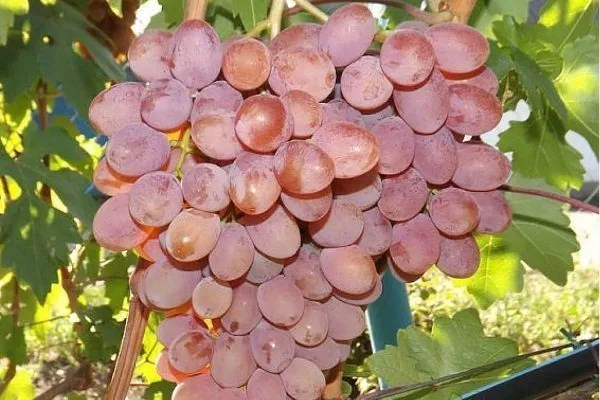
Advantages of the variety:
- self-pollination;
- ability to withstand frosts down to -25 degrees;
- high level of harvest;
- absence of peas;
- excellent transportability;
- good marketability.
Reading consumer reviews, one can notice that some dislike the overly simple taste of this grape. The grapes are simply sweet, without any flavor. However, many are attracted by the variety's presentation and high yield.
Early Russian
Created from the Michurinets and Severnaya Shasla varieties. The clusters are medium-sized, weighing approximately 200-400 g, and conical in shape. The fruits are round, weighing approximately 3-5 g.
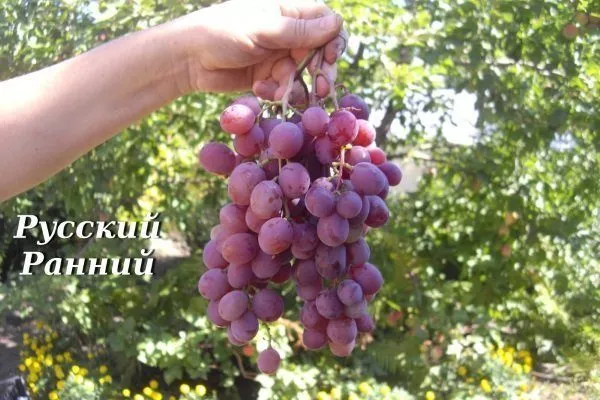
Advantages of the variety:
- self-pollination;
- high yield;
- the brushes are not afraid of overload;
- transportability at a high level.
This variety is best grown in glass or plastic greenhouses. This is because Russian Early is favored by ants, wasps, various beetles, and even butterflies. Therefore, it requires additional protection.
Sensation
This grape was bred from the Rizamat and Talisman varieties. The clusters are typically conical, weighing 700-1500 g. The berries are quite large, finger-shaped, weighing 16-22 g. The grapes have a balanced flavor and thin skin. The fruit color can be translucent.
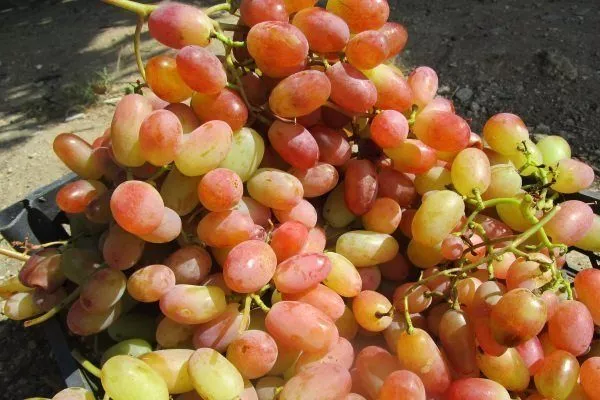
Advantages of the variety:
- bisexual flower;
- frost resistance down to -24 degrees;
- high level of harvest;
- absence of peas;
- excellent resistance to diseases;
- wasps hardly bother me;
- good transportability;
- attractive appearance.
Somerset Seedless
A seedless variety bred and produced in the USA. Clusters typically weigh 100-200 grams, with small, round berries. The flavor is very interesting and rich.
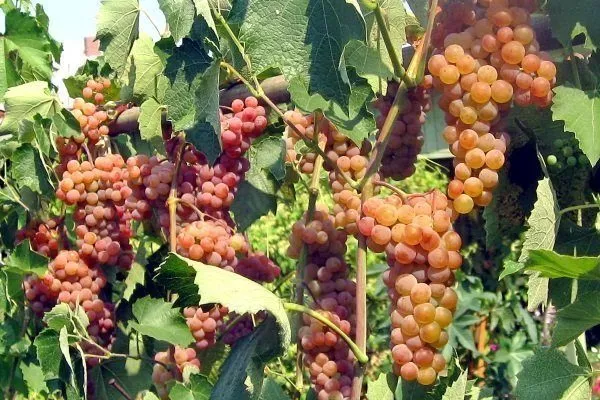
Advantages of the variety:
- high level of frost resistance (withstands temperatures down to -30…-34 degrees);
- the ability to carry out any pruning (read about spring pruning of grapes here);
- disease resistance;
- excellent taste.
Sofia
This variety is a hybrid resulting from crossing Kishmish Radiant and Arcadia. It requires pollination (best done with the Arcadia variety). Bunches typically weigh 1-3 kg. Berries may contain 1-2 seeds.
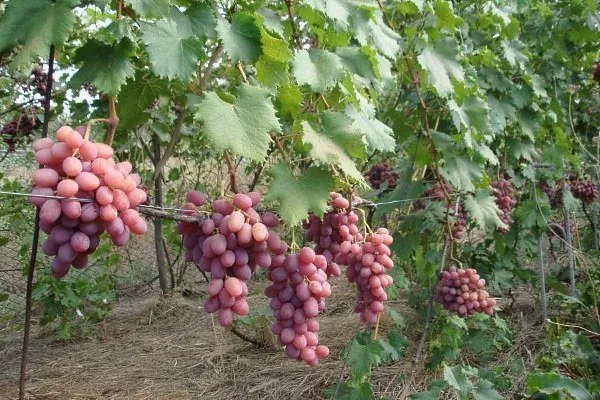
Advantages of the variety:
- excellent taste;
- marketable appearance.
Novocherkassk Anniversary
This hybrid variety has a cone-shaped form, weighing up to 700-1700 g (with proper care, up to 3 kg). The grapes are typically oval, weighing 12-18 g. The fruit skin is dense.
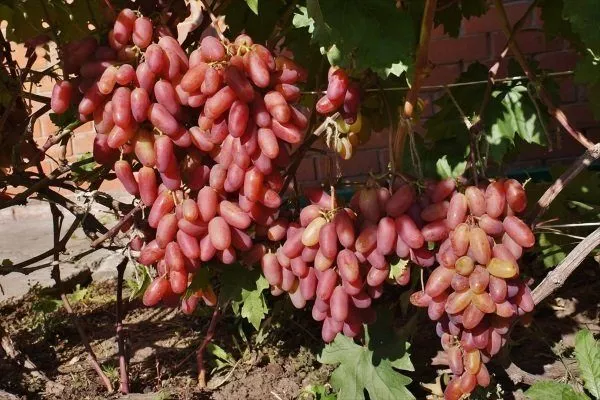
Advantages of the variety:
- self-pollination;
- frost resistance down to -23 degrees;
- absence of peas;
- good level of transportability.
Julian
This grape variety was bred from the Kesha and Rezamat varieties. The average bunch weight is 300-500 g, but clusters can reach 1-2 kg. The berries weigh 8-12 g and have a thin skin that is barely noticeable when bitten.
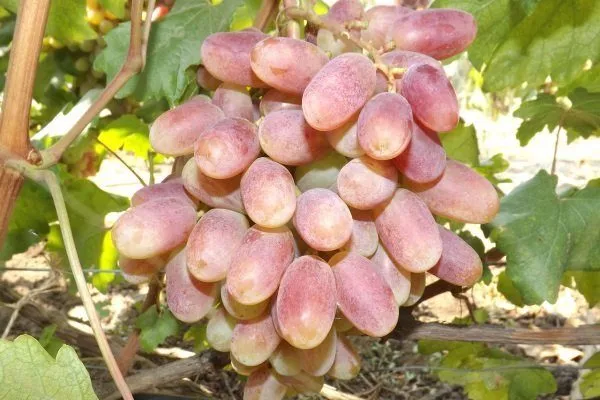
Advantages of the variety:
- self-pollination;
- frost resistance down to -24 degrees;
- high level of resistance to common diseases;
- "not afraid" of wasps;
- excellent transportability;
- marketable appearance.
Be careful with the amount of fertilizer you add. Too much nitrogen can ruin the flavor of these grapes, making them taste grassy.
Daya
This hybrid variety was developed from the parent pair Talisman and Blestyashchy. The clusters are conical, weighing approximately 500 g. The fruits are oval, weighing between 10 and 13 g.
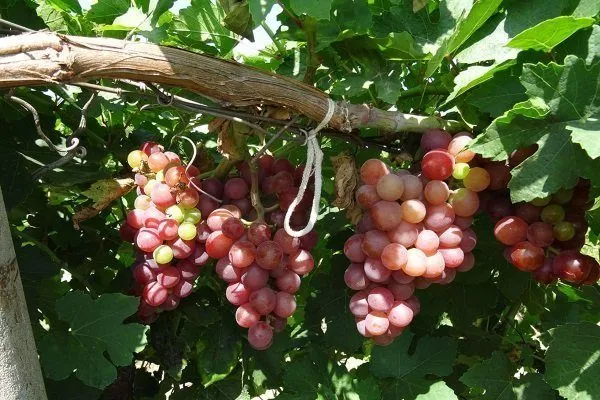
Advantages of the variety:
- self-pollination;
- absence of peas;
- frost resistance down to -24…-25 degrees;
- after rains the fruits do not crack;
- interesting, rich taste.
Kandahar
This variety was brought to the United States from Iran, where it was quite common. The bunches are conical, weighing 600-1500 g. The fruits are large and oblong, weighing up to 12 g. This heat-loving plant is recommended for greenhouse cultivation in northern regions.
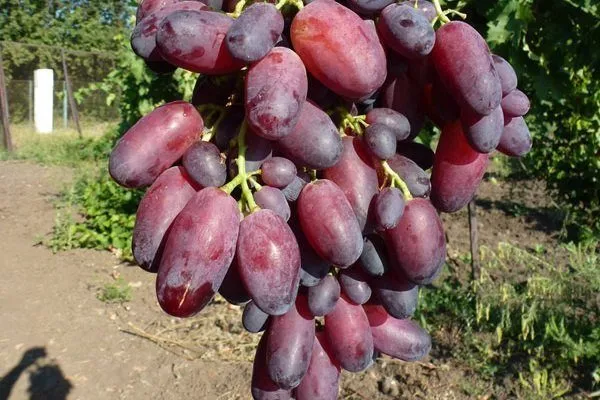
Advantages of the variety:
- high yield;
- good resistance to diseases.
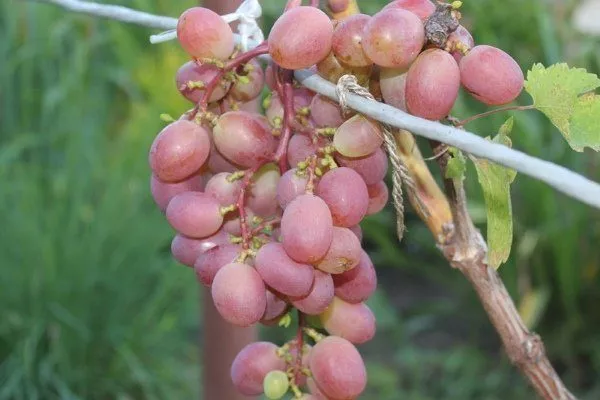
Beauty of the North
This grape also has a second name, Olga. It was created by crossing Zarya Severa and Taifi Pink. The clusters are conical, weighing 300-700 g. The grapes themselves are round, weighing 5-6 g. They have a thin skin and 2-3 seeds inside. Grow the plant under cover, as the berries tend to crack in humid weather.
Advantages of the variety:
- bisexual flowers;
- ability to withstand frosts down to -26 degrees;
- The fruits can remain on the branches for a long time without spoiling.
Pereyaslav Rada
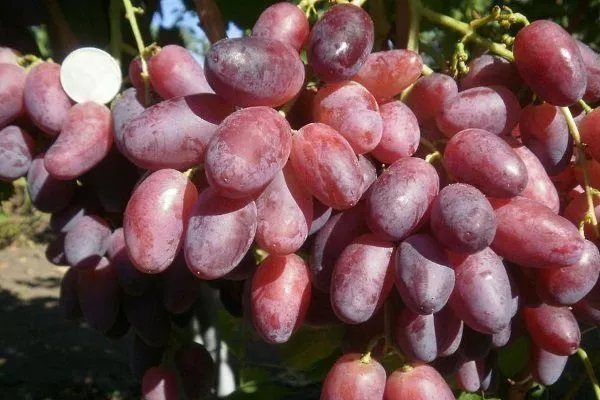
This grape variety was created by crossing Kishmish Radiant with Talisman. The clusters typically weigh 700-800 g and are cone-cylindrical or irregularly shaped. The fruits are oval and elongated, weighing approximately 16 g. The skin is dense.
Advantages of the variety:
- high yield;
- self-pollination;
- ability to remain on the bushes for a long time;
- frost resistance down to -23…-24 degrees;
- high resistance to rot and parasites;
- good transportability.
Motley
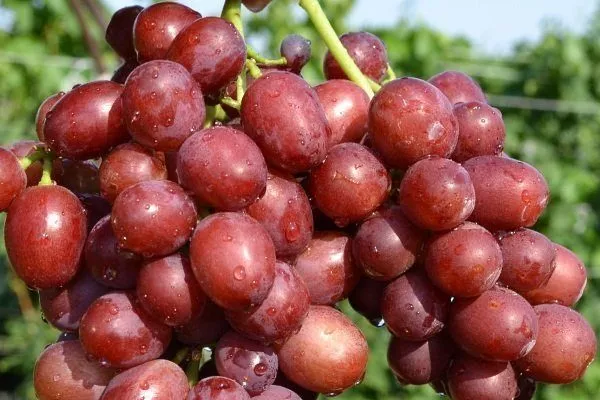
The Motley grape variety is created from the “parent” pair – Kishmish Radiant and MascotThe cone-shaped clusters typically weigh 800-1500 g. The berries are large, oval-shaped, weighing 8-12 g. People are usually attracted by their bright, interesting appearance.
Advantages of the variety:
- self-pollination;
- high yield;
- early ripening;
- frost resistance;
- the ability of berries to hang unpicked for a long time;
- good resistance to diseases;
- interesting taste.
Because grapes ripen very early, they are susceptible to spring cold snaps. The bunches may stop developing. To prevent this, plant the variety on a south-facing, sunny spot away from drafts.
Rosemary
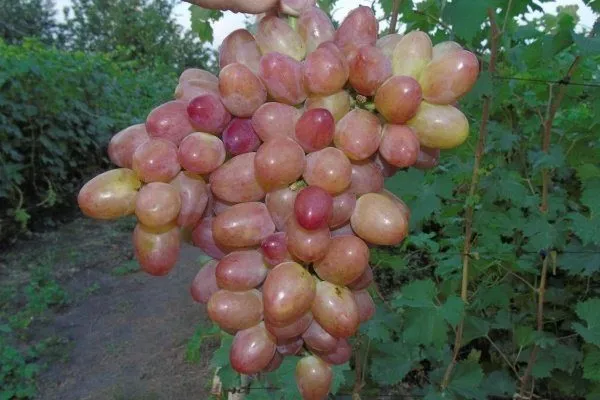
The Rozmus variety was created by crossing the Sofia and Arkadia varieties. The cone-shaped bunches weigh from 500 g to 1 kg. The grapes are oval or round, weighing 9-11 g. People love them for their unique and rich flavor.
Advantages of the variety:
- self-pollination;
- early ripening of berries;
- frost resistance -23…-24 degrees;
- the ability of berries to remain on the bushes for a long time without losing their characteristics;
- high resistance to diseases;
- long shelf life;
- good transportation;
- sweet, rich taste.
Rosemary responds favorably to supplemental mineral fertilizers and regular watering. However, despite its frost resistance, it needs to be covered for the winter. The grapes may have uneven coloring.
Comparative characteristics of varieties
To choose the right grape variety for your garden, consult the comparison chart. It will show you the ripening time, yield, and other characteristics that will tell you something about each variety.
Comparison table of pink grape varieties:
| Grape variety | Ripening time | Productivity | Taste | Color |
| Pink peach | early-middle (115–125 days) | good | balanced | pink |
| Original | average (135-145 days) | average | simple | white-pink and pink |
| Taifi pink | late (165-170 days) | high | very sweet | dark pink with a purple tint |
| Pink haze | early (115-125 days) | good | pleasant, with a hint of sourness | white with a slight pink blush |
| Azalea | very early or very early (105-120 days) | high | very sweet | light pink |
| Anyuta | mid-season or mid-late (140 days) | high | with a light nutmeg aroma | dark pink |
| Angelica (Ksenia) | early maturing (approximately 120 days) | high | sweet | pale pink |
| Arched (Friendship pink, Colored) | early (115-120 days) | high | balanced | pink (red in the sun) |
| Victor | very early or very early (100-110 days) | stable | light, pleasant | changes from pink-amber to red-lilac |
| Pink Timur | early (115-130 days) | high | sweet, with a nutmeg flavor | amber pink |
| Early Gourmet (Novocherkassky Red 1-12) | early (115-125 days) | high | nutmeg, with a floral aroma | soft pink |
| Dubovsky pink | early | high | balanced | dark pink |
| Kishmish Veles (Veles) | very early (95-105 days) | high | sweet, with a nutmeg aroma | pink with amber tint |
| Radiant Kishmish | early-middle (125-130 days) | high | light nutmeg flavor with a hint of nightshade in the background | golden pink turning into reddish pink |
| Libya | very early (105-110 days) | stable | pleasant, with a nutmeg tint | uneven, from soft pink to rich |
| Transfiguration | very early (105-110 days) | high | balanced | uneven, amber-pink |
| Rumba | very early (85-115 days) | high and stable | sweet | pink, bright red when ripe |
| Early Russian | very early (105-115 days) | high | sweet, without aroma | dark pink |
| Sensation | very early (up to 100 days) | high | with a nutmeg flavor | yellow-pink shade with crimson |
| Somerset Seedless | very early | average | pleasant, from strawberry-mulberry to caramel | pink |
| Sofia | very early (110-115 days) | high | sweet, with a nutmeg aroma | pink |
| Novocherkassk Anniversary | early (110-120 days) | high | sweet, balanced | pinkish-yellow |
| Julian | very early (95-105 days) | good | with a light muscat aroma and strawberry flavor | golden pink |
| Daya | early-middle (late August – early September) | high | with a pronounced nutmeg note | from pink to bright red |
| Kandahar | early (115-125 days) | high | pleasant, balanced | hot pink |
| Beauty of the North | early (110-115 days) | high | sweet, with a bit of sourness | white with a pinkish tint |
| Pereyaslav Rada | early | high | sweet, with notes of honey, caramel and rose in the aftertaste | dark pink, sometimes with a purple tint |
| Motley | very early (first days of August) | high | bright and rich, with a nutmeg aroma | bright pink with a hint of purple |
| Rosemary | super early (early August) | good | sweet, with a bright nutmeg note and a tea rose aroma | white and pink with a blush |
- ✓ Consider the climate conditions of your region, especially the minimum winter temperatures.
- ✓ Pay attention to the variety's resistance to diseases and pests, especially if you do not have the opportunity to regularly treat the plants.
- ✓ Consider the purpose of growing grapes: for fresh consumption, winemaking or ornamental purposes.
- ✓ Check whether the variety requires a pollinator or is self-pollinating.
You've explored 30 excellent rosé grape varieties. Based on your local climate and personal preferences, choose the one that best suits your needs. The comparison chart will help you make your decision.