
The Rochefort grape variety is one of gardeners' favorites. Growing it in your own garden isn't easy, but the results and appearance of the plant will delight you for years to come.
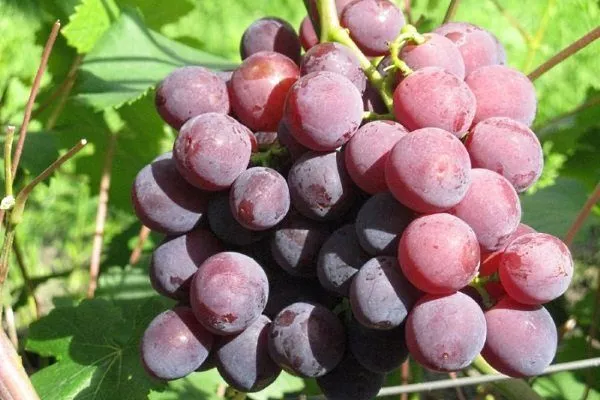
Rochefort grape variety
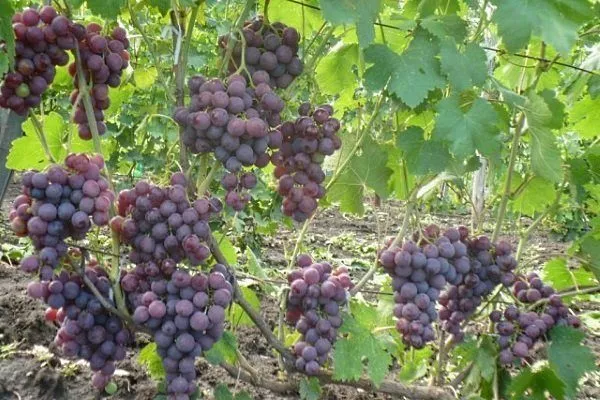
Due to its characteristics, the Rochefort variety is considered a benchmark in winemaking
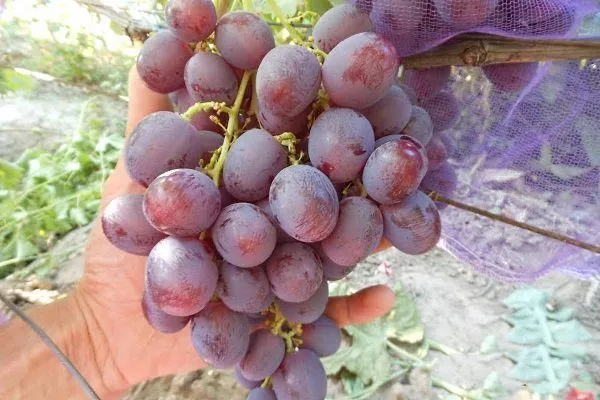
The fruits of the Rochefort grapes are distinguished by the harmonious taste and aroma of Muscat
History of cultivation
E.G. Pavlovsky is the founder of the variety. Cardinal, a member of the "Vostorgovskaya group," was used as the parent. This founder is noted for its frost resistance, large fruit, and marketable qualities. In addition to the "Vostorgovskaya group" variety, varieties of European and Amur origin were used.
Rochefort is a grape with excellent performance, especially in terms of hybrid diseases.
Characteristics of the Rochefort variety
This variety is a worthy ancestor of the Cardinal variety. It inherited from its parent large, juicy berries with unrivaled flavor and yield. Rochefort doesn't match the Cardinal's flavor, but it boasts a quick ripening time and overall robustness. These characteristics make it an excellent market variety.
Bushes
The crop grows too quickly. The yield is excellent—on average, 1-2 inflorescences per shoot. The grapes can withstand the weight of the fruit, but experienced gardeners recommend standard thinning to improve the quality of the berries. Thinning involves cutting back some of the inflorescences so the plant can handle the upcoming harvest.
Berries
The round fruits turn a deep purple when fully ripe, sometimes reaching black. Each berry weighs approximately 10 grams. The flesh is tender, and the skin is firm. The fruits contain several seeds of equal size. The berries can hang on the vine until the end of October without losing their commercial quality. They are suitable for transport, which is very beneficial for grape sales.
Frost resistance
The bush can withstand frosts down to -23°C (-23°F). In southern regions, the plant can be grown in uncovered areas, while in northern areas, grapes are covered for the winter. The colder the winter, the more extensive the covering should be. Agrofibre, spruce branches, and wooden boards are used. If soil is used for protection, it should be taken away from the plant to prevent the root system from being exposed.
Yield of the variety
The main advantage is rapid ripening. A bush yields approximately 5 kg. It's also possible to achieve yields of around 10 kg. However, this average yield is offset by excellent flavor, dense bunches, and excellent transportability.
For an overview of the Rochefort grape variety, watch the video below:
Advantages and disadvantages of the variety
Most gardeners consider the Rochefort grape variety to be one of the best. It is characterized by its rapid ripening, high yield, and low maintenance.
The main advantages of Rochefort grapes:
- The presence of both male and female flowers ensures rapid pollination and a consistent harvest.
- Suitability for transportation and excellent presentation.
- High resistance of berries to fungal diseases.
- Propagation is simple. Cuttings take root and develop.
- The bush is not afraid of winter frosts. The main thing is that the temperature does not drop below -23 degrees Celsius.
- The variety does not require special care, so without fertilizing and loosening it will not perish and will produce a good harvest.
The main disadvantages of Rochefort grapes:
- The berries do not store well after being cut.
- Susceptible to phylloxera, this variety should be protected from this pest. Phylloxera attacks the roots of the bush, making it almost impossible to cure. If it infects a bush, it will eventually have to be discarded entirely.
- Drafts and strong winds are a problem for the plant. They are especially harmful during flowering. They can cause significant damage, depriving the plant of a harvest by damaging the inflorescences and flowers. Plant the grapes in wind-free areas, away from open areas.
Planting and care
Rochefort is a heat-loving species; it should be planted on south- or west-facing slopes. Sufficient sunlight is essential for the plant's healthy development. The site should be near a fence to avoid drafts and strong winds.
The root system is well developed, reaching a depth of two or more meters, so the soil is selected based on this fact.
The plant doesn't like excess moisture. Planting grapes in low-lying areas is also not recommended. Ideally, the groundwater level should not rise more than 2.5 meters above the soil surface. If you can't find a suitable site, create a drainage system to ensure water drainage.
Selection and preparation of cuttings
Cuttings are taken from fruiting vines. They are divided into sections with three buds. If there are only a few branches, they are wrapped in damp newspaper, leaving gaps for air circulation. Experienced gardeners soak the branches in water before packaging the planting material, dry them, and then lay them in newspaper.
- ✓ The storage temperature for cuttings must be strictly below zero, but not below -4°C, to avoid freezing.
- ✓ The air humidity in the place where the cuttings are stored should be 85-90% to prevent them from drying out.
To reduce moisture evaporation, dip the tips of the branches in melted wax; you can also use plasticine. This isn't a necessary step, but without it, the cuttings won't last long. Store the branches in the refrigerator, close to the freezer. If you have a large number of cuttings, they won't fit in the refrigerator; a cellar is best for storage. Place the branches in a bag and sprinkle with sand.
It is important that the temperature in the cellar is below zero.
Cuttings taken in the fall shouldn't be kept outdoors for long; they'll wilt and the water will evaporate. For successful grape propagation, the branches are cut in the fall and stored until spring. If the branches are cut directly in the spring, the cuttings will be left without water and will take a very long time to establish in the soil.
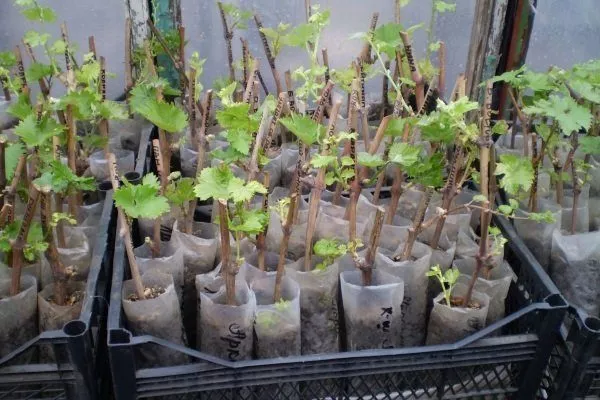
When to plant: in spring or autumn?
Grapes of any variety are planted in the spring, often in April. Fall is also a good option, but the cuttings will need to be well protected for the winter. Due to the risk of phylloxera, planting from seedlings is unsafe. Even experienced and trusted agrofarms cannot guarantee 100% results and safety. Propagation can be done by layering, seedlings, cuttings, or seeds.
Soil preparation
A vine's survival depends directly on root development. Root development ensures the proper development of the above-ground portion of the vine. For grapevines to develop quickly and efficiently, the soil must meet all the vine's requirements.
Before planting the cutting, clear the soil of stumps, shrubs, excess roots, and moss. Level the surface, remove the hole, and smooth out any hummocks. Pay particular attention to the soil's acidity and clay content. Fertilize the soil with humus, manure, and black soil.
Distance between bushes
The distance between plants depends on the type of trellis. A single-plane trellis requires a distance of 4 m from one plant to the next. A single-plane trellis requires a distance of 3 m. The grape ripening time should also be taken into account.
Landing rules
In the fall, grapes are planted in October before the first frost. The most convenient method is to plant the plants in holes. Follow these steps:
- Dig a hole in the shape of a square, 80 cm deep.
- Divide the soil from the hole into two parts: the first is the topsoil, the second is the bottom layer. Mix the topsoil with humus and fertilizer, and pour the soil mixture into the hole to a depth of about 30 cm.
- Water the soil.
- Leave the hole for two weeks to allow the soil to settle. If you don't, the grape cutting will be planted deeper than necessary.
- Before planting, soak the cuttings in water for 24 hours.
- Drive a stake into the hole and tie the grape seedling to it.
- Mix the soil from the second pile with sand and cover the cutting with it to a depth of 30 cm.
- Cover the seedling with a cut plastic bottle and water the soil generously.
Watering and mulching
Rochefort grapes require a tremendous amount of water. During planting and harvesting, the vine is watered generously. Water is especially important during prolonged droughts.
After each watering you should mulch the soil3 cm of sawdust. The bush should be fertilized with organic matter, potassium, and phosphorus. Grapevines are planted in the spring or fall after rain.
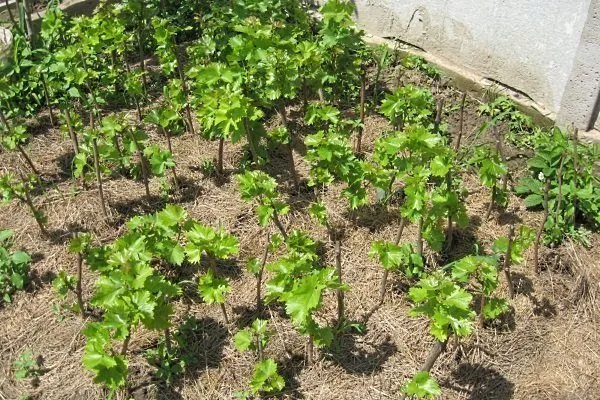
One Rochefort plant needs 5 liters of water.
After planting, the grapevines are watered weekly. After 30 days, watering is reduced to once every 14 days. Drought is an exception. In late summer, the grapevines are watered sparingly—this will help the crop ripen faster.
The greatest need for water occurs during bud break and the end of flowering. Watering is not necessary during the flowering process itself, otherwise the inflorescences will fall off.
Mulching is a surefire way to retain soil moisture. Straw or sawdust make excellent mulch materials. This procedure is particularly beneficial in southern regions; in other climates, it can cause root chilling.
Pruning grapes
Rochefort grapes are pruned in spring and fall. The heaviest load on the plant is 35 buds. A shoot should contain approximately seven buds. In autumn, the bush is pruned before the first frost, then covered for the winter. In spring, pruning is carried out when temperatures warm up to +5°C (41°F). The key is to do this before the sap starts to flow. Shoots that were frozen during the cold spell are removed.
We recommend reading our article about spring pruning of grapes.
Preparing for winter
Its good frost resistance allows the bush to survive the winter without much shelter in warm southern regions. However, northern climates require special care. First, clear the area around the trunk of weeds, excess leaves, and other plant debris. Loosen the soil and apply a fresh layer of mulch. The layer should be at least 10 cm thick, and up to 25 cm thick near the trunk. Humus or peat crumbs are excellent options.
Carefully remove the shoots from the trellis, bunch them together, and place them in prepared holes or lay them out on the ground. Sprinkle them with autumn leaves or wood shavings. If winter is expected to be light on snow or extremely harsh, wrap the root zone with three layers of burlap or other breathable material.
The cover must not be removed too early; the temperature must reach 11 degrees above zero. If frost is expected, the burlap should not be removed.
Diseases and pests
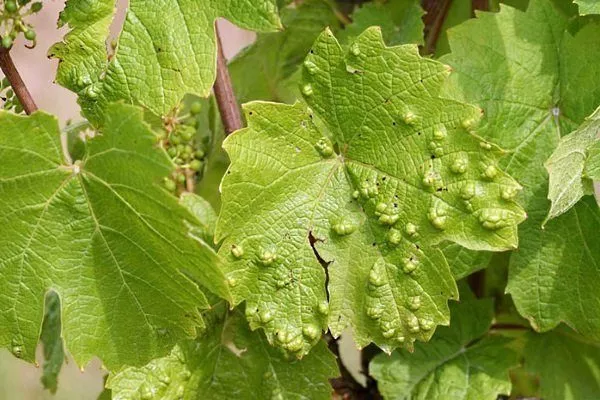
This grape variety has excellent resistance to various diseases. However, the main enemy of the bush is phylloxera, to which the grapevine's immunity is weak. Therefore, it is necessary to constantly monitor the plant's behavior for any signs of disease, and implement a number of preventative measures.
- Regularly inspect the root system and leaves for signs of phylloxera.
- Use only certified fungicides to treat plants.
- Avoid planting new bushes near infected plants.
Phylloxera is a small, green insect, approximately 1 mm long. The pest feeds on grape sap and produces compounds that are harmful to the plant.
This pest was brought to Europe by various seedlings from the United States, and it was from this continent that the insect's spread to our region began. The main preventative measure is fungicide treatment.
Gardeners' reviews of Rochefort grapes
Rochefort grapes are an excellent variety for growing in the garden. The plant is easy to care for, requiring only regular watering and mulching.