
The Rombik grape is characterized by its early ripening and hybrid form. It is suitable for cultivation in all regions of Russia, from the south to the Urals and Siberia. This variety has a unique characteristic: its taste is similar to prunes, which is particularly appealing to gardeners and consumers. It is a table grape variety that produces high-quality wine.
The history of Rombik grape selection
The Rombik hybrid is still being developed, specifically in the testing phase. Despite this, it has already won the hearts of winegrowers. The selection was carried out by Evgeny Georgievich Pavlovsky, a man of humble origin (not a professional breeder).
He introduced the world to several dozen hybrid and varietal grape varieties, which have already found their place in the country's state register. For the crossbreeding, the originator used two grape varieties—Krasotka and Super-Extra. The variety has a synonymous "name"—C-4-2.
Description of the variety
This hybrid is considered low-yielding and has poor transportability, but it does have a very early ripening period and amazing flavor. There are many other characteristics worth knowing.
Bushes
The main advantage of the grapevine is its vigor and rapid growth. Each robust vine can withstand massive bunches of grapes, snowdrifts, and so on, which is especially important for northern regions.
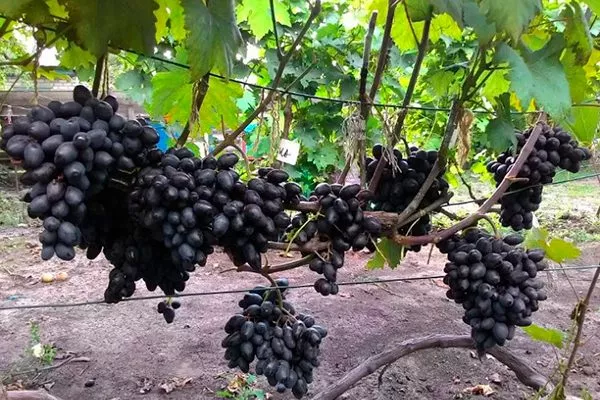
But it's important to leave only two clusters on the shoots each year, which will result in larger berries and denser clusters. Thinning is done in the spring.
Berries
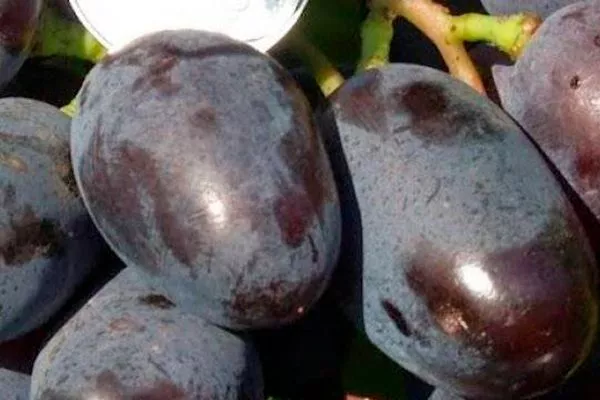
Rombik grapes are quite large. Their characteristic features include:
- weight – from 7 to 9.5 g, but with proper regulation it can reach 11 g;
- shape – oval-elongated, diamond-shaped, with a thickening in the center;
- the surface has a waxy coating, but the thickness is average;
- the skin is thick and does not crack, as it is elastic;
- bones – maximum 2 pcs.;
- the pulp is crunchy;
- color – dark blue, almost black when overripe.
Clusters
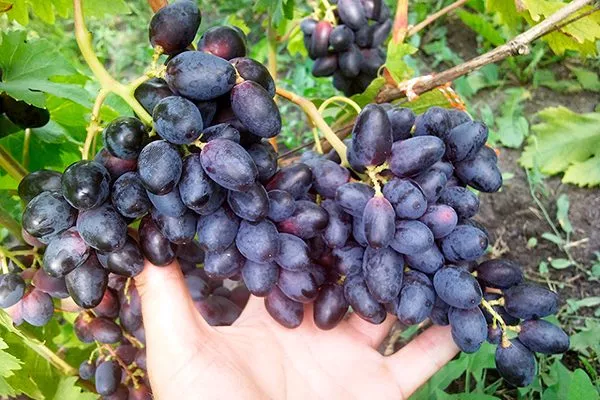
Clusters can have a variety of shapes, from conical to chaotic. The density of the berries is medium, preventing them from being crushed. The weight of a single bunch ranges from 500 to 1000 g. The fruits do not fall off, and the plant does not form peas.
Taste
The flavor is considered harmonious, with a hint of grape and notes of prune and blackcurrant. The fruit is quite sweet, with a sugar content of 14-20%. There's a slight tartness.
Characteristics of the variety
Rombik is most common in cities such as Nizhny Novgorod, Yekaterinburg, the Trans-Urals, and the Moscow and Leningrad regions. According to gardeners' reviews, this variety has excellent characteristics.
Application of fruits
As a table variety, Rombik is primarily eaten fresh. It can be preserved, used to make juice and wine, and used to make raisins. The only thing experts do not recommend is freezing the berries.
Immunity
The young hybrid's immune system is strong, so Rombik rarely gets sick or is susceptible to pest attacks. However, birds and wasps love the berries.
Drought resistance
The variety's root system is robust and extensive, allowing the bush to independently extract moisture from deep soil layers. However, this is only possible after the plant reaches five years of age, as young trees are still developing roots and cannot yet reach groundwater.
Frost resistance
The hybrid's frost resistance has been little studied, but the author claims the bushes can survive the winter uncovered at temperatures of -22-23 degrees Celsius. This is also confirmed by some reviews. If the thermometer readings are below these values, insulation will be required.
Pollination
Rombicus has bisexual flowers, so the plant doesn't require additional or artificial pollination. Moreover, the grape can act as a pollinator itself. Experts say that for a more abundant harvest, it's best to plant other grape varieties nearby, but only early-ripening ones (so that they bloom at the same time).
Flowering period and ripening time
Rombik buds begin to form in early spring, which is not ideal for regions with harsh climates, as subsequent frosts can destroy the buds. To prevent this, experienced winegrowers smoke the bushes.
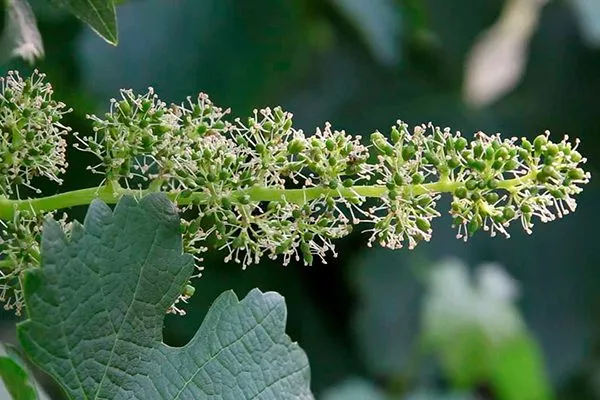
The berries ripen first, just 80 days after bud break. This applies to the southern regions, as elsewhere, it occurs 10-15 days later. Harvesting can begin in late June.
Productivity and fruiting
Rombik doesn't boast abundant harvests, but the older the bush gets, the more fruit it produces. Average yields range from 10 to 17 kg per plant.
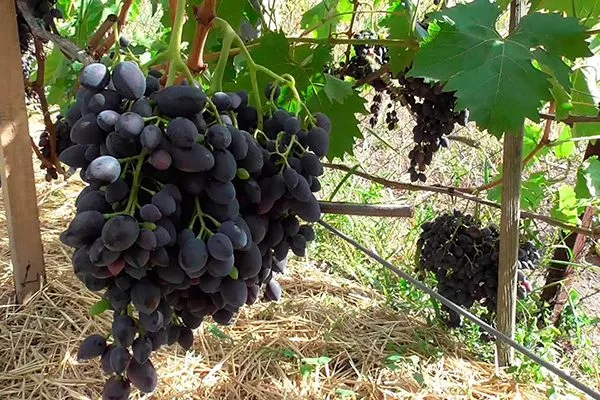
The hybrid's undeniable advantage is its ultra-early fruiting. A small number of berries can be harvested in the first season. Peak productivity is considered to be the fifth year after planting.
Advantages
The rhombus has many positive aspects. The main ones are:
The variety is perfect for beginners because it does not require special growing conditions.
Flaws
There are also some negative aspects, but they are critically few:
Many consider the fact that the hybrid has not yet been included in the State Register to be a significant disadvantage.
Landing
To ensure good grape production, select sunny sites and nutritious soil. Also consider the following:
- Planting dates. They depend on the climate, but the main factor is air temperature—14-16°C—and no risk of recurrent frost. In central Russia and the south, Rombik can be planted in the fall, but 1-1.5 months before the first frost.
- Optimal location. The vineyard should be located on elevated ground to prevent the root system from freezing in the lowlands. The groundwater table should be 1.5-2 meters below the soil surface. If the water table is lower, the roots will not be able to reach it and extract moisture, and if it is higher, they will rot. The distance from other crops or buildings should be 4-6 meters.
- Soil. Grapes typically thrive in sandy loam or loamy soil, but Rombik thrives in sandy soil. Because water doesn't stagnate, the soil warms up quickly.
The optimal pH is between 5 and 7. Fertility is also important, and sand is low in it, so mineral supplements are added to the hole during planting. - Selection and preparation of seedlings. The planting material should be free of damage and disease/pest infestation, with well-developed roots and above-ground growth. Preparation consists of the following:
- shortening of roots and shoots;
- treatment with a growth stimulator (Epin, Kornevin, etc.) according to the instructions:
- cutting off all damaged and unusable areas.
- Site preparation. For spring planting, do it in the fall; for autumn planting, do it in the summer. The beds need to be dug over, cleared of debris and weeds, and organic fertilizer added (8-10 kg of manure, humus, or compost per square meter).
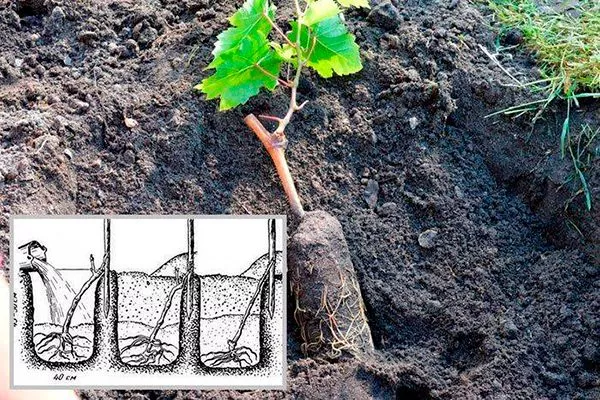
- Landing. Dig planting holes in the area to accommodate the root system. Fill the holes with soil, place the seedling, compact the remaining soil mixture, and water.
- ✓ The seedling planting depth should be at least 50 cm to ensure stability and development of the root system.
- ✓ The distance between seedlings should be 2-2.5 m to provide sufficient space for the bushes to grow.
Growing and care
Young plantings require special care as they develop. Standard maintenance procedures are then followed to maintain the plant's health.
Watering
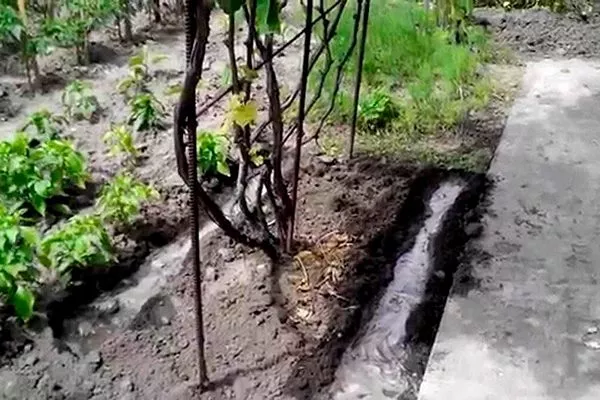
Until the vine reaches five years of age, Rombik grapes need to be watered frequently—approximately once a month, with 30-60 liters of settled water. Once the vine reaches maturity, watering a week before budding, during fruit formation, and a couple of weeks before ripening is sufficient. Mature plants require approximately 100-150 liters of water.
Other events
The remaining treatment procedures are standard. They include the following:
- Top dressing. Fertilizers are applied several times with mineral complexes, and organic matter is added only once every couple of years. When to apply fertilizers:
- during kidney formation;
- before flowering;
- during berry formation;
- before preparing for winter.
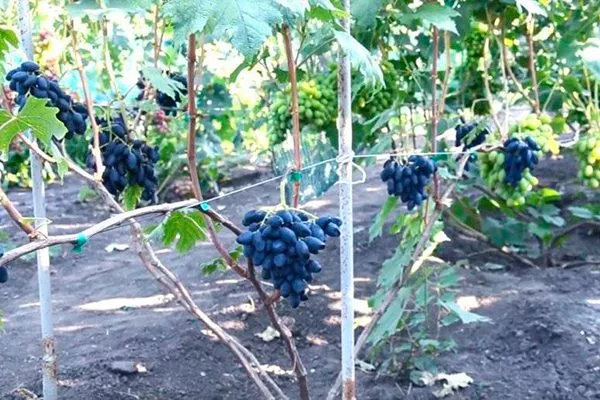
- Tying to a support. Despite the vigor of the shoots, the bush needs to be secured to prevent the stems from breaking and the clusters from drooping toward the ground. The support should be vertical—trellises, trellises, etc. Both old trunks and young shoots can be secured to the structure.
- Green operations. The plant requires shoot thinning. This is important for Rombika to increase productivity and achieve larger berries. To achieve this, side shoots, triplets, and double shoots are pruned to a height of 50-60 cm. Leave at least 15 cm between shoots in a vertical line.
- Treatment against diseases and pests. Despite strong immunity, preventative treatments are necessary. For this, the bushes are sprayed three times: in early spring, before budding, and when berries begin to form. Fungicides, insecticides, and Bordeaux mixture are used.
- Shaping and pruning. Removing shoots for sanitary and hygienic purposes is mandatory. For this purpose, broken, dried, frost-damaged, and insect- and disease-infested branches are pruned in the spring and fall. The same rules apply to all grape varieties.
- Preparing for winter. Before winter, the bushes are fertilized with potassium, pruned, hilled to a height of 20-25 cm, and mulched. If necessary, they are wrapped in any non-woven material, lined with spruce branches, and covered with snow.
Reproduction
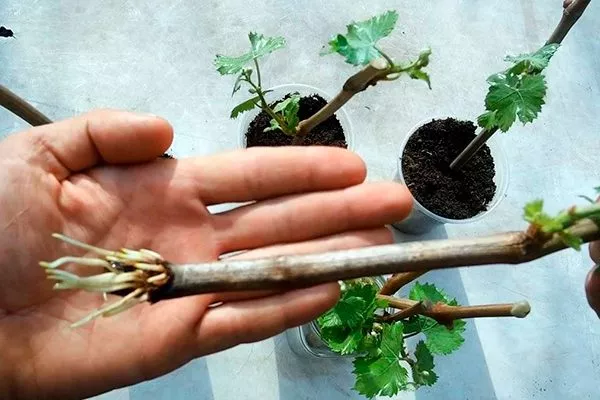
The Rombik hybrid is best propagated by cuttings. It's impossible to achieve the parent's characteristics using other methods. The process is simple:
- shoots up to 15 cm long are cut;
- processed in a root former;
- installed in a moist substrate;
- When roots begin to form, they are transplanted into the soil.
Diseases and pests
Despite the Rombik grape's strong immunity, growing it can sometimes be problematic. And the winegrower isn't always to blame—unfavorable weather conditions, such as prolonged rains, excessively dry summers, and the spread of bacteria by flying insects, also contribute to fungal infections. However, the main negative factor is failure to follow proper agricultural practices.
What may happen:
- Powdery mildew. The fungus attacks all green parts, leaving a grayish-white, powdery coating. Over time, brownish, rotten spots develop. Eventually, the leaves and stems dry out and fall off. Flint and Quadris are used for treatment and prevention.
- Downy mildew or false powdery mildew. The root zone is affected and can be recognized by yellowish or greenish plaque. Subsequently, the entire trunk dries out. Contact fungicides are required for treatment: Cuproxate, copper oxychloride, and Bordeaux mixture.
- Anthracnose. It is detected by the shedding and drying of leaves and berries. Copper-based preparations and Bordeaux mixture are used for treatment.
- Bacterial necrosis. Black necrotic spots appear on the above-ground parts, plant growth stops, and deformation occurs. Treatment is identical to the previous one, but the copper concentration is twice as high.
- Zlatka and beetle larvae. You can recognize the pest by holes in the bark and wilting of leaves and stems. Solutions of Iskra-M, Aliot, and Fufanon-Nova are used for control.
Harvesting and storage
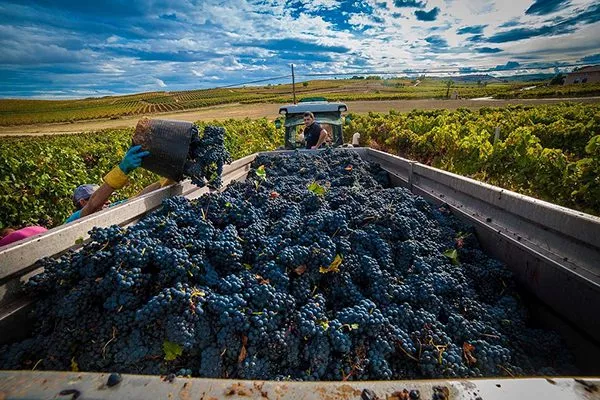
The harvest is carried out in dry weather to prevent the bunches from becoming damp. They are cut with sharp pruning shears and stored in a single layer in wooden crates with holes for ventilation. At temperatures between 0 and 5°C, the shelf life is 70 days.
Reviews
The Rombik grape is an unregistered new variety with good characteristics and excellent disease and pest resistance. The key is to pay close attention to watering during the first five years after planting and limit the yield, which is not considered abundant.