
The Georgian Rkatsiteli grape is one of the most famous grapes and an excellent source of raw material for the wine industry. Today, this variety is cultivated primarily in the former USSR and is widely used to produce a wide variety of wines.
Description of Rkatsiteli grapes
Rkatsiteli has robust pyramidal bushes. The foliage decreases from the base to the top, which is what forms the pyramid.
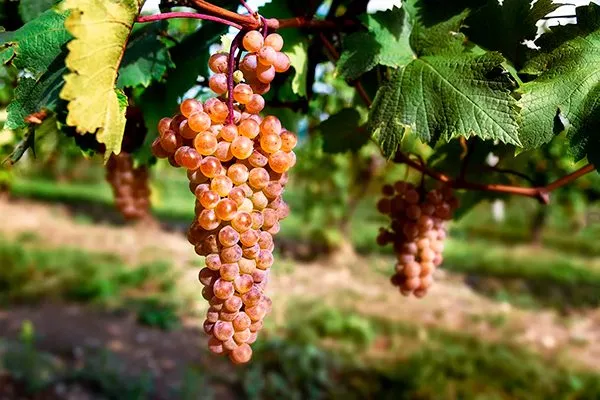
Brief description of Rkatsiteli:
- Bushes - vigorous.
- Leaves medium-sized, grooved-funnel-shaped, with 3-5 lobes.
- Roots well developed, their length reaches 3 m.
- Flowers bisexual, collected in inflorescences.
- Brushes medium density, up to 15 cm long, up to 8 cm wide. Weight - 150-165 g. Shape: cylindrical-conical and cylindrical.
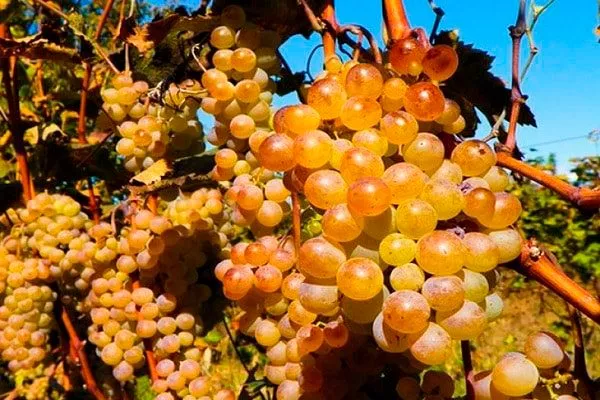
- Berries Round or oval, 14-18 mm in diameter. Weight: 1.8-2.6 g. Golden-yellow color with brown spots caused by sun exposure. Sometimes the fruits have a pinkish tint. The flesh is juicy, and the skin is thin and firm. The flesh contains 3 seeds.
Origin
In Georgia, grapes grow naturally, so all Georgian varieties—of which there are over 500—are very hardy and resilient, possessing a distinctive flavor. Rkatsiteli is one of the 20 most popular Georgian wine grape varieties.
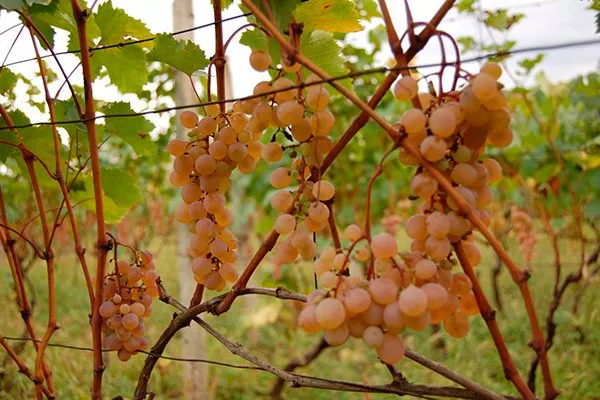
It's unclear exactly who developed the Rkatsiteli variety or when. It is known to have originated in Kakheti, Georgia. This white wine grape variety is highly prized and grows well in southern Russia. Rkatsiteli is known by other names in different regions, including Topolyok, Korolek, Kukura, and Budashuri.
Growing regions
Most Rkatsiteli grapes grow in eastern Georgia, in the Alazani Valley, along the Alazani River (Kakheti). In Georgia, this variety is cultivated on an area of over 20,000 hectares.
The variety is also widespread in southern Russia, Moldova, Armenia, Macedonia, and other countries. It is even grown in Australia, America, and Southeast Asia. Russia ranks second after Georgia in terms of Rkatsiteli plantings, with 6,500 hectares. In Crimea, for example, a third of all vineyards are planted with this Georgian variety.
Characteristics
The Rkatsiteli variety is popular due to its taste and commercial qualities, which allow for the production of unique wines, as well as its good agricultural characteristics.
Specifications:
- Productivity. This variety is considered high-yielding. An average yield of 100-120 centners per hectare is obtained. Fruit-bearing shoots account for 20-70%.
- Frost resistance. Average, the crop can withstand frosts down to -22°C.
- Drought resistance. Average.
- Ripening periods. This is a late-ripening variety, with bunches harvested in September and October. The ripening period is 155-160 days.
- Taste — a pleasant sweet taste with a slight sourness. Sugar content is 172 to 188 g/dm³, and acidity is from 7 to 9 g/dm³.
Landing
The success of growing Rkatsiteli grapes largely depends on how correctly the planting is carried out.
Landing features:
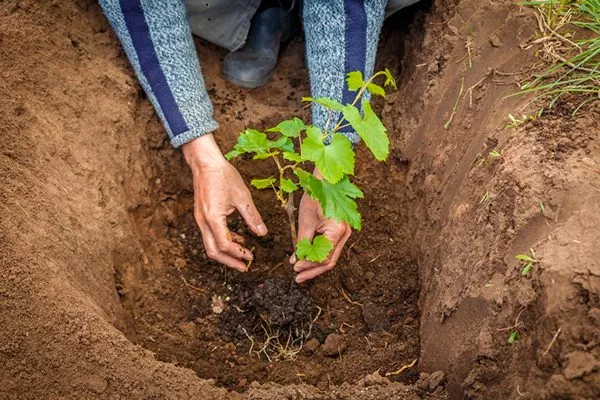
- Planting material. The Rkatsiteli variety is grown in two ways: from cuttings or from seedlings. The first method ensures a 90% survival rate if all planting conditions are met, while the second method ensures a 100% survival rate if the planting material is purchased from specialized stores and nurseries.
- Selecting a location. Rkatsiteli grows best in sandy and loamy soils with a high humus content. The key is to avoid waterlogging. Ideally, sites located at an altitude of 400-700 meters above sea level are suitable. Lowlands and basins are not recommended.
In the south, preference is given to the northern slopes of the hills, which ensures more uniform ripening of the berries. - Planting dates. The best time to plant Rkatsiteli grapes is in the spring. This allows the seedlings to establish themselves well and prepare for winter. It is recommended to plant on a cloudy day or in the evening, as direct sunlight can damage young grapes. Cuttings or seedlings are planted in mid- to late May—the timing depends on the regional climate.
- Nuances of disembarkation. The planting hole is 70 cm deep, with 2-3 m between adjacent holes. Drainage is placed at the bottom and filled with nutritious soil mixture. The planted grapes are tied to a pre-installed support and watered with lukewarm water.
- ✓ Soil pH should be between 6.0-7.5 for optimal growth.
- ✓ The groundwater depth must be at least 2.5 m to prevent root rot.
Features of growing the Rkatsiteli variety
To obtain a good harvest of Rkatsiteli—large and high quality—it is important to grow this grape in suitable conditions and provide it with appropriate care.
Features of agricultural technology:
- Trimming. This is mandatory and is performed twice—in spring and fall. Crown shaping ensures light and air flow to the clusters and prevents the spread of diseases and pests. Damaged and overly long shoots are also removed during pruning.
To ensure good ventilation, the shoots are positioned horizontally. The optimal load is 50-60 buds. There should be 10 to 12 buds per fruiting shoot. - Wintering. In southern Russia, the Rkatsiteli variety can be grown without winter cover. Here, grapes can be grown using tall trunks. In regions where winter temperatures drop below -20°C, cover is necessary—sprinkle the vines with leaves, cover them with agrofibre, and cover them with plastic.
- Watering. The recommended watering rate per bush is 10 liters. Water the bushes with settled water in the morning or evening. Avoid getting water on the leaves. During droughts, increase the frequency and amount of watering, and reduce it during rainy periods.
- Top dressing. The first feeding is done a couple of weeks after planting. Organic fertilizers are primarily used. Subsequently, potassium or phosphorus-based mineral fertilizers are preferred. Feeding is stopped during fruiting, and organic fertilizers are added again after fruiting has completed.
Pros and cons
Before planting Rkatsiteli grapes in your garden, it's worth evaluating all its advantages and disadvantages to determine whether this variety is suitable for your climate and/or intended purposes.
Diseases and pests
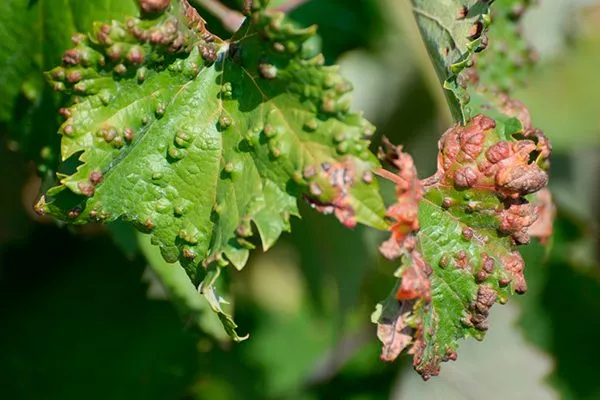
The Rkatsiteli variety is fairly resistant to mildew and gray mold, but is much more often affected by oidium under unfavorable conditions.
| Fungicide | Efficiency against powdery mildew, % | Protection period, days |
|---|---|---|
| Topaz | 90-95 | 14-21 |
| Strobe | 85-90 | 10-14 |
Other common grape diseases, such as anthracnose, chlorosis, and bacterial wilt, can also affect grapes. Standard preventative measures can help prevent these, and in cases of severe infestation, fungicides such as Topaz or Strobi can be used.
The main pests of the Rkatsiteli variety are grape leaf rollers and spider mites. The former are controlled with insecticides such as Fufanon-Nova, Decis, or Aliot, while acaricides such as Akarin, Kleschevit, Fitoverm, or similar products are used against spider mites.
Harvesting and storage
The bunches are picked in sunny weather; harvesting should not be done during rain, as moisture will negatively impact the quality of the grapes and the taste of the wine. Store the picked grapes in a cool, dark place where the temperature does not rise above 2°C.
Application
Rkatsiteli is used to make a wide variety of wines and wine bases for cognacs and brandies. Rkatsiteli has been used to produce dry white wines since 1943. In Georgia, this famous grape is used to make dry, semi-dry, and semi-sweet wines, and in Kakheti, it is also used to make a sweet wine.
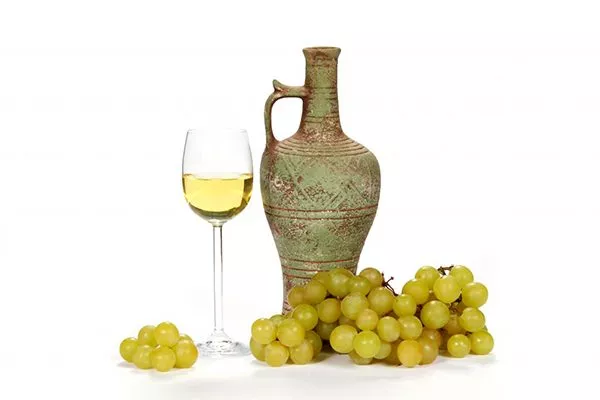
Rkatsiteli wines are fairly high in alcohol and moderately acidic. The taste reveals freshness and varietal notes, interspersed with floral, citrus, herbal, and honey tones. The bouquet of amber-colored Kakhetian wines reveals hints of dried apricot, raisins, and orange peel.
The most popular wines:
- Tsinandali;
- Gurjaani;
- Alazani Valley;
- Vazisubani.
The Rkatsiteli grape variety is the oldest Georgian grape variety, long recognized by winemakers. It is undoubtedly one of the most sought-after, not only producing excellent raw materials for dry white wines but also boasting excellent agronomic characteristics.