
Riesling is a world-famous white grape, cultivated by farmers for hundreds of years. This wine grape is often called the "king of the vineyards" and is widely used to make juices and fine wines.
Description of the Riesling variety
The Riesling variety is distinguished by its vigorous growth. Its biological qualities are typical of the group of vigorous Western European varieties.
Brief description:
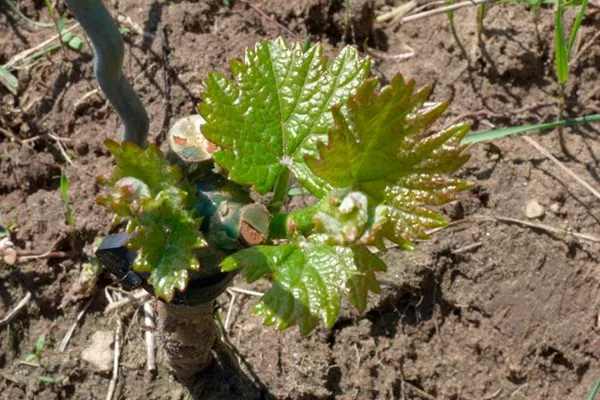
- Escapes When young, they are covered with a fine, light-green, bronze-tinted pubescence. After a year, the branches turn light brown and are covered with dark nodes.
- Leaves Medium-sized, rounded leaves with three or five lobes and a deep to medium dissection. The leaves are wrinkled, rich green, and turn yellow in autumn. The undersides of the leaves are pubescent. Petioles and immature shoots are wine-red.
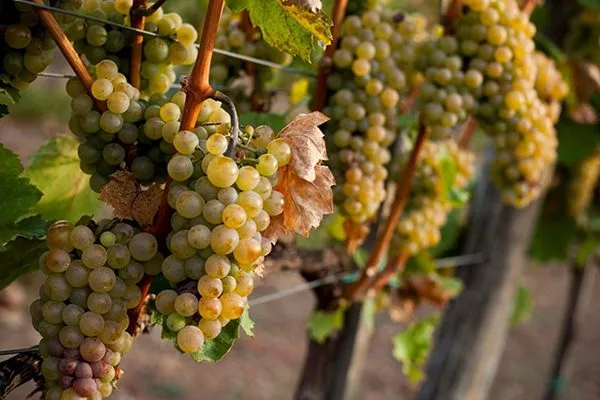
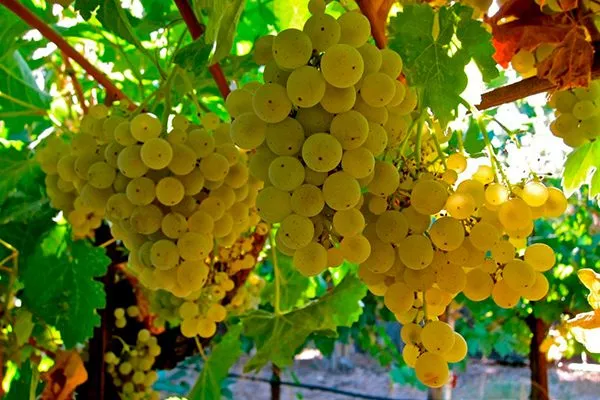
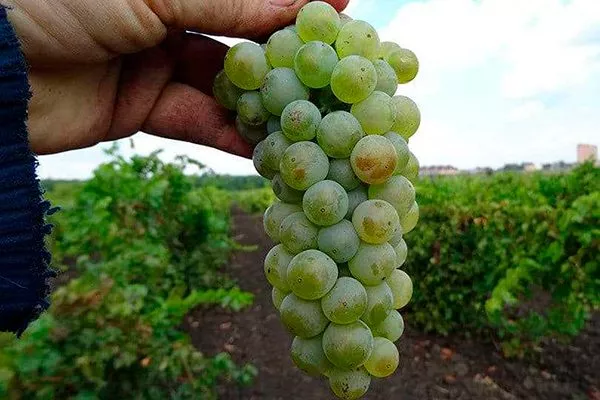
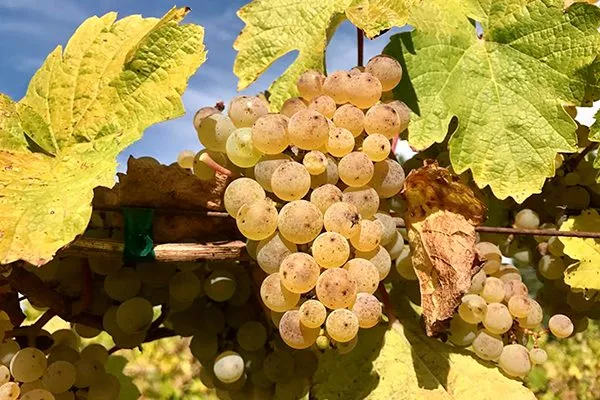
- Flowers Bisexual. After flowering, small, dense clusters form, ranging from 8 to 14 cm long and 6-8 cm wide. The clusters are typically cylindrical or cylindroconical in shape and have a short stalk (3 cm). The average cluster weight is 80-100 g.
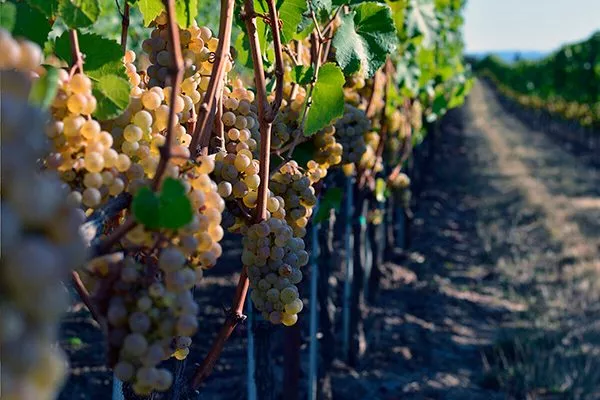
- Berries Green-white or greenish-yellow, they are round and have a thin but firm skin with visible brown spots. They have juicy flesh and 2-4 seeds inside. The berries are 11-15 mm in diameter and average weight is 1.3 g.
Breeding history
The Riesling grape was first mentioned in 1435 (in the chronicles of the town of Rüsselsheim, Germany). It is believed that the ancestors of Riesling were wild grapes and some cultivated variety. Having appeared on the banks of the Rhine, it quickly spread to other regions.
It is believed that one of the parent varieties was the Gouais Blanc grape. The Germans called it Weisser Heunisch. Although this variety is very rare today, it was widespread in Germany and France in the Middle Ages.
Today, approximately 60% of Riesling is grown in Germany. It is also planted in Austria, Switzerland, the Czech Republic, Romania, the United States, Argentina, and other countries with mild climates and long warm seasons. The variety's modern name, Riesling, was first used in 1552.
Other names:
- Rhine Riesling;
- White Riesling;
- Johannisberger;
- Riesling Johannisberg.
Today, Riesling, along with Chardonnay and Sauvignon Blanc, is one of the top three white grape varieties.
Characteristics
Riesling has earned the respect of winegrowers for good reason; it has excellent characteristics and is ideal for the food and wine industries.
Characteristics of the Riesling variety:
- Productivity. Depends on climate, location, and growing conditions. Riesling grapes are low-yielding varieties, with an average yield of 70-90 centners per hectare. Fruit-bearing shoots account for less than 90%. Each fruit-bearing shoot produces a pair of clusters.
- Frost resistance. The variety is frost-resistant and can withstand temperatures down to -20°C; it also withstands recurrent frosts in the spring.
- Drought resistance. The variety does not tolerate drought well; it is necessary to constantly maintain an optimal moisture level.
- Ripening periods. From bud break to harvest, 150-160 days pass. In designated growing areas, Riesling ripens by the end of September.
- Taste — pleasant and balanced. The berries have juicy pulp with a sugar content of about 20%. Acidity is 8.5-10.5 g/l.
- Grape juice yield— 80%.
- Caloric content of fresh berries — 43 kcal per 100 g.
Varieties with characteristics similar to Riesling grapes: Bakator white, Arnsburger, Sukholimansky white, Furmint, Khushia Shavi, Mavrud, Rkatsiteli.
Uses of Riesling grapes
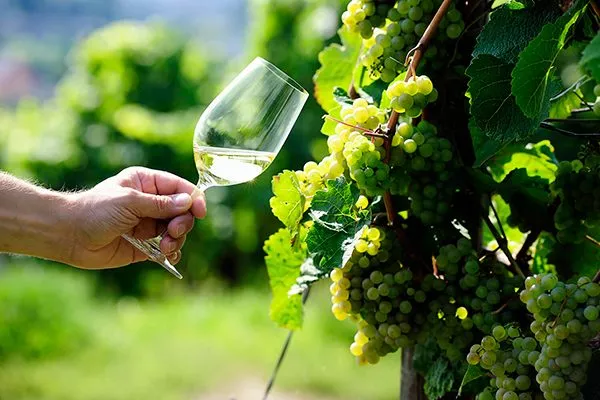
Riesling wines are pale yellow, slightly greenish. They have a sweet, refreshing, and refined flavor with a distinct acidity. Aromas of apple and pear combine with floral notes.
Aromatic bouquet of Riesling wines:
- floral notes - the scent of white flowers and roses is felt;
- herbaceous - the aroma of freshly cut grass;
- fruity - aromas of peach, green apple, pear, grapefruit, apricot and tropical fruits;
- mineral—aromas of flint, rubber, metal, oil, kerosene.
Oily notes are characteristic of aged wine. Their appearance is also facilitated by abundant sunshine, ripe berries, low humidity, and warm, rocky soils. "Noble rot," which increases the sugar content and aroma of the fruit, also plays a prominent role in the wine's flavor.
Riesling produces exquisite dry and semi-dry wines that complement fish, poultry, and pork dishes perfectly. They also pair well with various fruits, mousses, cream cakes, and other desserts.
Pros and cons
Given Riesling's long history and popularity, it's no surprise that this variety boasts many virtues. But before planting this grape in your garden, it's also helpful to be aware of its shortcomings.
Landing features
Riesling cultivation has a number of specific features that ultimately determine not only the quality of the harvest but also the wines themselves. First and foremost, attention must be paid to growing conditions and planting management.
Site requirements
The Riesling variety is planted on sunny slopes. It adapts well to a wide variety of soils. Fertile, well-drained soils provide the most favorable conditions. Riesling grows best on gentle slopes with calcareous soils.
Climate requirements
Riesling sets fruit quite late. However, this grape ripens earlier than many other varieties. To obtain berries with optimal acidity, ripening must be slow. This is possible in regions with long, cool summers. Only under such conditions can high-quality grapes be grown and used to produce good wine.
Recommended planting times
The best time to plant Riesling grapes is spring. Typically, in growing regions, they are planted in late April or early May, when the risk of night frosts decreases. If winters are mild in the region, planting in the fall is also possible. It's important to wait until the soil has warmed up in the spring and until it's frozen in the fall.
Neighborhood
Neighboring crops can affect the growth and development of grapes. Some plants are favorable and some are unfavorable, and it's important to avoid the latter in close proximity.
Good neighbors for Riesling grapes:
- clover and peas enrich the soil with nitrogen;
- Basil, dill, rosemary, lavender and flowering herbaceous plants attract beneficial insects;
- Lilac, jasmine, and other ornamental shrubs or trees can serve as a natural barrier protecting grapes from strong winds.
Selection and preparation of seedlings
Seedlings should have perfect, undamaged bark and healthy roots, free of dry or rotten shoots. Preference should be given to seedlings with three or more rootlets and five or six buds. If the leaves are wilted, curled, or deformed, the seedlings are of poor quality.
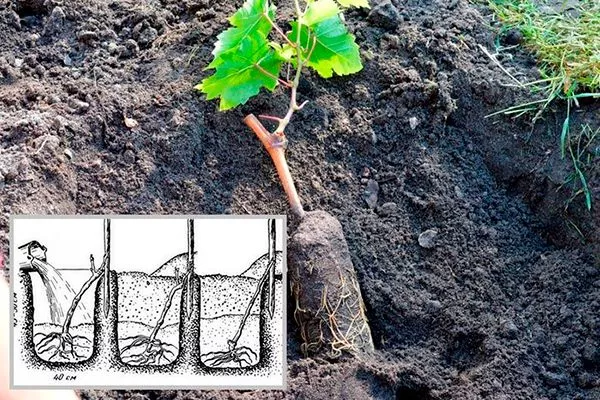
Before planting, immerse the roots of grape seedlings in water for 3-6 hours. This procedure will help the grapes root faster. It is also recommended to treat the roots with fungicides and insecticides.
Site preparation
Before planting Riesling grapes, it's necessary to conduct a soil analysis. Its pH, fertility, and mineral content are determined. Weeds, rocks, and other debris are removed from the area. The soil is then tilled, adding various components based on the results.
- ✓ Soil pH should be between 6.5-7.5 for optimal growth.
- ✓ The lime content in the soil should not exceed 20% to avoid chlorosis.
If the soil is acidic, add lime; if it's dense or poorly drained, add sand and organic matter (compost or humus). Mineral fertilizers are also added if necessary.
Features of planting seedlings in the ground
To plant Riesling seedlings, dig holes 45-60 cm deep and 60 cm wide. The distance between adjacent seedlings is 1.5-3 m. Leave gaps of 2.5-3 m between rows. Add compost or rotted manure to the holes. Place the seedling in the center of the hole, fill it with soil, compact it, and then tie it to the support.
Care
To obtain a high-quality harvest in the required quantities, it is necessary to properly care for the grape plantings.
- Watering. During the first years of growth, Riesling grapes are watered regularly. Watering is also important during drought and heat. Particularly large amounts of water are needed during the initial stages of growth, in spring and early summer; subsequently, the volume and frequency of watering are reduced. Overwatering is contraindicated, as it promotes root rot.
- Top dressing. In April and May, grapes require nitrogen to stimulate foliar growth. Potassium or ammonium nitrate, or a urea solution, can be applied. Fertilizers are sprayed around the vines, taking care not to contact the plants themselves. In May and June, grapes require phosphorus and potassium; superphosphate or other fertilizers containing potassium sulfate can be applied during this period. A second application can be made before winter to ensure nutrition for the spring, but the nitrogen content should be kept to a minimum.
- Trimming. This is usually done in late winter or early spring, before the vines begin to actively grow. All old, diseased, and damaged shoots growing in the wrong direction are removed.
During the growing season, excess shoots and leaves that interfere with ventilation and sunlight penetration to the clusters are trimmed. The tops of the vines are cut back to the first living point. In the fall, the pruning is repeated, removing old and diseased vines. - Wintering. First, remove all fallen leaves to prevent the spread of diseases. Mulch, straw, or various covering materials, such as agrofibre, are used as cover.
Pest and disease control
The Riesling variety is susceptible to a number of common grape diseases and pests, so preventative measures are recommended to prevent damage.
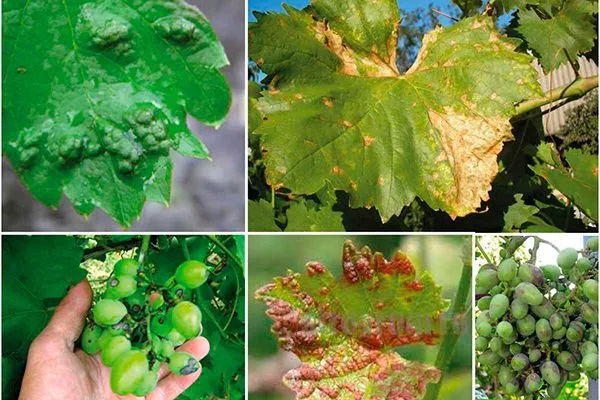
- At the beginning of the growing season, treat the vines with an insecticide against phylloxera.
- Before flowering, treat with a fungicide to prevent powdery mildew.
- After harvesting, remove and burn affected parts of plants.
Most often, Riesling is affected by the following diseases:
- oidium;
- bacterial cancer;
- gray rot.
Riesling is quite resistant to mildew, unlike many other varieties. However, infection by the fungus Botrytis cinerea leads not only to the harmful gray mold but also to the so-called "noble rot," which imparts a distinctive flavor and aroma to the wine.
The following helps reduce the risk of disease:
- choosing a sunny location;
- correct pruning;
- removal of fallen leaves;
- maintaining healthy soils;
- disinfection of pruning shears and other tools;
- apply fungicides in a timely manner.
Riesling grapes are most often attacked by the following insect pests: phylloxera and grape berry moth. These are controlled with powerful fungicides. Grapes also need to be protected from birds and slugs using traps, and from rodents during the winter using protective screens.
Harvesting and storage
The bunches are harvested when the berries reach optimal ripeness. They should develop a flavor that harmoniously balances sugar and acidity. Ripeness is determined by tasting the berries.
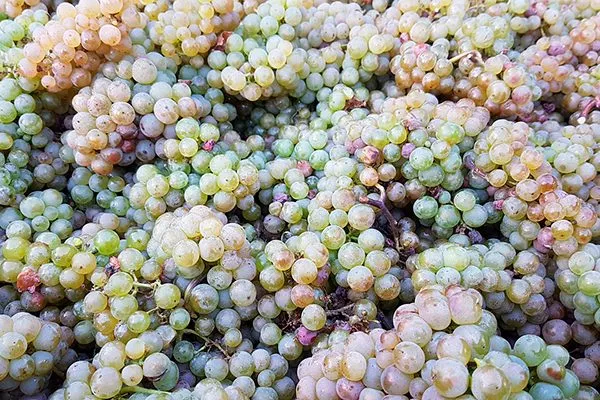
Riesling is best harvested on a cool morning to preserve maximum aromas. When picking the bunches, it's important not to press on the berries to avoid damaging them.
Riesling grapes do not store well; ideally, they are processed immediately after harvest. However, if the harvest needs to be stored for a while, a ventilated area with a temperature of 4 to 10°C is required. Ventilation and a supply of clean air are essential. The optimal humidity is 85-90%.
Riesling grapes are an old, tried-and-true variety that remains popular to this day. It's an easy-to-grow and hardy variety, but when growing it, it's important to consider its site and soil requirements to ensure the ideal grapes for winemaking.