
One of the most suitable grape varieties for warm climates is Red Globe. It attracts the attention of gardeners and grape lovers with its unique qualities and large, delicious bunches. This grape requires proper care to produce consistent and abundant harvests.
Breeding history
The variety was created by crossing L 12-80 and S 45-48 under the supervision of Harold Olmo, a researcher at the University of California. It was registered in the United States after successful trials in 1980.
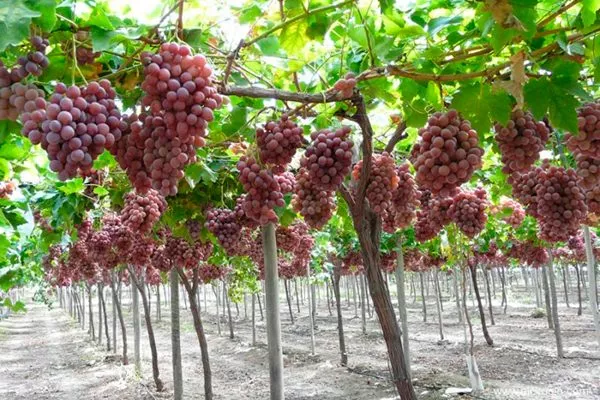
Geographic distribution
In Russia, it is successfully grown in regions with a warm climate in the south of the country, where favorable conditions are provided for heat-loving plants.
In the United States, it thrives in the California climate zone and other southern states. It is in demand in agriculture in China, Japan, and Latin America.
Description
It belongs to the dwarf and medium-sized varieties. When grown in its own root system, it does not exhibit significant shoot growth. It is sensitive to climate and soil conditions, which significantly impact its development.
Clusters
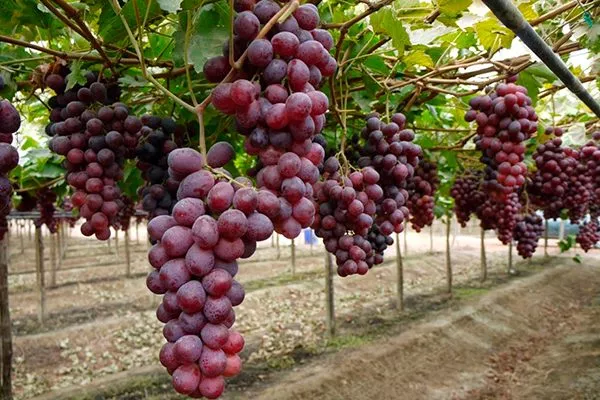
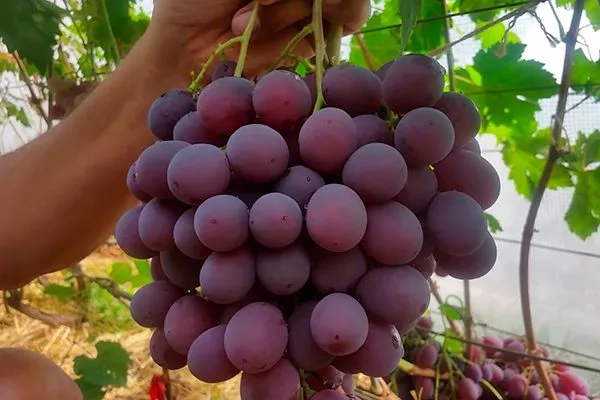
The fruit clusters located on the bush can weigh up to 1 kg. They are conical in shape and have a medium density, which characterizes their structure.
Berries
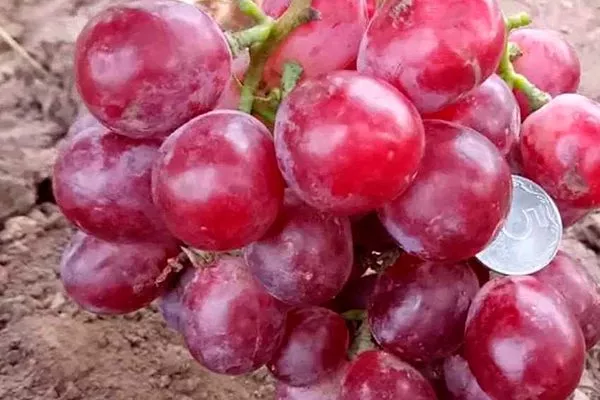
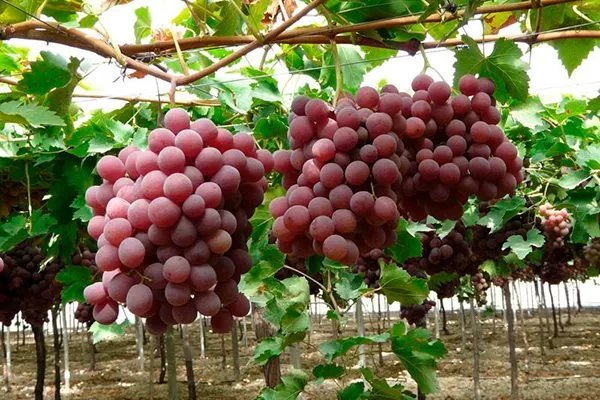
They have red skin when ripe. The skin is thin but firm, and does not crack when pressed. The juicy flesh contains four dark seeds. The round berries reach 24-28 mm in diameter. Large fruits weigh 10-15 g.
Ripening period and yield
Characterized by a late ripening period, the growing season lasts 140-155 days from the first berries appearing. It boasts high yields.
In the very first year of fruiting, no more than eight clusters form on a vine, but by the following year this number doubles. By the third year of seedling growth, the number of clusters does not exceed 30.
Features of cultivation
For planting, choose a sunny site protected from strong and harsh winds. The variety prefers fertile, loose soil. Carry out the procedure in the fall, before the first frost, to allow the plant to adapt and establish roots.
- ✓ Soil pH should be between 6.0-6.5 for optimal nutrient absorption.
- ✓ The depth of groundwater is at least 1.5 m to prevent root rot.
Step-by-step instructions:
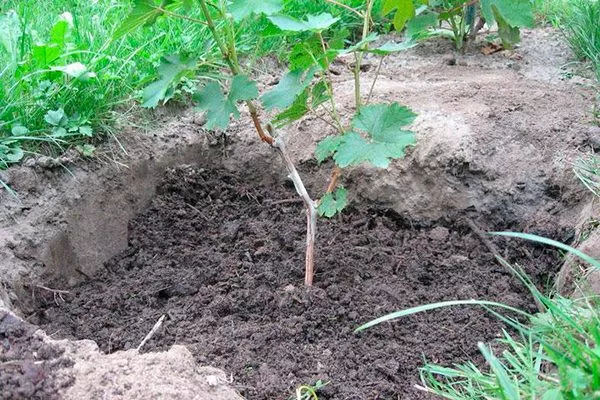
- Dig a hole, the depth of which depends on the size of the crop's roots, but does not exceed them by 20 cm.
- Place a drainage layer of gravel or wood chips at the bottom of the hole, then a fertile layer prepared from a mixture of black soil and fertilizers.
- Place the pre-prepared seedling in the hole, straighten the roots, then fill it with soil and compact it.
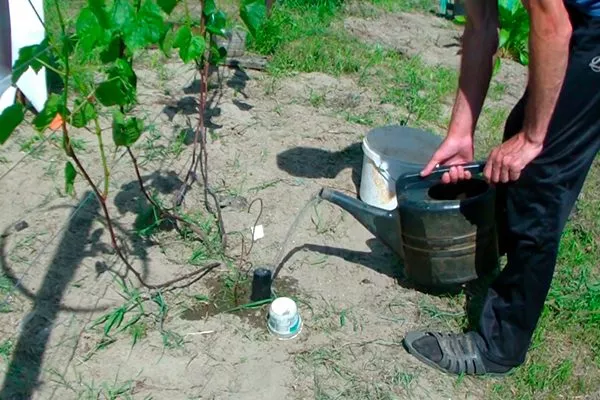
- Finish the process by watering generously with warm water.
Crop care must be timely, as agricultural practices directly impact yield. Helpful tips:
- Watering. Water the seedlings every two weeks until the soil is moist to a depth of 50 cm. Mulch the soil to protect the plant from weeds and retain moisture.
- Loosening. Carry out the procedure after watering or rain, accompanied by removing weeds.
- Top dressing. Fertilize 2-3 times per season. Start with mineral mixtures in the spring and finish with organic compounds before flowering.
- Trimming. Prune in the spring and fall before wintering. First, remove 7-8 buds on each shoot, then remove dry and diseased shoots. Leave the vine with no more than 5 shoots, and one cluster per stem. After flowering, shape the clusters, leaving only 3-4 main branches.
Red Globe is susceptible to fungal diseases. Gardeners who successfully grow this variety regularly use fungicides to control pests. The two most common diseases this variety is susceptible to are:
- Mildew. It attacks the green parts of the plant. Leaves become covered with yellow-brown oily spots that darken over time. Unripe fruits dry out and fall off, and those remaining acquire a sour taste.
- Oidium. Affects the above-ground portion of the vine. The upper parts of the leaves and green shoots become covered with dirty gray or brown spots. The berries stop growing, dry out, and, if the infection is late, may crack and rot.
| Disease | Period of activity | Control measures |
|---|---|---|
| Mildew | May-September | Treatment with Bordeaux mixture before flowering and after harvesting |
| Oidium | June-August | Treatment with sulfur-containing preparations at the first signs of the disease |
To combat the pest, use Bordeaux mixture (300 g of lime and copper sulfate per 10 liters of water). The application rate during treatment is 2 liters per 10 square meters.
Frost resistance and the need for shelter
It has moderate frost resistance and can withstand temperatures as low as -22°C. When growing in northern regions, where winters are more severe, additional shelter is recommended. Use dried leaves to protect the vines from adverse weather conditions.
Pros and cons
Planting grapes in your garden is a serious decision. Research the pros and cons of each variety.
Reviews
Red Globe attracts gardeners and grape connoisseurs with its unique characteristics. Large berries, pleasant flavor, and high yields make it a desirable choice for growing in a variety of climates.