
In the spring, many experienced gardeners plant grapes from seedlings. To ensure a good harvest, it's important to know how to do this correctly. In this article, you'll learn all the details of this procedure and the optimal timing according to the lunar calendar for 2019 and 2020.
Optimal planting times in different regions
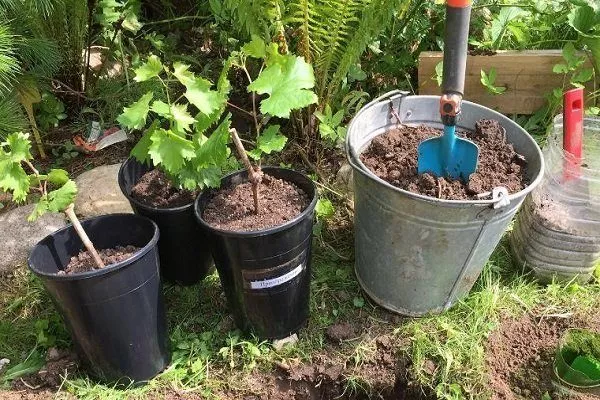
Grapes are very popular in the Moscow region and central regions. Here, weather conditions must be taken into account, but generally, planting begins in the second half of May. Planting can also begin in late April or early May, but in these cases, the seedlings should be placed in a greenhouse.
The earliest planting begins in the South, where, starting in the second half of the month, winegrowers are already busy planting cuttings and seedlings.
In Siberia and the Urals, spring grape planting should begin 2-3 days after the standard planting date, when frosts have passed and the plant is no longer in danger.
Dates according to the lunar calendar
This year, 2019, according to the lunar calendar, the most favorable period for planting seedlings of the selected grapes is the month of April, or more precisely, the period from the 11th to the 17th, and from the 21st to the 26th.
April is the best month for planting, so it's worth carving out some time for gardening during these days to enjoy the future harvest of your favorite grape variety. This isn't always possible, but if it's not possible, it's worth at least avoiding gardening during unfavorable times, as defined by the 2019 lunar calendar. These periods are considered unfavorable:
- 6, 7 and 21 in March;
- 5 and 19 in April;
- 5 and 19 in May;
- 3, 4 and 17 in June.
In 2020, favorable days for planting grapes will be:
- March 3-5;
- March 17;
- March 27-28;
- April 1-2;
- April 7-8;
- April 14;
- April 28.
Among the unfavorable days of 2020:
- March 14;
- March 22-23;
- April 19-22.
Pros and cons of spring planting
The main advantages of spring planting include the following:
- Acceptable temperatures. In spring, especially in April, there's no need to worry about severe frosts, so the risk of seedling death after planting is eliminated.
- Survival. Thanks to favorable weather conditions, the seedling goes through the adaptation period well, takes root, and as a result, its resistance to low temperatures significantly increases. It hardens, in a sense.
- Preparation. There's plenty of time to prepare the soil well in advance, allowing it to absorb nutrients during the winter. Over time, these nutrients will be transferred to the grapes, which will better cope with weather conditions and even pests.
Along with the advantages of spring planting, there are also disadvantages:
- Treatment. Before planting a seedling in the spring, the soil must be treated to remove harmful microorganisms and parasites, which awaken and become active during the spring.
- Weather. Forecasters have found it difficult to predict weather conditions recently, so the risk of frost in early spring remains and must be taken into account.
- Variety selection. Variety selection is quite limited in the spring, as grape growers try to sell their grapes in the fall. You'll have to purchase your seedlings in the fall and care for them until the spring planting season.
The planting time should be chosen based on personal capabilities and preferences, then the winegrower will have beautiful plants at any time.
Choosing the right variety
Many beginners overlook the choice of variety, which is a grave mistake. It's important to choose a variety based on the weather conditions in a particular region and personal preferences, not only in terms of taste but also care.
First, it's important to understand the ripening period, as temperatures vary across different regions, and climate conditions aren't always suitable for a particular grape variety. The fruit may simply not ripen if there's insufficient warmth.
Frost resistance and susceptibility to various diseases are important factors. Choose grape varieties with a wide range of resistance and various hybrid varieties that offer the most attractive characteristics. You can learn about the best frost-resistant grape varieties from this article.
- ✓ Check the root system for the presence of at least 3 healthy roots at least 10 cm long.
- ✓ Make sure that the seedling has at least one shoot at least 20 cm long.
What should a seedling be like?
There are two types of seedlings: vegetative and woody. Before choosing, it's worth familiarizing yourself with the main characteristics and features of each type:
- Under vegetative A cutting planted in early spring is often called a green cutting, as by the next spring, when planting should take place, the cutting usually already has several green leaves.
- Woody A seedling is a one-year-old grape bush. It is dug up in the fall and then stored in a cool place, always in damp sand. To preserve it, it's important to keep the humidity level in the room above 85% at all times, as mold and other microbial organisms can develop under lower conditions.
Suitable landing site
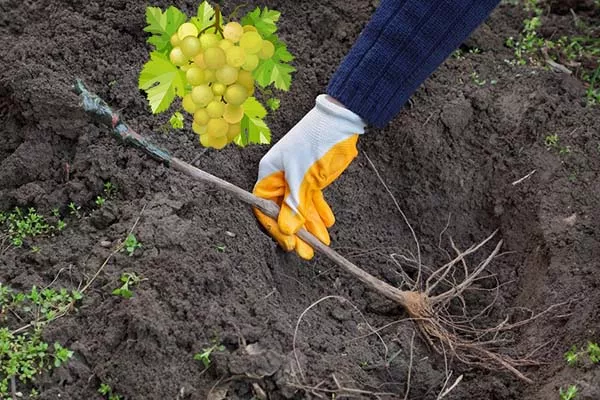
The location chosen is crucial for the future of grapes. Ideally, it should be a well-drained plot of land where the plant will receive maximum solar energy. The following planting nuances should also be considered:
- Planted cuttings should be spaced 3-6 meters from large trees. This is because trees draw a lot of nutrients from the soil, and the grapes simply won't get the nutrients they need to thrive. If the root system has become too extensive, the distance should be increased.
- It's recommended to plant cuttings on the south and west sides of buildings. This way, the plants will receive the necessary warmth even at night, thanks to the heat the buildings accumulate during the day. The cuttings will grow better and produce a better harvest faster.
- There's not always room to plant near a building, so consider elevated areas. This could include a slope facing southwest, west, or south.
- Avoid placing cuttings in low-lying areas, as frosts and any temperature fluctuations are felt there most strongly—the grapes may simply not survive.
- It is advisable to avoid places where groundwater is close to the soil.
Soil characteristics
The soil must be sufficiently fertile. According to statistics, most nutrients are found in the topsoil, so the top layer (approximately 10-15 cm) is not discarded when preparing the hole. It is then used, alternating with fertilizers, thereby preparing excellent soil for the future vineyard.
Requirements
It's important to consider all the requirements that will help you achieve a good harvest. We'll discuss them below.
How deep should I plant?
Winegrowers' opinions vary widely on this matter. Some believe that 50-cm holes are sufficient, while others insist the hole should be at least a meter deep. In moderate climates, gardeners prefer to plant cuttings at a depth of 70 cm.
At what distance should they be planted?
When planting multiple seedlings, the distance between cuttings must be taken into account by the gardener. The distance depends solely on the grape variety. For example, low- and medium-sized varieties should be planted at a distance of 1.3-1.5 meters, while vigorous varieties require a slightly different approach. They require at least 1.8-2 meters, and 2.5 meters is optimal if the plot owner has this option.
Insufficient spacing will impact the quality and growth of the grapes, as the cuttings will not receive sufficient nutrition, light, and ventilation. This significantly increases the risk of disease, and yields will be significantly reduced. Also, dense plantings age faster.
How and with what should I fertilize the soil before the procedure?
In most areas, the soil doesn't contain sufficient natural nutrients and components, and if the wrong location is chosen, grape growth is seriously compromised. To prevent plant death and disease, and to boost immunity, it's essential to thoroughly fertilize the area where the future vineyard will be located.
Experts recommend using mineral and organic fertilizers. You can apply several layers like this:
- black soil 10-15 cm;
- a bucket of rotted manure;
- a layer of fertilizer of your choice (150-200 potassium, 400 g of regular or 200 g of double superphosphate);
- Additionally, you can use a couple of cans of wood ash;
- another layer of black soil.
Preparation of planting material
The choice between a seedling or a cutting depends solely on the needs and wishes of the site owner, but the plants will need to be prepared in any case.
Cuttings
First, you need to leave the cuttings undisturbed at home for a few days. It doesn't matter whether they were purchased or dug up by a winegrower in advance in the fall. They need to acclimate to the temperature a little.
If you've grown and prepared the cuttings yourself, inspect them for mold, dark spots, or diseased spots. If mold is detected, rinse them in a potassium permanganate solution, then disinfect for 30 minutes. This can be done even if the cuttings are in perfect condition. After half an hour, rinse the cuttings with plain running water.
The next step is cutting to refresh the cuts. At this point, winegrowers also check the core of the cut, noting the color. A black or brown, dried-out core can be considered dead. Make sure the cuts are also smooth.
After this, they soak, furrow, treat with a root formation stimulator, and only then start sprouting.
To learn how to root grape cuttings, watch the following video:
Saplings
The situation with seedlings is a little simpler. Preparation begins 1-2 days in advance, including careful root pruning and soaking in a growth stimulant solution.
Sometimes, winegrowers replace store-bought stimulants with a solution of honey and water at a ratio of 1 tablespoon per 1 liter. This will give the seedling an excellent start and allow it to quickly take root, thus strengthening its roots.
Methods of planting seedlings
There are many ways to plant grapes, and each has its own advantages and disadvantages, which should be taken into account when choosing.
Classical
With the classic method, seedlings are thoroughly washed before planting. The container (if it was in a container) is cut open, the seedling is placed in the bottom of the hole, and a stake is placed on the north side for tying. The plant is then buried on top of the soil ball, compacted, and watered with warm water. Next, the hole is filled to the height of the first leaf, but this is after watering.
- Soak the roots of the seedling in water for 12-24 hours before planting.
- Trim damaged roots and shorten healthy ones to 15 cm.
- Place the seedling in the hole so that the root collar is 3-5 cm above the soil level.
For more information on spring grape planting, watch the following video:
On the trellis
This method allows for a well-organized vineyard. For this design, you need to prepare the site in advance by installing trellises in the required order depending on the number of seedlings. Then, planting occurs as in the first option.
Maintain a minimum distance of 2 m, and use 10 cm diameter metal pipes for supports. Use 5 cm diameter wire for tying, but it's important that it's plastic-coated.
On the ridges
This method is well suited for northern regions, as it provides maximum warmth and prevents flooding. First, dig a trench (facing south) 10 meters long, 1 meter wide, and 30-40 cm deep.
After this, add soil to a height of 30-35 cm, mulch, insulate, add heat-retaining material, and plant the cuttings 40 cm deep. A 30 cm diameter metal pipe is used for watering.
In the greenhouse
Planting in a greenhouse differs only in that the seedlings are watered once a week and kept well insulated. It's advisable to reduce watering as flowering and fruiting progresses.
Into containers
In northern regions, grapes are planted in containers. Cuttings are placed in bottomless plastic bags, but they must be placed on a suitable tray. The standard size is 30 x 40 cm. Humus and leaf mold are used as soil. Before planting, the roots are sprinkled with clay and manure (Kornevin can be used), and they are stored indoors.
When the first buds appear, the bags are placed in a shaded area for a couple of days, then moved to a sunny spot. When the weather warms up and becomes ideal for planting grapes, the seedlings are planted in the ground.
Moldavian
A long vine is twisted and tied with strong rope, then planted in a hole. No more than 2-3 buds are left above the surface. Care for the plant is the same as with the classic method.
Thickening
When densely planted, at least 7 bushes are grown per square meter. This method is more suitable for warmer climates. Branches are pruned fairly short, planted in the traditional manner, and grown in a bush form.
Peculiarities of planting grapes in lowlands
Lowlands are considered unsuitable. Seedlings are at risk from lack of sunlight, stagnant water, and frost. Planting in lowlands is possible, but A.G. Kudryavtsev's method is used. He suggested planting the plants in trenches and wrapping them well in heat-retaining material (bricks, slate, or regular boards).
Aftercare of grapes after planting
After planting grapes, they need careful care. We'll discuss how to do this properly below.
Watering
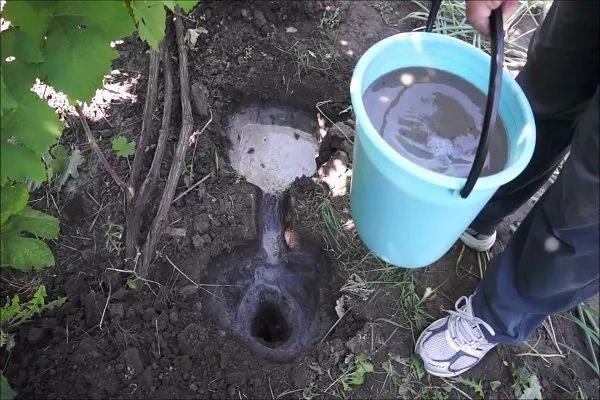
After planting, wait at least 10-14 days before watering for the first time. Ideally, do this in the evening, pouring 2-3 buckets of warm water under the bush. Subsequent waterings should be done after two weeks, and then only when the substrate has dried out.
Loosening
Loosening the soil is an essential step in grape care, as it allows air to reach the root system. Loosening the soil periodically is essential, but this can be avoided by covering the soil around the plant with a light layer of straw or hay.
Top dressing
With proper planting, there's no need to constantly fertilize the soil. This is only necessary if the soil was poor and the grapes are growing slowly and poorly overall. In these cases, organic and mineral fertilizers diluted in water are used. Typically, the manufacturer specifies the dosage on the packaging, and these should be followed.
Read more about what kind of fertilizer is suitable for grapes in the spring in next article.
Pest and disease control
Spraying grapes in spring Treatment against pathogens should be carried out before bud break. Experts recommend using fungicidal products that treat not only the vines but also the branches, trunk, and soil at the base. If there are numerous pests, the treatment should be repeated after 10 days.
Trimming
Pruning is done in early and late summer. Rootstocks are removed, as are the top roots of seedlings. A crucial step is to trim the roots first from the surface, which is accomplished by removing the top layer of soil to a depth of 20 cm.
After the work is done, the hole needs to be filled back in. Don't get carried away with pruning, as proper and complete pruning is only done in the plant's third year of growth.
Garter
For long vines, support them with long wooden stakes or a trellis. Metal pipes can also be used as a support.
Wintering
Insulation is essential for young seedlings. During winter, the grapes are laid in a trench and then mulched. As for the thickness, it should be chosen based on the climate conditions in your region.
Possible mistakes when planting grapes in spring
Even experienced grape growers can make mistakes when planting young seedlings. The most common mistakes include:
- too deep (the bush will grow poorly);
- seedlings from other regions (the local climate conditions are not suitable for them and they die);
- unsuitable location (not enough light, space, flooding and frost interfere with normal plant growth);
- planting vigorous and dwarf varieties nearby (some interfere with the development of others).
Useful tips and recommendations
Use trusted suppliers or prepare the seedlings yourself. It's a good idea to prepare the soil in advance for planting, so you can handle the rest of the care later.
Try to adhere to these guidelines when planting to avoid mistakes in depth or spacing between plants, as this can have a critical impact on the growth of the seedling and the future harvest.
Plant grapes at the right time and in the right weather conditions, otherwise you can forget about a favorable outcome.
Growing grapes is a complex and painstaking process that requires careful study and consideration of the needs of each variety. However, the hard work is rewarded when the harvest arrives. With the right approach, the quantity and quality of the fruit will always be excellent.