
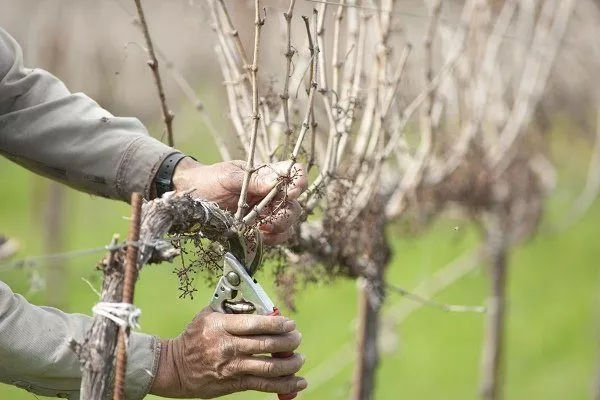
Spring pruning is necessary for early- and mid-season grape varieties. It is also recommended to prune varieties that are not particularly frost-hardy in the spring. Pruning helps gardeners increase grape yield and the quality of their berries, resulting in larger, sweeter berries.
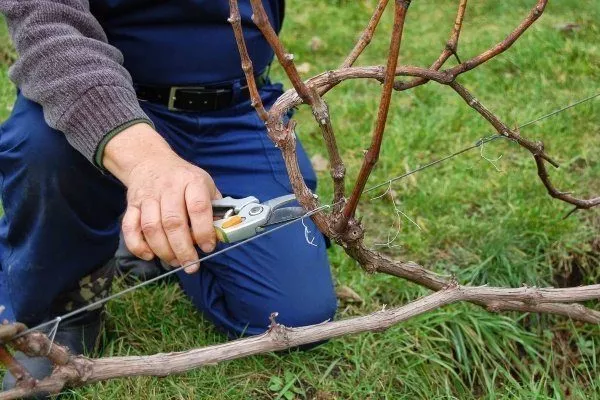
Why is spring pruning necessary?
Grapes are sun-loving plants, always reaching for the sun. They constantly produce new shoots, growing continuously, haphazardly, and unevenly. Why pruning is necessary:
- Formation of high-quality buds. If shoots grow haphazardly and unevenly, the buds are weak and sparse. They produce few inflorescences, many of which are sterile.
- Improving the taste of berries. Good buds produce powerful inflorescences, which produce large grapes with a rich taste.
- The vine is formed and excess shoots are removed.The plant tries to direct nutrients to young shoots. When a bush has an excess of rapidly growing branches, the plant lacks the energy to form fruit—all its energy goes into shoot growth.
If you skip spring pruning of grapes:
- the bushes become overgrown;
- the grapes will become smaller every year;
- the bushes will eventually become wild and lose their varietal characteristics.
Pruning is a mandatory procedure that allows you to renew the bush and ensure a high yield of berries.
Inexperienced gardeners often hesitate to prune excess branches, believing that cutting them means they're losing the harvest. Furthermore, pruned bushes initially look rather pitiful. The goal of pruning is to ensure sunlight reaches the top and bottom of the vines.
When do you prune grapes?
The timing of grape pruning depends on a number of factors:
- varieties;
- age of the bush;
- growing options;
- climate.
- Check the condition of the tools: sharpen the blades and disinfect them.
- Determine the timing of pruning based on air temperature and bud condition.
- Inspect the bushes for winter damage.
In spring, grapes are pruned:
- early and mid-season;
- with low frost resistance;
- young, with unformed bushes;
- covered for the winter.
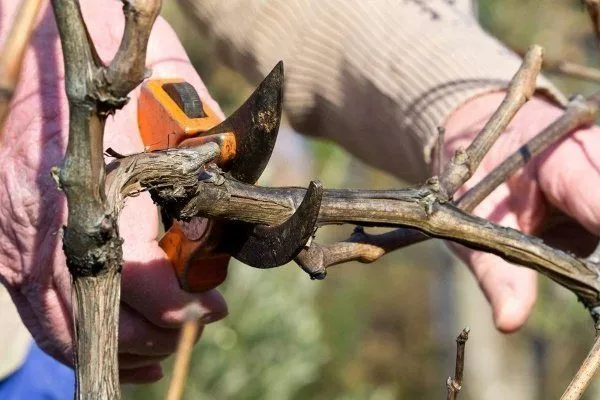
Spring pruning begins under the following conditions:
- Active sap flow hasn't begun. If pruning is delayed, exposed cuts will begin to ooze molasses, and this process cannot be stopped. The bush, losing its life-giving sap, weakens. As a result, the vine's growth is impaired.
If you carry out spring pruning after the sap has begun to flow, you can not only lose the harvest, but also completely destroy the grape bushes.
- The air temperature is set at 5-6˚C.
- Pruning should be done before the buds begin to enlarge. If the buds start to grow, you're too late!
The time for spring pruning has been missed – what should I do?
If the sap flow is in full swing and you haven’t had time to prune the grapes, you can:
- postpone pruning;
- engage in crown formation by blinding.
The blinding method is a crown formation technique that does not involve pruning the shoots. Blinding involves pruning the shoots:
- old;
- frozen;
- extra young people.
To prevent new growth from sucking juices from the bush, some of the buds are plucked out.
Trimming tool
For trimming you will need:
- Pruning shears – if pruning a young vineyard.
- A powerful pruning shear used for pruning fruit trees. This tool is essential for the rejuvenating removal of thick, perennial branches.
- Hacksaw. For removing any thickened branches.
- ✓ The pruning shears must be powerful enough to handle the thickness of the branches typical for your grape variety.
- ✓ The hacksaw should have fine teeth for a clean, burr-free cut.
Tool before use:
- They are sharpening.
- Wipe with alcohol.
In this video, an experienced gardener demonstrates how to properly sharpen grape pruning tools:
Basic rules of pruning
It's important to consider the age of the vines. Here are some rules for spring pruning of grapes:
- The cut is made at a 90-degree angle to allow the open cut to heal faster. An open wound at a right angle will heal faster.
- The following branches are being eliminated:
- sick;
- frozen over the winter;
- received other injuries.
At this stage, the cutting pattern is not taken into account.
- Overly elongated shoots are shortened so that they develop and form properly; 7-12 buds are left on them.
- Shoots that bore fruit last season are carefully cut off, being careful not to break them at the base. The shoots are cut 1.5 cm away from the perennial branch.
- To make replacement possible, shoots must be kept near the main trunk.
- Leave shoots with a diameter of 5-7 mm. Branches outside this range are pruned.
Thick shoots, more than 10 mm in diameter, are called fattening shoots – they interfere with fruiting, so they must be removed.
Once pruning is complete, the bush will initially look bare, but it won't take long before it becomes lush and green. Young shoots will quickly form and produce inflorescences—the source of the future harvest.
Pruning not only helps shape young vines but also restore neglected or frozen ones. Grapes are renowned for their resilience—they're ready to revive again and again, the key is to seize the opportunity wisely.
A viticulture specialist explains in this video how to properly perform spring pruning:
Types of pruning
During the first 3-4 years of life, grape vines are pruned to shape them properly—to create branches that will bear the entire weight. The supporting branches are formed in stages. The following methods can be used to shape the vine:
- standard;
- standardless.
In both cases, you must comply with:
- recommended pruning pattern;
- pruning times;
- care requirements.
Standard and standardless shaping differ from each other in the following features:
- Standard pruningThe main stem is formed, from which the supporting branches of the grape vine extend. The stem is 200-800 cm tall.
- Standard-free pruningThe basal head produces several supporting branches – 2 or 4.
Standard pruning
This pruning method is used when grapes are grown without winter cover, for frost-hardy varieties grown in large quantities. Standard pruning is also used by grape growers in warm climates.
Grape bushes that are well cared for grow for more than a hundred years.
Trunk formation is performed in the first year of grape planting. Trunk pruning is performed by year of growth:
- First yearTopping. Leaving two buds after the root, the seedling is cleared of excess growth.
- Second. The trunk is left untouched. The shoots that grew over the past season are removed. Having identified the strongest shoot, its top is pruned so that 7 to 12 buds remain. A single small shoot is left as a replacement, shortened to 2-3 buds.
- Third. This is the year the trunk's height and shape are established. The previously retained shoots become the supporting "sleeves"—they are reduced by two buds and then tied to supporting supports. Then the shoots retained as reserves are shortened: two buds are removed from one (leaving it as a replacement shoot), and five to six buds are removed from the other.
- Fourth. The time has come to trim the upper “sleeves” and remove all unnecessary shoots – the bush is formed as the winegrower wishes.
- FifthOnly the main branches that form the bush's fruiting structure are left. Any excess is trimmed off.
- Sixth. When forming a bush, 2 buds are cut off from the replacement branch, and the fruiting shoot is shortened, leaving 7-8 buds.
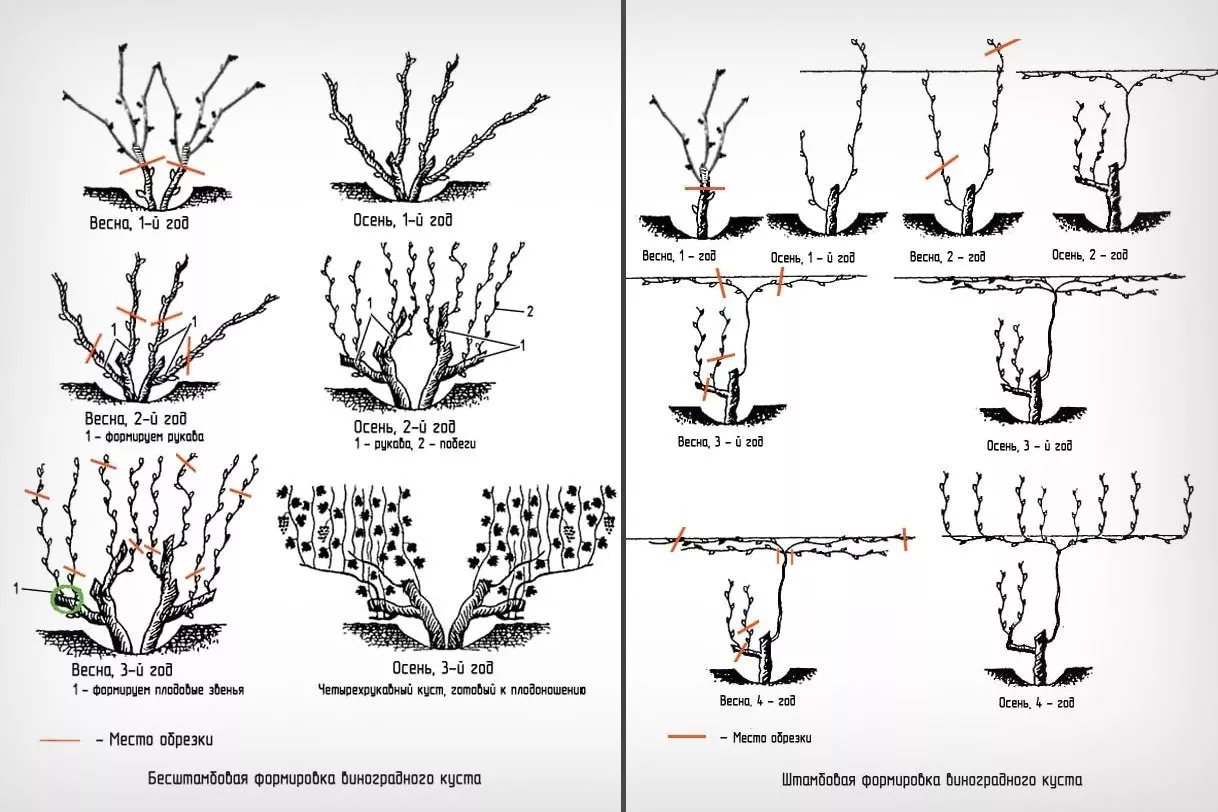
Thanks to standard pruning, it is possible to obtain abundant harvests while using space sparingly.
Standard-free pruning
This is a faster method of training. Three years is enough to produce properly growing grapes producing an enviable harvest. The order of standardless pruning by year:
- First year. Remove any damaged or deformed shoots. Also, remove 90% of the new growth. The remaining two shoots are trimmed back, leaving 2-3 cm after the second bud.
- Second. This year, 60% of the shoots are removed. Only two shoots should be left on the new shoots—the strongest ones are chosen, as they will bear the weight of the ripening grapes. The pruning should leave two to three buds on the shoots—many shoots will emerge from these by autumn.
- ThirdThe fruiting link formation stage. The lower vine is pruned to 2-3 buds, and the upper vine (fruiting stalk) is pruned to 7-10 buds. This is how the supporting "sleeves" are formed – each vine is left with two vines, and all other shoots are removed.
To ensure a fruitful harvest from your grapes, it's important to follow this rule: when pruning, leave fruit-bearing shoots and 2 or 3 branches, which will help renew the crown later.
Pruning fruit-bearing grapes
Greening operations on fruiting grapevines help regulate the growth and yield of the vines. Sometimes, it's necessary to remove excess fruiting shoots if the vine becomes overloaded.
Fragment
The formation of the bush is accelerated by pruning, eliminating pruning errors. Ventilation and warmth are improved. Pruning rules:
- Remove unwanted shoots growing on the head and branches of the bush. Leave shoots for replacement and renewal. For varieties with uneven shoot growth from dormant buds, pruning is performed twice.
- First of all, green shoots that have grown in the crowns are broken off.
- If the bushes are underloaded, debris is not needed.
- The pruning is done by breaking off the shoots down to the woody trunk.
Late pruning is done with pruning shears, but it harms the bush and weakens the plant.
Pinching off stepsons
Pinch off young herbaceous shoots growing on the fruiting stem. The purpose of pinching off shoots is:
- acceleration of restoration of the leaf crown or skeleton;
- stopping the growth of shoots – to prevent shedding.
On underweight bushes, pinch off several vigorous shoots above the third or fifth bud. The shoots produced after pinching can be used the following year to form fruiting branches.
An expert will explain how to properly prune grapes and how this affects yield in the following video:
Coinage
This is done to speed up the ripening of berries when green shoot growth has slowed. The withered tops of the berries are removed, 4-7 at a time. The conditions for pinching are:
- irrigation;
- strong growth of shoots;
- poor ripening.
If grapes are grown without irrigation, pruning is not necessary. It is also not necessary for low-growing varieties.
Spring pruning of damaged bushes
If your grapevine has been frozen over the winter, there's a good chance it will recover, at least partially. Let's look at restorative pruning techniques for various types of damage.
The bushes froze
First, the condition of the kidneys is checked by making cuts on them:
- green color indicates healthy kidneys;
- black and dark brown – about damage.
Cuts are made from the base to the tip of the branch. After counting the dead buds, the extent of damage is calculated. Depending on the extent of the damage, the following actions are taken:
- If the mortality rate is less than 80%, leave more buds during formation than is provided for in the scheme.
An additional harvest is obtained thanks to the shoots on fruiting branches left during autumn pruning. - If over 80% of the plant's growth has died, a two-stage sanitary pruning is necessary. Before bud break, remove frozen branches and damaged supporting shoots. Once the foliage begins to emerge, complete the sanitary pruning, removing excess growth.
- If the damage is 100%, check the side shoots—being more frost-hardy, they are more likely to survive the winter. If the side shoots have also lost buds, fruiting links can be formed from young shoots or fattened shoots growing from buds on perennial branches.
Frostbite of the root system
In frosty winters with little snow, part of the grapevine's root system is damaged or dies. Necessary actions:
- They dig up the ground at the will of the bush.
- Root incisions are made. Undamaged roots have white cuts, while frostbitten roots have dark brown cuts. If the frostbitten roots are up to 2.5 mm in diameter, the vine will recover the following year. The gardener's main goal is to reduce the load on the root system by cutting back fruiting branches.
Spring hail
If hail occurs in the spring and the bushes lose a lot of foliage, young shoots are pruned back to 1-2 buds. Then, shoots will emerge and are thinned out to activate reserve buds, which will bear fruit the following year.
A sharp cold snap
Frosts often occur in spring just as buds are breaking. These can damage not only new buds and shoots, but also year-old vines. Further action depends on the extent of the damage:
- The vine is damaged. It's recommended to prune last year's branches back to stimulate the growth of other shoots, which will awaken dormant buds.
- If frost has damaged the green parts and flowers, to awaken dormant buds, you need to shorten the annual shoots - this will help partially restore the harvest.
- If the tops of the branches, as well as a small part of the leaves and inflorescences, are damaged, you can do without special pruning.
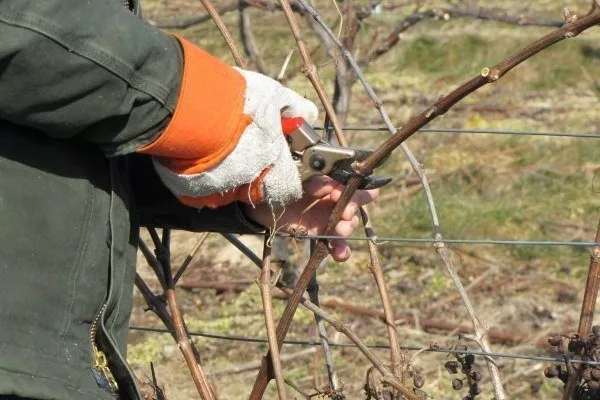
Trimming on the arch
Frost-resistant grape varieties are chosen for arches, as the branches are not covered for the winter. The pruning pattern is selected based on:
- features of the supports;
- characteristics of the variety.
Pruning arched grapes is no different from pruning vines supported on a trellis. Arched grapes produce abundant fruit, incomparable to the yields obtained on trellises.
If you live in a warm climate, you can plant the Original and Svetly varieties, as they aren't particularly frost-hardy, but they grow very quickly—in 1-2 months, even with heavy spring pruning, they'll cover the entire arch with foliage. It's recommended to prune the fruiting canes back to 10-12 buds.
If you need a frost-resistant, open-grown variety, consider Timur, Arochny, and Talisman—these are vigorous and disease-resistant. Bush training is done along with the installation of an arch:
- the first wire of the arch is placed at a distance of 50 cm from the ground;
- then at intervals of 30-40 cm.
When shoots emerge, only one is left—all the others are cut off. The remaining shoot is used to form a standard. A shoot that reaches the first wire produces two shoots. The task is to leave side shoots and form branches—left and right. Two more branches are established at a distance of 2 meters. Pruning rules:
- Fruit vines are laid along the branch and pruned to a certain number of buds, depending on the variety. A shoot grows from each remaining bud. The bush is formed using fruit vines.
- The vine that has finished fruiting is removed along with its new growth. The upper vine, which grew on the replacement shoot, is placed in the vacated space. The lower replacement shoot is shortened by two buds.
Popular methods of grape shaping
The training process begins 1-2 years after planting the seedlings, and lasts from 3 to 6 years, depending on the chosen training method. The process is complete when the bush and vine pattern has developed and full fruiting is achieved.
Guyau's scheme
Used in cold climates for covering grapes, it's considered a classic. This simple method allows the entire vine to be exposed to sunlight. Suitable for beginning gardeners. Guyot's method:
- In the first year, a strong shoot is grown. It is pruned in the fall, leaving 2-3 buds.
- In the second year, two shoots grow, they are pruned in the fall - 2-3 buds are left on one, the second is left long - the bunches will ripen on it.
- After a year, a knot and a vine will grow from the knot again.
Fruiting vines are shaped with imagination, and the bush's load is adjusted. By varying the length of the stems, the size of the clusters is altered.
Fan formation
The most popular option for shaping bushes. It differs from the Guyot pattern in that it uses a larger number of branches—3-5 instead of 1-2. Various fan-shaped formations can be created:
- big or small;
- with short sleeves or long sleeves;
- standard or standardless;
- one- and two-sided;
- single- and double-tiered.
In cold conditions, the standardless version—the fan-shaped and single-sided semi-fan—is more commonly used. Its advantages:
- convenient to care for bushes;
- convenient to cover;
- easy to carry out rejuvenation;
- the berries will have excellent taste.
The procedure for forming a fan-shaped bush:
- The first two years of work are no different from the previous method.
- In the third year, branches are formed, each of which produces two vines. By the third year, the bush bears fruit, producing at least four shoots—they grow up to 1 m long and 6-10 mm thick.
- The first tying is done in the spring. The sleeves are tied to the bottom wire (30-60 cm from the ground), forming a "fan."
- In spring, the shoots are pruned, making them shorter inside the fan than outside.
- While the vines are growing, annual shoots are regularly removed from the branches, leaving two or three at the top – these are needed to form new fruiting branches and lengthen the branches. They are tied vertically to the trellis.
- In the 4th or 5th year, fruiting links are created on the branches. To form a fruit-bearing stalk, the upper vine is cut back to 4-6 buds, and the lower vine is cut back to 2-3 buds.
Care after pruning
The larger the cut diameter, the greater the danger. The plant weakens after repeated pruning, and may even die. To minimize damage, you should:
- use sharp pruning shears;
- remove branches with a diameter of 2-8 cm using a bow saw, and saw old branches with a hacksaw;
- try to make sure that the cuts are located on one side - then nutrition will flow to all branches;
- The stumps of thick branches should be less than 1 cm. Otherwise, they will crack and damage the integrity of the wood.
To mitigate the damage caused, it is recommended:
- Clean the wounds with a pruning knife. This prevents water from collecting on the cuts, as this can allow fungus to enter and cause rot.
- Regularly loosen the soil within a radius of 40-60 cm from the bushes.
- Weed, water and feed plants on time.
- Treat plants against diseases and pests in a timely manner.
- When the shoots reach a length of 25 cm, bend them down, tying them to supports.
Common mistakes
When pruning grapes, inexperienced gardeners often make the following mistakes:
- To spare the plant, don't prune the new growth, but rather trim the tops and remove dead shoots. After a few years, the vines will become so intertwined that they block the sun. The fruit-bearing branches will be starved of energy, and the fruit will be small and tasteless.
- The shoots are being pruned to the wrong length. In the spring, it's important to keep in mind that the length of the pruned portion is determined by the shoot's thickness. The thicker the vine, the longer it will be after pruning.
- Thinking that the thick vines will yield more fruit, gardeners harvest young vines instead.
With proper and timely pruning, grape vines will produce abundant harvests. And the berries that ripen on the clusters will be juicy, large, and rich in flavor.