
Growing grapes isn't easy, but if you follow all the rules and recommendations, you won't encounter any serious difficulties, and you'll learn everything over time. Proper cultivation and care will ensure abundant harvests of juicy berries.
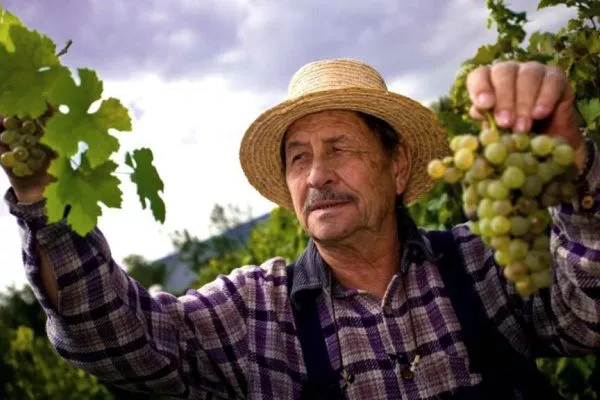
Selecting a variety
| Name | Ripening period (days) | Frost resistance (°C) | Yield (kg per bush) |
|---|---|---|---|
| Super Extra (Citrine) | 90-110 | -25 | 10-15 |
| Tukay | 95-115 | -23 | 8-12 |
| Juodupė (Black River) | 100-120 | -22 | 7-11 |
| Sphinx | 85-105 | -24 | 9-14 |
| Alyoshenkin | 90-110 | -26 | 11-16 |
Before heading to the nursery for a grape seedling, decide on the desired characteristics varietiesIf you make the wrong choice, it could end badly – you'll not only miss out on a harvest, but you'll also lose the vines in the first year after planting.
When choosing a variety, consider the following points:
- Ripening period. In the south of the country, almost any variety is grown, but for central Russia, Siberia, and the northern regions, choose a grape variety with suitable ripening times.
In short summer conditions, the best choice would be a variety with a ripening period of approximately 90-110 days. - Difficulty of care. Grapes require special care. Some varieties grow practically on their own, while others require careful maintenance.
If you're willing to devote a lot of time to the culture, you'll have a wide selection available; if not, give preference to unpretentious varieties. - Productivity. This is an important factor when choosing grapes. Some varieties have only one advantage: high yield. Before purchasing, decide what's more important: ease of care or a large harvest.
- Frost resistance. This factor is often decisive, as the climate in much of our country is unsuitable for growing southern berries. A significant advantage of these varieties may be their suitability for cultivation in Siberia or, for example, the Far East.
- Taste and color. Some people like dark varieties, others like light ones, and some don't even notice. Statistically, women prefer raisins, for children - large sweet berries, and for men - with a nutmeg aftertaste.
Gardeners note the following early grape varieties suitable for cultivation in central Russia:
- Super-Extra (Citrine);
- Tukay;
- Juodupė (Black River);
- Sphinx;
- Alyoshenkin.
From frost-resistant varieties Experienced winegrowers note the following types:
- Shunya;
- Laura;
- Arcadia;
- Friendship;
- Victoria.
Popular mid-late grape varieties:
- Change;
- Marbled raisins;
- Golden harvest.
The best late-ripening varieties include Danko and Urozhainy.
Regional features
Growing grapes outdoors varies across Russia, depending on the climate. In Siberia, spring and early summer are considered the most favorable times for planting. In some regions, frosts begin in the fall, so planting grapes at this time is not recommended.
In the Moscow region, carry out this procedure in the spring, starting in late April and continuing throughout May. In the fall, 1-2-year-old bushes are ready for transplanting into open ground from late September to mid-October.
In the Urals, plant grapes in late spring or early summer, and in the fall, plant in late August or early September. In the Krasnodar Krai, grape growers plant from October to November, and in the spring, plant in late March.
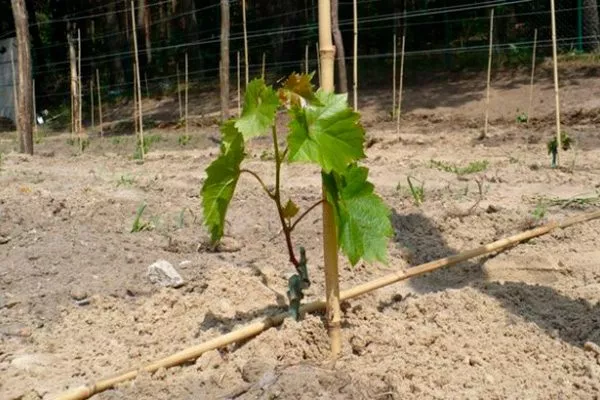
Growing methods
There are several methods for growing grapes. They differ in how the planting material is prepared. Before planting grapevines, familiarize yourself with the most popular growing methods used by experienced winegrowers.
On the trellis
Grapes are climbing vines. For support, choose a trellis—poles with wire stretched between them.
Helpful tips:
- For the posts, use metal pipes with a diameter of at least 10 cm, then stretch plastic-coated wire between them in several rows between the posts.
- The height of the bottom row from the ground should be 50 cm.
- To support the vines, keep the distance between supports no more than 2 m.
Once you have made the trellis, you can plant the grapes along it in any way convenient for you.
In the garden beds
This method is especially popular in northern regions. It helps protect the seedlings from cold and excess moisture. It's a very convenient method that makes caring for grapes easier.
Follow the instructions:
- Dig a trench 30 cm deep and 1 m wide. The direction should be from north to south.
- Fill the soil to a depth of 35 cm and cover with mulch. Use straw, sawdust, bark, or grass clippings.
- Plant the seedlings 40 cm deep and bury a 30 cm diameter pipe with drilled holes along the bed – this will be used for watering and fertilizing the plant.
In the greenhouse
When planted in a greenhouse, grapes ripen faster. Planting is the same as with other methods. Maintain a minimum distance of 1.5 meters between vines. Water the plants once a week and cover the soil with insulation.
In containers
For northern regions, use container growing. Follow these recommendations:
- Mix humus with leaves and soil in a ratio of 1:3, pour into plastic bags measuring 35x40 cm.
- Plant the cuttings and place them on a tray.
- Store the seedlings indoors until the buds appear, then move them outside into the shade.
- After a few days, place the grapes in the sun.
When the warm weather outside stabilizes, transplant the seedling into open ground.
On a long vine
To plant grapes in a permanent location, use a long section of a healthy, mature vine, measuring 60 x 100 cm.
- ✓ The vine should be flexible and not break when bent.
- ✓ When cut, the vine should be green and juicy.
- ✓ No spots or damage on the bark.
Planting recommendations:
- Place the whip in the hole, having first rolled it into a ring, arrange it evenly and fill it so that a few buds remain on the surface.

- When planting in spring, mulch the soil; in autumn, add a mound of soil.
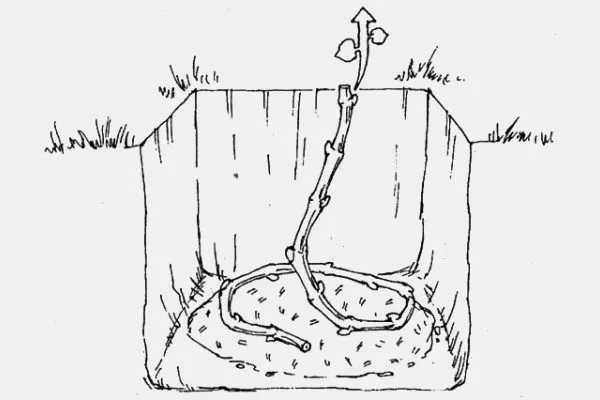
It is recommended to treat the vines with a 3% solution of ferrous sulfate before planting to avoid infection by fungal diseases, since the grapes will be in a humid environment.
Thickening
In warmer regions, thickening is a popular method of growing grapes. Plant up to seven vines per square meter. This will create a bushy plant. Keep branches short.
The advantage of this method is that there is no need for supports, but the disadvantage is that nearby bushes can quickly spread fungal infections, which will damage the crop.
Planting grapes
Planting grapes requires selecting seedlings and preparing them for the process. Before purchasing planting material, decide where you'll plant the grapes and how to do it correctly.
Selection and preparation of planting material
A healthy grape seedling should have a strong, developed root system. The more roots a plant has, the higher the chance of survival. To check the quality of the root system, pinch off a small piece of the root with pruning shears; it should be white and moist when cut.
- ✓ Check the root system for the presence of at least 3-5 healthy roots at least 10 cm long.
- ✓ Make sure that the seedling has at least one mature shoot at least 20 cm long.
- ✓ Inspect the seedling for mechanical damage and signs of disease.
If the roots are dry, black, or brown, this indicates the plant is dying. Before purchasing, inspect the trunk to ensure it appears healthy and free of any damage or signs of disease.
Prepare the grapes for planting:
- Soak the seedlings for 1-3 days in water with the addition of any root formation stimulator.
- After the soaking procedure, trim the heel roots to 10-12 cm. Remove the upper roots completely.
- Select several of the most developed shoots and shorten them so that 4-5 mature buds remain.
- Dip the root of the seedling into a clay mixture: mix 2 parts clay with 1 part cow dung.
After all the manipulations, the plant is ready for planting in a permanent location.
Where is the best place to plant grapes?
For growing crops, choose south- or southwest-facing slopes, which will reliably protect plants from cold winds. This will also prevent meltwater from accumulating in the spring.
Choose a site between buildings on the south side to create pockets for the plants. Plant seedlings at least 1 meter from the wall.
Site preparation
Before planting seedlings in a permanent location, prepare a planting hole measuring 80 x 80 x 70 cm. Mix the top half of the soil with 40 kg of manure, add 100 g of superphosphate, 40 g of potassium sulfate, or 5 kg of ash.
When preparing holes in the fall and planning planting in the spring, use fresh manure, compost, and other organic waste, such as grass clippings. Then remove the other half of the soil and set it aside.
Water the planting hole thoroughly and leave it for a few weeks to settle. The sooner you prepare the hole, the faster the soil will compact, preventing the grape vine from sinking after planting and watering.
Planting dates
April and May are considered the most favorable months for planting grapes. During this time, prepare one-year-old seedlings. Experienced gardeners recommend planting during the growing season.
Summer is not considered the best time to plant grapes, especially August, when the average daily temperature is at least +19 degrees, and the amount of precipitation is not enough for the seedling to develop normally.
If you plan to plant in the fall, do so from the second half of September to the end of October, when the nights are still not too cold. Water the plant regularly during this period. Also, prepare a covering material in case of sudden cold snaps.
Planting technology
It's preferable to plant grapevines in black soil or loam. The planting technique is a bit complicated, but even a beginner can handle it.
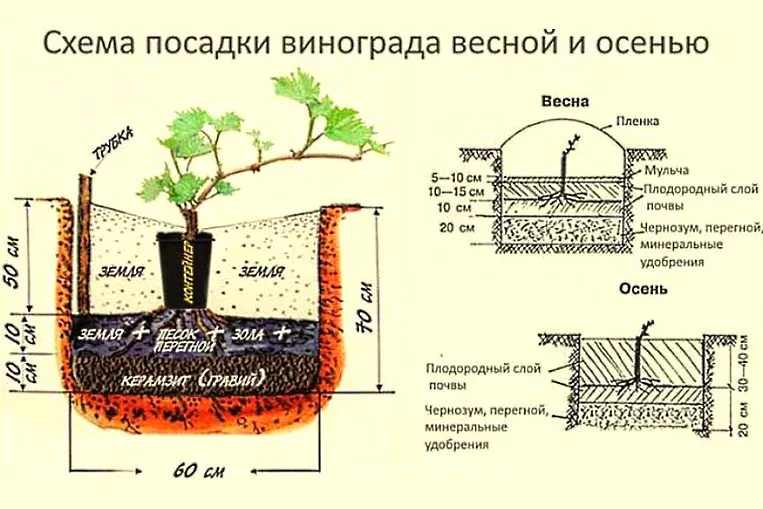
Follow the instructions:
- Dig a planting hole and place a 10-15 cm layer of expanded clay or pebbles at the bottom. This drainage ensures the necessary moisture for the seedling.
- On top of the drainage, pour fertile soil mixed with humus and wood ash to a thickness of at least 10-15 cm.
- Fertilize the next layer of soil with potassium fertilizers at a rate of 300 g per 10 kg of soil.
- Add soil on top.
- Make a mound in the center of the hole, then place the bush and cover with soil.
- Prepare a depression for water.
- The vine that begins to grow should be 5-6 cm above ground level.
- After planting, water the grapes and mulch the soil around the shoot.
A few days before planting outdoors, fertilize the seedlings in the container. During planting, remove the seedlings and spread the roots so they are evenly distributed throughout the hole.
Caring for grapes
Caring for grapevines requires meticulous care and a serious approach, but with time, you'll learn to spend minimal time and manage everything without difficulty. Care procedures include timely watering, regular fertilizing, tying, and loosening the soil.
Watering
Watering intensity varies depending on the stage of development and season. In spring, when the grapevine is in growth mode (leaves, roots, and shoots are actively growing), the plant requires more moisture. Make sure the soil is kept moist at all times.
Helpful tips:
- During the flowering period, reduce watering to a minimum to avoid overwatering the soil, which can cause flowers to fall off, leading to crop loss. If the summer is dry and moisture is low, water the grapes sparingly, with intervals of several days.
- When the berries begin to fill out, the grapes need more moisture. Avoid using a hose, as this water is usually cold and can stress the roots. Water the grapes with warm, settled water or at dawn.
Stop watering a few days before covering for the winter, but only if there is no risk of frost.
Top dressing
Apply fertilizer several times per season. Culture fertilize in spring, in summer and autumn.
Carry out the spring procedure in several stages:
- In April, when the plant is in a dormant stage.
- Before flowering begins.
- When the berries are set.
Use mineral fertilizers such as potassium, nitrogen and phosphorus for spring feeding.
During the summer, berries grow vigorously. The plant extracts maximum nutrients from the soil, but replenish them to ensure a rich and sweet harvest. Use organic fertilizers—herbal infusions, chicken manure, ash, or compost.
In autumn, the soil needs micronutrients to help the plant survive the winter. Fertilizers also help speed up the ripening of berries and impart excellent flavor. To achieve this, spray the vines with a boric acid solution.
Loosening
After each watering and rain, loosen the soil around the grapes to break up the soil crust. At the same time, remove weeds, which carry diseases.
Tying up
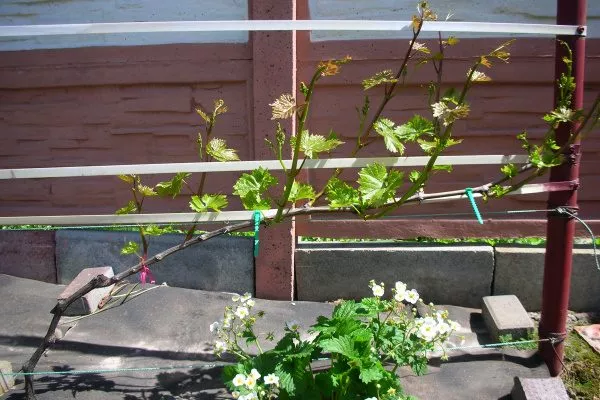
Carry out the procedure in several stages. Apply dry staking immediately after removing the winter cover – tie the vine to the first trellis rung. Apply green staking as the shoots develop – attach the newly grown parts to the next rungs of the trellis at an angle.
Prevention of pests and diseases
To prevent grapes from being damaged by diseases and pests, regularly carry out preventative measures and treat the plant. Follow these steps:
- Before budding, treat the vines with 3% copper sulfate. This protects against infectious diseases.
- During the budding period, use products against powdery mildew and grape mites. Use Famox, Aliot, Shirma, and Fitoverm.
- After the berries have formed, protect the plant from fungal diseases. Use Baktofit and Sporobacterin.
- Before wintering, treat the grapes with a 5% ferrous sulfate solution. This will protect the plant from fungi, rodents, and mold.
Preparing for winter and after wintering
Prepare your plants for winter immediately after harvesting. Follow these helpful tips:
- After sanitary pruning, clean up the area around the vine.
- Treat the bush with 5% copper sulfate to prevent the vine from becoming infected under cover.
- Water the grapes generously to ensure the roots receive enough moisture before wintering.
- Place the bush on the ground so that it does not rot: straighten the branches and secure them to the ground with a staple.
- Cover the grapevine with any airtight material, such as spunbond. Lay straw or spruce branches on top.
- Cover with a layer of slate or roofing felt.
- As soon as snow falls in winter, sprinkle it over the grapes to provide additional protection from frost.
When removing the cover in the spring, monitor the weather. Don't remove it until warm weather stabilizes. Also, don't overexpose the plant to avoid overheating.
Care features depending on the season
Depending on the time of year, grapes require specific care. Follow the recommendations of experienced winegrowers, and your plot will grow strong, healthy plants with juicy berries.
Spring care recommendations:
- Once the air temperature rises above +5 degrees, you can remove the cover from the grapes.
- Protect the plant from frost by treating it with Epin dissolved in cold water. Spray the vines a few days before frost. This effect lasts up to 1.5 weeks.
- If a puddle forms around the bush during snow melting, scoop it out or make a few grooves in the ground to allow the liquid to drain away on its own.
- A mound of soil will help prevent water stagnation around the bush.
- Carry out sanitary pruning, removing injured and frost-damaged stems.
- Tie up the vines, then spray the grapes with a solution of Nitrafen (200 g per 15 l of water) to protect against various diseases and pests.
In summer, pinch the top of the vines in a timely manner – they should not grow longer than 1.7 m. Fertilize the grapes twice before mid-summer.
Here are some more helpful tips:
- Remove all side shoots regularly.
- In mid-July, cut off the leaf blades that protect the berries from sunlight.
- Inspect the bush daily for pests and diseases. During the first weeks of summer, spray the grapes with Ridomil and Fufanon as a preventative measure.
- Repeat disease and pest prevention at the beginning of the second summer month.
Autumn care of grapes The main goal is to prepare the vine for winter. During this time, the vine weakens considerably. Feed the plant with organic fertilizer, mixed with wood ash. Also, treat it for pests and perform formative pruning after the leaves fall.
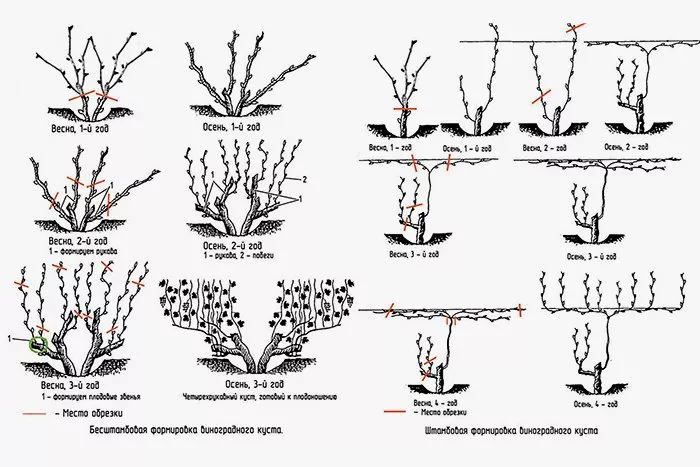
Pruning - Step-by-Step Instructions
Pruning grapes is an important procedure, as it ensures proper formation, stable fruiting, and increases yield.
When to prune?
Prune grapes in the fall. If you prune in the spring, the wounds will take a long time to heal. If the buds become covered in sap, this can lead to them becoming sour and dying.
Spring pruning
In early spring, when the air temperature reaches +5 degrees, carry out sanitary pruning, if necessary, removing broken or diseased shoots on young plants or those planted in the fall.
Pruning grapes in summer
In summer, pinch, remove side shoots, and prune the grapevines. Remove excess branches and trim off any leaves that block sunlight. These procedures will ensure the plant receives adequate ventilation and even nutrition and light.
How to prune in autumn?
Carry out autumn pruning in several stages. Once you've harvested all the fruit from the bush, remove weak shoots and suckers. Begin the second stage a few weeks before leaf fall.
Pruning mature plants is much more difficult:
- In the first half of September, remove young shoots from the lower part of perennial branches.
- On young shoots, remove all lateral shoots from above and trim off the tops, capturing segments up to 10% of the shoot size.
- After the leaves fall, select several well-developed shoots. Form a replacement shoot from the lower shoot, growing from the outer part of the branch. Prune it to the height of 3-4 buds.
Cut the second shoot, located slightly higher on the opposite side of the sleeve, to a height of 7-12 buds. This will form a fruiting stalk.
As a result, perennial trunks that grow perpendicular to the ground and branches with buds remain on the bush; next year, they form new clusters and vines.
Propagation of grapes
Grapes can be grown from seeds, but the resulting seedlings retain only a small portion of the varietal characteristics. For propagation, it's better to use more common methods.
Cuttings
This is considered the easiest and most simple method of grapevine propagation. Follow these instructions:
- In the fall, during pruning, prepare woody cuttings. Use mature vines at least as thick as a pencil. The internodes should be evenly distributed along the entire length of the vine, as well as 2-3 buds.
- Make the lower cut at an angle of 45 degrees, stepping back 3-4 cm from the bud.
- Store cuttings in a room with high humidity and an air temperature of +0…+5 degrees.
- Prepare a 1% ferrous sulfate solution and soak the plants in it for 5-10 minutes. Wait for the surface to dry, then wrap them in paper, place them in a plastic bag, and store them.
- To encourage rooting, plant the cuttings in plastic cups filled with a mixture of sand, peat, and humus in a 1:1:1 ratio. Make a 5-6 cm depression in the soil, then form a sand cushion at the bottom.
- Place the cutting and fill the resulting voids with sand.
- Coat the top cut with garden pitch. The cutting should be 5-7 cm above the cup.
- Water the seedling with warm water.
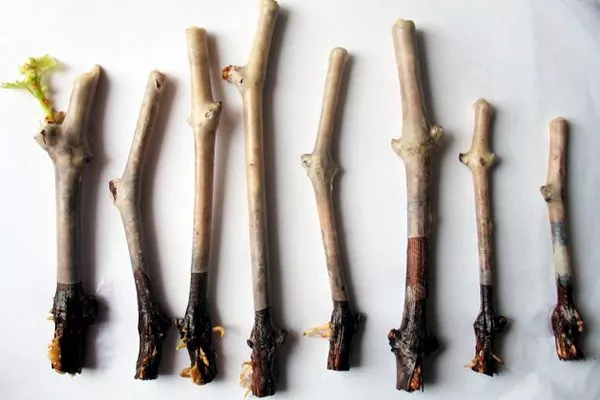
To harden the plant, move it to the terrace or balcony daily in the last days of April or early May. You can then use the hardened cuttings plant in open ground.
Vaccinations
To perform this procedure, you'll need a scion—a cutting from a cultivated variety with only one bud. Make sure you choose the rootstock as well—the scion should be from a variety resistant to phylloxera and at least 50 cm long. The rootstock should be thicker than the scion.
Take cuttings in the fall during pruning, ensuring that all cuttings have at least 3-4 buds. Store them until spring. In the fall, prepare the rootstock: remove all excess material, leaving only the vine for grafting.
Recommendations:
- See you off vaccination before the sap starts to flow on a cloudy, windless day.
- Remove cuttings from storage in early summer.
- Refresh the bottom cuts, then place the cuttings in a container with water at the bottom.
- After the buds have swollen, place the container with water on the shelf of the refrigerator for hardening.
- After a few days, remove the cuttings from the refrigerator and graft them onto the rootstock.
When performing this procedure in summer, prune the rootstock bushes to the previous year's vine, as this is where you will graft the scion. Summer grafting results in better fusion. Perform this procedure when the outside temperature is between 15 and 35 degrees Celsius.
If you're grafting in the summer, after inserting the scion wedge into the rootstock, wrap the junction with a damp cloth. Place a plastic bag over the plant and secure it below the graft. Then wrap it in thick paper to protect it from the sun.
Layers
Propagate by layering only in spring and fall. Follow the procedure step by step:
- Dig a trench up to 50 cm in size in the soil around the bush.
- Add black soil mixed with humus.
- Place a one-year-old, low-growing shoot and fill the trench with soil. The top, with three leaf blades and the growing point, should remain above ground.
- Water generously. Use about 20 liters of liquid.
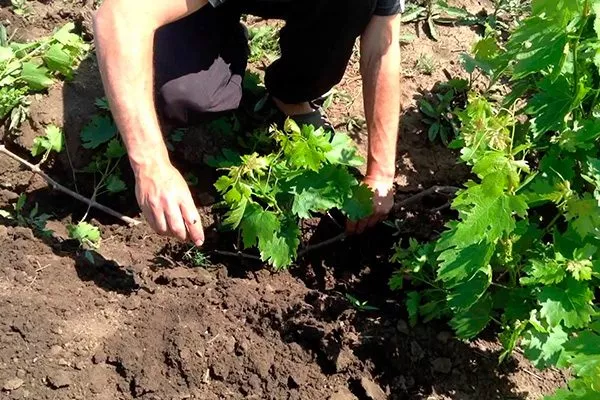
During the spring and summer, keep the soil above the cutting moist. This will encourage a shoot with its own root system to emerge from each node.
When and how to harvest?
Early varieties are usually picked unripe. Harvest in dry, sunny weather to ensure longer shelf life. Begin harvesting as soon as the berries are ripe. Carefully cut the clusters with pruning shears.
Not all varieties are suitable for storage. Place the bunches in a single layer on wooden pallets and store in a room with a temperature of 1 to 4 degrees Celsius. Experienced gardeners recommend storing the bunches hanging on hooks or in a basement on a floor lined with paper.
Grapes are a crop that many people grow in their gardens. However, planting this berry isn't as simple as it might seem at first glance. If you've decided to grow grapes, follow the planting guidelines and recommendations for the subsequent care of this popular crop.