
If your grapes aren't growing, whether they're young seedlings or mature vines, it's important to find the cause of the slowdown as soon as possible and take corrective action. Ignoring the problem can lead to crop loss, disease, and even death.
Why are grapes growing poorly and how can the problem be solved?
Grapes are traditionally grown in regions with the most favorable climates. This crop requires warmth, sun, and fertile soil for growth and fruiting. Unfavorable conditions and poor agricultural practices cause grapes to stunt growth and cease fruiting.
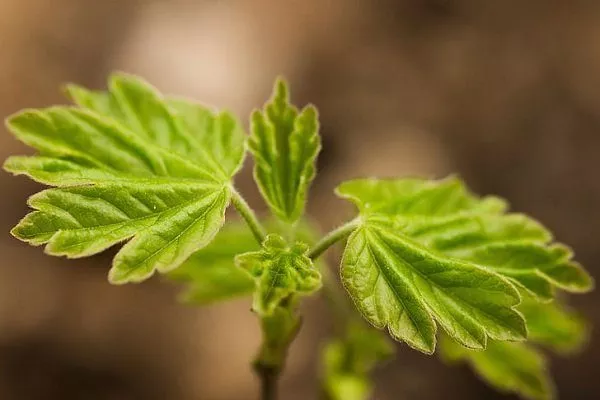
There are many reasons why grapevine growth may be stunted. It's important to first determine why the grapes aren't growing; otherwise, any measures taken will be ineffective.
| Name | Lighting requirements | Soil requirements | Disease resistance |
|---|---|---|---|
| Warmth and light | Tall | Average | Average |
| Soil and planting | Average | Tall | High |
| Watering | Low | Tall | Low |
| Nutrient deficiencies | Average | Tall | Average |
Warmth and light
Grapes prefer sunny areas, so planting them in the shade is strictly prohibited. The best planting location is a south-facing plot. They require plenty of light and space; they do not tolerate dense planting.
How to provide grapes with the optimal amount of heat and sun:
- To improve the microclimate in grape beds, they are planted near north-facing stone walls to avoid blocking the sun. You can plant grapes near a house wall or stone fence; another option is to cover the soil with roofing felt.
- You can warm the soil around your grapes using "bottle stoves." To make them, line up glass bottles along the rows. Press them into the soil two-thirds of the way up, neck down. These "batteries" warm the soil, allowing the grape roots to absorb more heat.
- For grapes to grow well, there should be at least 1 m between bushes. The vines should not be shaded by other plants, buildings, or structures.
- Young grapevines don't respond well to cold northerly winds. If there's a risk of strong northerly winds, it's necessary to provide protection with a makeshift screen.
Soil and planting
In regions with harsh winters, gardeners, to be on the safe side, plant grape seedlings 70-80 cm deep, but this negatively impacts their growth.
How to avoid landing problems:
- You can avoid digging too deep into the soil by adding peat or compost to the planting holes, to a depth of 40-50 cm. Filling the hole with organic matter stimulates the soil to warm up in the spring. This results in more vigorous growth and development of the grapes.
- To prevent freezing and icing of grape bushes during winter, the vines are untied from the trellises and, bent to the surface of the beds, covered with earth and sprinkled with dry leaves.
Watering
Irrigation regimen and rate have a significant impact on grape growth and yield. This crop does not tolerate drought or overwatering.
How to water grapes so they grow well:
- During the first year of life, grape vines are watered in furrows dug 30 cm from the trunk diameter. The recommended watering rate during this period is 10-15 liters.
- In the second year, grapes are given twice as much water—20 liters per bush. But in the third year, the amount is reduced to 5-7 liters.
- To prevent the vines from stunting, dropping fruit, or becoming susceptible to fungal diseases, water the grapes only with settled water that has been warmed by the sun. Watering with cold water is strictly prohibited, especially during the hot summer day.
- It's recommended to water grapes generously but infrequently—once or twice a month, depending on rainfall. Watering grapes too little and too frequently will stunt their growth, while overwatering can lead to root rot and fungal diseases.
- After watering, as soon as the soil dries out a little, it is essential to loosen it.
Nutrient deficiencies
A lack of nutrients can cause stunted growth. Grapes require a lot of fertilizer—organic and mineral—to form clusters of berries. A deficiency in any of these elements can lead to developmental problems and stunted growth.
Deficiency of elements and grape reaction:
- nitrogen - growth slows down, leaves become pale, small, and fall off long before autumn;
- potassium - a brown border appears along the edges of the leaf blades, the shoots dry out;
- phosphorus — the growth of bushes slows down, the leaves darken and wither;
- magnesium - yellowish spots appear on the leaves;
- manganese — causes yellowing and falling of leaves, and growth retardation.
- ✓ Yellow spots between the veins of the leaves indicate a magnesium deficiency.
- ✓ Brown edges on the leaves indicate a potassium deficiency.
If growth slowdown is due to a nutrient deficiency, don't apply fertilizer thoughtlessly. To avoid overfeeding, follow the dosage. It's best to use complex fertilizers containing all the vital elements—nitrogen, potassium, and phosphorus.
Pests and diseases
One of the biggest challenges in growing grapes is their weak disease resistance and the numerous pests that can cause significant damage to grape vines. As a result, the plants become sick, stunted, and fail to produce fruit.
Diseases and pests that cause growth retardation and measures to control them:
- Aphid. These are small insects that suck the sap from leaves and shoots. They settle in colonies on the undersides of leaves. By sucking out the sap, aphids sap the plant's vitality. The damage can be so severe that the plant first dries up and then dies.
Special insecticides are used to control aphids. The best product is Actellic. It kills grape aphids within two hours and prevents re-infestation. - Spider mite. This small, sucking insect can be identified by spots and bumps on the leaves. A fine webbing appears on the shoots and undersides of the leaves. On bushes infested by the mite, the growth of young shoots is slowed.
As soon as signs of spider mites are noticed, grape bushes should be sprayed with Actellic, Akarin or Apollo. - Mildew. This disease is caused by overwatering or rainy weather. Affected plants become wilted and lose their leaves. Spraying with a potassium permanganate solution—1 teaspoon diluted in 10 liters of water—can help eliminate the problem.
This remedy can also be used for preventive purposes. - Gray rot. This disease affects leaves and shoots, causing parts of the bush to rot and fall off. The disease not only stunts growth but also leads to crop losses. In summer, berries can also be affected by the rot, contributing to crop losses.
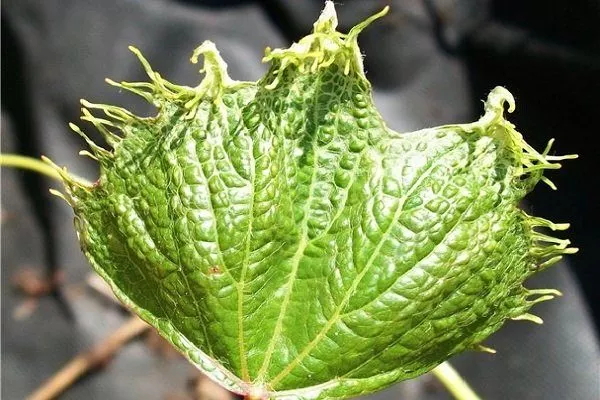
They fight rot, as well as other fungal diseases, with special preparations - Topsin or its analogues. Or spray the bushes with ordinary copper sulfate. - Short-node virus. Its presence can be identified by yellow spots on the leaves. A characteristic feature of this viral disease is the appearance of an unpleasant odor from the spots. The spots gradually thicken, and the leaves become deformed and fall off—a consequence of poor root development.
If the bushes are infected with the virus, all affected parts must be pruned and burned. There is no cure for the virus.
Freezing
Growth cessation may be due to freezing of the vine. Grapes, at least most varieties, do not tolerate frost well. Poor or no insulation, severe frosts, and winters with little snow—all these factors can lead to freezing of grape vines, their roots, and fruiting buds.
How to check if a grape bush is frozen:
- Disinfect a sharp garden knife.
- Make a cut along the vine - 1-2 cm.
- Inspect the branch. If it's brown, the plant has suffered severe frost damage.
- Cut damaged shoots to the base.
Recommendations from experienced gardeners
Growing grapes requires careful and thoughtful attention from gardeners, as well as knowledge and adherence to agricultural practices. To ensure a productive harvest without harming the grapevines, many nuances must be taken into account, from the grape variety's characteristics to climate conditions.
Tips from experienced winegrowers for novice gardeners:
- Plant grape seedlings only in well-lit areas, and prepare the soil in the fall by carefully digging the soil. Thorough loosening will destroy pest larvae and eggs—if they reach the surface, they will freeze to death over the winter.
- When replanting grapes, be sure to fertilize them with potassium and nitrogen fertilizers. This will boost the plants' immunity and accelerate their growth.
- Before planting grape seedlings, treat the soil with a weak solution of potassium permanganate and add humus (5 liters per 1 sq. m).
- Use special growth activators—they not only stimulate the development of grape bushes, but also reduce the risk of disease.
- When applying any fertilizer or treatment, strictly follow the instructions for the specific product—overdosing, like underdosing, can negatively impact crop development.
What to do if seedlings don’t grow?
There are several technologies for stimulating grape growth. In many regions with harsh climates, this crop is used primarily as a landscape ornamental, as a climbing plant. However, with a little effort, quite a high yield can be achieved.
Recommended planting technologies
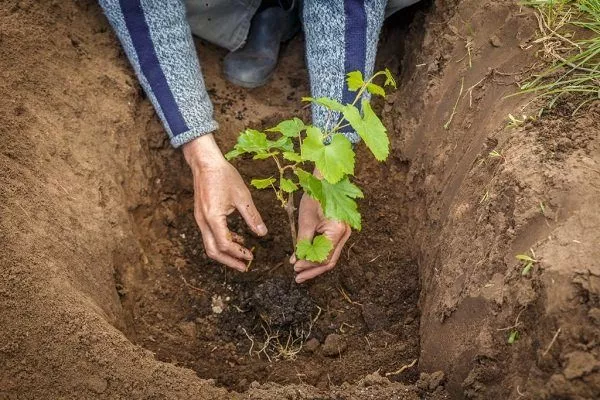
To ensure seedlings begin to grow quickly, they must be planted using specific planting techniques. Incorrect planting will stunt the young plant's growth, negatively impact its growth and yield, and even lead to its death.
Key technologies:
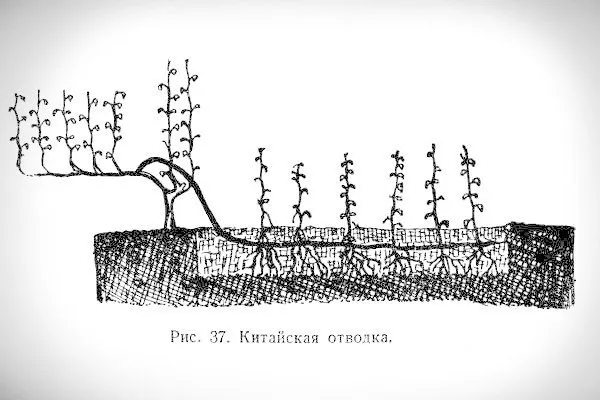
- Chinese cuttings. In early spring, vine shoots—perennial canes—are dug into the soil so that their tips are slightly above the surface. Over the summer, the seedlings should take root, and their buds should produce shoots that take root.
The following spring, the branches are divided equally among the rooted shoots. The vines that have taken root are dug up and replanted. Essentially, during the first spring, the gardener forms "nests" in which the new shoots grow.
In this case, the sleeves play the role of mother plants, which nourish and strengthen the growing vine.

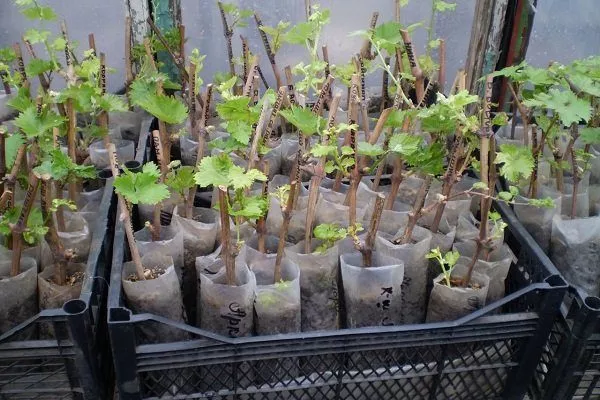
- Layers in containers. For planting, use a cutting—a scion with 2-3 buds. Plant in a wide container filled with fertile soil, such as a plastic bottle. Take two such containers, cut off the top of one, and pierce the bottom with an awl to make 5-6 holes for drainage.
The container is filled with a mixture of sand, soil, and coarse slag. After planting, the seedling is watered with warm water and then covered with another bottle. The latter is trimmed at the bottom and placed over the first bottle. This creates a moist environment in which the cutting will quickly root and grow.
The cap is unscrewed to prevent air from stagnating in the bottles.
- Planting in soil. Cuttings can be planted directly into the ground. Before autumn planting, the cuttings are soaked in water for 24 hours and then completely buried in loose, light soil at a slight angle.
If planting is done in the spring, the cuttings are soaked in melted snow. When buds appear, the dry cuttings regain their moisture balance and are ready for active growth—they are buried in the soil. A small greenhouse made of plastic is created over the plantings to protect them from wind, sun, and cold.
Methods for activating seedling growth
Young seedlings, even those planted strictly according to the instructions, often lag in growth. In this case, it's important to determine the cause of the growth retardation and address it.
How to stimulate seedling growth:
- Soil salinization. This problem can be identified visually. Salt-contaminated soil becomes mushy after watering, and after a couple of days, it hardens to the point that it's difficult to break up with a shovel.
Applying gypsum to the soil helps solve these problems. It's dug in with the soil and watered generously. The salt leaches out gradually, and the soils only return to normal after 5-6 years. - Lack of moisture. Dried-out seedlings flatly refuse to develop. To stimulate their growth, increase the frequency of watering to 1-2 times a week. Continue frequent watering until the shoots begin to grow vigorously, after which watering should be reduced.
- Nutritional deficiency. Seedlings usually receive all the necessary nutrients from pre-fertilized soil—all necessary fertilizers (mineral and organic) are added before planting. If the soil is not fertile enough, an additional 50-100 grams of ammonium nitrate or urea are added to each seedling.
After nitrogen fertilization, young seedlings begin to grow rapidly, which may even lead to the need to slow down the process by adding superphosphate (30-50 g per 1 sq. m). - Chlorosis. This is indicated by light-colored tops, weak growth, and a lack of ovaries. Watering with 0.3% ferrous sulfate and spraying with iron chelate can correct the situation.
There are many reasons why grapevines stop growing. Some problems are easy to fix, while others require significant time and effort. A gardener's primary goal is to analyze their cultivation practices and identify the root cause of the slowdown based on external symptoms.