
To choose the right Muscat grape variety for growing, it's important to consider the key characteristics of each variety. Below, we'll review the best Muscat varieties, with their key characteristics and detailed descriptions.
| Name | Ripening period | Productivity | Frost resistance (°C) |
|---|---|---|---|
| Muscat Blau | mid-late | average | -29 |
| Pink Muscat | late | average | low |
| Pleven Muscat | early | high | -25 |
| Summer Muscat | early | high | -23 |
| Don Muscat | early | high | -30 |
| Very early red muscat | very early | average | -23 |
| Muscat Livadia | early | high | -21 |
| Novoshakhtinsky Muscat | early | high | -24 |
| Russian amber | early | average | -22 |
| Hamburg | very late | from low to high | low |
| Amber Muscat | early | high | -18 |
| Muscat Far Eastern | very early | average | -30 |
| Noble Muscat | very early | high | -23 |
| Muscat of Moscow | early | high | -25 |
| Muscat Dievsky | early | high | -23 |
| Paradise | very early | there is no exact data | -23 |
Muscat Blau (Garnier 83/2)
Developed in Switzerland, this grape is a highly frost-hardy variety, withstanding temperatures down to -29°C. However, it is not planted in northern regions because it requires plenty of sun and warmth. This grape is only suited to southern climates.
It ripens mid-late (135-140 days), and is harvested in September. The bushes are tall. The clusters are large (up to 300 g) and loose. The berries are up to 5 g, round, and black. They contain seeds. The vine is sensitive to stress, so it requires regular pruning.
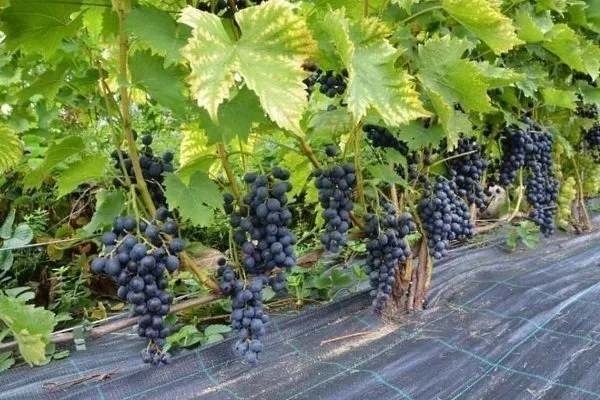
Grapes are undemanding in terms of soil and location. They have good resistance to fungal diseases, but still require preventative spraying. Wasps, which enjoy the sweet pulp of grapes, cause significant damage to the crop. Experts recommend protecting the bunches with special nets.
Muscat Blau is a versatile grape variety used for both wine and fresh consumption. This variety produces richly aromatic red Muscat wines.
The yield is average. It can be increased by mineral and organic fertilizers and irrigation. Regular watering is essential during hot and dry periods.
Pink Muscat (Red Muscat, Muscat Rouge de Frontignan)
Considered a variety of Muscat blanc, its exact origin is unknown. Some believe it is of European origin and was developed in southwestern Europe. Other experts attribute its Middle Eastern origins to the Arabian Peninsula, Syria, and Egypt.
Currently, Pink Muscat grows in the CIS countries - Tajikistan, Russia, Ukraine, Uzbekistan, Armenia, Azerbaijan and Kazakhstan, as well as in European countries - Italy, France.
Description:
- The bushes are medium-sized, slow-growing, with reddish shoots and green foliage. All shoots are sparsely pubescent. Mature one-year-old shoots are yellow-brown, darker at the nodes. Shoots mature well or satisfactorily. The percentage of sterile shoots ranges from 10-25%, depending on the growing region.
- The leaves are large, five-lobed, and have upturned margins. The underside of the leaf blade is covered with bristles.
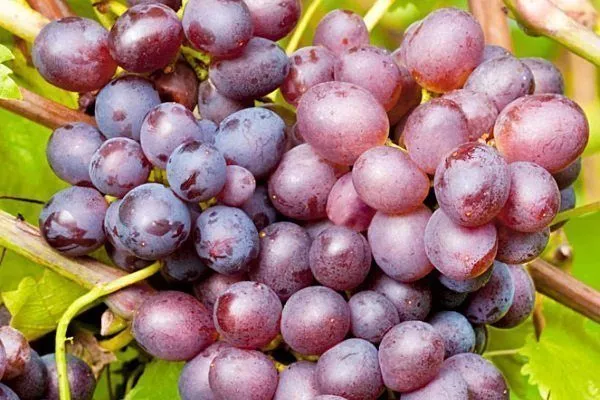
- The grape clusters are medium-sized (up to 204 g), cylindrical or cylindroconical in shape, and dense. The grapes are also medium-sized, round in shape, and dark pink in color, with a thick bloom.
- Ripe berries are almost black. They contain 2-4 seeds. The ovaries tend to fall off. The skin is firm and thin. The flesh is juicy with a strong musky aroma.
For grapes to fully ripen, temperatures of at least 29°C (83°F) are required. This determines the sugar concentration in the pulp. Therefore, grapes in the southern regions of Italy, Portugal, the southern coast of Crimea, and Uzbekistan are sweeter than those in the northern regions—France, Russia, and the western coast of Crimea.
The fruit ripens in 140 days, and the harvest begins around September 20th. The yield is up to 80 centners per hectare. The highest yields are recorded on the southern coast of Crimea, in areas with low relief.
The variety is not immune to fungal diseases such as downy mildew, powdery mildew, and rot, and is susceptible to phylloxera and grape berry moth. Furthermore, it lacks frost resistance. It freezes at low temperatures and is often damaged by recurrent frosts.
Compared to other varieties, Pink Muscat is less drought-resistant. The berries rot in rainy weather.
This grape is universal; it is used to make vintage liqueur Muscat and table wines.
Pleven Muscat
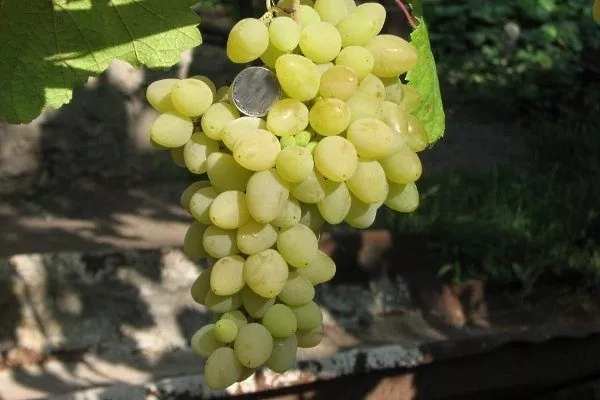
An early-ripening table grape variety of Bulgarian origin, ripening in 115 days. It thrives in the central Russian climate. The bush is vigorous (reaching 2 m in height) and roots easily. The vine can support up to 35-45 buds. Fruiting shoots are pruned to 6-8 buds. The clusters are large—each weighing up to 600 g—and conical and loose, allowing the berries to ripen evenly.
The grapes weigh up to 8 grams and are green with an amber hue. They turn bright yellow when exposed to sunlight. The flesh is sweet and crisp with a faint musky aroma. The plant begins bearing fruit in its third year. Harvesting begins in early August and ends in the third ten-day period of that month.
Ripe fruits attract the attention of wasps and birds, so it is necessary to protect them from uninvited guests.
This frost-hardy variety tolerates temperatures down to -25°C and is undemanding of soil conditions, but is susceptible to fungal diseases. Its yield is high—140 c/ha.
Summer Muscat
An early-ripening variety from Moldovan breeders, ripening in 110-120 days. In the southern regions, harvesting occurs in early August, and in the mid-latitudes, in early September.
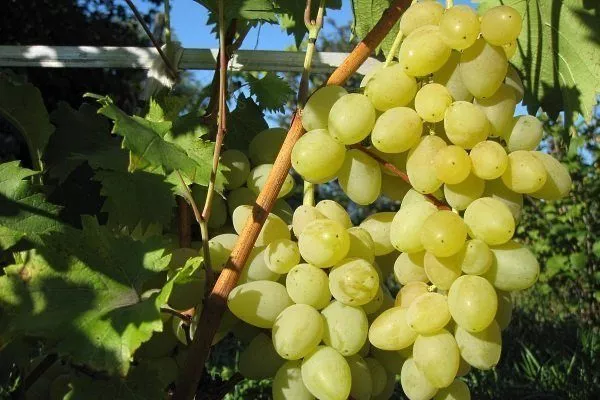
The bush is tall, reaching 3 meters. The clusters are cylindrical-conical, medium-dense, and among the largest. The average cluster weighs 650 g, but some specimens weigh up to 1 kg.
The berries are large—up to 28 mm long and up to 22 mm wide. They are medium-sized, weighing up to 8 g. They are oval-elongated and amber-white in color. In sunlight, they turn golden-amber. The variety is resistant to downy mildew and moderately resistant to powdery mildew.
This variety is moderately frost-hardy, withstanding temperatures down to -23°C, but requires shelter. The bush bears 30-40 buds; fruiting vines are pruned to 6-8 buds. Fruiting vines reach up to 80% of the plant's buds, and they ripen well. Cuttings root easily.
Experts recommend growing Summer Muscat grapes in sunny locations, which improves yield and taste—the grapes will be sweeter.
Don Muscat
An ancient wine grape variety used to make dry and dessert wines. This early-ripening grape ripens in 115 days, making it suitable for cultivation in regions with short summers. Ripe bunches are harvested in mid-August.
The bushes are tall. The leaves are medium-sized and trilobate. The upper surface of the leaf blade is matte and wrinkled, while the lower surface is covered with small bristles.
The clusters are medium-sized, each weighing no more than 200 g, cylindrical-conical in shape, and of medium density. The berries are small (up to 2 g), round, and bluish-black. The flesh is juicy with a strong muscat flavor. The yield is high. The crop begins bearing fruit after just two years and grows in all types of soil.
The berries do not fall off, can remain on the branches for a long time, and do not crack.
The variety is susceptible to phylloxera attacks, but has average immunity to diseases, so preventative treatments with preparations are necessary 1-2 times a year.
A distinctive feature of the variety is the large number of inflorescences on the shoots; to make the berries larger, the inflorescences are thinned out.
The variety tolerates temperatures down to -30°C. The shoots ripen well. The percentage of fruiting vines on the bush is 50%.
Very early red muscat
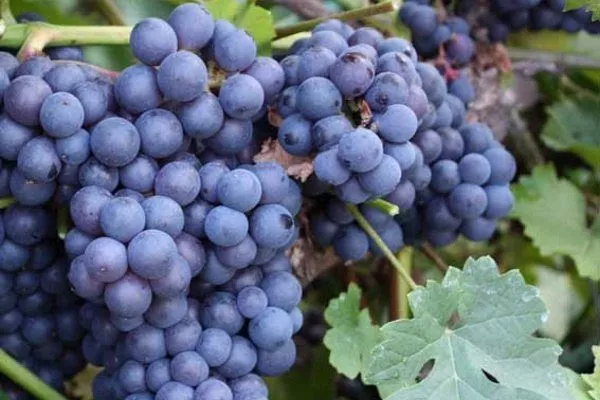
A Moldovan table grape variety. Its eloquent name indicates that it ripens quickly, within 95-100 days. It is suitable for growing in temperate climates. If temperatures do not rise above 20°C, the ripening period is extended. In southern regions, the harvest is in mid-July; in cooler climates, it is harvested in mid-August.
The bushes are vigorous or medium-sized. The leaves are small and rounded. The outer surface has a wavy surface. The clusters are large, weighing from 300 to 600 g, conical, and loose. The berries are medium-sized, weighing no more than 5 g. However, the older the bush, the larger the berries and clusters become.
The grapes are round or slightly oval in shape, red. Ripe berries take on a purple hue. A whitish waxy coating forms on the surface. The flesh is fleshy, crisp, with a seed inside and a pleasant, mild flavor.
This variety is resistant to gray mold and has moderate resistance to downy mildew and powdery mildew. The grapes are well-suited for transportation. They have average frost resistance, withstanding temperatures down to -23°C and requiring shelter. The pulp doesn't contain much sugar, so wasps aren't attracted to them.
The yield is average. The bush produces 35-40 buds, with fruiting shoots pruned to 6-8 buds. The vines and shoots ripen well, with mature shoots turning a bright brown. Fruiting shoots account for 65% of the bush's fruiting shoots.
Muscat Livadia (Pavel Golodriga 5)
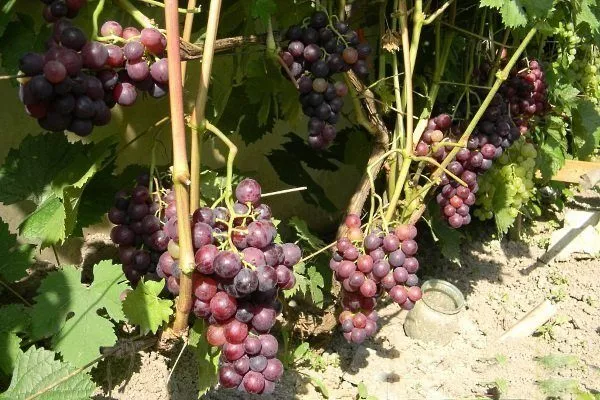
An early-ripening variety from Ukrainian breeders, ideal for beginners and a table grape variety. The bushes are medium-sized, and the vines ripen well. The bunches are loose, branched, and large. The average weight is 500 g, with a maximum of 800 g.
The berries are medium-sized, yellow-green, and elongated, resembling an egg. When ripe, they acquire a beautiful golden hue. Each berry contains 1-3 small seeds. This variety is moderately frost-resistant, withstanding temperatures down to -21°C and is drought-resistant.
The advantage of grapes is their excellent immunity to fungal and infectious diseases, as well as to phylloxera.
The yield is high. If summer temperatures average 25°C, ripe bunches are harvested in the second half of July. Weather conditions influence the taste of the berries and the yield. Without enough sun and warmth, the grapes become slightly sour, and the yield drops.
The optimal load per bush is up to 35 buds, with shoots pruned to 4-6 buds. Shoots with a good degree of maturity.
Novoshakhtinsky Muscat
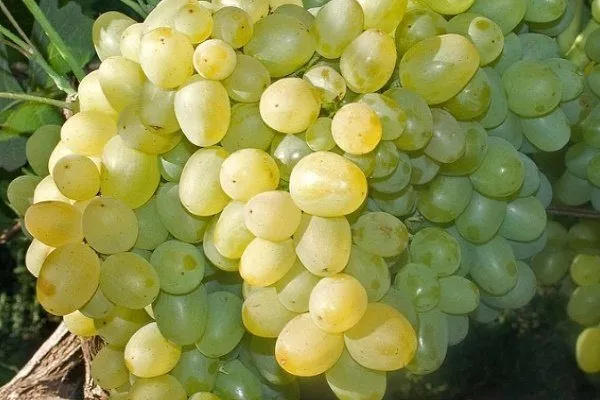
A hybrid from Russian breeders with an early ripening period (110-115 days) and a table variety. The bushes are tall. The clusters are large, averaging 500 g.
The berries are also large, weighing up to 10 g. They are round in shape and range in color from purple-red to cherry. The flesh is juicy and crisp, with 2-3 seeds and a nutmeg-caramel flavor.
The skin is very thin, but it doesn't crack. The fruit stays on the bushes for a long time, without deteriorating in appearance or flavor. This frost-hardy hybrid tolerates temperatures down to -24°C and tolerates long-distance transportation well. It has moderate resistance to diseases and pests, but is often affected by black rot. The yield is high, but the berries ripen unevenly.
Russian amber
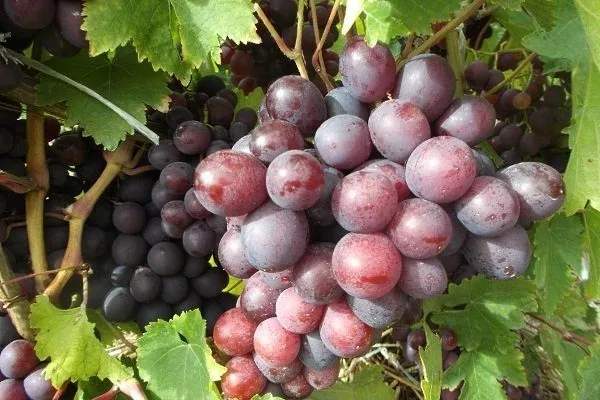
This variety was developed by Russian scientists and is included in the State Register of the Russian Federation. It is recommended for cultivation in the Central Black Earth Region. It is a table grape variety and an early-ripening one, with the harvest ripening in 110-120 days. The bush is medium-sized, with shoots growing well. The leaves are medium-sized, five-lobed, and green, sometimes with a grayish tint. The bunches are approximately 132 g in size and cylindrical-conical in shape.
The berries are medium-sized, round, greenish-yellow with an amber blush. The flesh is fleshy and juicy with a forest nutmeg aroma. It contains 2-3 seeds.
This moderately winter-hardy plant tolerates temperatures down to -22°C and requires winter cover. In southern regions, pressing the vines to the ground is sufficient. The variety is resistant to mildew, but is susceptible to powdery mildew and, in humid climates, gray mold.
The berries are prone to cracking. Two to three inflorescences develop on each shoot. To prevent the bushes from becoming overloaded with fruit, they should be pruned short and excess green shoots removed. The yield is average.
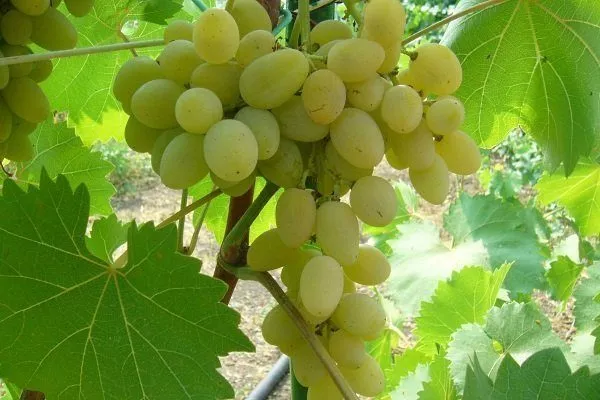
Hamburg (Muscat black Alexandria, Muscat de Hamburg)
This variety was developed by English breeders for greenhouse cultivation. This heat-loving plant grows only in the southern regions of France, as well as in Spain, Greece, Tunisia, California, and Crimea. It is a medium-sized bush with creeping shoots and abundant foliage. The plant requires regular pruning. For information on spring pruning of grapes, read Here.
The ripe vines turn from green to reddish-brown. The leaves are five-lobed, heart-shaped, and have a reddish edge. The leaf blades are pubescent on all sides, but the underside is more heavily pubescent. The bunch is conical, reaching up to 20 cm in length and weighing 170-260 g.
The berries are round or oval, weighing no more than 4 g each. They contain 2-3 large seeds. The pulp is juicy and fleshy. The skin is tough, black, and has a waxy coating.
Varietal characteristics:
- It is a mid-late variety (148 days) in terms of ripening time. The harvest ripens in the second half of September. The berries can be stored for about three months without losing their flavor or appearance. They are transportable. However, they are prone to shedding and pea-sized berries.
- The crop has very poor frost resistance—at -19°C, 50% of its buds freeze, requiring winter protection. Grapes are not immune to mildew, gray mold, powdery mildew, or bacterial canker. Among pests, they are often plagued by phylloxera (aphids), which infest the plant's root system.
- Yields are variable and depend on many factors. In favorable years, up to 120 centners can be harvested per hectare. The bush bears 18-20 shoots, of which up to 17 are fruit-bearing. Due to low frost resistance, pruning is done to 4-6 buds.
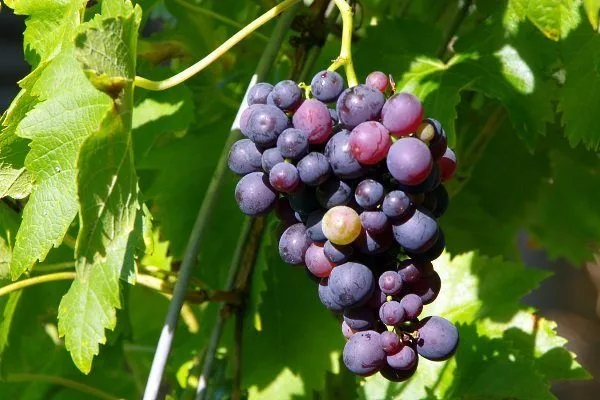
Grapes are most often used as table grapes, eaten fresh. Some winemakers use them to make wine.
Amber Muscat
This Moldovan variety ripens early (105-117 days). This allows it to be grown in regions with short but warm summers. In southern Russia, ripe bunches are harvested as early as the second half of August. The crop prefers warm slopes with fertile, easily permeable soils.
The bushes are medium-sized. The clusters are cylindrical, medium-density, and contain amber-colored berries. The leaves are small. The undersides of the leaves are unveiled. They are rounded and do not diverge into large lobes. The upper surface of the leaf blade is blistered, giving the leaf a convex shape. The clusters are no more than 17 cm long and weigh up to 340 g.
The berries are usually round, rarely oval, and contain 2-3 seeds. The skin is thick, yellow-green, and takes on a golden hue on the sunny side. The flesh is meaty, tender, and crisp, with a distinctive muscat aftertaste. This is a table variety.
When stored, grapes retain their taste and marketable appearance for up to 3 months.
The berries are not prone to cracking or rotting, but the plant is susceptible to fungal diseases such as downy mildew and powdery mildew. The variety can withstand temperatures down to -18°C to -20°C. Yields are high—120 centners per hectare or more. When pruning, leave 6-7 buds on the fruiting vine.
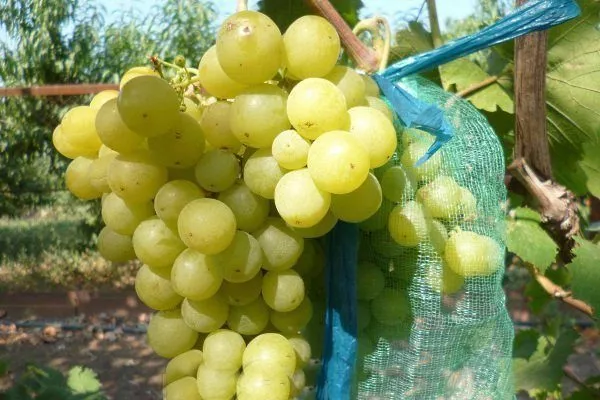
Muscat Far Eastern
A very early-ripening table grape variety from Primorye breeders. It is distinguished by its small clusters, weighing no more than 80 g. The clusters are conical in shape, or less commonly, branched.
The berries are also small, weighing up to 1.9 g, round, slightly flattened, yellowish-white in color, and have a pleasant flavor. The leaves are medium-sized, rarely large. The undersides are pubescent.
The variety's advantages include excellent winter hardiness—the plant tolerates temperatures down to -30°C—and moderate resistance to diseases and insects. The yield is average.
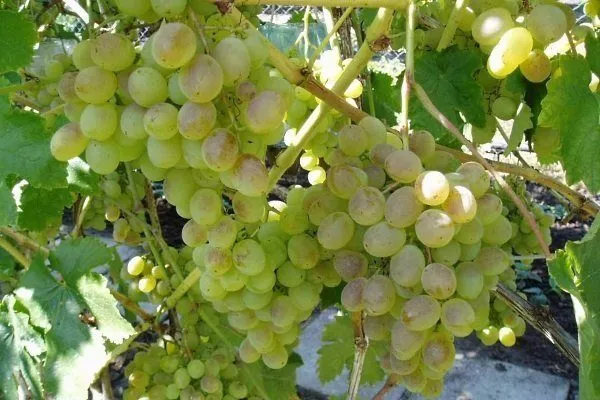
Noble Muscat
This is a new hybrid, a very early-ripening variety. Fruit ripens in 105-115 days. The bushes are tall. The bunches are large (600 g), conical.
The berries are large, often weighing up to 18 g each, and are ovoid. The skin is dense, thin, and white. On the sunny side, it is yellowish and translucent.
Grapes are not afraid of wasps. Muscat Noble can withstand temperatures down to -23°C and is moderately disease-resistant. Bushes require preventative treatment once or twice a year.
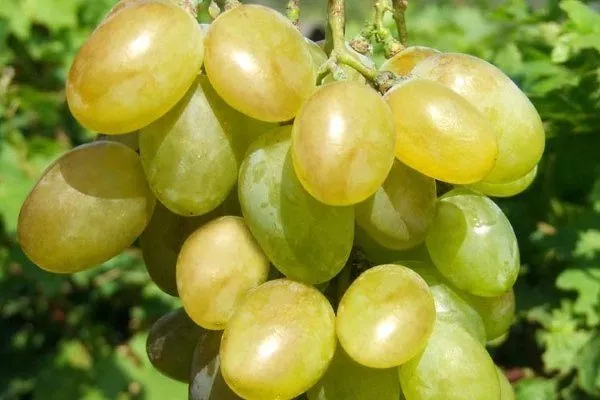
Since this is a new hybrid, its characteristics are not exact.
Muscat of Moscow
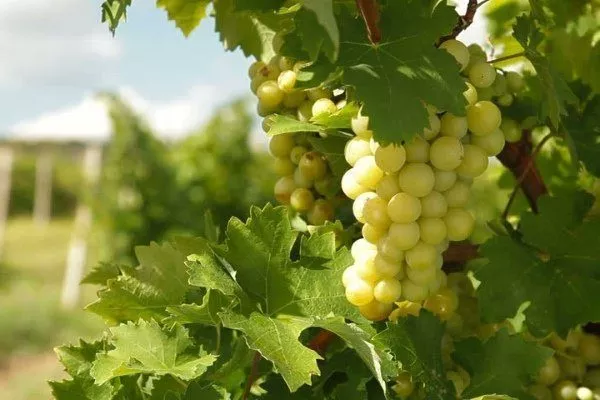
This variety is included in the State Register of Russian Federation grapes and is recommended for cultivation in all regions of the country. This early-ripening grape is a table grape. The bush is tall. In the Moscow region, shoots reach an average height of 1.5-1.8 meters. The leaves are large, five-lobed, and virtually pubescent. Hair may appear only at the base of the leaf blade. The bunch is medium-sized—up to 475 grams—cylindrical-conical in shape and medium density.
The berries are medium-sized, round, and light green, sometimes with a yellow tint. The pulp contains 2-3 seeds. It is crisp, juicy, and very sweet. The skin is very thin and easy to chew.
The plant requires annual harvest rationing. It also requires treatment against spider mites. Diseases are rare. The variety is highly frost-hardy, withstanding temperatures down to -25°C and requiring no winter cover. It dislikes shaded areas and should be planted only in sunny locations.
Muscat Dievsky
An early-ripening (110-120 days) hybrid of table grapes. Suitable for growing in temperate climates. The bushes are medium-sized. The vines ripen well. Rooting and graft union rates are high. The leaves are large and slightly dissected. The clusters are large, moderately loose, weighing an average of 600-800 g.
Varietal characteristics:
- The berries are very large, weighing 20 grams each, oval-shaped and white, acquiring a yellowish tint in the sun. The flesh is juicy with a harmonious flavor. The skin is thick, so the grapes are resistant to wasp damage.
- The plant can withstand temperatures down to -23°C, but if frosts are severe in the region, the bushes should be covered. It tolerates drought and high humidity, and is undemanding of soil conditions.
- The yield is high, but it depends on the weather. Rainy summers prevent the berries from fully ripening. Under favorable conditions, ripe bunches are harvested in mid-August.
- The hybrid's resistance to diseases and pests is at the level of standard varieties.
- Muscat requires frequent pruning, as the average vine bears 45 buds. Before the fruit ripens, overloaded vines are pruned, as the berries will not reach their intended size.
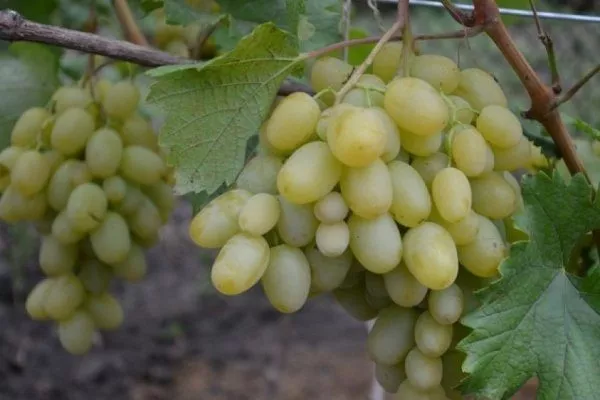
The yield is stable and high.
Paradise
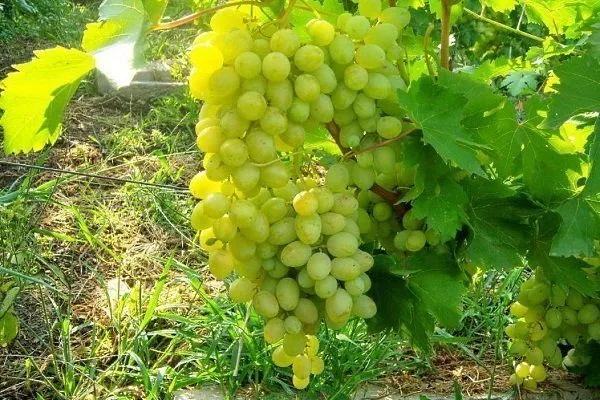
A new hybrid Muscat table grape, the characteristics of which still require further clarification. This is an ultra-early variety (95-100 days), but ripening time is significantly affected by weather conditions. The vines are tall. The bunches are irregularly conical, loose, and large, weighing up to 800 g.
The berries are large (up to 17 g), oval with an elongated tip, and white-green. When ripe, they acquire a pinkish tint. The flesh is fleshy.
The skin is thin but dense, providing excellent protection from wasps. This variety is prized for its high resistance to major diseases. The grapes do not crack or rot in rainy weather. This variety is highly frost-resistant, tolerating temperatures down to -23°C.
Crunchy
Another new selection. The bushes are medium-sized. The clusters weigh no more than 600 g and are medium-sized. The berries hold well on the branches. They are large, weighing 10-16 g, with an elongated oval shape and a rounded tip.
- ✓ For northern regions, varieties with frost resistance of at least -25°C and an early ripening period are preferred.
- ✓ In southern regions, varieties with low frost resistance can be grown, but they require a lot of sun and heat to fully ripen.
They resemble grapes in appearance. Ladyfingers varietyThey have a beautiful purple-crimson color that doesn't darken as they ripen. The flesh is firm, crisp, and has a muscat flavor. The grapes are resistant to cracking and rot, even under the most adverse conditions.
This variety is a table grape. The harvest is transportable and tolerates long-distance shipping well. It has a long shelf life of over three months, without affecting its taste or appearance.
A gardener provides an overview of the Khrustinka grape variety in the video below:
Comparative characteristics of Muscat grape varieties
The table below shows the main characteristics of the varieties considered:
| Name of the variety | Form | Ripening period | Productivity | Color | Frost resistance (C°) |
| Muscat Blau | universal | mid-late | average | black | up to -29 |
| Pink Muscat | universal | late | average | dark pink | low |
| Pleven Muscat | dining room | early | high | yellow-green | up to -25 |
| Summer Muscat | dining room | early | high | amber | up to -23 |
| Don Muscat | technical | early | high | blue-black | up to -30 |
| Very early red muscat | dining room | very early | average | violet | up to -23 |
| Muscat Livadia | dining room | early | high | yellow-green | up to -21 |
| Novoshakhtinsky Muscat | dining room | early | high | red-violet | up to -24 |
| Russian amber | dining room | early | average | greenish-yellow | up to -22 |
| Hamburg | dining room | very late | from low to high | black with a waxy coating | low |
| Amber Muscat | dining room | early | high | yellow-green | up to -18 |
| Muscat Far Eastern | dining room | very early | average | yellowish-white | up to -30 |
| Noble Muscat | dining room | very early | high | white | up to -23 |
| Muscat of Moscow | dining room | early | high | light green | up to -25 |
| Muscat Dievsky | dining room | early | high | white | up to -23 |
| Paradise | dining room | very early | there is no exact data | white and pink | up to -23 |
| Crunchy | dining room | there is no exact data | there is no exact data | purple-crimson | there is no exact data |
Distinctive features of Muscat grapes
Muscat's flavor is derived from ternoid compounds. Grapes from this variety are pleasant to the taste and much sweeter than other varieties.
Muscat grapes are native to Central Asia. Therefore, they require plenty of sun and warmth to fully ripen. Only fully ripened fruits acquire their muscat flavor and aroma. Low temperatures are detrimental to the grapes.
A major drawback of Muscat varieties is their vulnerability to various diseases. Therefore, regular treatment with pesticides is a key agricultural practice when cultivating them. On the other hand, these grapes have high yields. The fruit is easy to transport and has a good shelf life. Their flavor and aroma last for 2-3 months.
Thanks to the efforts of breeders, new varieties and hybrids with improved characteristics are appearing on the market. Therefore, vineyards can now be found not only in sunny southern regions but also in areas with cooler climates. Scientists are also working to improve the crop's immunity to major diseases.
- Apply the first fungicide treatment in early spring, before bud break.
- Perform the second treatment before flowering.
- Carry out the third treatment after flowering, but before the berries begin to ripen.
Most often the plant suffers from fungal diseases:
- mildew, also known as downy mildew;
- oidium - better known as powdery mildew;
- anthracnose;
- gray, white and black rot.
The most common diseases of bacterial origin are:
- bacterial cancer;
- bacteriosis;
- sour rot;
- bacterial necrosis.
From viral diseases:
- leaf marbling;
- chlorosis;
- mosaic;
- dwarfism.
Muscat grapes are prized for their unique flavor and sweetness, but not all varieties are frost- and disease-resistant, so caring for them requires specific knowledge. The information presented in this article will help you choose the variety that best suits your climate and growing needs.