
Monastrell or Mourvedre are the names of a Western European black-fruited wine grape variety characterized by late ripening. It is very popular in Spain and southeastern France. It is used exclusively for the production of table red wines, which it imparts with a tart flavor and rich aromas of herbs and tree bark.
History of selection
The variety's homeland is considered to be the Spanish region of Morvedre, from which it takes its name. There, it was grown on lands belonging to a monastery. This is how the grape's second name, Monastrell, originated. In the 16th century, it spread to Roussillon, and then to the French Languedoc.
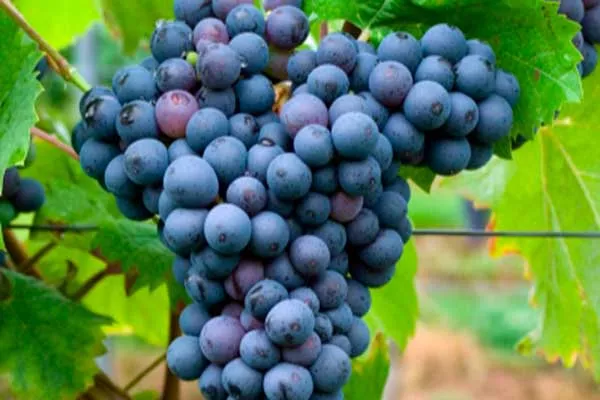
Today, Mourvedre is cultivated in many countries around the world, such as:
- France (Mediterranean coast);
- Spain (Balearic Islands, Murcia, Yecla);
- USA (California, Washington);
- Australia (southern part of the country);
- SOUTH AFRICA.
Appearance
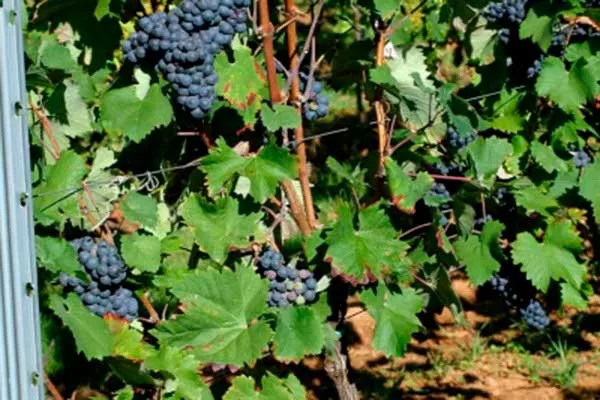
The berry plants are vigorous, growing like powerful perennial shrubby vines with numerous shoots. They have the following characteristics:
- long vines twining around supports with the help of tendrils;
- the bark is deeply furrowed, brown or reddish;
- foliage: green, medium-sized, rounded (slightly elongated), flat, slightly dissected, three-lobed, with a reticulated-wrinkled surface, pubescent on the reverse side;
- lyre-shaped petiole notch, open, with a rounded bottom;
- bisexual flowers.
Fruits and their taste characteristics
The grape clusters of Monastrel are medium-sized, conical (or cylindrical) in shape, and have dense clusters.
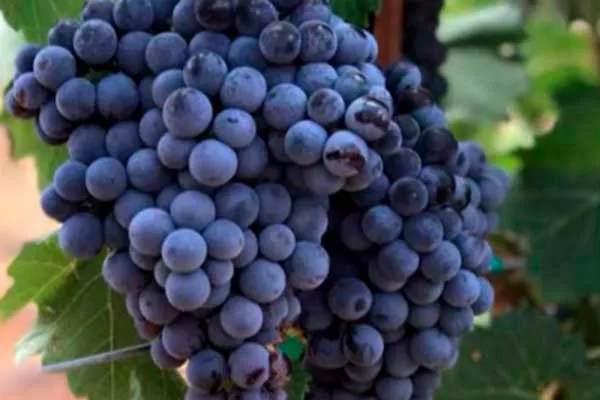
The berries that ripen on them have the following characteristics:
- average size;
- spherical or slightly oval shape;
- thick and durable skin of a dark blue color, covered with a thick layer of waxy coating;
- juicy and melt-in-your-mouth pulp.
The dense clusters make this variety attractive for winemaking, and the dense skins of the berries make it easy to transport. During transportation, the grapes do not bruise, deform, or leak.
Winemakers describe the flavor of Mourvedre berries as rich, interesting, and multifaceted. When fully ripe, it has spicy notes and a distinct astringency due to the high tannin content of the pulp. It also has good acidity.
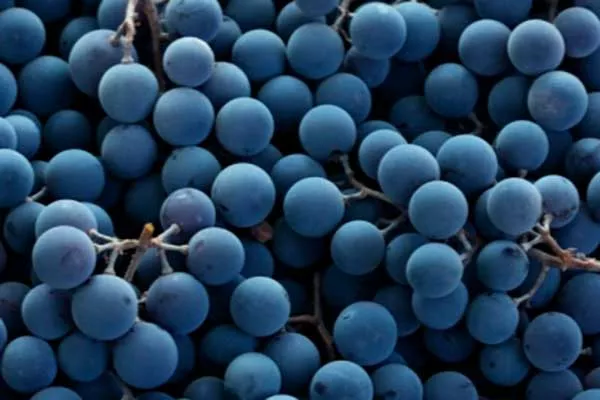
Monastrell grapes are not suitable for fresh consumption, but are ideal for producing dry red table wine. This grape imparts the following characteristics to the wine:
- intense color;
- rich herbal or woody (in aged wines) aroma;
- berry flavor with spicy notes;
- pronounced astringency and viscosity.
Characteristics
The ancient grape variety Monastrell has the following distinctive qualities:
- late ripening period of the crop - 127-157 days after bud break (provided that the total active temperatures are from 2650°C to 3100°C);
- entering the fruiting period in the fifth year after planting (sometimes the vine begins to produce a harvest earlier, but in this case it is not of high quality);
- low yield rate - 6000-7000 kg per 1 hectare (if the plant does not receive enough moisture), 12000-20000 kg per 1 hectare of planting (if the vine is provided with high-quality watering);
- frost resistance - up to -18°C;
- susceptibility to fungal infections when grown in an unsuitable climate (damp and cool).
- ✓ Minimum sum of active temperatures for crop ripening: 2650°C.
- ✓ Optimal distance between seedlings: 2-2.5 m, between rows: 3-5 m.
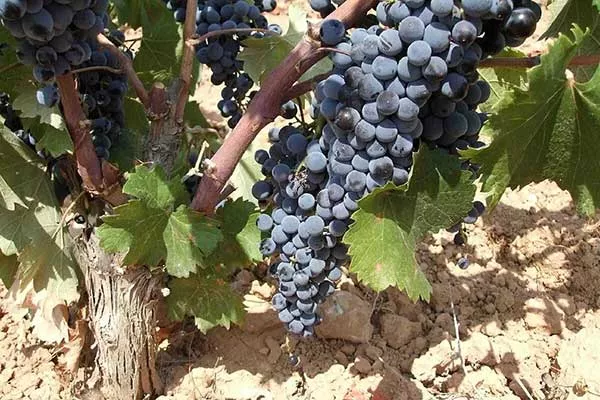
This variety is suitable for cultivation in areas with hot, dry, long summers and mild winters. It thrives in areas with ample sunlight and does well with minimal rainfall. In wet weather (or overwatering), it will not produce a harvest and may die the following year.
The nuances of growing crops
If you plan to grow the Western European grape variety Mourvèdre in your garden, familiarize yourself with the cultivation practices, advice from experienced winegrowers, and other important details.
When to plant?
Grow Monastrell in the south of the country or in Crimea. Plant it in the spring:
- not earlier than the last days of March - if you purchased a seedling with an open root system;
- at the end of May or in the first days of June - if you bought grapes growing in a pot.
Plant this heat-loving plant in the garden after the soil warms to 10°C and the air temperature reaches 10-15°C. Remember that Mourvedre seedlings should not be exposed to cold soil. This can cause serious stress and even death.
Experienced winegrowers prefer closed-root planting stock. They plant it in their plots while it's still vegetating in early June.
Preparing planting material and planting site
To ensure you enjoy a bountiful harvest from this Spanish wine grape, be sure to choose the right location for its cultivation in your garden. Select a plot for your vineyard that meets the following requirements:
- sunny (berries need a lot of light and heat to ripen);
- protected from drafts and strong winds that could break the vine;
- without stagnant moisture, which can lead to rotting of plant roots;
- located away from tall trees and buildings (distance - at least 5 m), as well as bush crops (at least 2 m);
- with fertile, well-drained soil (Monastrel grows best in chalky soil).
Grapes are typically planted in trenches or holes with added nutrient solutions to improve soil fertility. Space 2-2.5 meters between seedlings and 3-5 meters between rows. Orient the plantings from south to north.
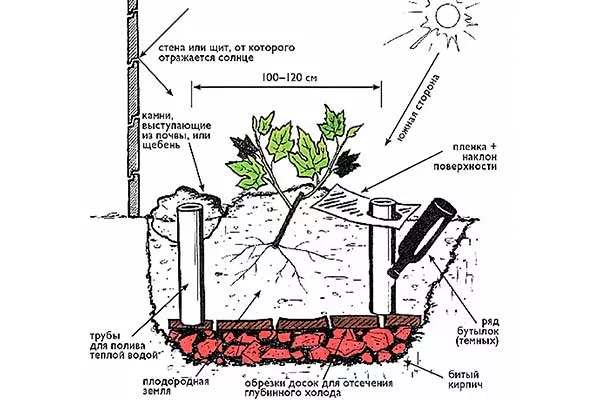
Dig a hole or trench in the fall. If you haven't done this before winter, prepare the planting site 2-3 weeks beforehand. Make the hole 70 cm deep and 80 cm in diameter. Line the bottom with expanded clay or broken brick.
Fill the planting hole with loose materials, soil and fertilizer, laying them out in layers:
- sand - 16-20 kg;
- humus - 30 kg;
- garden soil (its topsoil) - 40-50 kg;
- ash - 400-500 g;
- Superphosphate - 200 g;
- ammonium nitrate - 40 g;
- potassium sulfate (add it if you did not add ash) - 100-200 g.
Water the hole thoroughly several times during the planting period. Make sure the soil settles thoroughly. Otherwise, it will pull the seedling deeper, and it will die due to damaged roots.
Planting material also requires preparation. Potted seedlings need to be hardened off, as they are at risk of damage from direct sunlight (they can burn). Keep them under cover for three days before planting, and immediately afterward, cover them with a sheet of plywood for one to one and a half months.
Planting in the ground
Planting Morvedre grapes follows these steps:
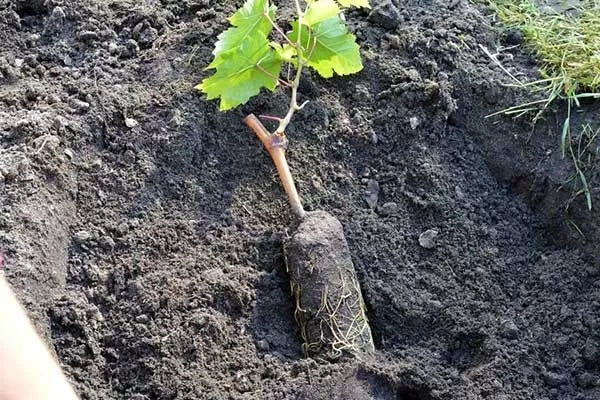
- Completely cut off the bottom of the pot in which the seedling is growing.
- Make a hole in the center of the planting hole. Its diameter should match the size of the pot. The depth should be 30 cm.
- Position the seedling in the hole so that its buds occupy a single plane running along the trellis. This will ensure ease of tying the vine later.
- Fill the hole with soil. Compact it under the seedling.
- Water the grapes with water (10-20 l) to which you have added a little Kornevin.
- Install a stake and tie the plant to it.
- Mulch the soil under the seedling with hay, peat, humus, dry grass or rotted sawdust.
The subtleties of grape care
The Monastrell grape variety is very demanding in terms of growing conditions and care. Improper cultivation practices can negatively impact its growth, health, and fruiting.
Features of watering
This garden variety does not tolerate damp weather or waterlogged soil. Overwatering can kill it. Despite its excellent drought tolerance, a lack of moisture can also harm the grapevine. It can lead to reduced yields and unripened berries (the clusters will remain green).
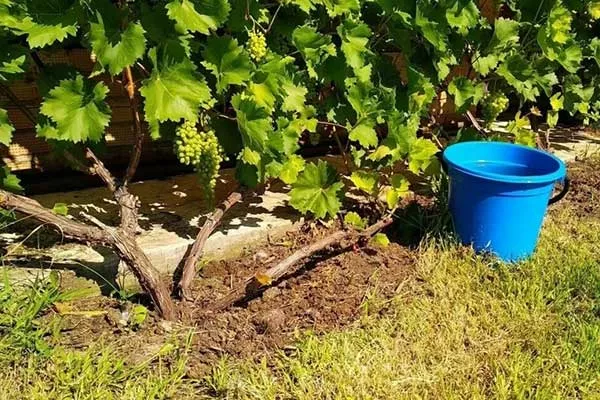
Mourvedre requires controlled and limited irrigation, which must be adjusted based on weather conditions and soil moisture evaporation rates. Follow the irrigation regime:
- moisten the soil under the grape bush no more than once every 14 days;
- water the crop during the period of its flowering and ripening of berries;
- Soak the soil under the vineyard with water to a depth of 50 cm.
Mulching the area around the tree trunk with straw will help reduce watering and reduce the amount of water used. Don't forget to loosen the spaces between the rows. This will improve air flow to the plant's root system and increase the soil's permeability.
Fertilizers and dressings
To ensure a bountiful and high-quality harvest, fertilize your Spanish grapes regularly. Apply fertilizer based on the plant's developmental stage:
- in the spring stimulate the growth of green mass using nitrogen compounds (urea, ammonium nitrate);
- in summerDuring the period of formation and ripening of the crop, use fertilizers rich in potassium and phosphorus (potassium salt, potassium chloride, superphosphate), which promote the accumulation of sugar in the fruits and improve their taste;
- in autumn Fertilize the grapevine with mixtures containing potassium and phosphorus (potassium sulfate, potassium sulfate, phosphate rock) to strengthen its immunity and increase winter hardiness.
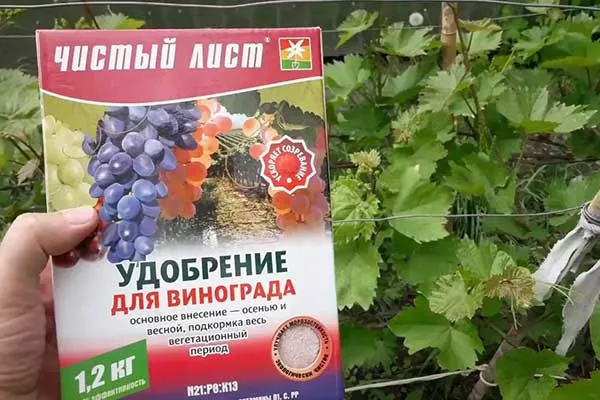
Use not only mineral compounds, but also organic matter (compost, chicken manure infusion, bone meal, wood ash) as crop fertilizer.
Pruning grapes
Pruning is essential when growing the dark-skinned Monastrell grape. It has many positive effects:
- helps protect bushes from damage by pathogenic microflora;
- stimulates the development of new shoots;
- increases grape yield;
- improves the taste and quality of berries, promotes their increase in size.
In summer and spring, carry out preventative maintenance by removing unproductive branches (broken, deformed, old, diseased, or dead). You'll also need to pinch back young shoots to protect them from disease and thin out the bushes to ensure better sun exposure.
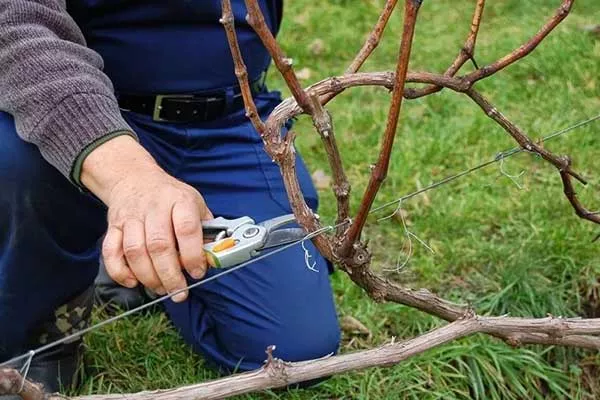
In the fall, prune your vines thoroughly. Remove damaged branches, dead leaves, and unharvested grape clusters. Choose the right time to perform this procedure—when the plant sheds its leaves and begins storing its vital resources in its roots, preparing for winter.
Carry out autumn pruning of Monastrel step by step:
- Inspect the grape vines to identify perennial skeletal canes.
- Shorten them by 10-20 cm.
- Cut off last year's branches.
- Completely remove any excess young shoots that are thickening the bush.
- Cut out all damaged branches.
Wintering
Prepare your Mourvedre vines for winter carefully. The plant is very heat-loving. It can withstand temperatures as low as -18°C with proper insulation. Young vines, those less than two years old, need this especially.
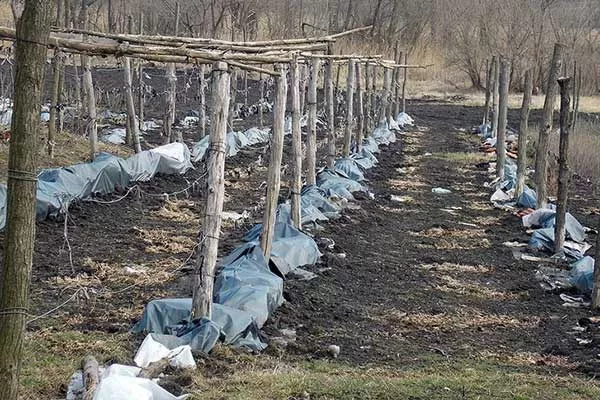
Begin covering the vines after night frosts become frequent and daytime temperatures drop to just above freezing. Follow these step-by-step instructions:
- Dig a small trench along the vine trellises, on either side, with earthen embankments 10-15 cm high.
- Remove the branches from the trellises. Lay them on the ground, guiding them along the trenches.
- Fix them, leaving a gap of 5 cm between the vine and the ground.
- At the bottom of the trellis, at a height of 30 cm from the ground, stretch a wire to support the covering material.
- Cover the vineyard with wire, capturing the earthen ramparts.
- Provide additional insulation to the vines before covering them with plastic. Use dry leaves (up to 15 cm thick) for this purpose.
- Leave the end of the covered trellis open to allow the plant to ventilate. If the temperature drops to -15°C, close it tightly.
How to protect crops from diseases and pests?
Domestic winegrowers consider one of the significant drawbacks of this Western European variety to be its low resistance to fungal infections. In the dry and very hot Spanish climate, this problem is rare, but in the growing conditions of the variety in southern Russia, the risk of disease is quite high.
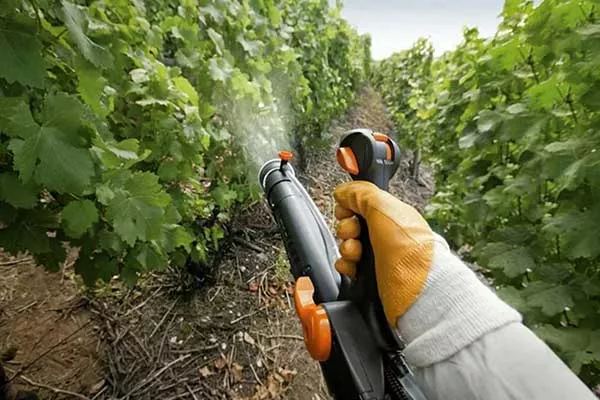
Vineyards are particularly susceptible to diseases such as anthracnose, powdery mildew, gray mold, and black spot. To prevent these diseases, apply two broad-spectrum fungicide treatments to the foliage, shoots, root zone, and soil in the spring.
Gardeners consider the following insects to be the most formidable enemies of crops:
- spider mite;
- phylloxera (aphid);
- grape itch;
- leaf roller.
Preventative measures can help prevent fungal and bacterial diseases on vines and protect them from pests. These measures include:
- the correct choice of location for growing crops;
- watering it correctly;
- timely application of fertilizers;
- tying the vine to a trellis for better access to sunlight and air;
- regular pruning of the bush and pinching of shoots;
- loosening the soil between rows, removing weeds;
- periodic inspection of the vineyard to detect the first signs of ill health or insect damage.
Harvesting and storage
Determine the grape harvesting time based on the appearance and taste of the berries. They should be fully ripe. If you delay harvesting until the leaves fall, cut the bunches off along with some of the vines.
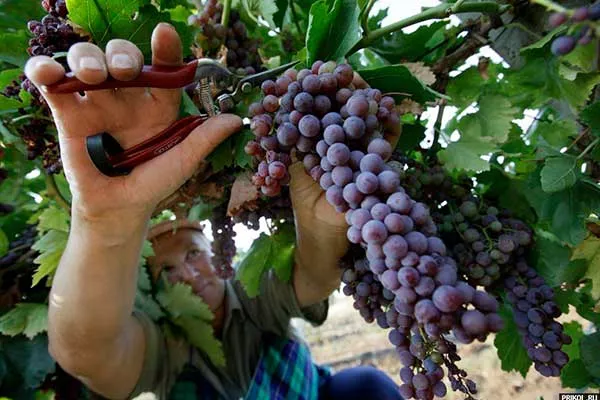
Harvest in dry, sunny weather. Start early in the morning, immediately after the dew has cleared. Cut the bunches with scissors or pruning shears.
If you plan to store grapes in a cellar, follow these conditions:
- collect the bunches, trying not to damage the waxy coating on the fruits;
- do not damage the integrity of the berries;
- When cutting, hold the bunches by the stalk;
- do not store the harvest in buckets or deep baskets;
- use a flat container like a sieve for collection;
- Immediately remove damaged, rotten, and dry berries from the total mass.
For long-term storage, expose the harvest to sunlight for 20-30 minutes immediately after harvesting. Ideal conditions for maintaining freshness include a dry, clean, dark, and well-ventilated area with a temperature between 1°C and 4°C.
Positive and negative qualities
Monastrell is of interest to domestic winegrowers as a variety suitable for producing dry wines with a rich color, an interesting, multifaceted flavor, and an intense herbal aroma. Among its inherent advantages, they highlight the vines' good heat and drought tolerance and the easy transportability of the harvest.
The variety has quite a few shortcomings that gardeners planning to grow on their plots should pay special attention to:
Reviews
Monastrell, or Mourvedre, is a late-ripening Spanish grape variety. It is well known to connoisseurs of European wines as the ingredient that imparts interesting spicy notes to their flavors, a very intense red color, and a rich aroma. Domestic winemakers successfully cultivate it in the south of the country and in Crimea.