
The Moldova grape variety produces juicy and nutritious berries even when not fully ripe. It is precisely because of this advantage that this variety is known far beyond its growing region. The clusters have an exotic appearance and are used to decorate dishes on any holiday table.
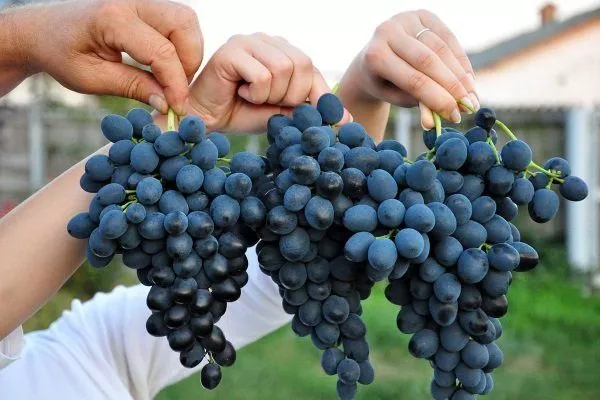
Moldova grape variety
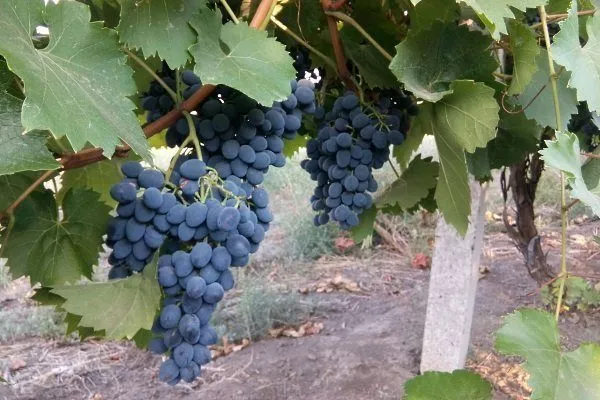
The Moldova variety is considered one of the best table varieties and is successfully cultivated throughout the country.
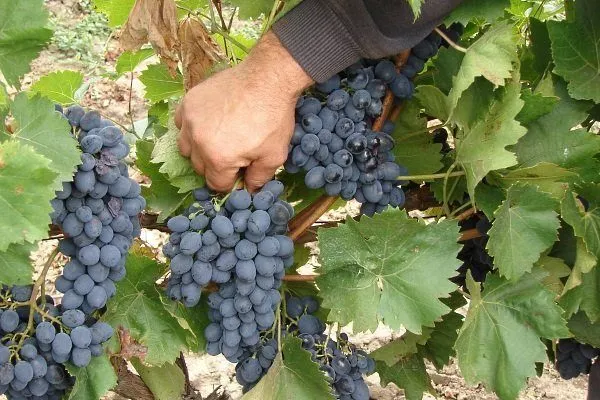
Moldova grapes consistently earn high tasting scores and delight with large harvests
History of selection
Moldova is a hybrid variety, the parents of which are the Central Asian dark-berry variety Guzar Kara and the French light-berry variety Villard Blanc. Breeders call the latter a unique grape variety, capable of producing unrivaled white wines. In 1987, the grape was first introduced to the territory of what is now the CIS, where it successfully established itself in the southern regions of the countries.
Characteristics of Moldova grapes
The main characteristic is the late ripening period; the berries can only be picked after five months. This means that a crop planted in March will not produce a harvest until September. Full fruiting is observed in the second or third year.
The harvest is abundant and healthy, and it performs well in southern regions of the country. Growing in northern regions is possible, but due to the late ripening period, the variety will not ripen fully, and the berries will remain tart.
Peculiarities of agricultural technology
The site where the plant grows is especially important. The area should be as sunny as possible. The standard planting pattern for Moldova grapes is 4x5 m. When the plants become too dense, the branches stretch out and the berries become smaller.
Grapes thrive on the south side near a high fence or gazebo. The planting hole, soil composition, and seedling size all depend on the regional climate and the soil on the site.
If your garden has black soil, simply dig a hole and plant it. Poor and heavy clay soils require a more thoughtful plan. A 1x1 meter hole is dug and filled with turf mixed with peat, humus, and compost.
Berries and ripening period
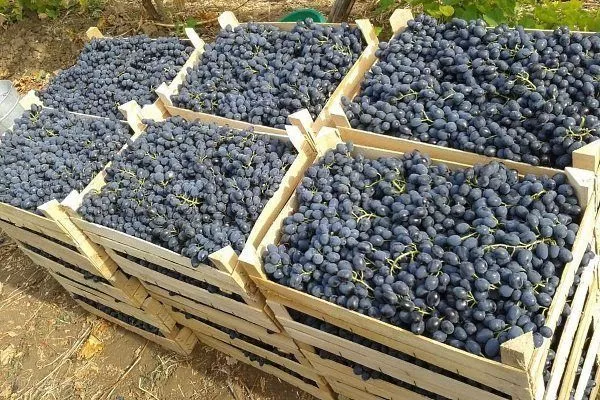
The fruits are large, oval-shaped, weighing approximately 6 grams per berry. The fleshy pulp contains several seeds. When fully ripe, the berries are dark purple or black. They are covered with a waxy layer, which distinguishes the Moldova variety from other varieties. This waxy coating is noticeable when eating, but it serves a protective function.
The fruit has a sweet flavor. Grapes can be eaten fresh or used for various preserves. The dense structure of the berries ensures easy transport. They can be easily transported from one place to another, without losing their decorative appearance.
The berries can be stored for up to six months, which gives the crop another significant advantage. Grapes retain their flavor over time.
The grapes have a high sugar content—around 19%. This sugar accumulation occurs due to the fruit's prolonged ripening process. The variety is distinguished by excellent resistance to fungal diseases and rot, which can damage the grapes, leaves, and root system of the plant.
Moldova cannot resist all diseases; some of them attack the crop, and to prevent this, it is necessary to implement a number of preventative measures several times during one season.
Productivity
Moldova is a late-ripening table grape variety. Although the growing season is long, this doesn't affect the yield. Gardeners note that the variety produces large yields starting in its eighth year.
You can see the Moldova grape variety in the video below:
One bush can produce up to 150 kg of juicy and dense berries.
Commercial grape cultivation in Moldova yields 150 centners per hectare for breeders. Hobbyists can harvest approximately 4 kg per square meter. These figures are achieved thanks to the plant's rapid growth. It adapts well to the soil and begins producing its first berries in its second year. The flowers are bisexual, so adjacent plantings are unnecessary.
Frost resistance
The Moldova variety can tolerate temperatures as low as -23 degrees Celsius. In northern regions, winter shelter is essential, but in southern regions, it's possible to get by without it.
Advantages and disadvantages of the variety
Moldovan grapes produce a large harvest and are famous for their delicious berries, but they are also a late-ripening variety and cannot withstand frost.
Advantages of the Moldova grape variety:
- It's easy to care for. Basic knowledge of grape care is enough to grow this variety in your garden. It doesn't require any special conditions.
- Self-pollinating. It produces both male and female flowers and does not require pollination. Additional plants near the grapevine are not necessary.
- Long-term storage. The berries will retain their original appearance and flavor even after six months.
- Excellent transportation. If you're thinking of growing Moldovan grapes commercially, this is a good solution. The berries don't burst or spoil during transport.
- Bunches can hang on the plant for a long time. Didn't have time to harvest? No problem – the fruit can hang on the plant for a while longer.
- The berries are not sour and contain a huge amount of natural sugar.
- The crop is disease-resistant. It is not susceptible to gray mold or phylloxera.
- Quickly recovers from pruning and natural damage.
Disadvantages of the variety:
- Low frost resistance. Growing in temperate regions is only possible if the gardener can provide adequate winter protection for the bush. However, some gardeners claim that grapes can withstand temperatures as low as -26 degrees Celsius.
- It is susceptible to powdery mildew. Regular preventative measures are necessary.
- Shelf life is reduced. If the bunch of grapes is not picked from the bush in time, the shelf life and shelf life of the berries are reduced.
- It tolerates neither overload nor underload poorly, resulting in reduced yields.
Features of planting and growing
Planting a crop is a difficult process. The challenge isn't just choosing the right cuttings; choosing the right site and soil is crucial. An incorrect choice will lead to frequent plant diseases, ultimately resulting in death.
- ✓ Soil pH should be between 6.0-6.5 for optimal growth.
- ✓ The depth of groundwater is at least 1.5 m from the surface.
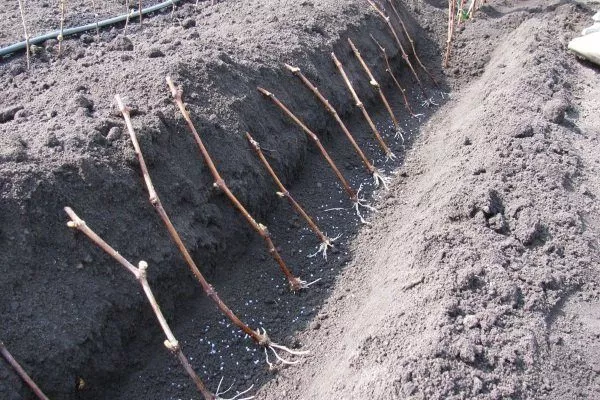
It's best to choose light soil for planting, rich in minerals and fertilizers. The bush is very sensitive to changes in soil water level, so drainage is essential in the area where the grapes are grown. The groundwater level should not be higher than 1.5 meters, otherwise the variety will not thrive.
A high yield is guaranteed only if the plant is planted in a sunny, wind-protected location. Northerly winds are the most dangerous for the crop. The site should be near overhangs or fences so that the Moldova grapes can cling to the supports as they grow. This will prevent the grapes from becoming dense, and the berries will have the best conditions for gaining weight.
It's recommended to plant grapes in the spring. During the summer and fall, the plants will have time to establish themselves in the soil, and they won't be affected by winter. This directly impacts the comfortable growth of the grapes; in terms of performance, the plants produced by autumn plantings are dense and bear abundant clusters.
The basic rule is that the ideal temperature should be maintained at +15°C. The soil temperature should not drop to -10°C.
Planting grapes from cuttings: a step-by-step guide
The planting pattern is based on the developmental characteristics of the cutting. Moldova grapes are characterized by rapid growth and a tendency to develop unacceptably dense foliage. The planting area should be chosen based on these factors. A favorable plot size for grapes is 5 x 4 m.
Basic recommendations for planting the Moldova variety:
- Planting is carried out in two ways: on native roots and on grafted old rootstock.
- When planting a seedling, soak its root system in water for a long time until the roots develop a white hue. Pay attention to the color of the cut; it should be a rich green.
- When purchasing, make sure that the root system is not dry or frozen.
- Plant the cutting in a pre-fertilized hole. Place organic fertilizer at the bottom, mix it with the soil, cover with soil, and plant. Just be careful with the root collar; don't cover it with soil.
- Grafting: Trim the seedling into a wedge shape, 2-3 mm from the bud, and place it in water for 24 hours. The procedure is performed by splitting the old rootstock.
- Before planting, soak the seedlings in "Humata" to help them establish quickly. Add 8 drops of the product to 1 liter of water and soak the seedlings for 2 minutes.
- Planning a fall planting? Cover your seedlings with paraffin wax. This will help them survive winter frosts and winds. Melt some paraffin wax in a container of water. Let the mixture boil. The wax will rise to the surface, and dip the cutting into it for a few seconds. Afterward, place the seedling in cold water to cool.
- After planting, water the cutting well, using about 5 liters of water.
- Dig in a support near the seedling, which will begin to guide the plant.
Caring for grapes
The soil shouldn't be dry after planting, so be sure to water the seedling. Insufficient water is the main cause of plant disease and even death.
Watering
The Moldova grape variety is sensitive to watering; it dislikes drought, but overwatering is also not beneficial. Watering should be done twice a month. During drought, heat, and scorching sun, the frequency of watering should be increased.
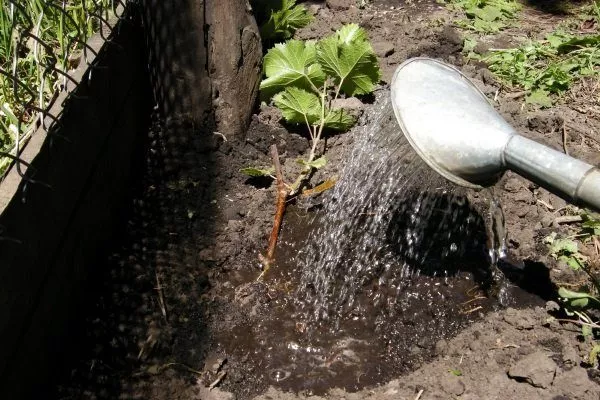
The frequency of watering is adjusted depending on the soil in which the plant is planted. To prevent overwatering, gardeners create drainage systems to remove excess moisture.
Top dressing
The most beneficial fertilizers are nitrogen, phosphorus, and potassium. Fertilize four times per season, preferably in conjunction with watering. In spring, use organic nitrogen fertilizer, as it stimulates the growth and development of plant foliage. Avoid applying nitrogen in fall and summer. During these periods, potassium and phosphorus are the best fertilizers.
Organic fertilizers are applied in late autumn every couple of years. Such fertilizers in the spring can significantly spoil the taste of the berries.
- ✓ Prune to 8-10 buds per shoot for optimal fruiting.
- ✓ Remove shoots growing inside the bush to improve ventilation.
Trimming
Prune while the grapevine is still dormant, that is, before the sap begins to flow. The best time is early spring or late fall. The bush should have four branches remaining.
Don't be stingy with your grapevine's branches; too many will negatively impact the bush's yield. During pruning, remove excess, diseased, and dead branches. After pruning, the grapevine quickly recovers and begins to produce even more bunches.
We recommend that you also read the article about spring pruning of grapes.
Shelter for the winter
Frost protection for grapes will be required if they grow in northern regions, where winter temperatures reach -23°C and below.
The shelter is provided according to the following scheme:
- After pruning in the fall, tie the vines together and press them into the ground.
- For covering material, use film, hay or geotextile.
- Mulch the tree's trunk area with wood chips or peat. Remove the mulch in the spring. More information on mulching can be found here.here.
Harvesting and storage
Moldovan grapes often fully ripen in early autumn. Harvesting begins in the morning using sharp pruning shears. The bunches are carefully placed in crates; the berries' thick skins help them store well and withstand regular transport. Grapes can be left on the vines immediately after ripening, but this will affect their shelf life.
Diseases and pests
The Moldova variety is highly resistant to pests and diseases. It's resistant to mildew, powdery mildew, and phylloxera. However, it's essential to protect the plant from chlorosis and phylloxera. These are the two most dangerous diseases that attack the plant, preventing it from growing and developing normally.
Before purchasing a seedling, be sure to check the root system and the entire branch for fungal infections. Disease resistance in nurseries is low, as some shoots are on the ground, and the plants have limited space and moisture.
Gardeners' reviews of the variety
Moldovan grapes produce a rich and delicious harvest. However, to achieve this, they need proper care, fertilization, and regular preventative measures to prevent the development of dangerous diseases.