
Merlot is a sought-after Western European grape variety, very popular in winemaking. It ranks second among wine grapes, behind only the renowned Cabernet Sauvignon.
Description and characteristics
Merlot is a high-yielding technical variety grown for winemaking.
Brief botanical description:
- Bushes — medium-sized, shoots are grey with pinkish spots.
- Roots - powerful, branched.
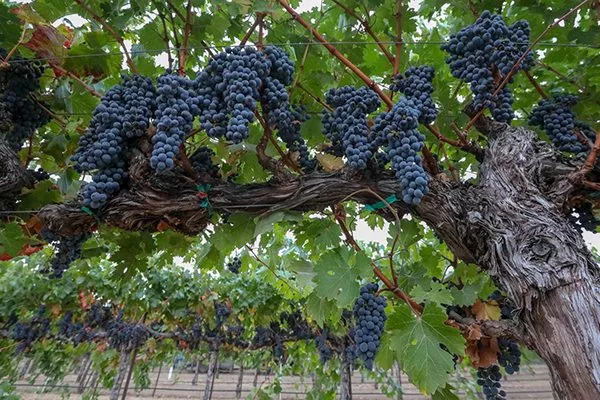
- Leaves — large, wrinkled, five-lobed, dark green, turning golden-red in autumn. Downy underneath, serrated edges.
- Flowers — bisexual, collected in panicle-shaped inflorescences. With a pleasant scent.
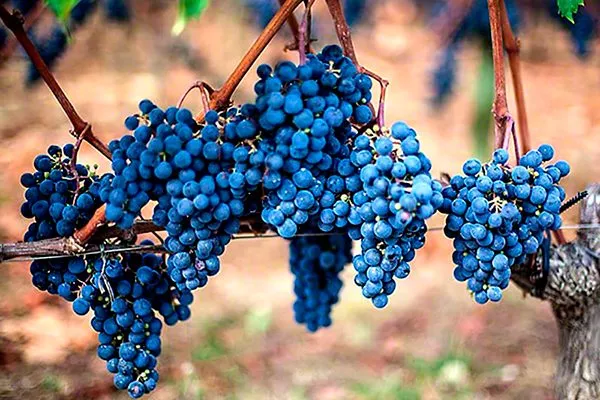
- Clusters — cylindrical-conical, medium-dense. Average weight: 110-150 g.
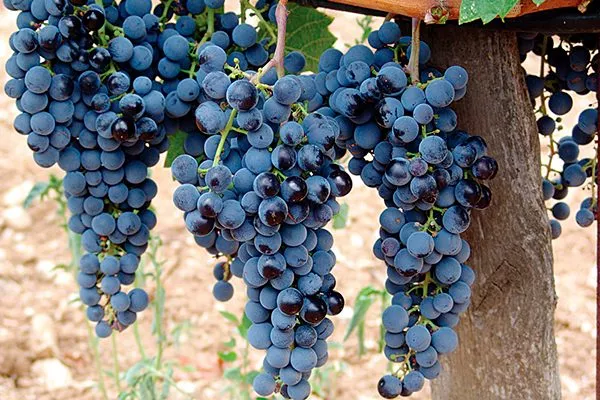
- Berries — black, with a thick waxy coating and a firm, thin skin. The flesh is juicy, and the juice is colorless. The fruit is round. The average weight of one berry is 1-1.4 g. The diameter is 12-13 x 13-14 mm. The flesh contains 1-3 seeds.
Main characteristics:
- Ripening period - Late. If the fruit is used to make table wine, ripening takes 155 days; if used for dessert wine, it takes 165 days.
- Percentage of fruitful shoots - 52.8%.
- Productivity — 50-60 c/ha, in fruitful years up to 80-150 c/ha can be harvested.
- Frost resistance — up to -22 °C.
- Drought resistance - average.
- Pest resistance and diseases - average.
- Number of bunches per shoot — 1,2.
- Taste - gentle, harmonious, nightshade.
- Fruiting coefficient — 1.7.
- Sugar content — 195-220 g/100 cubic meters. dm.
- Acidity — 5.2-8.5 g/cu. dm.
Merlot grapes bloom in May or June. The variety ripens beautifully in both cool and warm weather. In the latter case, the fruit is more sugary. The vines are almost completely ripe by winter.
Origin
The Merlot grape originates from France. The first mentions of it date back to the 18th century. It has long been grown in the vineyards of Bordeaux. It was especially common on the right bank of the Gironde River (Saint-Émilion, Pomerol).
Genetic analysis revealed that its parent varieties were Cabernet Franc and Madeleine Noir des Charentes. Merlot has many other names: Bignie Rouge, Vidal, Ojaleshi, Plan Médoc, and Alicante.
Geographic distribution
Merlot grapes are widespread throughout the world today. They are grown in areas with mild, warm climates and long summers. Besides France, Merlot is also grown in Italy, Spain, Portugal, Montenegro, Switzerland, the United States, Australia, Croatia, Moldova, Argentina, and Ukraine.
In Russia, the Merlot grape variety is grown in many regions, but it is most widespread in the Krasnodar Krai. Merlot was included in the State Register of the Russian Federation in 2002.
Benefits of Merlot
Merlot grapes are rich in microelements, vitamins, and other beneficial substances. These are found both in fresh fruit and in wine products.
The berries contain:
- Sodium — maintains water balance and participates in metabolic processes. Drinking Merlot wine promotes blood renewal and the production of intercellular fluid.
- Potassium - helps strengthen vascular walls and has a positive effect on the functioning of the heart muscle.
- Calcium - maintains bone density, nail and hair growth.
- Magnesium - normalizes the functioning of the digestive system.
Pros and cons of Merlot
Before planting Merlot grapes in your garden, you need to evaluate all its pros and cons to decide whether this variety is suitable for specific conditions and goals.
Landing features
To ensure Merlot grapes thrive and produce consistent yields, with fruit quality that meets expectations, they must be planted and cultivated correctly.
- ✓ Soil pH should be between 6.0-7.0 for optimal nutrient absorption.
- ✓ The depth of groundwater is at least 1.5 m to prevent root rot.
Landing features:
- Selecting a location. Merlot grapes are planted on warm slopes protected from cold winds. Low-lying, excessively dry, or, conversely, marshy areas are contraindicated.
- Landing plan. Between adjacent plants, maintain intervals of 1.2-1.5 m. Between rows, maintain a distance of approximately 3 cm.
- Planting dates. In areas with a warm climate, planting is done in the fall; in regions with cold winters, preference is given to spring planting.
- Soil. This variety grows best in loamy soils mixed with river sand, which improves soil aeration. Fine crushed stone is often added for this purpose.
- Preparation of planting material. Two-year-old seedlings are used for planting. The roots of the seedlings are immersed in water a day before planting.
- Preparing the pit. Two weeks before planting, dig 80x80x80 cm holes and install supports. Add drainage material and 20 liters of potting soil mixed with fertile soil and humus to the bottom.
- The landing process. The plant is placed in the center of the hole and filled with soil. The hole around the trunk is then covered with peat, sawdust, moss, or freshly cut grass.
Care
The quality and quantity of the harvest depend not only on growing conditions but also on care. Merlot grapes don't require any special care, just standard agricultural practices, but these must be carried out regularly and promptly.
Watering
Young grapes are watered 1-2 times a week. The recommended watering rate is 10-20 liters. During dry periods, watering becomes more frequent.
Watering is especially important during the following periods:
- 2 weeks before flowering, during the period of bud and shoot blooming.
- 2 weeks after flowering, when pinhead-sized fruits are formed.
- At the stage of filling and intensive growth of fruits, until they reach technical ripeness.
Top dressing
The bushes don't need additional feeding for the first three years, as they have sufficient nutrients from the planting hole. Subsequently, they need to be fed approximately five times during the season. The first three feedings involve the application of nitrogen fertilizers such as urea or ammonium nitrate. Subsequent feedings involve the application of phosphorus and potassium compounds.
Trimming
Pruning is carried out in spring and fall. There are two types: one aimed at shaping the bush, the other at maintaining its health and involves removing shoots that are diseased, damaged, or frozen over the winter.
Vineyard pruning is carried out in the fall. This pruning stimulates new shoot growth and increases yield. Experience from European winemakers shows that reducing vine yields has a beneficial effect on wine flavor. This approach is appropriate for the production of exclusive wines; in other cases, increasing yields makes sense.
For Merlot, the ideal yield is 50 buds per bush with moderate pruning (5-6 buds). Removing weak and fruitless shoots also increases yield, reaching up to 6 kg per bush.
Shelter for the winter
When growing grapes in cold winters, a shelter is provided. This should protect the vines from the effects of low temperatures. In this case, grapes are grown in standardless forms, such as a multi-arm fan or sloping cordon.
The vines are removed from the trellises, laid down, and then covered with straw, sawdust, leaves, reeds, or other covering material. A waterproof covering, such as film or roofing felt, is placed on top. This will prevent the buds from rotting due to the covering becoming damp.
Diseases and measures to combat them
The Merlot variety is resistant to mildew, gray mold, and other fungal diseases. However, powdery mildew can cause significant damage to this grape variety. Regular preventative spraying with copper sulfate and systemic fungicides is important.
- ✓ White powdery coating on leaves and shoots that cannot be wiped off.
- ✓ Deformation and drying of affected leaves and berries.
Preventive measures:
- Before planting, the cuttings are kept in warm water.
- Laying drainage into the planting hole.
- Regular mulching of the soil.
- Plant bushes in a way that provides ventilation.
- Regular loosening of the soil.
Storage
Merlot grapes contain very few tannins, making them completely unsuitable for long-term storage. Bunches can only be stored for 2-3 weeks at lower temperatures—in the refrigerator or cellar.
Application of the variety
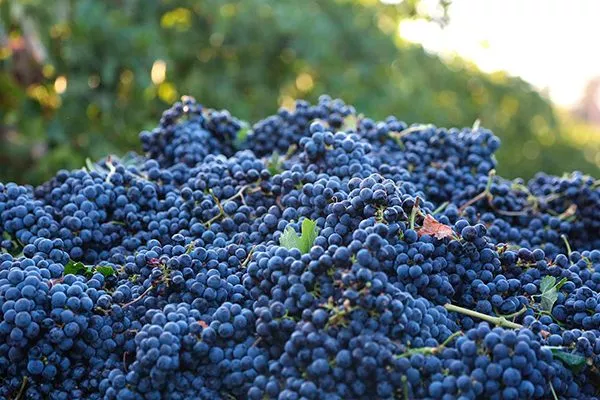
Merlot grapes are used to produce red wines and are also used in blending. This grape has the ability to soften the harshness of other varieties.
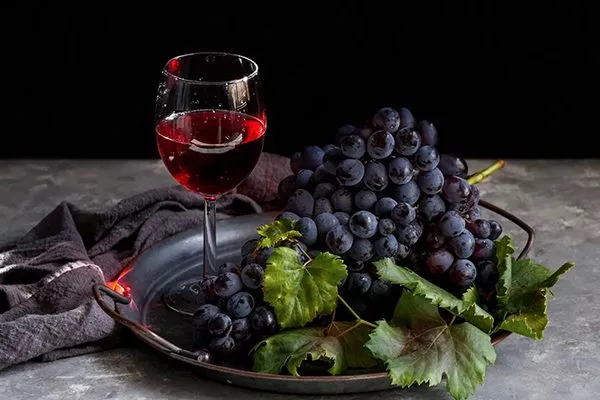
There are several particularly popular brands of Merlot:
- Italian - sweet and tart, with a hint of spices.
- Tuscan (Italian variety) - aged for two years in oak barrels, has notes of coffee and blueberry.
- New World (South American) - with a taste of mint and white pepper, the aroma contains notes of plum jam.
- French (from Bordeaux) is the most popular variant, with a berry flavor. It combines notes of blackberry, currant, cherry, and raspberry, while the aroma reveals violet, plum, and cocoa.
Merlot grapes are deservedly considered one of the most popular varieties in the world. This variety produces a unique raw material for red wine production, while also being quite hardy, easy to grow, and productive.