
Malbec is a popular grape variety used in winemaking and is very popular among ordinary gardeners. This French grape once experienced a "second wind" in South American vineyards, where it became a true leader among wine grapes.
Description of Malbec grapes
Malbec is a wine grape variety used to produce red and rosé wines. It belongs to the Western European group and is characterized by robust, vigorous vines with readily ripening shoots.
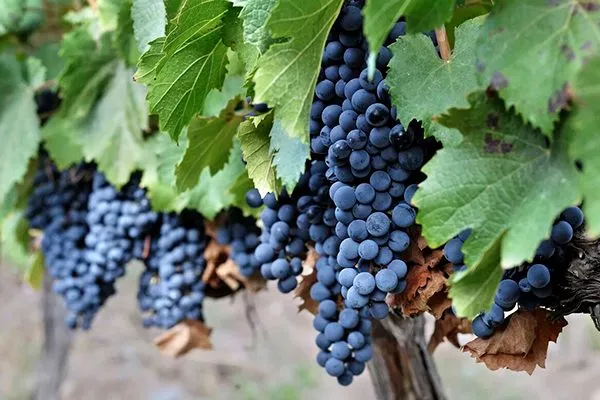
Brief botanical description:
- Bushes - medium-sized, spreading.
- Roots - powerful, branched.
- Leaves — rounded, medium-sized (16 x 18 cm). Three- and five-lobed, with a reticulated-wrinkled surface, varying degrees of dissection. The leaf blades are vesicular, with downward-curved margins. The leaves are edged with pointed teeth along the perimeter.
- Clusters — loose, conical in shape. Approximate size: 8 x 12 cm. Average weight: 50 g.
- Berries — round, dark purple, with a thick waxy coating. The skin is medium-thick. The flesh is meaty, juicy, and melts in the mouth.
History of selection
The Malbec grape has a long history, originating in France several hundred years ago. It was developed by crossing two grape varieties—Magdalaine Noir des Charentes and Prunellar.
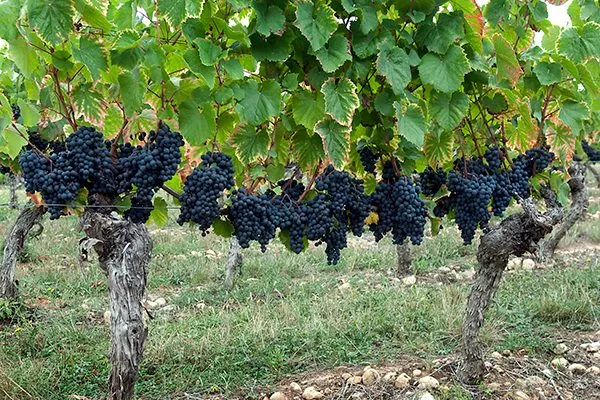
Its birthplace is considered to be the Cahors region in southwestern France. Other names include Côt, Cahors, Noir de Presac, Médoc Noir, Auxerrois, Tinturin, Franc Moreau, Jacobin Blauer, and Costa Rose.
Geographic distribution
Malbec is grown on 61,000 hectares worldwide, of which approximately 40,000 hectares are in Argentina, where it is considered the flagship variety. It is also widely grown in France, where it lost some ground following the phylloxera epidemic and the cold winter of 1956. Nearly 80% of all plantings perished during those years.
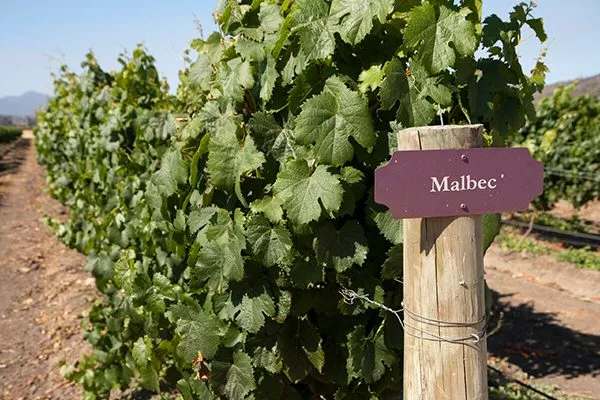
In France, Malbec is grown in Bordeaux, Gascony, and the Loire Valley. It is also cultivated in the United States, Chile, Australia, New Zealand, and several other countries. The hot climate of South America has proven particularly suitable for the Malbec variety, where it has been cultivated since the 19th century. Every year on April 17, winemakers celebrate World Malbec Day.
Characteristics
The Malbec variety is an early-ripening grape. It has excellent agronomic characteristics, making it easy to grow.
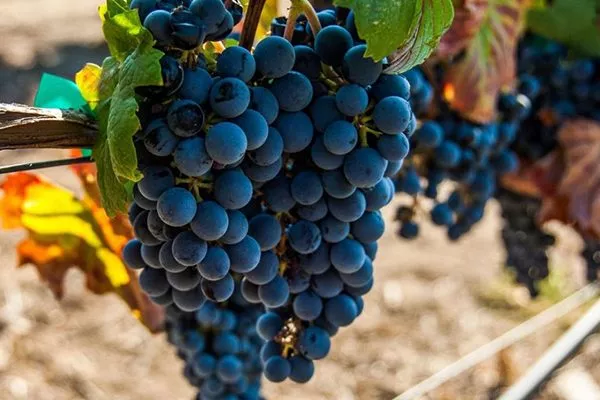
Main characteristics:
- Ripening period - It takes 140-145 days from bud break until the bunches reach harvestable maturity. Bud break begins in the second ten days of April.
- Percentage of fruitful shoots - 55-75%.
- Productivity — 40-160 c/ha.
- Frost resistance — up to -18 °C.
- Drought resistance - good.
- Pest resistance and diseases - average.
- Number of bunches per shoot — 1.1-1.5.
- Taste — pleasant, harmonious, slightly sour, with a berry flavor, in which subtle notes of chocolate can be felt.
- Fruiting coefficient — 1.5-1.6.
- Acidity to sugar ratio — 0.7%/28%.
Pros and cons
The popularity of Malbec stems from its virtues, which outweigh the shortcomings of this ancient grape, which also have many. However, the quality of the resulting wines makes farmers and winemakers willing to accept these shortcomings.
Landing
Achieving high yields requires a professional approach to planting site selection. It's also important to properly select, prepare, and plant grape seedlings (cuttings).
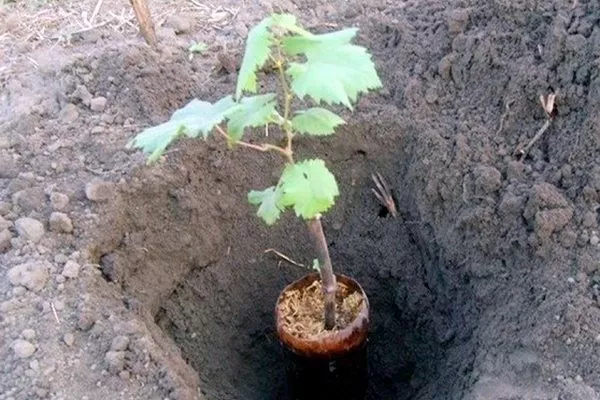
It is recommended to plant Malbec grapes taking into account the following requirements:
- good lighting;
- plain or hill;
- southern side of the site;
- protection from drafts and gusty winds;
- chernozem or stony-sandy soils.
- ✓ Soil pH should be between 6.0-7.0 for optimal growth.
- ✓ The groundwater depth must be at least 1.5 m to prevent root rot.
Planting occurs in the second ten days of April and continues until mid-May. Rushing to plant is not recommended, as the crop does not tolerate recurrent frosts well. Planting times vary by region.
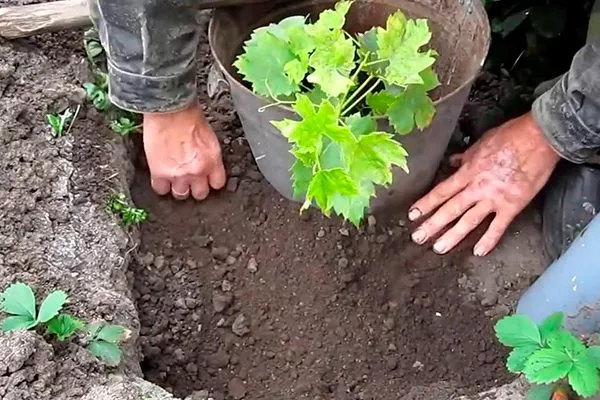
What to pay attention to when planting:
- The cuttings are soaked for 24 hours in a growth stimulator solution (Epin).
- Dig holes measuring 70 x 70 cm. Place a drainage layer of crushed rock or broken brick at the bottom. Top with a soil mixture made from fertile soil and mullein (1:10). Humus can also be used.
- The seedling is placed in the middle of a mound formed from the soil mixture and covered with soil up to the root collar, lightly compacted and watered generously.
It is recommended to pour a biostimulant solution into the holes before planting.
Care
The Malbec variety is quite demanding in terms of care. Any mistake will result in a decrease in yield.
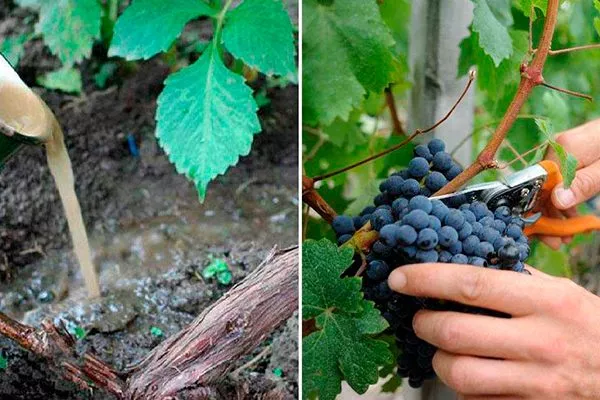
Care features:
- Top dressing. They are applied three times during the season. The composition of the fertilizer depends on the growing stage of the grape vines:
- During the period of leaf formation, nitrogen-containing fertilizers are added, for example, superphosphate and potassium salt, respectively, 20 g and 15 g per 10 liters of bird droppings solution.
- During the formation of ovaries, the bushes are watered with a solution of superphosphate and potassium sulfate, 60 g and 30 g per 10 liters of water, respectively.
- At the fruiting stage, potassium fertilizers are added - superphosphate and potassium sulfate, 100 g and 50 g, respectively.
- Watering. This variety requires moderate watering. Drip irrigation or sprinkler irrigation are optimal. A lack of moisture often causes flower drop. During drought, increase watering frequency to once every 3-5 days. In spring and fall, watering is adjusted based on soil conditions and rainfall.
- Trimming. Malbec shoots mature quite quickly, so pruning is done three times. After winter, damaged, frozen, and weakened branches are trimmed. In summer, pruning is done after fruit set, with the final pruning done after the harvest.
For the Malbec variety, a short pruning is recommended, leaving only 2-4 buds. The shoots from the first bud should be broken off manually to encourage inward growth rather than outward. - Wintering. Winter preparation begins in late autumn. First, water the vines to replenish moisture, then cover them with spruce branches and straw, and cover them with agrofibre, thick film, or slate sheets. It's important to leave vents for ventilation. Close them when the temperature drops below -18°C.
Diseases and pests
The Malbec variety has low resistance to common fungal diseases of grapes, such as mildew and oidium. Preventative spraying with Bordeaux mixture, colloidal sulfur, and Ridomil helps prevent these diseases.
Malbec grapes can also be affected by gray mold, which is controlled with Horus, Topsin-M, and similar products. The vines can also become infected with anthracnose, which causes dark spots to appear on the leaves. This disease can be controlled with Acrobat and Antracol.
To protect ripening grape clusters from wasp infestations, they are placed in fine-mesh or fabric bags. Plants can also be eaten by grape leaf roller caterpillars. Damaged fruit subsequently show signs of gray mold. Recommended insecticides are Zolon and Talstar, and spraying with biological preparations such as Actofit and Bitoxybacillin is also effective.
Harvesting and storage
The harvest is timely to prevent the berries from falling and cracking. Harvesting occurs when the berries reach full ripeness, which is determined by taste and color. Ripe fruits turn dark blue or purple.
- ✓ The berries acquire a dark blue or purple color with a uniform waxy coating.
- ✓ The acidity of the berries decreases to 0.7%, and the sugar content reaches 28%.
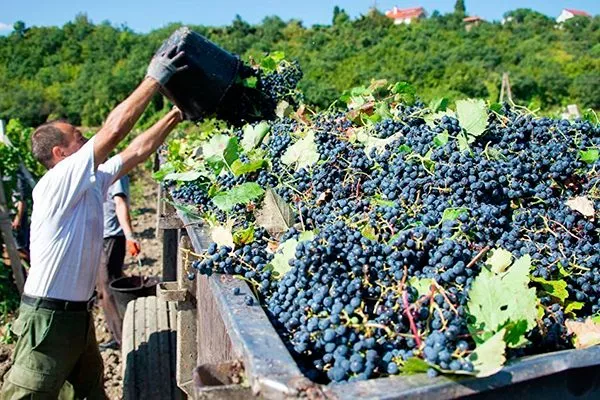
The harvest usually takes place in mid-September. After picking, the bunches are sorted, removing damaged berries, excess stems, and stalks to reduce the risk of mold. The harvested grapes are then immediately processed.
Before processing, grapes can be stored in a cool room at a temperature of 0 to +4°C and a relative humidity of 90%. A cellar or refrigerator is ideal. This industrial grape variety cannot be stored for long periods.
Application of the variety
The Malbec grape is used primarily in winemaking. It produces wines with high tannin levels, giving them the potential for long aging.

Malbec wines feature aromas of dark berries—blackberries, cherries, blueberries, and red plums. They may also feature hints of prune and spicy undertones like cloves and allspice. Wines aged in oak barrels additionally develop vanilla, chocolate, and tobacco aromas.
Popular wines made from Malbec grapes:
- Cahors AOP (Cahors) - tart, restrained wines with fruity notes.
- Cheval des Andes is a vintage wine from Argentina.
- Zuccardi is the finest Malbec wine in South America.
- Catena Zapata is a premium wine from Argentina.
The wines of Caliterra, Rigal, Viu Manent and Trapiche deserve no less attention.
Wines made without barrel aging are recommended to be consumed within a year. Wines aged for 3-4 months can be stored in bottles for 2 or 3 years. Wines aged for about a year can be stored for up to 10 years.
Malbec wines are considered mid-priced and are an excellent alternative to premium alternatives. The flavor of the resulting wine depends largely on the climate and other growing conditions. For example, French Malbec wines have cherry and raspberry flavors, while Argentine Malbec wines have plum and blackberry notes.
Similar varieties
| Name | Ripening period | Disease resistance | Frost resistance |
|---|---|---|---|
| Malbec | 140-145 days | Average | Up to -18 °C |
| Merlot | 150-155 days | High | Up to -20 °C |
| Shiraz | 160-165 days | Average | Up to -22 °C |
| Dolcetto | 130-135 days | Low | Up to -15 °C |
| Petit Verdot | 145-150 days | Average | Up to -19 °C |
| Mourvedre | 155-160 days | High | Up to -21 °C |
| Toriga Nacional | 165-170 days | Average | Up to -23 °C |
There are several varieties that are similar to Malbec and can replace it, to varying degrees.
Similar varieties:
- Merlot Merlot is a red wine grape native to Bordeaux. It is the second most widely planted grape in the world, after Cabernet Sauvignon. The fruits are large and dark blue. Merlot wines are low in tannins. Their aromas reveal raspberry, blackberry, plum, coffee, and chocolate notes.
- Shiraz or Syrah — a French red grape with dense, juicy berries covered in a thick, dark blue, almost black skin. It produces wine with fruity, chocolatey, and spicy aromas.
- Dolcetto — an Italian grape with small, dark-blue berries. It produces a tart and dry wine with a bitter aftertaste and hints of licorice and almond.
- Petit Verdot - This industrial grape has small dark blue berries that turn bluish-black when ripe.
- Mourvedre — a Spanish grape variety with small, thick-skinned berries. The fruit is dark, with high tannin levels. It produces a dense wine with blackberry and cherry notes.
- Toriga Nacional — a new wine grape variety popular in Portugal. It produces dark, thick-skinned berries used to make fortified wines.
Malbec is a dark, industrial grape variety that will appeal to red wine lovers. It's quite demanding, so its cultivation requires regular care and yields are dependent on environmental conditions.