
Grapes burst for various reasons, but it's possible to prevent them from cracking. This can be accomplished by following proper agricultural practices, paying attention to irrigation, applying the right fertilizers, and preventing diseases. It's important to be aware that certain varieties are prone to cracking.
Causes of grape cracking that are not related to disease
There are factors that contribute to grape cracking, and they are completely unrelated to diseases or other plant pathologies. Most often, it is caused by improper grape growing practices.
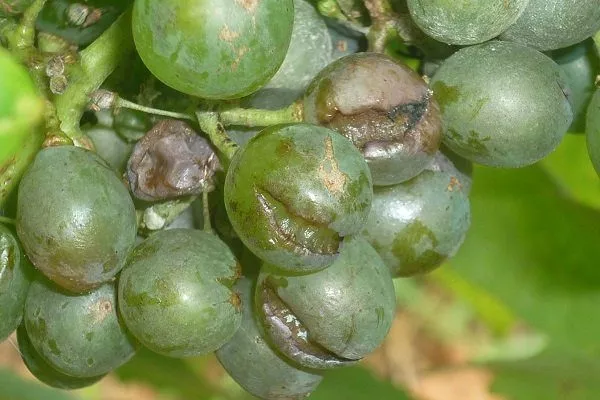
Violation of irrigation techniques
This is the most important and common cause, as overwatering the soil is directly related to water-logged fruits. On the other hand, dryness also negatively impacts the elasticity of the rind, which is what causes cracking.
- ✓ Optimal water temperature for watering: 18-22°C to avoid stress on plants.
- ✓ The soil moisture depth should reach 50-60 cm for mature bushes, ensuring moisture access to the root system.
If moisture is insufficient, plant growth and development are inhibited, but abundant watering is only required until flowering. After flowering, watering is significantly reduced, and then increased again after fruit set.
There is an opinion that in the summer grapes do not need liquid (the berries become watery and not sweet), but this is fundamentally wrong.
A lack of humidity leads to a shortage of sap flow in the berries, and if it rains, the fruit draws out all the moisture, causing it to become overflowing and stretched. But the skins don't, which causes them to burst.
Insufficient nutritional content
Phosphorus gives grapes their firmness. Phosphorus fertilizers should not be ignored. Potassium is also important, as it promotes skin thickening and strength. It also promotes uniform skin growth and internal filling, preventing cracking.
This happens for 2 reasons:
- Potassium is a moisture regulator in fruits (distributes water evenly);
- Phosphorus causes cell division inside the berry and in the shell.
It is recommended to apply potassium-phosphorus fertilizers as soon as flowers begin to form. Stop fertilizing after the berries have ripened.
Incorrect application of fertilizers
The most powerful enemy of grape fruit skin is nitrogen, as it has the following effects:
- reduces sugar content;
- enhances excessive growth of green mass;
- accumulates moisture in tissues;
- increases the volume of pulp due to water imbalance;
- weakens the elasticity and strength of the peel;
- increases the ripening of fruits too much.
In simple terms, the skin becomes thinner, and when the berries are filled with juice, it can't withstand the pressure and bursts.
Grape varieties prone to cracking
| Name | Disease resistance | Ripening period | Irrigation requirements |
|---|---|---|---|
| Rizamat | Average | Late | Tall |
| Hadji Murat | High | Average | Average |
| Elf | Low | Early | Low |
| Rusven | Average | Average | Average |
| Victoria | High | Early | Tall |
| Tomaisky | Low | Late | Low |
| Karmacode | Average | Average | Average |
| Strashensky | High | Late | Tall |
| Autumn black | Average | Late | Average |
| Arcadia | High | Early | Tall |
| Azos | Low | Average | Low |
| The highlight | Average | Late | Average |
| Laura | High | Early | Tall |
| Chasselas | Low | Average | Low |
| Amirhan | Average | Late | Average |
| Hope | High | Early | Tall |
There are a huge number of varieties that are inherently prone to cracking, even when all the requirements are met. This is due to the high pressure inside the fruit and the thinness of the skin. What are these varieties?
- Rizamat;
- Hadji Murat;
- Elf;
- Rusven;
- Victoria;
- Tomaisky;
- Karmacode;
- Strashensky;
- Autumn black;
- Arcadia;
- Azos;
- The highlight;
- Laura;
- Chasselas;
- Amirhan;
- Hope.
- ✓ The presence of a thin skin, visible when examining the berries in the light.
- ✓ High sugar content in the juice, which increases internal pressure.
To avoid cracking, experienced winegrowers advise paying particular attention to agricultural practices and harvesting within the strictly established timeframes for a particular variety.
The grapes burst due to diseases
When a grapevine is infected, berry cracking rarely occurs. There are only three main diseases associated with this. To identify this cause, pay attention to additional signs of the specific disease.
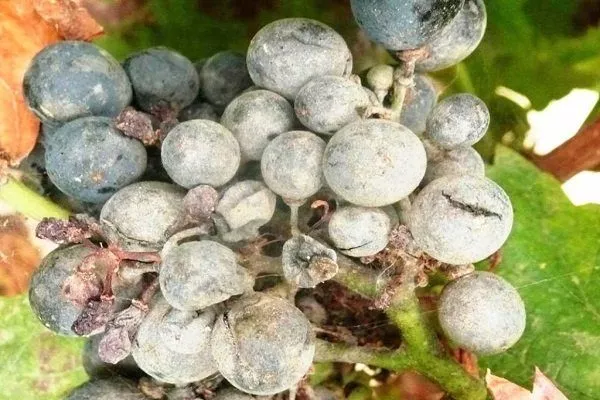
Oidium
The disease is considered a fungal infection (caused by Oidium tuckeri) and is common in vineyards. The main reasons for its rapid spread are drought and excessively hot weather. How to tell if a plant has powdery mildew:
- formation of a powdery coating on the leaves, initially whitish, then grey;
- yellowing and fading of the leaves, but they do not fall off, but remain firmly attached to the stem;
- blackening of shoots;
- drying out and falling off of flowers, which become covered with a coating resembling flour;
- the same thing happens with berries at the green ripeness stage;
- If the fruits are already ripe, they rot after cracking.
Escoriosis
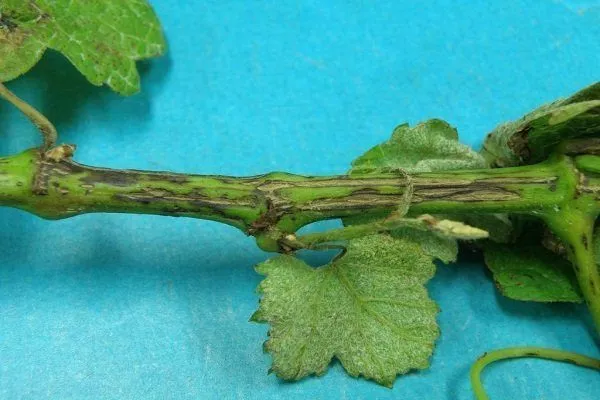
The causative agent of this fungal disease is Phomopsis viticola, also known as black spot. Since the fungus infects both living and dead tissue, it completely destroys the grapevines, and the vines require immediate burning.
Infection is facilitated by cool weather (around 5°C), frost, and dripping moisture. To recognize the disease, pay attention to other signs:
- formation of brown-black dots with a yellow border on leaves and inflorescences;
- deformation of green mass with ruptures;
- premature yellowing;
- on young stems – the formation of black swollen tubercles, which leads to their rupture;
- light lesions are observed on woody stems;
- The berries turn dark purple, then rot and fall off.
Anthracnose
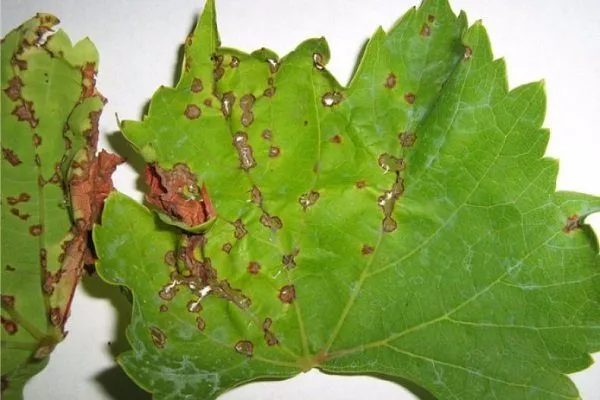
The disease is caused by the fungus Gloeosporium ampelophagum. Anthracnose manifests itself as follows:
- formation of grey-brown spots on the leaves, which turn black over time;
- formation of black-purple spots on stems and fruits;
- cracking of not only berries, but also shoots;
- death of inflorescences;
- rotting of berries.
What to do when the berries have already burst?
If grapes are bursting, even if they're not from a variety prone to cracking, consider the cause. If disease is the cause, immediately remove all affected parts and burn them. If this is due to improper care, prune the grapes to protect the remaining crop.
- Take a sharp pruning shears (never cut with a knife, saw with a saw, or rip off with your hands).
- Cut off all bunches where the berries have cracked more than 30-40%.
- If the skin cracks in a smaller percentage, remove the spoiled berries using scissors that have blunt ends (so as not to damage healthy fruits).
- Remove them if they fall to the ground, as they attract insect pests and even cause fungal diseases.
- Check the bunches—don't allow any cracked berries to remain on them. This can lead to rot and infection in all the clusters.
- Along with this, prune old and dry branches.
- Treat the bushes with colloidal sulfur. If the cause is a fungal disease, dilute 80 g of sulfur in 10 liters of water, which is the recommended dose for combating all types of fungus.
For preventative spraying, 50-55 g of the product is required per 10 liters of water. This amount is sufficient for an area of 55-60 square meters.
Why can't you leave burst berries on the bush?
Cracked berries should not be left on grape vines, and there are several main reasons for this:
- Leads to diseases. This is important because cracked elements rot, causing fungal and rot diseases. Sometimes these diseases can affect entire vineyards, and the farmer loses not only the harvest but also the vines, which cannot be restored.
- Attracts insects. This is especially true for wasps, flies, bees, ticks, leaf rollers, thrips, etc. They not only spread infections, but also take over large areas, eating both infected berries and completely intact ones.
- External indicators. This aspect is important for winegrowers who grow grapes for sale. If the bunches are missing fruit, no one will buy them, and their shelf life will be significantly reduced.
- Productivity. Fruit cracking reduces yield by 2 or more times, especially if measures are not taken immediately.
Prevention of cracking
To prevent grapes from cracking and bursting, strictly adhere to all cultivation practices. Pay attention to the growing conditions for your particular variety. This rule is mandatory.
Fertilization mode
Grapes require mineral and organic fertilizers. These must be balanced—minimum nitrogen, maximum phosphorus and potassium.
When it comes to organic fertilizers, choose compost or manure, but make sure it's well-rotted. How to properly feed grape vines to prevent cracking:
- First time. Fertilize in early spring, immediately after the vines begin to emerge. Apply mineral fertilizers. Add potassium salt (5 g), superphosphate (20 g), and saltpeter (10 g) to 10 liters of water.
This amount is calculated for one mature plant. Apply only at the roots, avoiding contact with the green foliage and stems. - Second time. Fertilize before flowering (7-10 days). Apply the same mixture as the first time.
- Third time. Fertilize when the berries ripen. Use a complex fertilizer containing phosphorus and potassium. Avoid using saltpeter, as it contains nitrogen, which has a negative effect.
Double superphosphate, Master, potassium sulfate, and similar solutions are suitable. Dilute in water according to the instructions for the specific product.
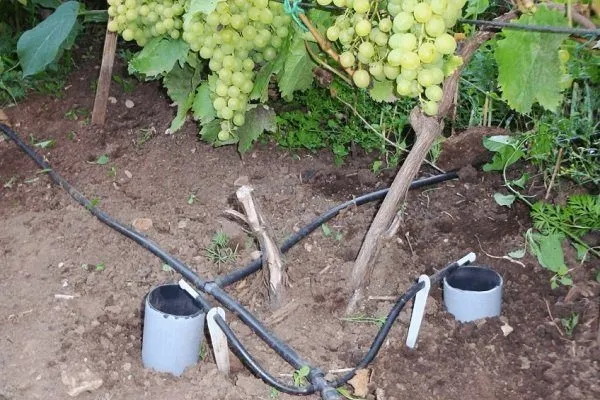
How to irrigate?
To prevent grapes from cracking, follow these rules:
- To maintain normal soil moisture levels, be sure to mulch (spread straw, freshly cut grass, peat, etc. in the root zone). Continue this practice throughout the growing season.
- If heavy rains are expected, pre-apply potassium monophosphate to the soil and irrigate (1 tablespoon per 10 liters of water).
- Do not allow water to stagnate and dry crust to form.
- Spray the bunches with warm water in the evening. Never do this in the morning or afternoon, as sun rays and hot weather can cause sunburn.
- Watering once or twice a month is sufficient, using 10 to 20 liters of water, depending on the age of the plant.
How to protect against diseases?
Agronomists have developed key guidelines for treating grapevines against diseases that cause berry cracking. Please note:
- Choose zoned varieties - those intended for growing in cool climates do not withstand hot weather, begin to get sick, and their fruits crack;
- plant varieties that are resistant to anthracnose, escoria and oidium;
- clear the root zone of debris, that is, keep it completely clean;
- promptly remove and destroy fallen leaves and fruits;
- do not overcrowd the vineyard - this will weaken the bushes' immunity and make them less resistant to fungi;
- If it rains all summer, cover the bushes with plastic film, but so that there is no condensation.
Be sure to treat with fungicides. The following are excellent for this:
- Falcon;
- Albite;
- Novosil;
- Narcissus;
- Topaz;
- Bordeaux mixture;
- Vectra;
- Bayleton;
- Ridomil;
- Valagro;
- Strobe.
Read the instructions carefully and follow the dosages indicated.
How to reduce the negative impact of nitrogen and increase the positive effects of phosphorus and potassium?
Chicken manure contains large amounts of nitrogen. Use it only before flowering to encourage the plants to develop green mass.
Potassium and phosphorus are beneficial for berry cracking, but too much can have negative consequences, stunting foliage development. Apply them more frequently during berry formation.
Can you use burst grapes?
If grapes burst due to a fungal infection, they are strictly prohibited from being eaten or processed. Such berries must be destroyed. To kill the infection, they are burned.
If you notice an infestation of insects and pests on your berries, throw them out as well, as these winged sweet-toothed creatures carry pathogenic microorganisms.
Only those berries that have cracked due to improper handling are allowed to be processed into juice, or even better, wine. Pick them immediately after they burst. Don't leave them out for long periods of time.
To collect the required amount for wine production, you can freeze the grapes for a while.
If you've discovered why your grapes are bursting, take immediate action. Better yet, follow proper agricultural practices, don't forget to feed them properly, and inspect the bushes and fruit at least 2-3 times a week for signs of the problem.