
Livia grapes are rarely grown in our country. Many gardeners hesitate due to unfamiliarity with their characteristics, but they possess numerous positive attributes. For successful cultivation, it's important to understand them and the care instructions for the variety.
History of the variety's creation
It was created in the early 2000s by Ukrainian breeder V. V. Zagorulko. After successfully passing variety trials at the Magarach Research Institute of Viticulture and Winemaking in 2011, the hybrid was granted a patent and entered into the State Register.
The well-known varieties Arcadia and Flamingo were used in the crossbreeding. From its "parents," Livia inherited high yields, excellent flavor, beautiful color, and resistance to adverse environmental conditions and diseases.
Description of the variety
Gardeners who successfully grow this plant in their own plots describe it as undemanding and low-maintenance. Independent plantings are characterized by vigorous growth and a tendency toward vertical development.
Bushes
Young shoots have a light green upper surface, with the first leaf being a single leaf and subsequent leaves consisting of five medium-sized lobes. Mature one-year-old shoots are light brown, becoming darker with age.
Berries
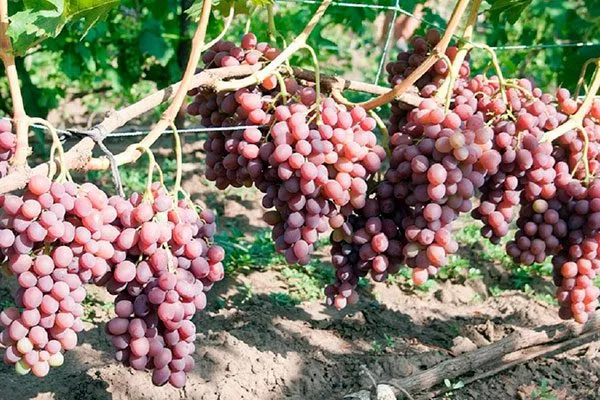
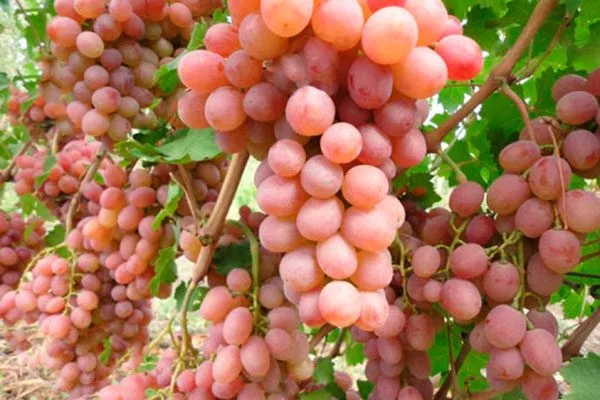
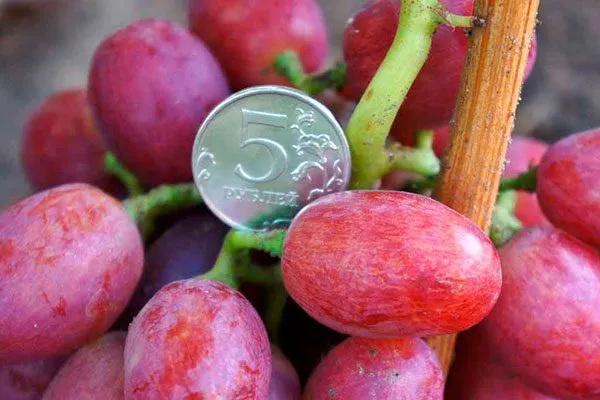
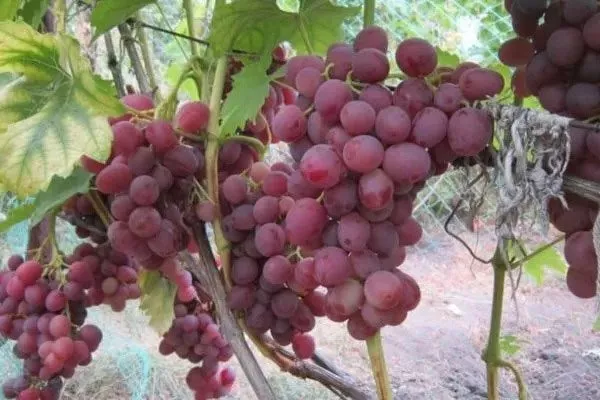
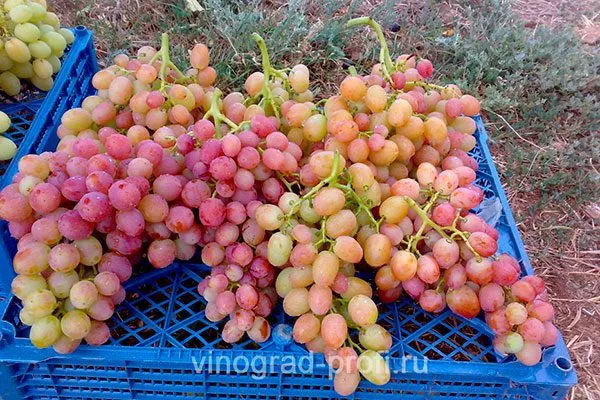
They are characterized by an ovoid shape. Their size ranges from 10 to 15 g, with a length of 28 mm or more and a width of about 18-20 mm. The color varies and can range from light pink to dark, with the color being more intense on grafted bushes compared to berries from their own roots.
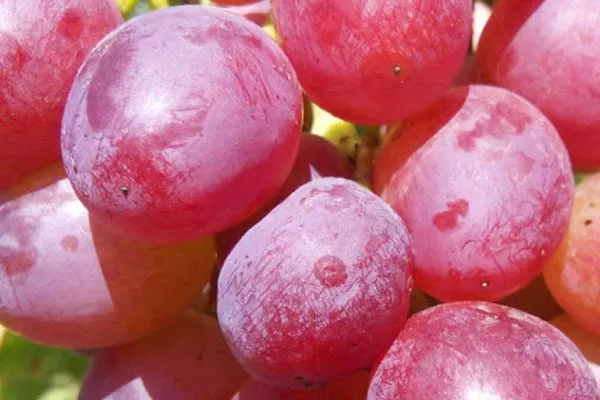
The pulp is fleshy and juicy, with a distinct muscat aroma and high sugar content. Each fruit contains 1 to 3 seeds. The skin is almost imperceptible when eaten. The vine produces fruit from very early to mid-season ripening without loss of quality.
Clusters
They have a medium density and a conical shape. The minimum weight of a mature bunch ranges from 600 to 800 g. On average, a bunch weighs between 1 and 1.2 kg, but some specimens weigh 1.5 kg or more. The length of a bunch is approximately 20-30 cm.
Taste
A delicate, velvety flavor with moderate sweetness, hints of muscat, and a slight acidity. The berries contain 20 to 25% sugar with minimal acidity.
Brief description
Livia has many positive characteristics that make it prized by winegrowers. It requires little time and effort to maintain, yet produces abundant harvests.
Growing regions, winter hardiness
Prefers a mild climate and thrives in mountain and coastal areas, valleys, and sunny, open areas protected from drafts. It is popular in Ukraine, the Caucasus republics, and the Krasnodar Territory.
Characterized by its ability to ripen even in unfavorable conditions due to its early maturity, it is not known for its cold tolerance. Severe frosts, especially with insufficient snow cover, even with cover, can damage the buds and cause harm.
Productivity and ripening time
Fruiting begins in the second season after planting, when 3-4 fairly large clusters appear on the young plants. Ripening occurs in August. Suitable for growing in garden plots and for commercial cultivation.
The berries are resistant to pea formation, cracking, and falling out. A single bush can yield 20 to 30 kg of fruit per season, equivalent to approximately 170 centners per hectare.
Drought resistance
It does not tolerate even short periods of drought well. Regular watering is necessary to ensure good growth and development.
Pollination
The flowers on the shoots are bisexual, so the hybrid does not require additional pollinators. Livia is often used as a pollinator for other species.
Application of fruits
It's a table variety thanks to its muscat aroma and harmonious flavor, making it suitable for use as a dessert when ripe. Many use it to make juices, compotes, and jams for the winter.
The harvested fruits are used to make jams and raisins. When grown on a large scale, the collected bunches are used for sale or processing.
Advantages and disadvantages
In the segment of pink grape varieties, Libya occupies one of the leading positions due to its numerous advantages.
Landing
Planting can be done in either fall or spring, depending on the region. In northern regions, spring planting is preferred so that the seedlings have time to establish themselves and take root by late fall, while in the Krasnodar Krai and the Crimean Peninsula, fall planting is more common.
- ✓ The seedling planting depth should be at least 40 cm to ensure stability and proper development of the root system.
- ✓ The distance between bushes should be at least 3 m to ensure sufficient space for growth and air circulation.
Helpful tips:
- Choose your growing sites wisely. They should be protected from wind and drafts, have ample space for good air circulation, and provide adequate light. They should be located at a groundwater depth of at least 1.5 meters.
- Chernozem is considered the ideal soil, but the hybrid is quite unpretentious, so good fertilizer can compensate for the soil fertility.
- For planting, select seedlings with at least two buds and healthy, firm roots. Trim their tips and treat them with growth stimulants, such as Kornevin or Clonex gel.
- Dig a hole measuring 60x60x60 cm, fill it with nutritious soil, then place the seedling in it.
Care
Caring for the crop is a simple process that includes maintaining a watering regime, regular fertilization, pruning plants, and preparing them for winter.
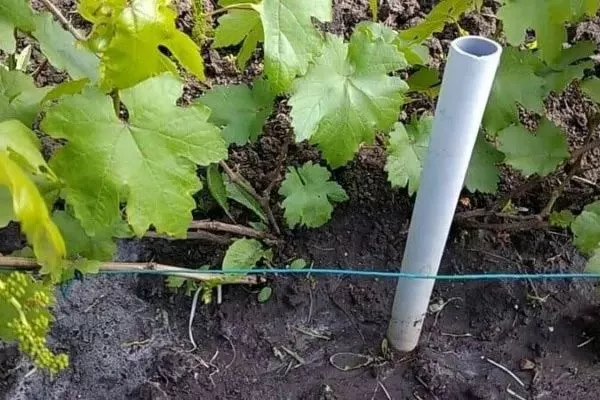
For good development, carry out agricultural measures:
- Watering. It doesn't tolerate even short periods of drought, so ensure timely watering of the area around the trunk. Water the plant for the first time in early spring, when the first leaves appear on the vines. Subsequent waterings should occur when buds are opening and fruit buds are forming.
During dry summer periods, water moderately every 14-20 days. After rain, loosen the soil to ensure oxygen and moisture reach the roots. - Fertilizers. In spring and fall, add compost or rotted manure to the root zone. In summer, apply fertilizers containing phosphorus, potassium, and organic matter, applying them dry.
Mulching after watering and loosening helps retain moisture in the soil and prevent weed growth. - Pruning and shaping the bush. Prune in early spring or late fall, removing excess or weak branches. When shaping, trim fruiting shoots short, leaving a certain number of buds on each, or perform a medium-length pruning.
- Preparing for winter. This includes generous watering, application of potassium and phosphorus fertilizers, and pruning. In southern regions, covering is not required due to the plant's high frost resistance. In colder climates, the bushes are covered with hay, soil, and plastic.
In winter conditions with temperatures below -30ºC, it is recommended to hill the soil or cover it with organic fertilizer to protect the root system from frost.
Reproduction
Grapevines can be grown in a variety of ways: by grafting, cuttings (to produce seedlings), and layering. One of the simplest methods is planting seedlings.
- ✓ Cuttings must have at least 3 healthy buds for successful rooting.
- ✓ The cutting diameter should be at least 8 mm to ensure sufficient supply of nutrients.
Use one of the propagation methods:
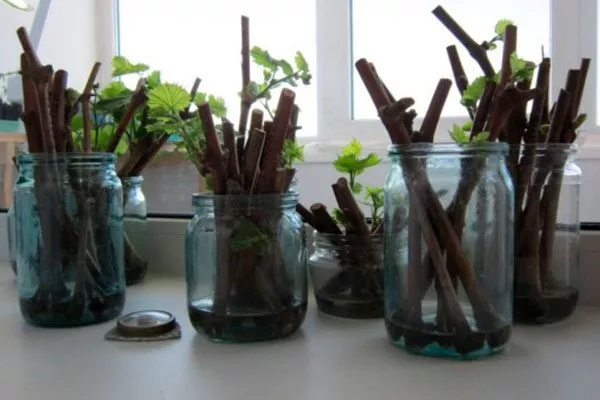
- Cuttings. You can purchase ready-made seedlings or grow them yourself. To obtain planting material, take cuttings from mature vines in the fall before the first frost, each with 4-5 buds.
Treat them with a 5% copper sulfate or potassium permanganate solution, pack them in a plastic bag, and store in a cool place until February. Then remove them, soak them in warm water for 2 days, and place them in a container with a growth stimulator. Cover the stems with plastic wrap to create an optimal microclimate.
Once roots appear, transplant them to another container with fertile soil, where they remain until planting time. Once the danger of frost has passed and warm temperatures have returned, the seedlings can be transplanted outdoors. - By layering. This method is used in the spring, when the vine is actively growing. To do this, select a strong branch, bend it down, and cover it with soil. The vine will root quickly, receiving all the necessary nutrients from the mother plant. To speed up the rooting process, add a growth stimulator to the water.
Separate the cuttings from the mother plant only after complete rooting, when the young daughter plant is fully formed (usually after a month). - Graft. This method involves grafting one plant (the scion) onto another (the rootstock). To do this, make a T-shaped cut on a healthy, strong branch (the rootstock) and insert a prepared scion of the desired grape variety into it. Then, cover the scion with bark and secure it with a bandage. Seal the graft site with garden pitch.
Choose the most optimal option to increase the number of seedlings for planting on the site.
Diseases and pests
To protect your crop, it's important to know what preventative measures to take. Grapes can be susceptible to insect attacks and diseases:
- Leaf roller. Pests can feed on all parts of the plant, from foliage to berries. To control leaf rollers, use chemical and biological insecticides and implement agricultural practices. Treat plants at regular intervals after the emergence of butterflies and caterpillars.
- Mildew. A fungal disease that can seriously damage the plant. It appears as a white coating on the leaves, which later develops into brown spots. It can lead to reduced yields and poor berry quality.
Proper ventilation of the bushes and removal of side shoots help reduce the risk of infection. For prevention, spray with Bordeaux mixture before and after bud fall, and before harvesting for storage. Apply mineral fertilizers. - Oidium. A dangerous disease that can completely destroy a plant. It appears as a white, fluffy coating on leaves, shoots, and grape clusters. If severe, it can cause yellowing of the leaves and even death of the grapes.
To prevent and control the problem, conduct regular inspections, ensure good ventilation, remove affected parts and use special preparations.
Harvesting and storage
The bunches can remain on the vines even after ripening, maintaining their appearance and improving their flavor due to the increased sugar content. The bunches ripen simultaneously. Harvest the grapes in dry, warm weather, as only under these conditions will the grapes store for a long time and retain their quality.
Reviews
Livia grapes attract gardeners with their excellent taste and attractive appearance. Caring for them is easy, but the key is to ensure regular watering without over- or under-watering, fertilize, and follow basic farming practices.