
Thanks to its excellent taste, large fruit, and distinctive appearance, the Lily of the Valley grape has earned the recognition of gardeners in just a few years. Let's find out what makes this variety so special and whether it's suitable for growing in our climate.
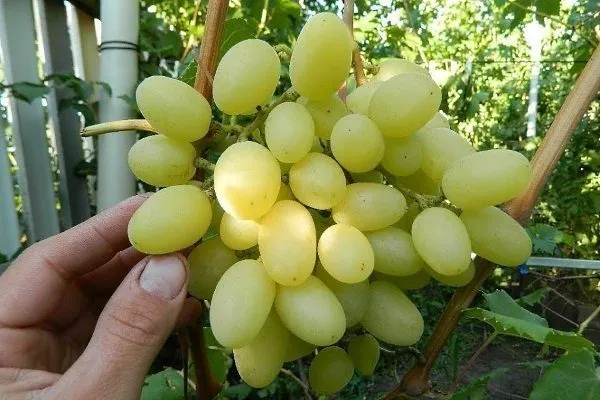
grape variety "Lily of the valley"
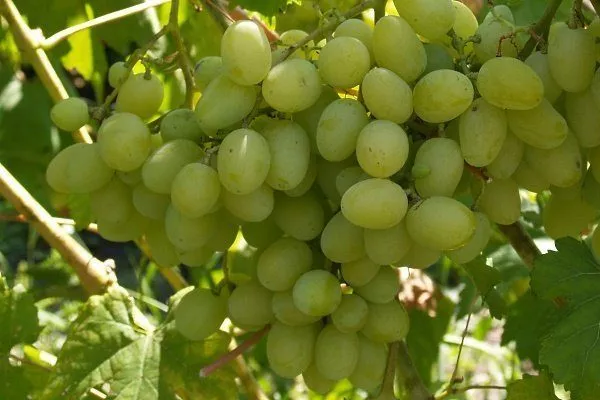
The Lily of the Valley grape produces fairly large and lush clusters
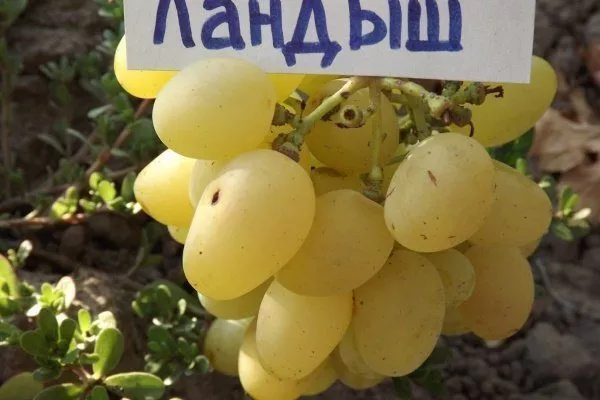
The sweet berries of the Lily of the Valley grapes have a very persistent and pleasant nutmeg flavor
History of the variety
The renowned Ukrainian amateur breeder V.V. Zagorulko worked on the creation of the Lily of the Valley grape variety. Winegrowers became aware of this hybrid form, created by crossing varieties. Kishmish radiant and Mascot, in 2012.
To obtain a new grape variety with unique qualities, the breeder used the following characteristics of the parent varieties:
- Mascot (bearer of female flowers) – large-fruited, resistant to low temperatures, diseases and pests.
- Radiant Kishmish(well-developed male flowers) – beautiful berry color and wonderful taste, but most importantly, it is an excellent pollinator.
After the initial necessary testing and preliminary confirmation of its stated characteristics, the variety quickly gained popularity among gardeners. This was facilitated by both the positive experience of growing it and the excellent grape characteristics.
Due to its novelty, the variety has not yet been fully studied, and is currently undergoing further testing in different climatic zones.
Description of the Lily of the Valley grape variety
Brief botanical description of the Lily of the Valley grape:
- Vine. The grape vines are vigorous, with robust shoots that are 10-12 mm thick and can reach 3.5-4 m in length. They are characterized by fully ripening grapes, ensuring high, consistent yields. The vines begin to develop in the first year. The leaves are large and richly green.
- Berries.They have a beautiful elongated oval or cylindrical shape and reach very large sizes. The average fruit diameter is over 2 cm and the length is 3.5 cm. Each berry weighs 8-14 g, but giants weighing up to 19 g have been observed. The skin of ripe berries is bright yellow, lemon-yellow, and does not crack or become infested with wasps.
- Clusters. Large, regular, slightly elongated conical shaped, weighing over 500 g and can reach 1 kg or more. The clusters are medium-dense, preventing the fruit from being compressed or crushed.
Characteristics of the variety
Lily of the Valley grapes grow successfully both in small garden plots and in vast vineyards.
In the video, a gardener describes the Lily of the Valley grape variety:
Ripening time
Lily of the valley is a mid-early variety, but it's more accurately considered a mid-season variety. It takes 125-140 days from the end of flowering to the first harvest.
In warmer regions (the variety is recommended primarily for Ukraine, Moldova, and southern Russia (Stavropol, Kuban)), the harvest is in the second to third ten days of August. In colder regions, it lasts until mid-September.
Ripe bunches of Lily of the Valley can remain on the vine for a long time without losing their marketable appearance.
Variety resistance
Lily of the Valley grapes are valued for their excellent taste and appearance, rather than for their resistance to adverse factors:
- Resistance to pests and diseasesAbsolutely reliable data on Lily of the Valley's resistance to fungal diseases, powdery mildew, and mildew has not yet been obtained. Research is ongoing.
According to winegrowers, this hybrid variety's resistance to grapevine pests and diseases is average. To prevent rot and fungal diseases, the grapes are treated three times per season. - Frost resistance. Grapes can withstand temperatures down to minus 20-21ºC, but if the frosts in the growing region are stronger and the temperatures are below these values, Lily of the Valley must be covered for the winter.
- Drought resistance. The impact of drought on grapes has been little studied. However, some winegrowers note that with prolonged drought (over a month), the leaves do not turn yellow, the bunches do not spoil, and the damaged fruit rate is no more than 1-2%.
- ✓ Yellowing of leaves between the veins indicates a magnesium deficiency.
- ✓ Curling leaves may indicate a lack of potassium or excess moisture.
Productivity and fruiting
Gardeners who have already planted and grown Lily of the Valley note that even young vines can produce up to 10 kg of grapes. Overall, the variety produces consistent and high yields. Full fruiting begins in the third or fourth year.
The presence of bisexual flowers has a significant impact on yield stability, ensuring high pollination rates. The grapevine is self-pollinating, independent of other varieties. The vigorous growth of the vines, with shoots that ripen almost 100%, also plays a significant role.
Prolonged rains during the flowering period and spring frosts can negatively affect fruiting and significantly reduce yield.
Taste characteristics
The berries have a harmonious and distinctive flavor. The flesh is tender, sweet with a subtle tartness, juicy, and has a pleasant aroma of nutmeg and a subtle, light hint of lily-of-the-valley or white acacia.
The presence of a floral note may be a warning sign for lovers of this berry, but not all tasters detect these notes. However, they recognize the excellent taste qualities of Lily of the Valley, including its sweetness. Ripe berries have a sugar content of at least 18-19% with an acidity of 5-7 g/l.
The skin is quite dense, of medium thickness, but does not spoil the taste and is almost invisible when eating the berries.
Application
Lily of the Valley grapes are a table variety and are best eaten fresh. They are also suitable for juice, homemade jams, preserves, compotes, and baked goods.

Advantages and disadvantages of Lily of the Valley grapes
This is a promising variety with many advantages, but it is worth remembering that it was bred very recently, and not enough data has yet been collected on its cultivation.
The following advantages of this grape can be highlighted:
- good resistance to diseases and pests (3 points out of 5);
- unpretentiousness: weather conditions and soil fertility do not affect the taste and marketability of the fruit;
- resistance to low temperatures down to -21ºС;
- unique fruit taste and pleasant aroma;
- It reproduces easily, which is facilitated by good rooting and survival of both cuttings and seedlings, as well as shoots;
- high and stable yield due to the presence of bisexual flowers;
- ripe fruits remain on the bushes for a long time without loss of quality;
- grapes have a long shelf life in cool conditions – until the end of winter;
- excellent presentation;
- tolerates transportation well.
Flaws:
- predisposition to flower shedding under the influence of rain;
- if berries are kept on the bush for too long, the consistency of the fruit pulp deteriorates;
- There is insufficient data on how to more effectively shape bushes to increase yield.
Reproduction
Lily of the Valley grapes are propagated in several ways:
- By cuttingsCuttings are grafted onto rootstocks of other grape varieties. Thanks to a healthy, mature rootstock, the vine begins to bear fruit earlier. However, this method can alter the varietal qualities of the cuttings.
- seedlingsThis is the most popular and easiest option, ideal for first-time grape plantings. Once established, the plant will produce consistent, moderate growth. The first clusters from a two-year-old vine can be harvested in the third year, or at the latest in the fourth.
- Seeds (pits)This is a very time-consuming propagation method, meaning the berries won't appear until at least a couple of years after rooting in a permanent location. Instructions for growing grapes from seeds are available. Here.
- LayeringOne-year-old shoots from the lower part of the grapevine are bent down to the ground, planted deep, and covered with soil. Given favorable weather and good watering, the shoot will inevitably root, and over time, it will develop into a full-fledged grapevine.
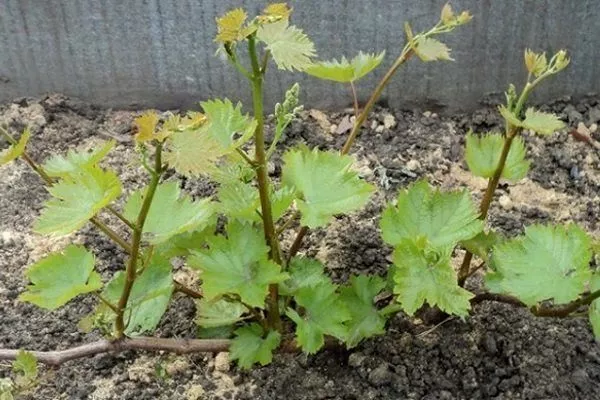
According to the experience of people cultivating this variety, the best methods are planting seedlings or cuttings.
How to plant Lily of the Valley?
The key to successfully growing Lily of the Valley grapes is healthy, high-quality planting material. It's best to purchase seedlings from specialized nurseries.
Optimal timing and climate
This hybrid form can be planted either in early spring or late fall; there is no specific time. During the later specified times, dormant cuttings and seedlings are planted.
The period from the first warmth of spring to early June is a favorable time for planting leafy seedlings. This is the time to make cuttings.
When planting in the fall, it's important to choose the right time. Mid-October is ideal. This will give the plants time to take root, but will not yet begin to grow. If you plant the seedlings too early, they will grow during the winter and die. Planting them late will prevent them from establishing roots before the onset of consistent frost.
As mentioned, the Lily of the Valley grape variety performs excellently in the warm climate of Russia's southern regions. It is not yet known how this hybrid variety will perform in Russia's central or northern climate zones.
Selecting and preparing a landing site
Choose a well-lit, sunny, warm, and windless planting site. A south-facing location, behind a house wall or other structure that provides protection from northerly winds, is ideal.
For the bush to thrive, the soil should be light, fertile, and permeable—ideally, black soil. If the chosen planting site is prone to flooding during rainy season or meltwater, a small mound of earth should be created.
The groundwater level should not be higher than 2.5 meters above the ground surface. If this is not the case, a drainage system must be installed to remove excess water.
It's important to keep in mind that this variety is vigorous, so ensure it has enough space to thrive. If planting multiple grapevines, space them at least 3 meters apart, and 5 meters between rows.
Preparing a hole for planting:
- Dig a hole that is the same width and depth – 80 by 80 cm.
- Add a generous amount of fertilizer to the bottom of the hole. Compost and humus, potassium salt, superphosphate, nitrogen, and fertile soil are essential. On heavy soils, first add a 10 cm drainage layer consisting of fine crushed stone or gravel mixed with sand.
- Place a layer of fertile soil on top of the fertilizer. This will provide separation between the seedling's roots and the fertilizer.
- Don't go all the way to the top when filling the hole with soil; there should be a hole left for watering.
- Water generously to seal.
- Leave the hole for several weeks, or until spring if you are preparing it in the fall.
- ✓ Soil temperature should be at least 10°C for optimal rooting.
- ✓ Soil pH should be in the range of 6.0-6.5 to prevent chlorosis.
Step-by-step planting instructions
The root system of a seedling suitable for planting is white, and the cut at the top is green.
A grape seedling purchased just before planting should not be planted directly into the hole. Its roots should be dipped in water to ensure the plant is properly hydrated.
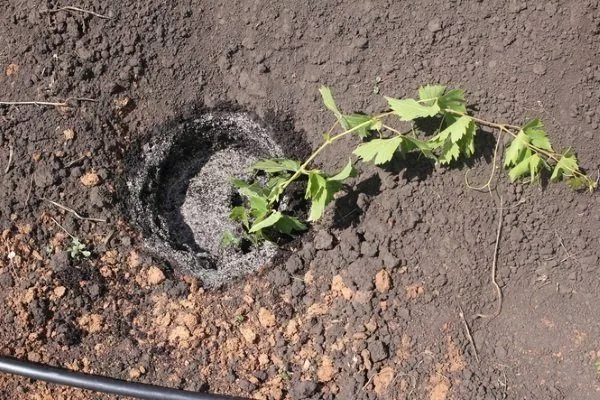
Follow these simple rules when planting grapes:
- Make a hole in the center of the hole corresponding to the size of the seedling's root system.
- Do not plant the seedling deeper than the root collar; this is a very important point.
- Fill the hole carefully, trying not to damage the roots, but pack the soil tightly, leaving no voids.
- Drive in a support that is higher than the planted plant and tie the seedling to it.
- Water generously (2-3 buckets).
- When the moisture is absorbed, mulch the soil in the hole with rotted sawdust or peat.
For the first 2-3 weeks, it's recommended to cover the seedling with non-woven fabric to prevent adverse weather conditions from interfering with rooting. Then, remove the covering.
Care
Caring for grapes involves performing basic agricultural practices.
Watering
The bushes require abundant and regular watering. During dry periods and when buds are forming, this should be done more frequently. To retain soil moisture, the plantings are mulched.
Top dressing
No fertilizer is needed for the first 2-3 years; the plant is sufficiently supplied with the fertilizer added to the planting hole. Organic fertilizer is recommended in the spring, and phosphorus-potassium fertilizers in the fall. Potassium magnesium sulfate is applied every three years to promote sugar accumulation in the fruit and increase yield.
Trimming
Held twice a year:
- in the spring – cut off old shoots that have not survived the winter well (read more about spring pruning of grapeshere);
- in autumn – after harvesting the grapes, the shoots are pruned, leaving 8-10 buds on each, and the unripe part of the vine is cut out.
Preparing for winter
If winter temperatures in the region drop below -21ºC, grapes need to be covered. Plants should not be covered until temperatures reach a stable temperature of -2 to -5ºC. If this is done too early, without waiting for the cold weather, the vines will rot under the "fur coat."
Experienced winegrowers use this method of covering for the winter:
- the shoots are bent to the ground, small wooden blocks are placed under them, and they are pinned down;
- cover with a sugar bag cut on the sides (the material is breathable, unlike film);
- A layer of soil (up to 10 cm) is poured on top, taken along the laid and secured vines. This creates grooves that will drain water during a thaw.
Diseases and pests
Considering the average resistance of Lily of the Valley to diseases and pests, mandatory preventative treatments are carried out three times per season:
- before flowering;
- after flowering;
- when the fruits are the size of a pea.
Use fungicides and other protective preparations, following the instructions included with them.
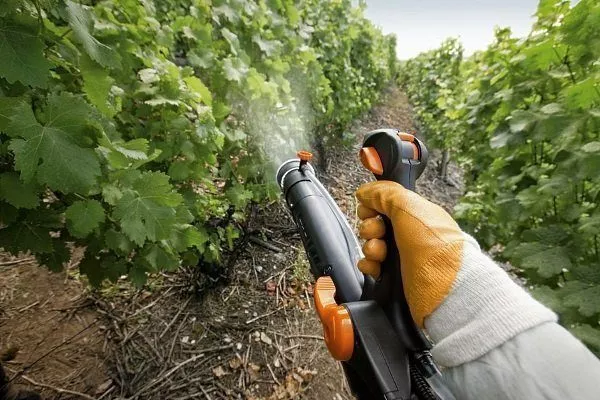
The main danger is fungal diseases. Let's look at the most common ones:
| Disease | Symptoms | How to fight? |
| Mildew | Gray coating and yellow spots on leaves. | Spraying grape bushes with preparations:
|
| Oidium | Gray coating on berries and leaves, later – cracking of berries. | Application of fungicides:
|
| Gray mold | It attacks any above-ground parts of the bush, covering them with a gray, fluffy coating. Grape clusters hanging close to the ground are most often infected. | It is difficult to treat. The following medications are used:
Preventive measures: tying, thinning, pruning. |
Protection from birds and insects
Ripe fruit attracts birds and insects, which can cause significant damage to the crop. To protect vineyards from wasps, the vines are sprayed with a Chlorophos solution, and wasp nests are identified and destroyed.
To protect against birds, use:
- Repellers. Sound, visual and complex.
- Isolation of ripening fruits. The following materials are used:
- tulle;
- nylon stockings;
- fishing nets;
- double nets for packaging vegetables.
Reviews of grapes
By following simple planting and care guidelines for Lily of the Valley, you can reap bountiful harvests of stunningly delicious and beautiful berries. Overall, this variety is promising for growing in gardens, dachas (for personal consumption), and commercial purposes.