
The Crystal grape is an ultra-early Hungarian variety widely used in the wine and food industries. It is a fairly hardy and undemanding variety, easily grown even by inexperienced gardeners.
History of breeding and distribution
The Crystal variety was developed by Hungarian breeders through several crosses. First, they created a hybrid of Amur grapes with Csallóczi Lajos, then crossed it again with the popular Hungarian variety Villard Blanc, from which the new variety acquired excellent flavor and good resistance to fungal diseases.
The Crystal grape variety inherited its high frost resistance and undemanding nature from the Amur grape. The Crystal variety was included in the State Register of the Russian Federation in 2002. It was recommended for cultivation in the Lower Volga and North Caucasus regions.
Description of the Crystal variety
The Crystal grape variety grows on low bushes with small, smooth leaves of a rich, dark green color. Its shoots are yellow-beige, long, and strong, with a slightly reddish tint. A single plant may have both dissected and entire leaves.
- ✓ Leaves can be either dissected or whole on the same plant.
- ✓ The fruits acquire a pinkish tint under bright sunlight.
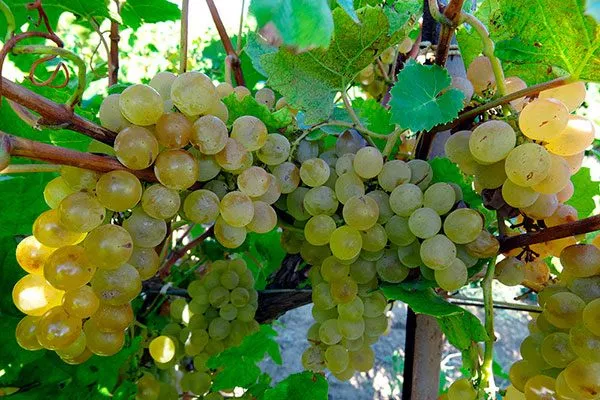
Description of the bunches:
- Shape: cylindrical-conical or conical.
- Density: medium.
- Size - medium.
- Weight: from 180 to 200 g.
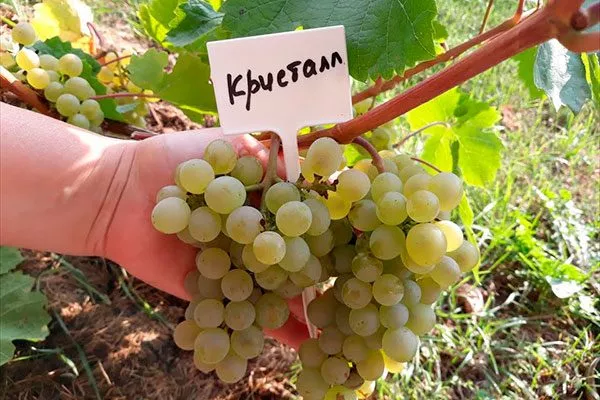
Description of fruits
- The size is average.
- Weight: 1.8-2.5 g.
- Shape: round or slightly oval.
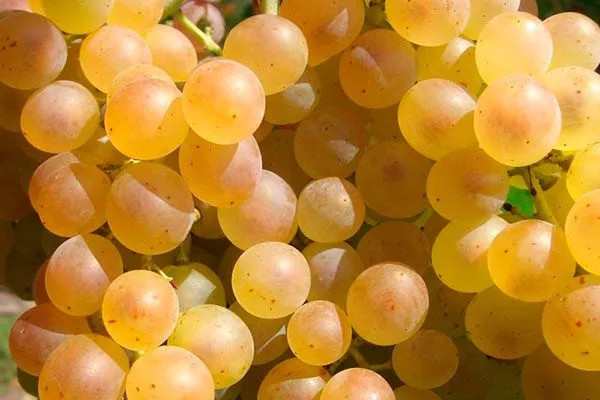
- The color ranges from white-green to yellow. In bright sunlight, they acquire a pinkish tint.
- The skin is strong, with a waxy coating.
- The pulp is juicy and tender.
- The taste is harmonious, without any foreign flavors.
Characteristics
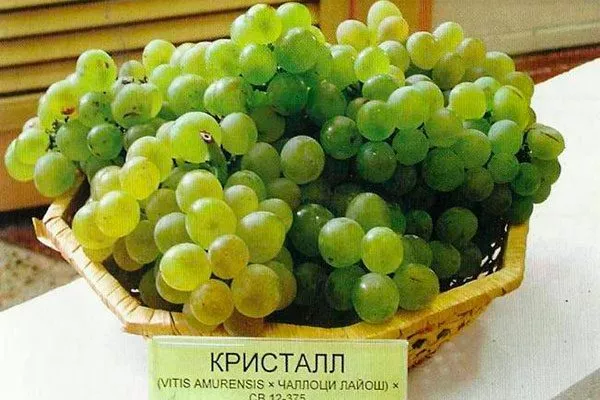
Crystal grapes are a typical industrial variety with good agronomic characteristics that allow them to be grown on an industrial scale.
Main characteristics:
- Ripening period - very early, fruits ripen 110-115 days after the buds begin to open.
- Percentage of fruitful shoots - 55-75%.
- Productivity - 160 c/ha, maximum - 200 c/ha.
- Frost resistance — up to -30 °C.
- Drought resistance - average.
- Fruiting - 2-3 years after planting.
- Pest resistance and diseases — average, to mildew — 2 points, to oidium — 2.5 points.
- Number of bunches per shoot — 1.1-1.5.
- Fruiting coefficient — 1.3.
- Number of fruiting shoots — 85-90%.
- Sugar content — 17-18%.
- Acidity — 6-7 g/l.
- Juice yield — 70%.
The acidity and sugar content of the fruit largely depends on growing conditions; the sweetest fruits ripen in the southern regions, where there are many sunny and hot days.
In the temperate climate zone, the Crystal variety ripens around mid-August. However, for winemaking, it's recommended to let the bunches sit on the vines for a while to develop ripeness and flavor. The fruit can remain on the vine until frost, so the bunches can be picked when the berries' flavor is at its best.
Pros and cons of the Crystal variety
Before planting the Crystal variety in your garden, evaluate all its advantages and disadvantages to determine whether it is suitable for your specific climate conditions and intended purposes.
Landing
When planting Crystal grape seedlings, it's important to consider the varietal requirements. Proper planting will determine the growth and future yield of the variety.
- ✓ The optimal soil acidity for Crystal grapes should be within 6.0-7.0 pH.
- ✓ The distance between seedlings should be at least 1.5 m to ensure sufficient space for root system growth.
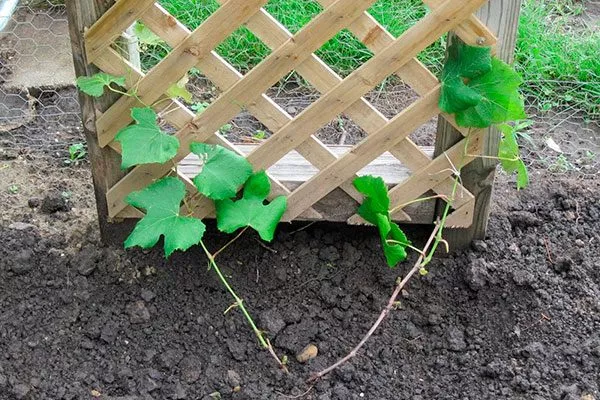
Features of planting Crystal grapes:
- Selection of seedlings. It's important to pay attention to the roots; they should be well-developed. Ideally, there should be at least three shoots up to 10 cm long and 3-5 mm in diameter. The planting material should be of high quality—the stem should be elastic, and the roots should be smooth and healthy, white when cut.
- Planting dates. Crystal grapes are planted in spring or fall. The former is preferred in temperate climates, while in the south, autumn is preferred. Planting occurs when soil temperatures reach 10 to 12°C, with daytime air temperatures reaching at least 15°C.
- Landing site. This variety doesn't tolerate shade well. For full growth, it requires warmth and light, so it's recommended to choose the sunniest locations. In the shade, the berries ripen poorly and develop a sour taste. Locations close to fruit trees are not suitable for planting; they should be at least 5-6 meters away.
The Crystal variety shouldn't be planted in low-lying areas, as meltwater and rainwater accumulate there, and the air is too humid. The grapes will be susceptible to root diseases there. Drafts are also undesirable for the plant. - Preparing the pit. Its depth and diameter should be at least 80 cm, otherwise the roots may freeze in winter. A drainage layer of expanded clay or pebbles must be placed at the bottom. The drainage layer should be 5-6 cm thick. Fertile substrate is added on top of it.
- Preparing seedlings. Before planting, the roots are soaked in water with potassium permanganate added. Leave for about a day. Then, the roots are trimmed back by 1-2 cm. Immediately before planting, the root system is immersed in a mixture of clay and potassium humate. The consistency should be similar to sour cream. Once the mixture on the roots has dried, the plant is planted in the prepared hole.
- Planting a seedling. The vine is placed vertically and covered with soil. It is added in small portions, compacting it periodically. After compacting the soil well, 30-40 liters of water are poured under the planted grapes. After this, the seedling is shortened by 3-4 buds.
Growing and care
The Crystal variety isn't particularly fussy, but it does require some care to produce a quality harvest. This grape requires regular watering, pruning, and fertilizing a couple of times per season. Preventative measures are also important to avoid many diseases and crop losses.
Care features:
- Watering. This variety loves moisture and does not tolerate water shortages well. Young plants up to two years old require frequent and generous watering, while mature plants should be watered no more than four times per season. The greatest water requirement occurs during leaf budding and fruit formation.
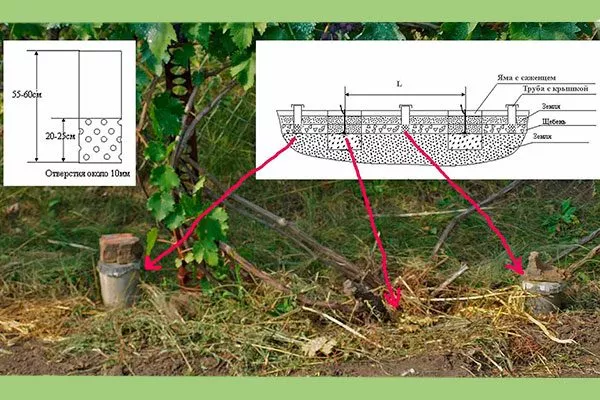
In the fall, after pruning, the final watering is a moisture-recharging watering. The optimal method is drip irrigation or drainage pipes laid in the ground.

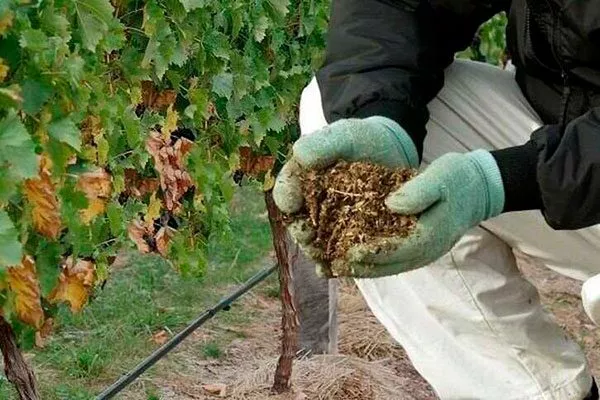
- Top dressing. They are especially important during the period before flowering. If fertilizer was added to the planting hole, the plants will not require additional feeding for several years. Subsequently, mature bushes are fertilized twice a season.
- Nitrogen-containing fertilizers are applied in the spring, and phosphorus and potassium in the fall. Grapes can also be fed with complex fertilizers.
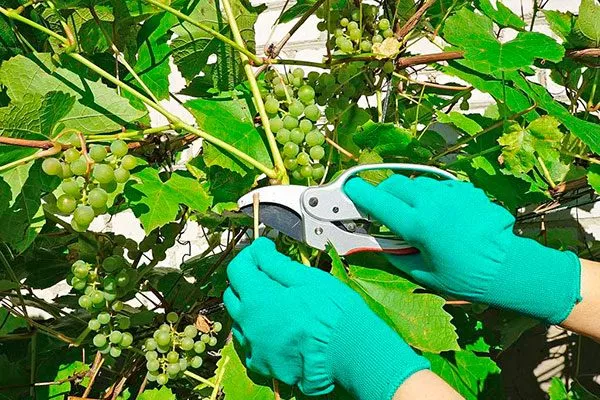
- Trimming. It is recommended to perform this procedure on 3-4 buds. Only about 60-65 buds are left on one bush. Overcrowding is strictly avoided. This leads to ovary shedding, reduced yield, and poorer appearance of the bunches. The tops of bushes reaching 170 cm are pinched.
During the growing season, the bushes are pruned twice—in spring and fall. These include decorative and sanitary pruning. Failure to do so leads to overgrowth, dense bushes, and smaller fruit. Fast-growing young shoots are pruned when they reach 2-3 cm, and pruned again when they reach 12-15 cm. Branches 60-70 cm long are tied to trellises.
Shelter for the winter
The Crystal grape variety is characterized by good frost resistance, so in southern Russia this grape doesn't require shelter; it overwinters directly on trellises. In regions with a temperate climate and harsh winters, the plant requires protection.
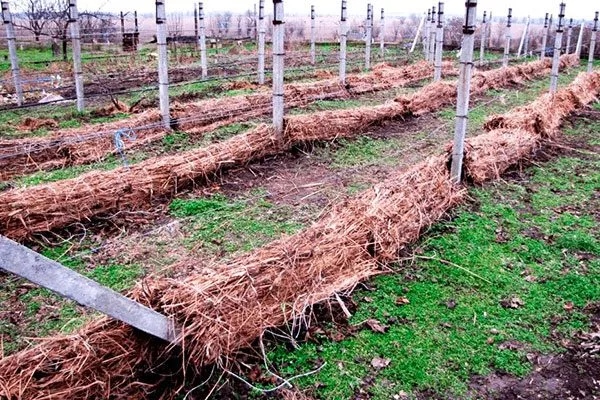
In late autumn, the vines are removed from the trellises, laid on the ground, and secured. The vines are then covered with spruce branches, burlap, or other covering material. When snow falls, the covering is covered with snow.
Diseases and pests
The Crystal variety is characterized by high resistance to most diseases affecting grapes, including mildew and oidium. However, the crop is susceptible to some diseases that typically occur in humid climates.
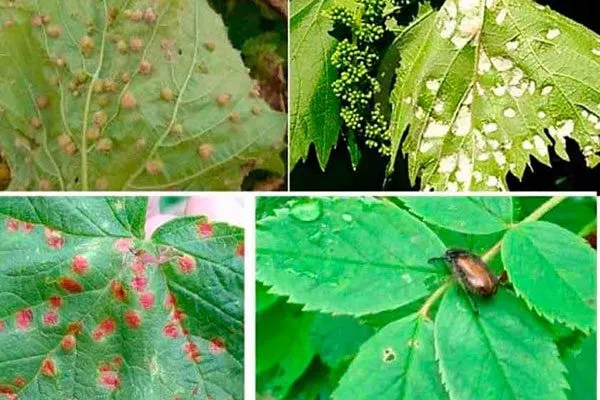
It is recommended to regularly spray the bushes with fungicides to prevent fungal diseases that can develop in unfavorable weather conditions and poor agricultural practices.
Recommended:
- A week before flowering and after harvesting, the bushes are sprayed with Topaz, Horus, Skor, Bordeaux mixture, copper sulfate or other systemic fungicides.
- The most common pests affecting Crystal grapes are leaf rollers and spider mites. To prevent these, the bushes are treated with Nitrafen before bud break. In summer, the plant is additionally sprayed with diluted wood ash, soda ash, or colloidal sulfur.
- Ripening grape clusters attract birds, which can cause significant damage to the harvest. To protect grapes from being eaten, it's recommended to install noise-type repellents or regular scarecrows. However, the greatest effect is achieved by using fine-mesh netting.
- Wasp control can begin with finding and destroying their nests. A simpler and more effective solution is to place a container filled with a sweet liquid. Regular jam or sugar syrup containing a poison (insecticide) will work.
Storage
Ripe, cut Crystal grape clusters can be stored for some time if placed in favorable conditions. In the refrigerator, the fruit can be stored for up to two months.
The shelf life of the fruit also depends largely on the weather. If the summer was warm and moderately humid, the bunches will keep better and longer than fruit picked after a dry season. Fruit picked from young plants is not suitable for long-term storage.
Storage life also depends on the sugar content of the fruit. The higher their sugar content, the better their shelf life. Bunches can be stored not only in the refrigerator but also in a cool, dry place.
Application
Crystal grapes are used to produce wine, juices, compotes, pastilles, and jellies. In regions north of the Voronezh region, this variety is also eaten. Crystal grapes produce a luxurious wine. The fruits can be eaten fresh or dried.
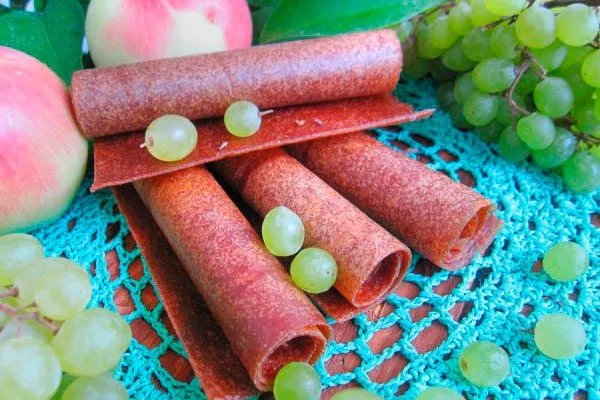
The Crystal variety is primarily used to make fortified dry and sweet Sherry wines. Tasters rate the table wine at 8.5 points, and the sparkling wine at 9.1 points.
The Crystal grape variety is suitable for growing in temperate climates. This frost-hardy wine grape not only boasts excellent flavor characteristics, making it suitable for producing excellent wines, but can also be cultivated throughout virtually all of Russia.