
Carménère grapes are a dark, industrial variety with a unique, herbaceous flavor. They're sure to please those who appreciate new and original tastes.
Description of the Carmenere grape
Carménère is a mid-season grape variety with tall, vigorous vines and rapid shoot development.
Brief botanical description:
- Bushes — vigorous, spreading, up to 2 m in height, with dark brown vines.
- Roots - powerful, branched.
- Leaves — three- or five-lobed, thin and dense, with pubescence on the underside. Coloration is bright green.
- Flowers - bisexual.
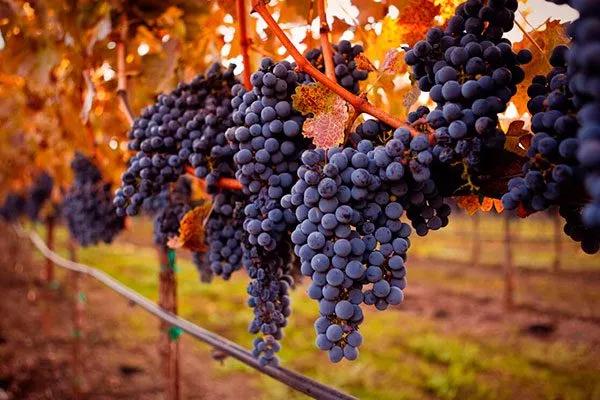
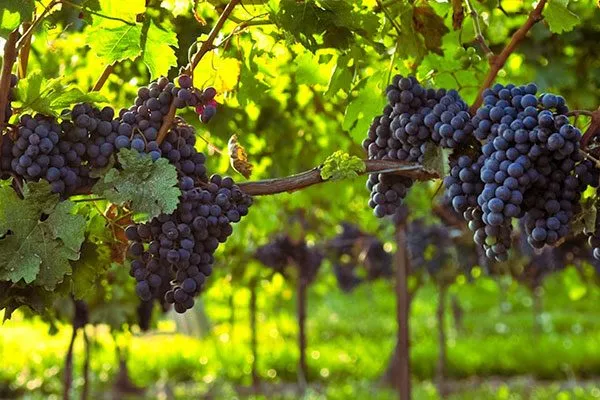
- Clusters — loose, cylindrical-conical in shape. The average bunch length is 30 cm. The average weight is 0.8 kg, the maximum is 2 kg.
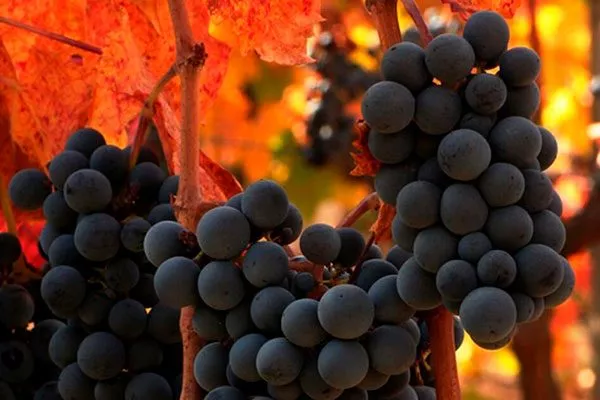
- Berries — round, medium-sized. The approximate weight of one fruit is 10-11 g. They have a thick skin, dark blue or dark purple in color. The flesh is fleshy and juicy.
History of creation
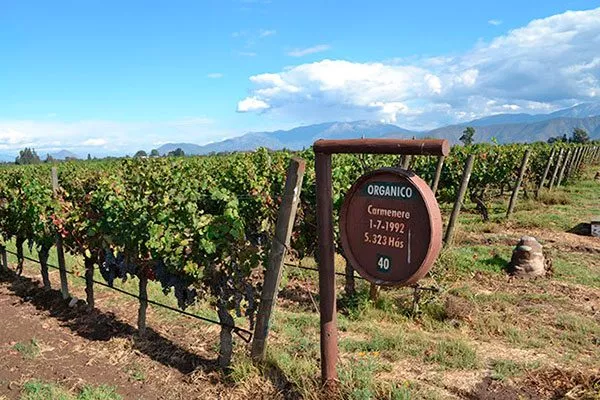
Carménère is a dark grape native to Bordeaux, France. It is now widely grown in Chile. The country's climate and rocky soils are ideal for growing this crop.
The variety gets its name from the French word carmin, which refers to the bright shade of red that the leaves of this grape turn before they fall.
The Carménère grape is considered the progenitor of the famous Cabernet Sauvignon and Merlot varieties, which occupy first and second place in the world rankings for prevalence and popularity, respectively. Compared to Merlot, Carménère produces larger fruits.
Characteristics
The Carménère variety belongs to the mid-season ripening group. It has relatively good agronomic characteristics, allowing it to be grown both commercially and in garden plots.
Main characteristics:
- Ripening period - From the moment the buds open until the fruit ripens, it takes approximately 125-135 days.
- Productivity — 17-20 kg per bush.
- Frost resistance — up to -22 °C.
- Drought resistance - average.
- Percentage of fruitful shoots - 75-80%.
- Pest resistance and diseases - average.
- Taste — pleasant, harmonious, with a herbal flavor. Under favorable growing conditions, the berries have chocolate notes.
- Acidity - 6-8 g/l.
- Sugar content — 23%.
In Russia, the Carmenere variety is suitable for growing in Kuban and Crimea.
Pros and cons
The French grape variety Carménère, while boasting many of the virtues that have made it popular for so long, also has a number of drawbacks. Before planting Carménère grapes in your garden, it's recommended to familiarize yourself with all of its advantages and disadvantages.
Landing
The Carménère grape variety is very sensitive to cold, drafts, and high humidity. All these factors negatively impact the growth and development of the crop. This grape is grown outdoors only in the southern regions.
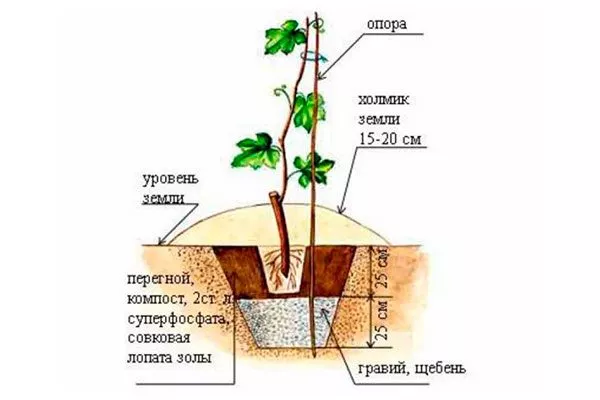
Landing features:
- Selecting a site. This variety requires a lot of light, so it's planted in the sunniest areas, as its fruits require plenty of sun and warmth to reach full ripeness. An elevated site is ideal, with a shallow water table.
Plants must be protected from cold winds, which can damage the blooms. It is recommended to plant bushes in the center of the garden or near a fence or building wall. - Soil. The Carmenere variety is not at all demanding in terms of soil; it grows well even in the rocky areas of Chile, but when grown in gardens, it is recommended to plant it in the most fertile soils, such as black soil.
- Disembarkation times. Carménère grapes are planted in the fall or spring. In southern regions, fall planting is preferred, as it allows the seedlings to harden off, allowing them to grow vigorously in the spring, growing and developing rapidly.
- Planting material. For planting, use seedlings or cuttings without defects. They should have healthy roots and undamaged bark.
- Landing The seedling is planted in pre-dug holes measuring 80x80x80 cm. A support is driven into the center. The seedling is placed deep into the soil until its root collar is level with the ground surface.
- ✓ The depth of groundwater should be at least 2.5 meters to prevent root rot.
- ✓ The distance between bushes should be at least 3 meters to ensure sufficient feeding and ventilation area.
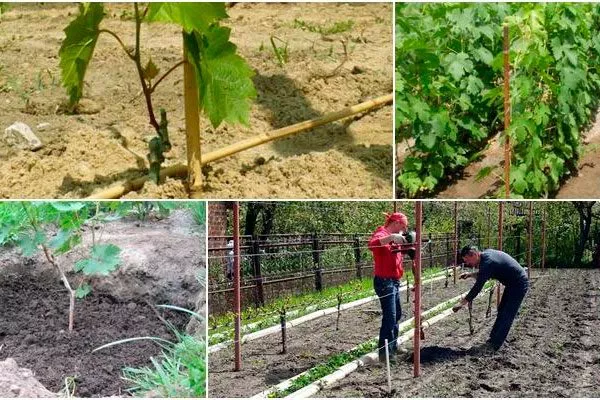
Care
With proper care, the Carmenere variety quickly takes root, grows, and produces good harvests.
Care features:
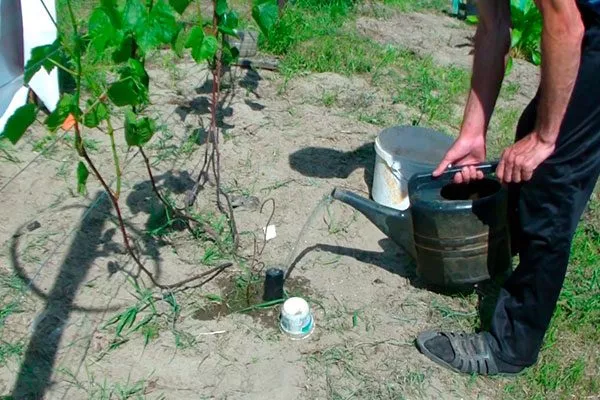
- Watering. Mature bushes are recommended to be watered once a month. The water should be warm and settled. During droughts, watering frequency increases; sprinkling irrigation is beneficial during such periods.

The first watering is done before bud formation, and the second at flowering. Then, after harvest, the final watering is done before the cold weather sets in. - Top dressingThey are carried out simultaneously with watering. At the beginning of the season, nitrogen-containing fertilizers are applied, followed by potassium and phosphorus-containing fertilizers.
Grapes are primarily fed with mineral fertilizers—urea, superphosphate, and potassium sulfate. Organic matter—rotted manure, cow dung, and wood ash—is also added to the vines. - Weeding and loosening. These measures should be carried out regularly. It is also recommended to mulch the tree trunk area with peat, straw, or sawdust; this helps slow weed growth and prevent moisture evaporation.
- Trimming. This is done at least twice a year, in spring and fall. Formative and sanitary pruning is performed in early March and late October, removing frozen branches, suckers, old, dry, and diseased ones. Fruit-bearing shoots are shortened to 6-8 buds.
No more than three stems are left on each bush. The Carménère variety is characterized by rapid growth, so it is recommended to prune it more frequently to prevent the planting from becoming too dense. For pruning, use sharp garden shears to prevent kinking.
- Wintering. This variety is very frost-tolerant and easily dies if exposed to frost. In areas where temperatures are likely to drop to critical levels, covering is essential. Vines are covered with agrofibre, thick film, or other covering materials.
Possible problems and diseases
When growing Carménère grapes, problems may arise due to the varietal characteristics and/or deficiencies of this grape. Knowing these can help you take timely measures to prevent problems.
What problems may accompany growing the Carmenere variety:
- Strong foliage. Carménère vines are heavily leafed, resulting in bunches of grapes often covered in leaves. This prevents proper ripening of the fruit. Wine made from such underripe grapes acquires a bitter taste.
- Peas. The variety is prone to ovary and young fruit drop. This occurs due to exposure to wind, cold, or rain, as well as nutrient deficiencies.
If berries exposed to adverse factors still remain on the bunches, they become smaller and develop seedless—a process called pea formation. Strict adherence to agricultural practices and regular fertilizing can help prevent this problem. - Diseases. The variety is resistant to most fungal infections, but it has limited immunity to gray mold. This is caused by high humidity and dense bushes. Preventative measures can help prevent its occurrence: spray the bushes with fungicides such as Horus, Thanos, Topaz, Bordeaux mixture, and colloidal sulfur.
- Pests. To protect the bunches from wasps and birds, they are placed in mesh bags. Insects are controlled with insecticides, including Zolon, Fury, and similar products. Biological preparations such as Fitoverm, Bitoxybacillin, and others are also used.
- ✓ Tendency to pea formation due to lack of nutrients or unfavorable weather conditions.
- ✓ High sensitivity to gray mold at high humidity.
Harvesting
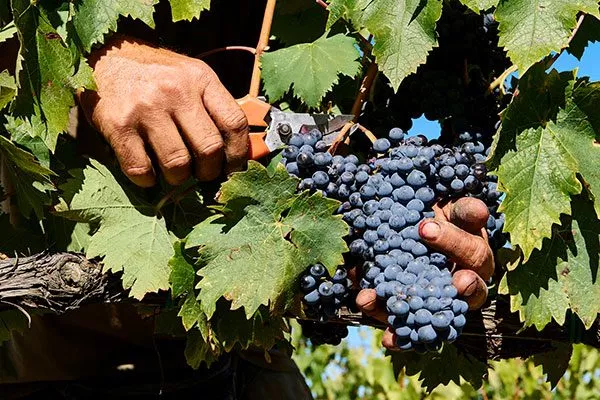
The harvest is in August or September, depending on weather and climate conditions. The berries turn dark purple when ripe. Each bunch is carefully cut with a sharp tool. The harvest takes place in dry weather.
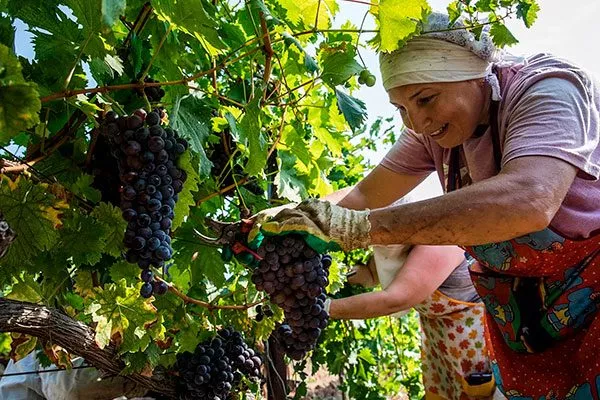
Carménère grapes, like most wine grapes, don't store for long. The bunches are immediately sent for processing—for wine production.
Uses of the Carmenere variety
Carménère grapes are used to produce red wines. These wines, distinguished by their diverse bouquet, feature fruity and berry notes, as well as spicy and smoky flavors. Some Carménère wines boast flavors of blueberry, cherry, currant, anise, and coffee.
The flavor of the future wine can depend on weather conditions. If the season is rainy, notes of lavender and meadow herbs emerge. All wines made from the Carménère grape are characterized by a rich flavor, with distinct tannins.
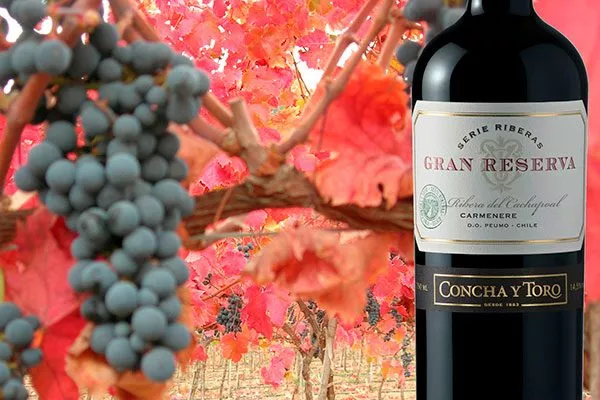
Carménère wines pair best with meat dishes served with spicy and savory sauces. Wines made from this grape variety also pair well with ham, jamón, and sausages. Popular wines include Purple Angel from Montes, Carmín de Peumo from Concha y Toro, and Kai from Vina Errazuriz.
Carménère is a wine grape variety that has become truly popular among winemakers; it is rarely used as a table grape. This variety is sure to be of interest to those making homemade wine, but when choosing this grape, it's important to consider its heat tolerance.