
The Cardinal grape is an ultra-early table grape variety that needs no introduction. It has been cultivated for nearly 80 years by winegrowers and gardeners in many countries, and despite the abundance of new varieties, the tried-and-true Cardinal remains a popular choice.
History of creation
The Cardinal grape is an American-bred variety. It was developed in 1939 by Californian breeders E. Snyder and F. Harmon.
Later, the Cardinal grape spread across Europe, and it began to be grown in Western Europe. Around the 1950s, it appeared in the vineyards of Eastern Europe, and since 1958, it has been grown in the USSR, particularly in Crimea, the Krasnodar region, and southern Ukraine.
The variety was added to the state register in 1974. The Cardinal grape variety was used to develop the AZOS, K-87, K-80 and other hybrids.
Appearance of the plant and fruits
The Cardinal table grape variety grows quickly, producing vigorous bushes with vines reaching up to 3 meters. The shoots have bright brown bark, darker at the nodes. The leaves are serrated and five-lobed.
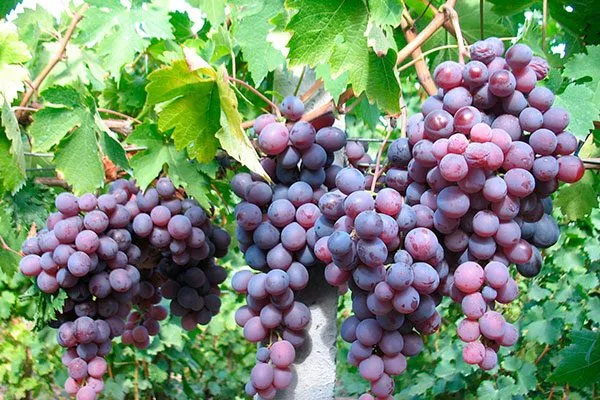
In spring, they are light green, later becoming darker. The variety produces bisexual, easily pollinated flowers.
Clusters
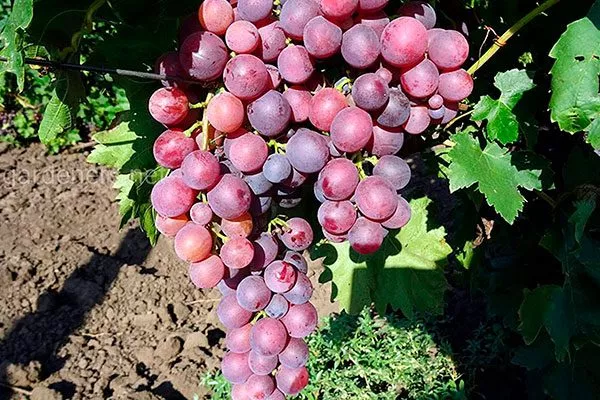
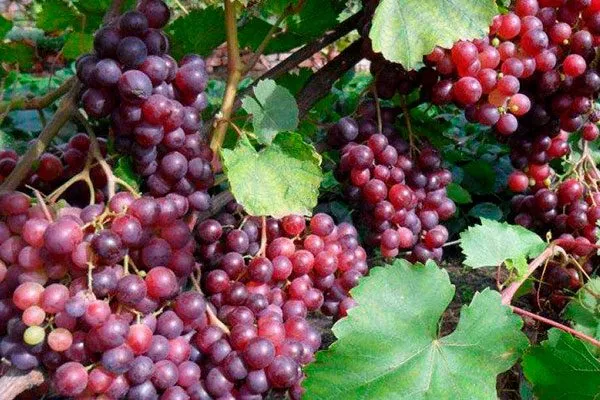
Cardinal grape clusters are cylindrical-conical in shape. They are loose, with long stalks, and easily detach from the vine. The average weight is 400-500 g. They are 20-25 cm long and about 15 cm wide.
Berries
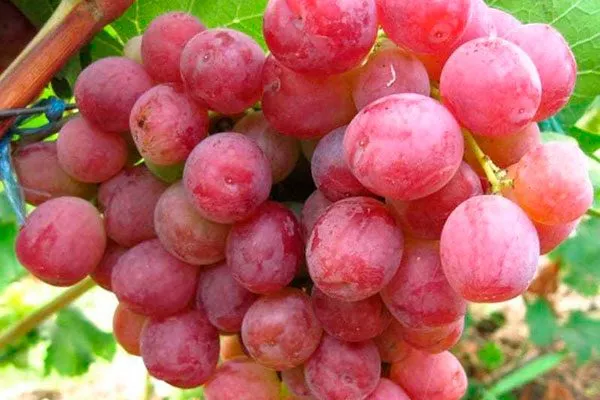
The fruits are purple-red, covered with a smoky, waxy coating. The berries are oval in shape, though rounder specimens are also found. Each berry contains 2-4 seeds. Some berries may have slanted, grooved tops.
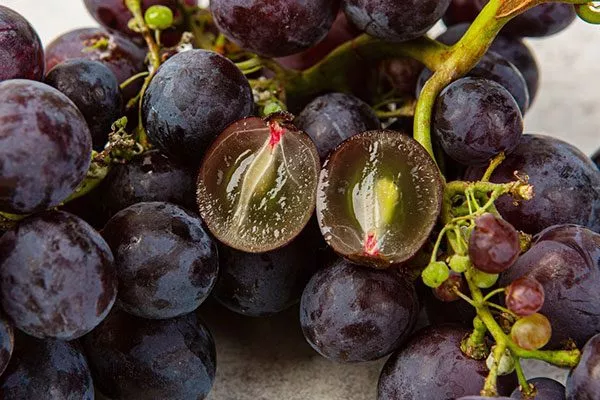
The average weight of one fruit is 6-10 g. The diameter is 1.5-3 cm. The berries have a dense skin, and the flesh is light, juicy, and fleshy.
Characteristics of the variety
The Cardinal variety has enjoyed popularity for decades, and for good reason. This table grape demonstrates excellent agronomic, commercial, and flavor characteristics.
Maturation
This variety belongs to the group of early-ripening varieties. The fruits reach maturity 110-120 days after the start of the growing season. Typically, the harvest is ready for harvesting by mid-August.
Productivity
Old Cardinal grapevines produce better yields than young ones. Two clusters ripen on a single shoot. With a favorable climate and proper farming practices, the clusters grow particularly large, weighing up to 900 g. The average yield is 150 centners per hectare.
Frost and drought resistance
The Cardinal grape variety can withstand temperatures down to -20°C, so it requires insulation in most regions of Russia. This grape tolerates moisture deficits well and is considered a drought-resistant variety.
Disease resistance
The Cardinal grape is prone to fungal diseases; in autumn, its apical parts are often affected by mildew, oidium, and bacterial cancer.
Taste
The fruits are sweet, slightly tart, and have a subtle muscat flavor. Sugar content is 155-180 g/dm3. Acidity is 7-8.4 g/dm3. The fruits were given a tasting score of 8-9 points.
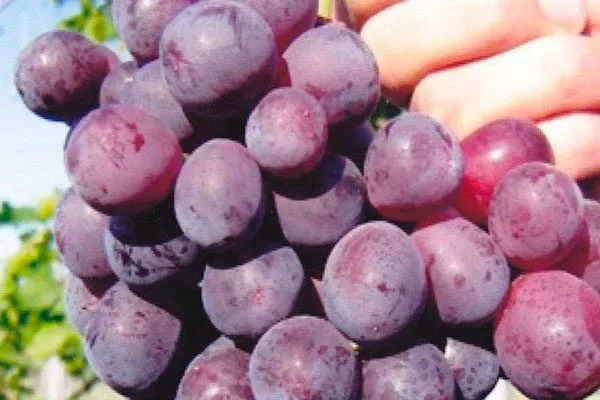
- ✓ Berries may have beveled tops with a furrow, which is a unique characteristic of the variety.
- ✓ The sugar content in the fruits varies from 155 to 180 g/dm3, which is above average for table varieties.
Variety qualities
Before planting Cardinal grapes in your garden, it's helpful to evaluate all of its advantages and disadvantages. This will help you determine whether this variety is suitable for your needs.
Agricultural technology
The Cardinal variety is a heat-loving variety, so it is recommended to grow it commercially only in southern regions. It is a rather demanding grape variety, so its cultivation requires specific care, otherwise the vines will not produce the desired results.
How to grow the Cardinal variety:
- It's best to plant the bushes on the southern and southwestern slopes of the plot. The best soils for this variety are light loams and sandy loams, as well as chernozems.
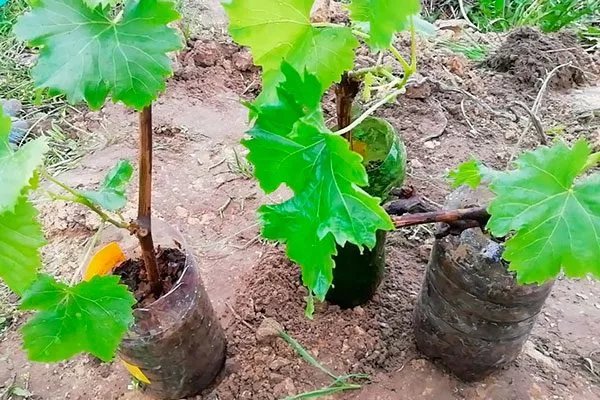
- Planting is recommended in sunny, wind-protected areas. Planting should begin when the soil warms to at least 10°C. Use cuttings with well-developed roots.
- The hole is filled with planting substrate, enriched with organic fertilizers (compost or humus), potassium, and phosphorus. This eliminates the need for fertilizer during the first 3-4 years of cultivation.
- Pruning is done to 5-6 buds. There should be about 25-30 buds on a single bush. It is recommended to shape the bush in a fan-shaped manner. For winter, the vines are pruned short (to 3 buds). Replacement vines are not left.
- Cardinal grapes are best propagated using mature rootstocks of more cold-hardy varieties. Cuttings can also be used, for which the material is collected in the fall. Grafting is performed in the third ten days of April.
- This variety requires moderate soil moisture. Avoid overwatering, as this can cause fruit cracking. The recommended watering per bush is 10-20 liters. Watering should be done 3-4 times per season. Mulching the trunk area after watering is recommended.
- This variety requires regular fertilizing. Add compost to a 6-8 cm layer in spring and fall. Apply mineral fertilizers 3-4 times per season.
Diseases and pests
The Cardinal variety requires regular preventative care to prevent various infections. Grape fruits are often affected by gray mold in rainy and damp weather. To prevent this, spray the vines with iron sulfate and colloidal sulfur solution.
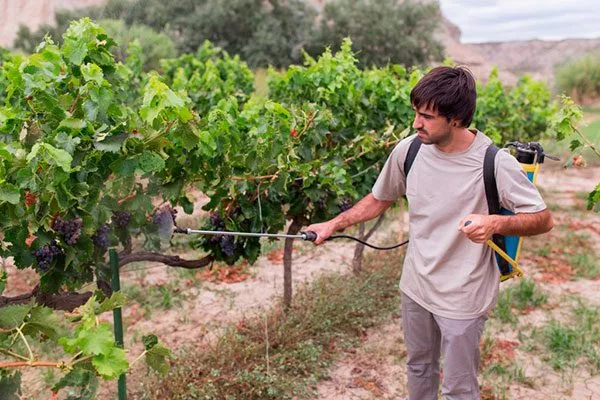
These treatments not only prevent disease but also enrich the bushes with iron. Spraying promotes bush growth, makes shoots more vigorous, increases yield, and produces larger, healthier fruits, preventing pea-like growth.
The most dangerous pests for the Cardinal variety are the grape leaf roller, as well as birds and wasps, which can be controlled with various repellents. Standard insecticides used for grape growing are used to control these insects.
Harvesting, storage and use of crops
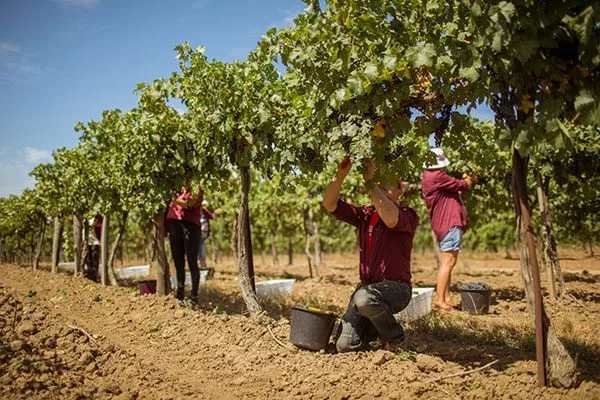
Harvesting begins in early August. The grapes are cut with pruning shears, leaving stems about 5 cm long. The bunches are stored in wooden crates. In this form, the grapes can be stored for about three months. This variety is a table grape and can be eaten fresh. The fruits are also used to make a variety of preserves, including juices, compotes, jams, and they also make excellent raisins.
The Cardinal variety will delight even the most discerning grape connoisseurs with its flavor, but it is more convenient to grow in southern regions. In areas with a harsh climate and rainy summers, growing this variety requires special attention and care.