
Growing grapes from seed is a labor-intensive process. It requires patience, dedication, and a long wait. This article will cover the basic rules for growing grapes from seed.
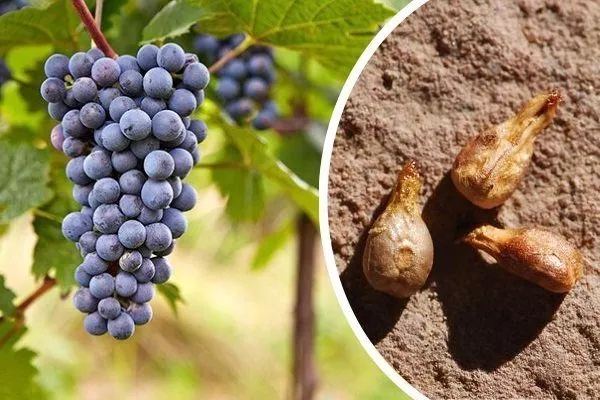
Peculiarities of growing grapes from seeds
Vineyards are created using cuttings or seedlings. Seeds present many challenges, so this method is rarely used in gardening. When planting seeds, it's necessary to prepare for unforeseen situations. It's difficult to predict the exact characteristics of the seedling. The fruit may not be as large or juicy as desired.
Planting from seeds is justified in three cases:
- The desire to get a new look.
- The variety requires a rootstock – a cutting can be grafted onto the plant, which will yield an excellent harvest.
- Interest in the growing process itself.
Want to test your skills as a breeder? Plant a couple of seeds of the same variety and compare the growing plants. Continue to nurture the most resilient and vigorous plant.
If you create good conditions and ensure a normal temperature regime during growing from seed, then after two weeks you can get ready-made sprouts.
Mandatory conditions for growing a plant from seed:
- Water the seedling with water at room temperature.
- The soil needs to be loosened, and this must be done carefully so as not to damage the roots.
- Use a variety of fertilizers if necessary.
- If you're growing the plant in a sunny location, provide some shade. If there are drafts, move the plant to a different location.
- The bushes are susceptible to diseases and insects. In the spring, transplant the seedling into larger containers.
Once the seedlings reach a certain height, become stronger, and more frost-resistant, the grapes are transplanted into open soil. The breeder should pay special attention to pre-hardening. This method will help the grapes take root better.
How profitable is it to grow grapes from seeds?
The "indoor" vine differs from the "outdoor" variety in several ways. It is more pleasant to the touch, with tender and juicy berries. It begins to bear fruit five years after planting. The first harvest is small, with a predominantly tart, mild flavor. The berries become juicier with each passing year.
There's a risk of poor seedling growth. If improper care is taken, or mistakes are made during planting and transplanting, the grapevine may grow weak and produce a poor harvest.
Which variety is suitable for growing?
| Name | Productivity | Ripening period | Disease resistance |
|---|---|---|---|
| Isabel | High | Average | High |
| Tamerlane | Average | Early | Average |
| Mascot | High | Average | High |
| Chardonnay | Average | Late | Average |
| Bianca | High | Average | High |
| Saperavi | Average | Late | Average |
| Regent | High | Average | High |
It's important to decide on its future use. Grapes can be used to make homemade wine, jam, and compotes. The berries can be eaten fresh, sold, or used as decoration. A specific plant variety is selected for these uses.
- For canning – Isabella variety.
- For trade, decoration or consumption - Tamerlane or Talisman.
- For wine – Chardonnay, Bianca, Saperavi or Regent.
You can finally choose a variety after determining how quickly grapes will grow in your region, climate, and soil. If you provide the bushes with favorable conditions and grow them in a suitable location, the results will not be long in coming.
How to make sure the seeds are viable?
After choosing a variety, you need to remove the pits from the fruit. You can buy seeds from specialized agro-firms or obtain them yourself.
Watch a video about sprouting grape seeds:
Stages of seed selection:
- Make sure the seeds are suitable for planting. Healthy seedlings should be firm to the touch.
- Carefully examine the seed, especially its color. A good seed will have a white liquid under the shell.
- Place the material in water. All immature seeds will float, while healthy ones will sink.
Preparing for planting grapes from seeds
After fully checking the seeds for viability, they must be washed.
The seedlings are soaked in water and left for 24 hours. The seeds then separate into layers, a process called stratification.
- ✓ The germination temperature should be stable, without sudden changes, optimally 20-25°C.
- ✓ The substrate humidity should be maintained at 70-80%, preventing drying out or over-watering.
Seed germination can be slowed or accelerated. If you plan to grow the bush in a month or more, you can place the seeds in a cool, damp place. A suitable environment for slowing development is leaving them in the soil over winter. However, for growing seeds indoors, the germination process should be accelerated.
Substrate
The substrate is an airtight container with plenty of damp paper towels. In addition to towels, you can use sand or peat moss. It's best to choose the latter, as moss has antifungal properties and quickly eliminates mold.
Plastic bag
Place the seeds in a bag, distributing them evenly. A special soil mixture is poured on top of the seeds, the thickness of which should not exceed 15 mm. Place the bag in a damp, cool place. The refrigerator is ideal. The shelf life is 90 days.
The bag should not be placed in the freezer, only on a shelf. Seeds for planting are taken out in early March and planted in containers. It's important to plant one seed per pot.
Temperature
Nighttime temperatures should not drop below 15 degrees Celsius. To prevent temperatures from rising or falling, seeds should be stored in a greenhouse or heated with heating mats.
Soil
Don't overwater the soil; if you've recently watered the plant but the soil is already dry, use a sprayer. It takes 14 to 56 days for the sprouts to break through the soil. Monitor the plant's development regularly.
The bushes can be repotted only when they reach 8 cm in height. To ensure the plant becomes strong and frost-resistant, the pots are not brought into the garden until the grapes reach 30 cm. Additionally, the roots should be established, and about 6 leaves should appear on the stems.
Rules and stages of cultivation
Growing rules – compliance with all planting and care requirements.
Landing
Preference should be given to fertile soil, which you can make yourself. Fertile soil is a mixture of equal parts humus and sand. Fill a container with the mixture and sow the seeds to a depth of 1 cm. Place the containers close to a window; the seedlings need light.
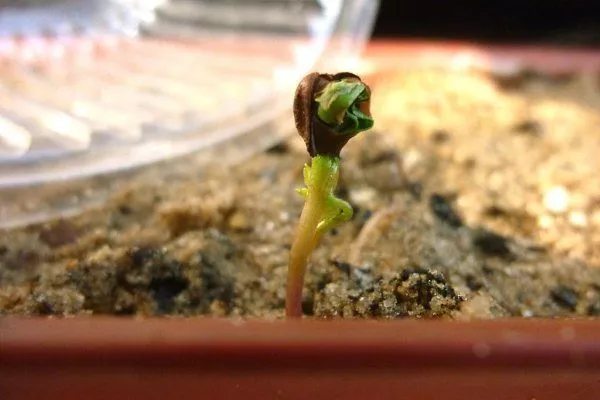
The emergence of sprouts
The seedlings resemble pepper sprouts in appearance. They require care, watering, and loosening of the soil. It's essential to apply the optimal amount of fertilizer and organize pest control measures. The main enemy of grapes is spider mites.
Transplantation
At the end of May, the young shoots are transferred to convenient, wide containers, and the pots are taken to the balcony. Over the summer, the grapevines can reach a couple of meters in height. With the onset of autumn, the bushes are planted in the garden. The plants can be transplanted immediately, but hardening off is essential beforehand. To do this, the pot containing the bush is placed outside for half an hour, then an hour, then two, and so on.
How to speed up the growth of grapes?
Nitrogen helps the vines grow green mass. It's best applied in early March, when the vines are starting to develop greenery. Grapes don't need this fertilizer in the summer. Using nitrogen in the fall is harmful, as the vines are preparing for dormancy, and fertilizing will stimulate the formation of new shoots, preventing the vines from going dormant. Nitrogen is found in ammonium nitrate and urea.
| Type of feeding | Period of contribution | Efficiency |
|---|---|---|
| Nitrogen | Beginning of March | High for growing green mass |
| Phosphorus | During flowering | High for improved flowering and fruiting |
| Potassium | Autumn | High to increase frost resistance |
During flowering, grapevines require phosphorus, and in autumn, they are fertilized with potassium. It improves the plant's immunity and makes it frost-resistant. Copper-based fertilizers increase the plant's resistance to adverse climates and promote overall growth.
Transplanting seedlings into open ground
Planting a seedling requires following some basic rules. You need to choose a good location. The plant thrives in full sun, so a shady spot isn't ideal.
Distance between cuttings
Cuttings are placed 2.5 meters apart. The soil should be well-drained. If the garden has a significant percentage of clay, it is necessary to add compost, sand, and other drainage materials to the soil. Raising the bed is also an option.
Before planting, test the soil for pH. Different grape varieties require specific pH levels. American grape varieties require pH 5.5 to 6, hybrids require pH 6 to 6.5, and European grapes require pH 6.5 to 7. Accordingly, the soil should be acidified or, conversely, lowered before planting.
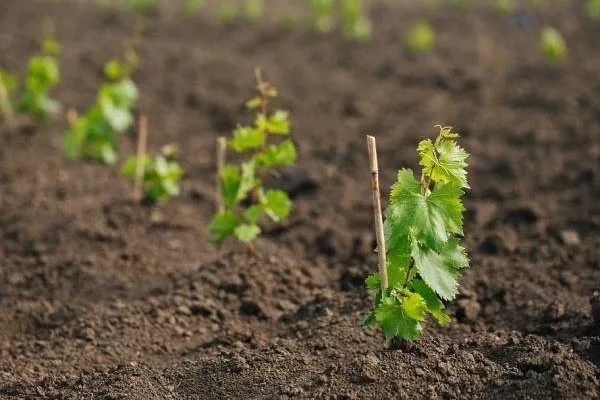
Soil and fertilizer quality
The seedling needs a fertile mixture.
Basic requirements for soil and fertilization:
- Apply the fertilizer 14 days after planting.
- Apply fertilizer once a year (spring or fall).
- Apply fertilizer. You can use an arbor, wall, or trellis type.
Pegs
Stake the cuttings while they're still low. Wooden poles are driven in next to the bushes and tied to them. The stakes should be high enough to prevent the vines from drooping.
Over time, the poles are removed, and the grapes are tied to the arbor. In the future, the branches are guided to form a arbor-like or wall-mounted frame.
Caring for seedlings after planting
Caring for grapes involves monitoring their development and quickly removing weak branches. Avoid allowing the plant to become overly dense, so that the vines develop a strong, bountiful harvest. Fertilizing begins in the second year. The first flower stalks are removed—the vines are not yet ready to bear fruit.
In the third year, the bushes are fed, and shoots and stems are removed. During this period, the inflorescences are left; they will fall off on their own.
In all other years of growing the bush, sanitary pruning and fertilizing are carried out.
Helpful growing tips from experienced gardeners
The plant is grown indoors until it reaches 2 meters. After that, it thrives only in open ground. Here are some key tips from experienced gardeners:
- The growing area should be well-lit. On the north side of the garden, provide protection from drafts and winds.
- The soil should be permeable to air and not waterlogged.
- To grow a strong seedling, use trellises (special supports with stretched wire).
- Drainage in the form of small stones is essential. Fill the drainage with fertile soil.
Subsequent grape care involves frequent watering, loosening the soil, and applying various fertilizers. If the bushes are properly cared for, the fruit will begin to bear fruit within 3 or 4 years after the seed is planted.