
Isabella grapes have become a favorite among gardeners thanks to their unique ability to thrive with minimal care. We'll explore the growing process, their characteristics, and the various training methods that allow this variety to reach its full potential in a variety of climates.
History of origin
The creator is William Prince, who brought this variety worldwide fame. Isabella is a natural hybrid, the result of an accidental cross between V. labrusca and Petit Meslier.
Description of the variety
Its widespread popularity among Russian gardeners is largely due to its low growing conditions. Experience shows that even if the vine is not pruned for several years, it can continue to bear fruit abundantly, producing a rich and high-quality harvest.
Bushes
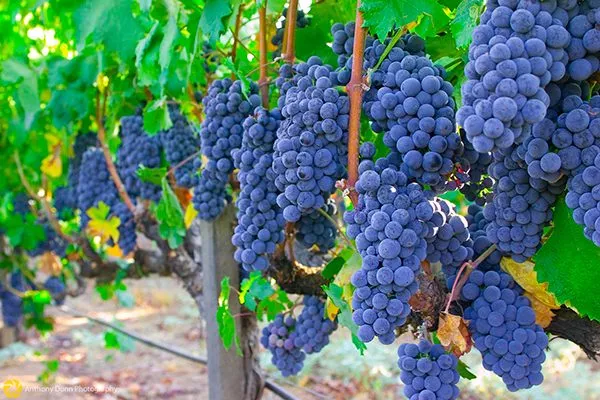
The hybrid is characterized by vigorous growth and active shoot maturation. The long-lived parts of the plant are covered with rough bark with a reddish tint. The leaf blades are simple, large, and rounded, often trilobed or nearly flat.
Features of leaves that affect appearance:
- The upper part is smooth and dark green, while the lower part of the leaf blades is greenish-white with dense pubescence.
- The petiole notch has a round shape.
- The teeth on the edges of the blades are straight with sharp tips.
- The length of the petiole is equal to the length of the midrib or shorter.
The flowers are small (3-5 mm) and greenish in color. They are bisexual, allowing the plant to self-pollinate fully, even under unfavorable weather conditions and in the complete absence of pollinators. Gardeners note a lack of excessive flower shedding.
Berries
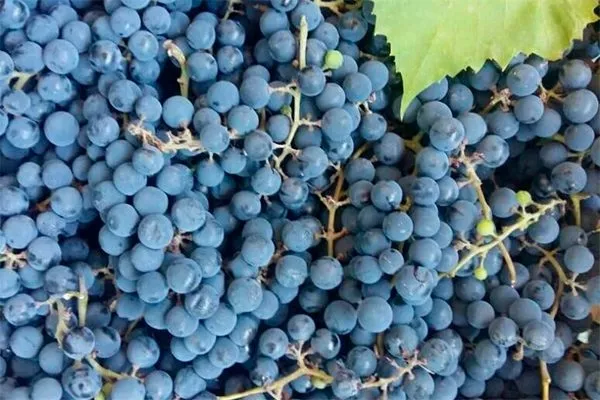
Medium-sized, round or oval, weighing 2 to 3 grams. They have pits, usually 2-3, and are not prone to pea formation or cracking. They are black with a bluish tint and have a thick waxy coating.
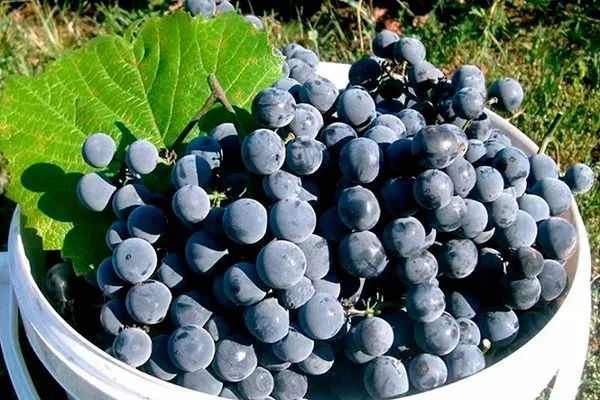
The skin is thick and firm, and the flesh is pinkish and slimy. A single cluster typically contains 40-50 berries, including unripe or green ones. The peduncle is short, thin, and covered with small gray warts.
Clusters
Medium-sized, weighing approximately 140 g, they are cylindrical-conical or cylindrical in shape, sometimes with small wings. The clusters are of medium density, sometimes loose. The peduncle is short, almost green, and easily separated from the shoots.
Taste
The fruits have a characteristic sweet and sour taste with a distinct strawberry aroma. Sugar content and acidity are 160-180 and 6-7 g/dm3, respectively. Juice accounts for 77% of the total fruit weight. Professional tasting scores range from 8.1 to 8.2 points.
Characteristics of the variety
Isabella is characterized by high yields, wide distribution, and other positive traits. Detailed characteristics of the hybrid are presented below.
Ripening time
It has a late ripening period, requiring 150 to 180 days after the start of the growing season, with a combined active temperature of approximately 3100 degrees Celsius. In southern latitudes, harvesting begins in September to early October, while in the central zone, the berries rarely ripen.
Productivity
Yields range from 20 to 50 kg per bush, depending on the plant's age and quality of care. Fruiting occurs annually and is largely unaffected by weather conditions.
Growing regions, winter hardiness
This variety is widespread throughout Russia, including Siberia and the Urals. Even in these cold regions, it is often grown without cover, used as an ornamental plant for landscaping fences, building walls, and gazebos, although the fruits do not always ripen.
Properties
Grapes are known for their numerous beneficial properties. Isabella berries have a positive effect on the body:
- Dark pigment in the peel. Formed from antioxidants, it helps normalize hematopoiesis, regulates blood pressure, and improves the condition of the blood and blood vessels.
- Increased hemoglobin. Regular consumption effectively increases hemoglobin levels, competing with pomegranate in this regard.
- Flavonoids and catechins. They cleanse the body of waste and toxins, increase productivity, improve overall tone and promote faster recovery from illness.
- Support of the heart muscle. Freshly squeezed juice and fruits promote normal contraction of the heart muscle and restoration of normal rhythm.
The healing properties extend not only to the fruits, but also to the leaves and vines:
- Used for cuts, bruises, and abrasions.
- Can be used to reduce fever by applying to the forehead, armpits, and chest.
- They are effective for headaches, used for expectoration, gargling for sore throats and pharyngitis, and also in the form of lotions for abscesses and furunculosis.
Application
Isabella, thanks to its abundant harvest and beneficial qualities, is widely used in various fields. Let's take a closer look:
- Beverage production. It is used to make aromatic homemade wine. Chacha and moonshine are produced industrially in Georgia and Dagestan.
- Cooking. The berries are processed into puree and frozen for the winter. Compotes are made with pears and apples. Juice is produced, and it is recommended to mix it with apple juice in equal proportions. Jams and preserves are also made.
- Cosmetology. The seeds are used to create scrubs. Extracts are used in the production of creams and toners. The peel is an excellent rejuvenating agent. A decoction of the leaves is recommended for wiping the face for acne.
Its applications extend beyond winemaking to cooking and cosmetology, making it a versatile and valuable raw material.
Advantages and disadvantages
It's important to highlight a number of the hybrid's positive characteristics and consider its negatives. Isabella has many advantages:
Landing
The hybrid prefers bright sunlight. In the shade, fewer berries form and they don't reach the desired sweetness. Ideal soils are loose, fertile, and slightly calcareous. The plant tolerates temporary flooding, so it can be planted in areas with low groundwater levels.
- ✓ Soil pH should be between 5.5-7.0 for optimal growth.
- ✓ The groundwater depth must be at least 1.5 m to prevent root rot.
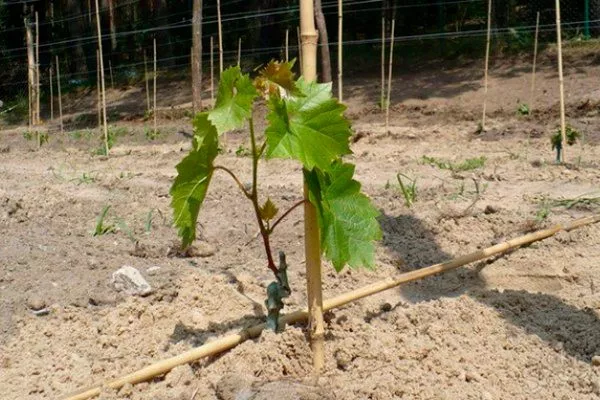
The best time to plant seedlings is spring, when the soil warms to 10°C (April-May). The recommended spacing for bushes is 2.5 x 3-4 m. When planting near a building wall, space the plants 1-1.5 m away from it.
Step-by-step landing:
- Dig a hole measuring 60x60x60 cm. In clay soils, add 10 kg of crushed stone or sand and gravel mixture to the bottom for drainage.
- Fill the hole with a mixture of humus, sand and garden soil, adding 40 g of superphosphate and 20 g of potassium sulfate, or granular fertilizer for grapes (OMU, Fertika).
- Pour 30 liters of water into the hole and let it soak in.
- Place the seedling on a mound of earth, spreading the roots out to the sides.
- After covering the roots of the seedling with soil, form a 10-15 cm high border around the hole to prevent water from spreading between the rows when watering.
After planting, water the plants generously and mulch the soil with mown grass, straw or coarse sawdust.
Growing and care
Isabella is rightly called the "lazy man's grape" due to its incredible simplicity and ease of care. Many gardeners allow the vine to grow with little or no intervention, yet it produces impressive yields. With careful attention, this plant produces large clusters of delicious grapes.
Watering
This variety does not tolerate drought well, but is tolerant of high humidity. In regions with cool, rainy summers, plants do not require additional watering. In the south, watering is recommended a few days before flowering and during the formation of fruit in the cluster.
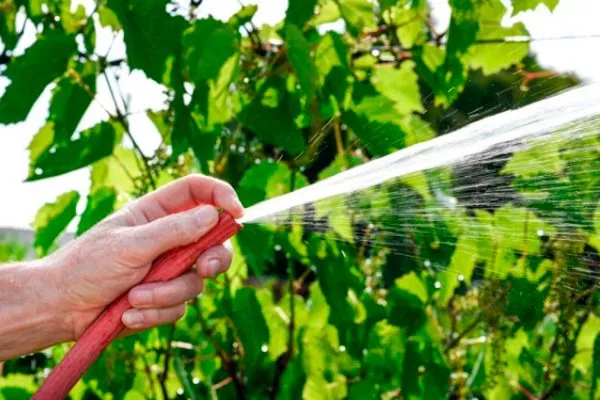
Stop watering in the second half of August, when the grapes begin to color. To conserve soil moisture, use mulch or grass (growing low-growing perennial grasses).
Top dressing
To achieve a high grape yield, apply fertilizer 2-3 times per season. In the spring, water the plants with an infusion of manure or bird droppings, or a urea solution (30 g per 10 liters of water). During flowering and fruit filling, apply any ready-made complex mineral fertilizer, such as Plantofol, Florovit, or Hera.
Pest and disease control
It is rarely affected by common diseases, even in unfavorable summer conditions. Thinning the bushes to improve ventilation is usually sufficient. Pests are virtually absent.
In very hot weather, spider mites may become a problem. Control involves spraying with Actellic, BI-58, or Amitraz. You can also treat the bushes with garlic or a soap solution. Due to the late fruiting season, insecticides do not harm the crop.
Pruning during the season
Start pruning immediately after planting to avoid overcrowding. Systematic crown thinning is required, including pinching (removing shoot tips) as soon as they reach the top wire of the trellis.
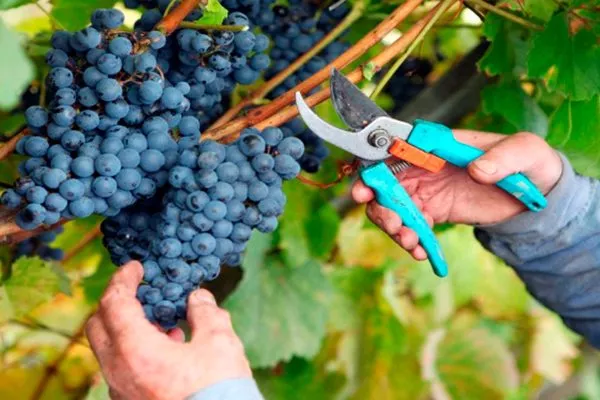
Pinch out side shoots just above their first leaf. Remove some vertical shoots, maintaining a distance of 15 cm between them. Remove weak, double, and triple shoots. This reduces the risk of fungal infections.
Formation of grapes
In open-air cultivation regions, the most convenient training method is a tall-stemmed cordon, known as a 2.4-arm cordon. Grapes are often used to twine around arbors and pergolas, allowing the vines to grow freely and guiding them as needed.
In colder regions, the standard fan-shaped trellis cultivation is used. Isabella does not require pruning. The plant is capable of providing nutrition to all the formed clusters on the shoots.
Shelter for the winter
In most cases, winter protection is not necessary. Experience shows that even with frost in the spring, vines are capable of producing new shoots that grow throughout the season. In the Urals or Siberia, where severe frosts are common, covering the vines is recommended to protect them from the cold.
Reproduction
Isabella is easily propagated by cuttings and layering. Propagate by cuttings in the fall during pruning before winter:
- Select mature shoots at least 6 mm in diameter, cut them into 25-35 cm long branches, and tie them into bundles. Store the cuttings over winter in a cellar, refrigerator (immersed in damp sand), or buried in the garden.
- In March, remove them from storage, renew the cuts at both ends and soak them in water with the addition of Kornevin or succinic acid.
- Root in a substrate of sand (perlite) and light soil.
- Keep the seedlings in bright light at a temperature of +20°C and 80% humidity. Water regularly and spray once every 7-10 days.
- ✓ Cuttings must have at least 3-4 buds for successful rooting.
- ✓ A cutting diameter of at least 6 mm ensures better survival.
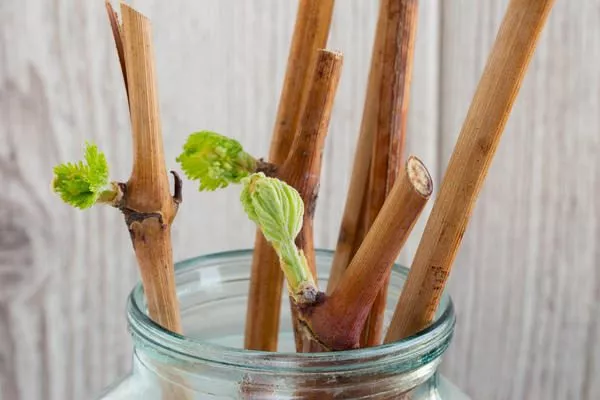
High-quality cuttings can be obtained from bushes trained on a low stem or without one. Follow these instructions:
- Dig 1-2 trenches next to the crop, 25-30 cm deep and 20 cm wide.
- Place some old straw manure on the bottom, then cover it with soil.
- In July, when the young growth reaches more than 1 m, select 1-2 strong lower shoots, clear them of excess leaves and tendrils, leaving a few leaves at the top.
- Place the branch in the trench, pin it with wire staples and cover with soil.
By autumn, a developed root system will have formed on the cutting, and it can be transplanted to a new location in September-October in the south or the following spring in the Central Belt.
Reviews
Isabella is one of the most common grape varieties, thriving even in temperate gardens. It belongs to the table grape group, boasting pleasantly flavored berries and high yields. Its frost resistance and low maintenance make it an excellent choice for landscaping in areas where autumn vine cover is not required.