
Italia grapes are sought after not only by farmers and gardeners but also by winemakers, as their berries produce the most delicious and expensive wines. This variety has a centuries-old history, is grown throughout the world, and belongs to the Vitis vinifera species. In various countries, it is known as Pirovano 65, Dona Sofia, Italian Muscat, Italian Muscat, Goldoni, and Ideal.
Description of the Italian grape variety and its appearance with photos
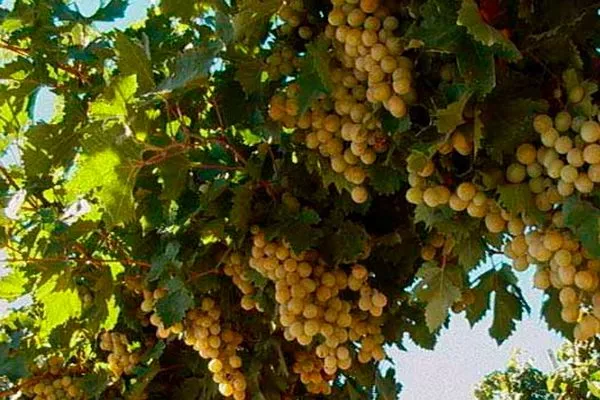
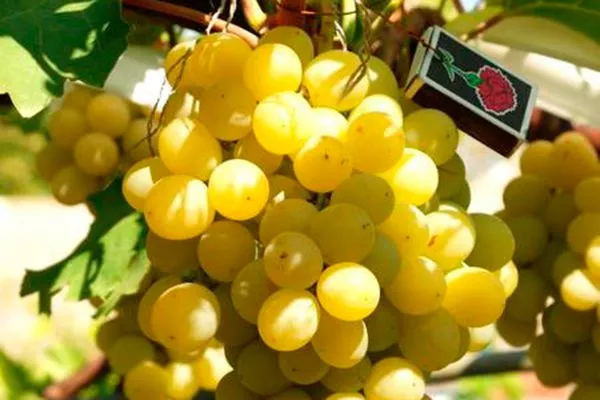
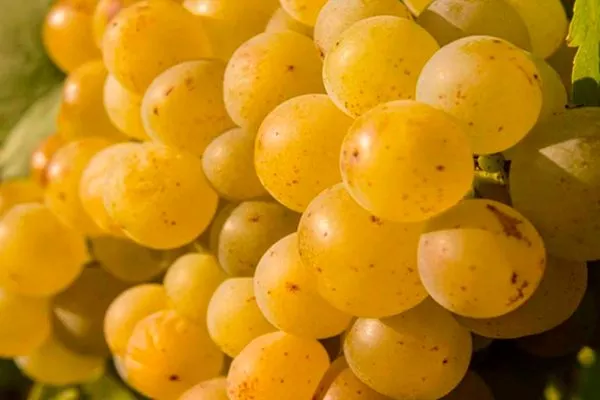
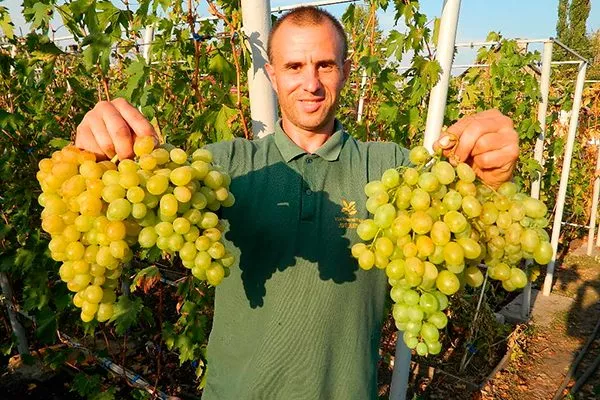
Italy is characterized by fairly large clusters, berries, and leaves. The fruit's base color is light greenish-yellow with a matte, dense bloom. The variety can also be identified by other characteristics:
- aroma – nutmeg;
- juiciness – increased;
- berry weight – 5-7 g;
- bunch weight – 550-650 g, length – 20-22 cm;
- the shape of the bunch is cylindrical-conical, density is weak;
- foliage - strong;
- leaves are green, their length is 17-20 cm, width 12-15 cm;
- number of seeds – from 2 to 4 pcs.;
- the peel is dense and does not crack;
- pulp – fleshy type;
- fruit shape – ovoid and oval;
- The maximum dimensions of a berry are 30 mm in length and 20 mm in width.
Advantages and disadvantages of the variety
The variety's main advantage is its muscat aroma and flavor, which imparts a distinctive taste to the berries, as well as to wine. But the grapes also have other positive qualities:
- versatility of application;
- skin strength, which increases the shelf life;
- long-distance transportability;
- high level of aromatic and taste qualities;
- the strength of the vine, due to which the bush is not subjected to overload;
- self-fertility;
- excellent yield performance;
- the berries are rain-resistant (they do not crack);
- the berries do not fall from the bush.
The variety also has some disadvantages:
- poor resistance to diseases and pests;
- poor frost resistance;
- not suitable for growing in northern regions and the Central Belt;
- late ripening period.
History of selection and authors
The Italia grape variety has been around since 1911. It was created by the Italian breeder Alberto Pirovano. Two popular varieties were used for the cross:
- mother bush – Bikan;
- pollen taken from Muscat of Hamburg.
The result was a variety with the best characteristics of both parents.
Characteristics
To assess the feasibility and necessity of planting Italian grapes in your garden, carefully examine all the qualities of the variety. This will allow you to determine in advance how successful you will be in growing the plant and whether it's worthwhile in your region.
The taste of berries, their use and storage
Pirovano 65 is the basis for many wines due to its diverse flavor profile. The berries not only feature muscat notes, but also citrus, spicy, floral, and honey accents. The amount of sugar and acidity varies by region and growing conditions, so the levels vary:
- sugar content – from 140 to 195 g/cu. dm;
- acidity – from 6 to 10 g/cu. dm.
- ✓ Storage temperature must be strictly within the range from 0 to +4 degrees.
- ✓ The air humidity in the storage room should be 85-90%.
Under optimal conditions, the shelf life is at least three months. To achieve this, the air temperature must be between 0 and 4°C (32°F and 4°F), and the bunches must be stored in a single layer in perforated wooden crates. If conditions are not ideal, the shelf life will decrease rapidly.
The variety has a wide range of applications:
- fresh consumption:
- preparation of desserts;
- production of juices and compotes;
- creation of sweet and dry wines;
- cooking jam, preserves, marmalade.
Drought resistance, frost resistance
Italy cannot boast of high scores on these characteristics:
- drought resistance is average, so the soil should always be kept moist;
- Frost resistance is also low; the bushes can withstand temperatures down to -18 degrees.
Only in subtropical conditions do the bushes not require winter cover. Due to these frost-hardiness characteristics, the Italia variety is recommended for cultivation in Crimea, the Krasnodar Krai, the North Caucasus, and other southern regions, as well as the Black Sea coast.
Resistance to diseases and pests
Since Italia is not a hybrid, but a native variety that has been around for over a century, it is not known for its resistance to grape diseases. Most commonly, the bushes are susceptible to diseases such as powdery mildew, downy mildew, and gray mold. Among the pests, scale insects, grape mites, and leaf rollers are also a concern.
Pollination
The variety is completely self-pollinating, so it does not require planting other grape varieties nearby or attracting pollinating insects.
Productivity, ripening time and fruiting
Fruiting begins at 2-3 years of age, and peak productivity is reached by 5 years after planting. At this time, yields range from 10 to 16 tons per hectare. Yield levels directly depend on climate, weather conditions, and adherence to agricultural practices.
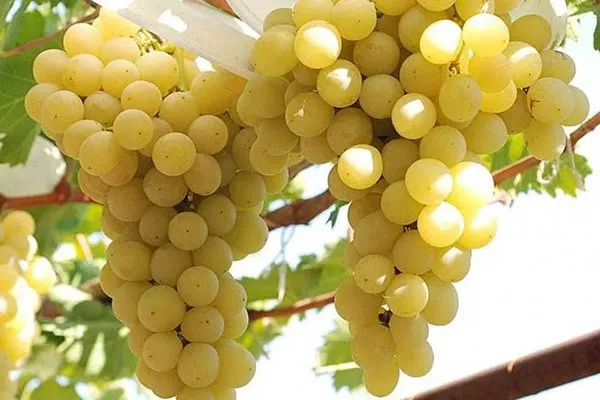
The variety is considered mid-late, so it takes about 150 days from bud break to harvest. Consequently, the harvest begins around the beginning of September.
Chemical composition of berries
Italian Muscat grapes are renowned for their rich content of all essential daily vitamins, macro- and micronutrients. The berries are particularly rich in vitamins B6, K, C, calcium, magnesium, potassium, and phosphorus.
Features of planting seedlings
The rules for landing in Italy are classic; you just need to take into account a few specifics:
- Recommended planting times. Work can be done in both spring and fall. In the former case, the soil temperature should be at least 10-13 degrees Celsius, while in the latter case, planting should be done a month to a month and a half before the first frost. Keep in mind that this variety is susceptible to recurrent frosts.
- Choosing a suitable location. This is a heat-loving plant, so the site must be in full sun. Otherwise, the fruits will not acquire their sweetness and will not have time to ripen to technical maturity. Drafts and groundwater levels above 2 meters are avoided.
- Selection and preparation of planting material. The seedlings must be of good quality—free from diseases and pests, showing no signs of wilting or overwatering. They are prepared using standard methods: treated with a growth stimulant, the shoots and roots are pruned, and just before planting, the root system is dipped in a clay slurry with manure.
- Site preparation. It's best to do this several months before planting, or at least 2-3 weeks before. This involves clearing the area, digging, and adding organic fertilizer (approximately 7-10 kg per square meter).
- The process of planting young seedlings. To begin, dig planting holes at least 3 meters apart. It's best to leave 4 meters or more between rows. Then, lay drainage material at the bottom, add a little fertile soil on top, plant the seedling, cover with soil, and water.
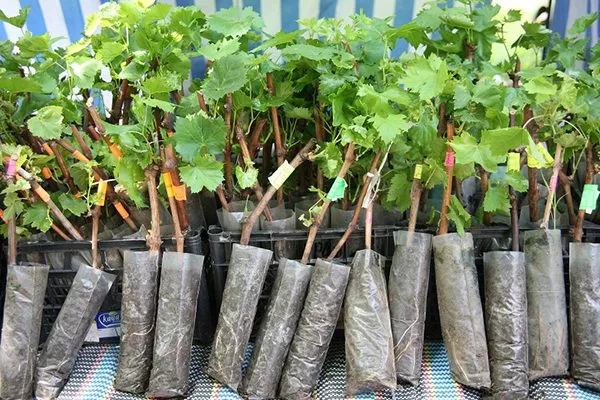
Consider some planting features related to Italian grapes:
- soil acidity should be 6 pH;
- depth and diameter of the hole – 50-55 cm;
- It is necessary to install supports and tie up the seedlings.
Care and cultivation rules
The care procedures are not particularly difficult, just do the following:
- Prevention and protection from pests and diseases. This is a mandatory procedure to prevent the plant from getting sick. Spraying is carried out three times, starting with the removal of the covering. Various insecticides and fungicides, Bordeaux mixture, etc. are used.
- Watering. Since Italy doesn't tolerate prolonged drought, water the bushes as the top layer of soil dries out. However, avoid stagnant water. One mature bush requires approximately 100-120 liters of water. It's advisable to apply mulch to retain moisture.
- Feeding scheme. Due to its average level of immunity, Italy is often fed:
- after the plant awakens in spring, nitrogen is needed in the form of organic matter;
- During budding and later, during fruit formation, phosphorus and potassium are used:
- during active berry growth, a complex of phosphorus, potassium and nitrogen is needed, as well as zinc, iron, copper and manganese;
- a couple of weeks before ripening, use potassium-phosphorus fertilizers;
- After harvesting the bunches, organic matter based on potassium and phosphorus is required.
- Pruning and shaping the bush. In spring, remove old shoots, leaving about 3-4 of the strongest. Sanitary pruning is required twice a year.

- Preparing for winter. Includes several actions:
- moisture-charging irrigation;
- application of fertilizers;
- shortening the stems to make it easier to create shelter;
- whitewashing tree trunks against insects;
- mulching;
- hilling;
- cover with non-woven material if necessary.
Harvesting
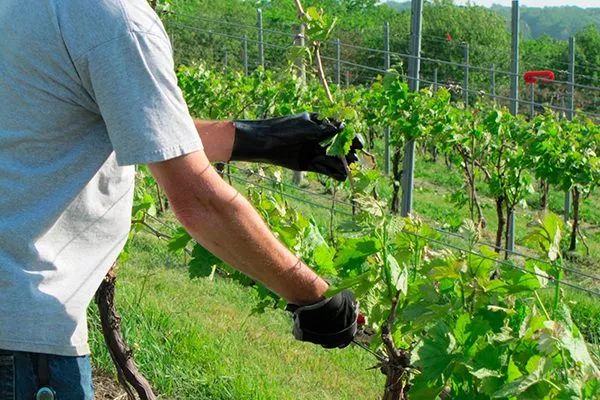
The berry clusters are cut with sharp pruning shears and immediately placed in storage containers. Harvest time is morning or evening, in dry weather.
Reviews
Italian grapes are renowned worldwide. They have both advantages and disadvantages, but are most prized for their pleasant Muscat flavor and aroma, which makes them unique wines, juices, compotes, and desserts. The key to growing them is adherence to agricultural practices.