
Growing grapes requires constant attention from the gardener. Neglecting proper care can result in a harvest with unsatisfactory flavor, such as a bitter aftertaste. By following a few recommendations, such consequences can be avoided.

Why do grapes taste bitter?
The bitter taste of grapes comes from the tannins they contain. Also known as tannic acid, these water-soluble phenolic compounds have a bitter taste and astringent properties. In nature, tannins function as a plant defense mechanism against pests.
They are typically found in plant bark and leaves. In grapes, bitter tannins are found in the berry skins and seeds. They release bitterness when mechanically damaged, such as when biting into a seed.
But there are other reasons for the bitter taste of grapes.
Varietal characteristics
| Name | Tannin content | Disease resistance | Recommended growing regions |
|---|---|---|---|
| Cabernet Sauvignon | High | Average | France, USA, Chile |
| Merlot | Average | High | France, Italy, USA |
| Malbec | High | Low | Argentina, France |
| Tannat | Very high | High | France, Uruguay |
| Shiraz | Average | High | Australia, France |
| Nebbiolo | High | Low | Italy |
| Aglianico | High | Average | Italy |
| Xinomavro | Average | High | Greece |
| Nera d'Avola | Low | High | Italy |
| Toriga Nacional | High | Average | Portugal |
| Saperavi | High | High | Georgia |
| Tempranillo | Average | High | Spain |
| Montepulciano | Low | High | Italy |
There are grape varieties with high tannin content. These include:
- Cabernet Sauvignon;
- Merlot;
- Malbec;
- Tannat;
- Shiraz;
- Nebbiolo;
- Aglianico;
- Xinomavro;
- Nera d'Avola;
- Toriga Nacional;
- Saperavi;
- Tempranillo;
- Montepulciano.
The berries of these grape varieties give a feeling of tartness and bitterness in the taste.
Unsuitable conditions
Growing conditions affect grape ripening, flavor, and shelf life. Unfavorable conditions do not directly cause bitterness.
However, excessively humid or hot weather can cause the grapes' waxy coating to deteriorate. The waxy coating, which contains natural yeast, ferments and penetrates the fruit, imparting a slight bitterness.
Heavy rainfall during flowering and high humidity during the hot summer season can cause grapes to crack and become susceptible to diseases. Some diseases can cause bitterness in the fruit.
Violations of agricultural practices
Agricultural errors that cause bitterness in grapes include inadequate plant nutrition. Growing berries in depleted soils lacking micronutrients is not recommended. Plants have poor nutrient absorption in sandy and peaty soils.
Soils with a neutral or alkaline pH often suffer from manganese deficiency. When this deficiency occurs, grape leaves become covered with light green spots, then turn yellow and die, and the fruit develops a bitter taste.
- ✓ Maintain soil pH between 6.0-6.5 for optimal nutrient absorption.
- ✓ Provide drainage in the grape planting area to prevent water stagnation.
Excess copper in the soil can cause a bitter taste. High tannin levels are found in grapes grown in clay soils in hot climates with limited water.
Chemical treatment
Grapes are treated with a wide variety of chemicals. The purpose of these treatments is to suppress fungal activity to prolong the shelf life of the fruit, as well as to control pests and diseases.
Substances that can penetrate berries and remain in them include:
- diphenyl;
- sulfur oxide;
- chlorine gas.
Wash the grapes thoroughly with water. You can dust the berries with baking soda or salt and shake the container. Then rinse them thoroughly. This helps remove harmful substances from the skins.
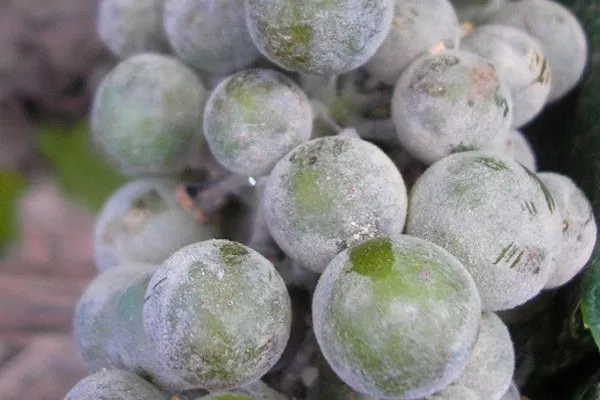
Inadequate rinsing increases the risk of ingesting chemicals. The fruit may have a sulfuric or "hospital" odor and cause an allergic reaction. However, chemical processing is not the cause of the bitter taste.
Diseases
Grapes are susceptible to many diseases. Some of them contribute to bitterness in the fruit:
- Bitter rot – a disease caused by the fungus Melanconium fuligineum (Scribn. et Viala) Caw. It typically attacks grapes in contact with the ground. Gray, smoky, and almost black fungal pads emerge from the cracked skin of the fruit.
The berries in affected clusters wrinkle and dry out. Slightly affected berries have a bitter taste. - White rot – a disease caused by the fungus Coniothyrium diplodiella Sacc. It primarily attacks weakened plants, such as those damaged by hail, overly dense plantings, or sunburned bunches.
The disease first appears as yellow and brown spots on some berries. They then turn brown entirely, shrivel, and dry out.
One of the main symptoms of white rot is the drying out of the lower part of the bunch. The leaves also dry out, turning a dirty green. The berries fall off and have a bitter taste.
What to do?
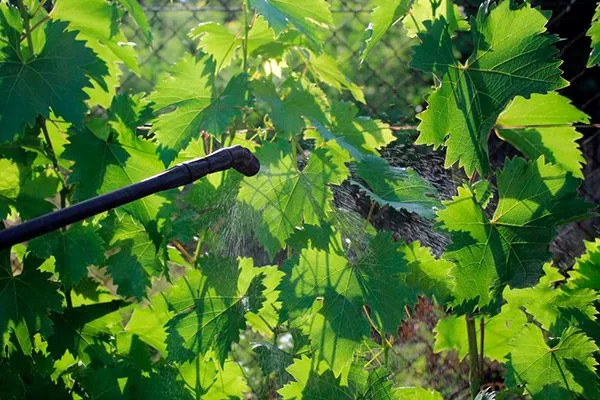
Topaz and Horus have proven effective in protecting against rot diseases. Use them strictly according to the package instructions. Do not treat grapes with chemicals during the ripening period. Spray the bushes no later than 30 days before harvest.
Alternate the preparations, do not use the same one more than twice.
Grape rot can be combated with folk remedies. To do this, treat the bush with:
- With iodine solution. Dilute 30-40 drops of iodine in 10 liters of water. Spray the shoots once when berries are forming, and a second time when the fruit is ripening.
- Garlic infusion. Add 100 g of crushed garlic to 10 liters of water. Let it steep in a dark place for 24 hours. Strain the resulting infusion and spray the bunches of grapes, removing any infected berries first.
- With milk solution. Spray the grapes with a solution made from 1 liter of milk and 10 liters of water. This inhibits mycelial growth.
- With a solution of potassium permanganate. On a dry and cloudy day, you can spray the plants with a solution of 10 liters of water, 70 g of soda and 5 g of potassium permanganate.
Preventive measures
Preventative measures should be primarily aimed at preventing diseases that lead to changes in the taste of berries:
- Tie fruit runners to a trellis at least 40-50 cm above the ground to prevent the bunches from touching the soil. Make sure the berries don't sag under their own weight. Install supports.
- Before covering the grapes for the winter, thoroughly dig up the soil around the bush and remove leaves, as the fungus overwinters in the bark of the shoots and in fallen leaves. When it emerges in the spring, the fungus attacks the shoots. In the spring, mulch the soil under the grapes with straw, grass, or plastic.
- Remove diseased shoots and bunches promptly to prevent the spread of diseases.
- Perform sanitary and formative pruning. Avoid overcrowding and poor ventilation.
- Avoid overwatering. Reduce watering to once a week or reduce it to zero during rainy weather.
- Provide adequate nutrition to the plants, fertilize the grapes in the spring to stimulate growth, and in the fall to strengthen the bushes for winter.
- Use EM products (such as Baikal). Their beneficial microorganisms suppress pathogenic soil flora, protect against diseases, and increase crop yields.
- Choose the right location for planting grapes. It should be well-ventilated, without stagnant soil, and preferably at an elevated location.
To prevent the incidence of rot, choose varieties resistant to these diseases for cultivation:
- Don agate;
- Atlas;
- Seedless early;
- Vavilovskiy;
- Victoria;
- December;
- Isabel;
- Cabernet Sauvignon;
- Zaporizhzhya raisins;
- Moldova.
By maintaining good sanitary conditions in the vineyard and choosing the right variety for cultivation, it is possible to minimize the presence of bitterness in the fruit and achieve a harmonious, balanced taste of the berries.
My grapes were a bit bitter this year, even though they're usually as sweet as honey. Thank you so much, I found the cause of the bitterness thanks to your article! Very useful information!