
Bordeaux grapes are a relatively new, late-season, industrial grape variety widely used in winemaking. Despite the "French flavor" in their name, this grape is native to Russia and grows well in Russia.
Description of the Bordeaux variety
Bordeaux is a technical grape variety used to produce various wines.
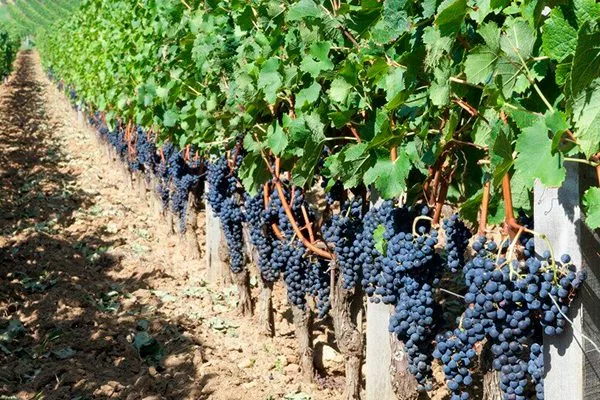
Brief botanical description:
- Bushes - medium-sized.
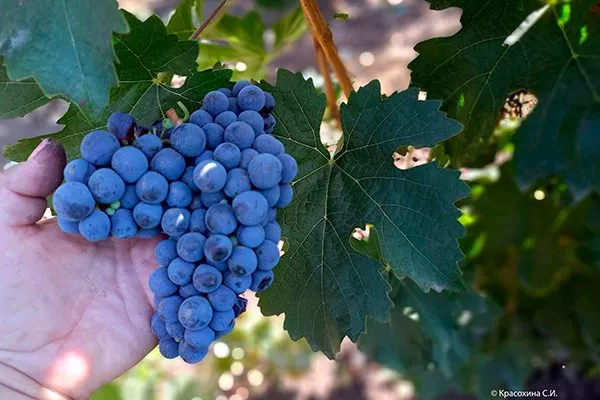
- Leaves - medium-sized, deeply dissected, with pubescence.
- Flowers - bisexual.
- Clusters — medium size, cylindrical-conical shape, average weight — 160-165 g.
- Berries — medium-sized, round, blue-black, juicy, with colorless juice. Inside the pulp are 2-3 small seeds.
The Bordeaux variety has good agronomic characteristics, allowing it to be grown on a large scale not only in the south of Russia, but also in temperate latitudes.
Main characteristics:
- Deadlines maturation - mid-late.
- Productivity - from 155 to 165 c/ha.
- Frost resistance — up to -23 °C.
- Pest resistance and diseases - average.
- Sugar accumulation — 25.5 g/100 cm3.
- Acidity — 9 g/cu. dm.
Who developed the variety?
The Bordeaux grape was developed from the Cabernet Sauvignon variety. It surpassed its parent in yield and also possessed greater pigment and sugar content. The variety was approved for use in 2014.
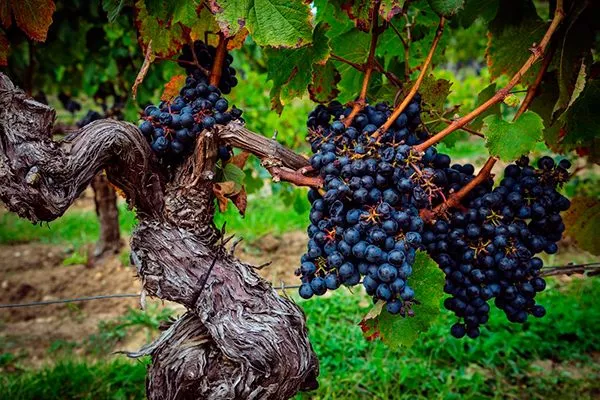
The authors of the variety are employees of the All-Russian Scientific Research Institute of Viticulture and Winemaking "Magarach" of the Russian Academy of Sciences - Rachinskaya A.I. and Melkonyan M.V. The variety is included in the State Register for the North Caucasus region.
Pros and cons of the Bordeaux variety
Before planting Bordeaux grapes in your garden, it's helpful to familiarize yourself not only with their characteristics but also with their advantages. By weighing the pros and cons of this native variety, you'll be able to determine whether it's suitable for your region's climate and your specific needs.
No particular flaws have been identified with Bordeaux grapes. This variety requires routine care, which is essential for healthy vines and a good harvest.
Planting nuances
The health and productivity of Bordeaux grapes depend largely on proper planting. It's important not only to select the right planting material and site, but also to follow the correct planting technique.
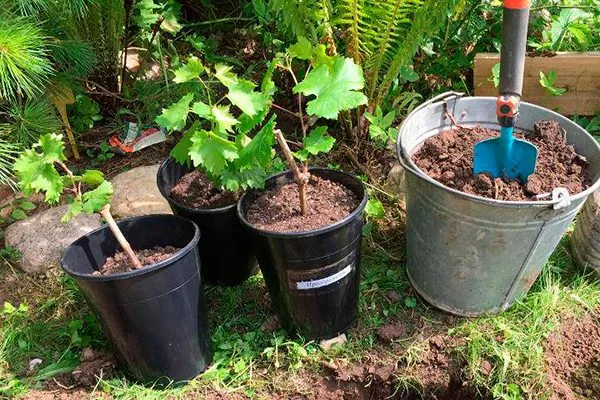
Features of planting Bordeaux grapes:
- Planting dates. In the south of the country, planting is best done in the fall, in October, and in spring in other regions. This minimizes the risk of young seedlings freezing. In spring, planting occurs before the sap begins to flow and the buds begin to open. The air temperature should be at least 15°C, and the soil temperature should be at least 10°C.
- Selecting a site. Grapes are planted on flat ground. Lowlands risk water and cold air accumulation, and they may also lack sufficient light. In the south, grapes can be planted on slopes, but in other regions, this is best avoided as they can be exposed to cold winds.
The site should be shade-free, and the plantings should be at least 3 meters away from shrubs and trees. The best location in the garden is a southern or western exposure. Optimal soils are loose, light, sandy loam. Wet, salty, and loose, sandy soils are strictly contraindicated. - Selection of planting material. Two-year-old seedlings with healthy roots and smooth, defect-free bark are selected for planting.
- Preparation of planting material. Before planting, grape seedlings are soaked in water for 2-3 days. Immediately before planting, they are pruned, leaving only one shoot, and the roots are trimmed by 1 cm with pruning shears and dipped in a clay slurry.
- Site preparation. It's prepared in the fall by deeply plowing the soil. It's recommended to orient the rows north to south to improve light and warmth. The optimal distance between rows is 2.5-3 meters, and between bushes, 2 meters.
- Preparing the pit. Fertilizer is added to the hole before planting. Its dimensions are approximately 80 x 80 x 80 cm. Almost half of the hole is filled with drainage material. A plastic pipe is inserted into the drainage hole so that its top is higher than the hole.
Add 20-30 liters of a soil mixture of compost, manure, and wood ash to the drainage area. Add 200 g of potassium-phosphorus fertilizer and 10-20 liters of water. - The landing process. The seedling is placed in the hole after the water has been absorbed. The roots are positioned south, and the buds are positioned north. The hole is filled with ordinary soil mixed with sand and humus. The top of the hole is mulched with sawdust or hay to retain moisture.
- ✓ The seedling planting depth should be at least 50 cm to ensure stability and proper development of the root system.
- ✓ Using only freshly prepared clay slurry to treat the roots before planting prevents them from drying out and improves rooting.
Features of cultivation
To obtain consistently high yields of high quality, Bordeaux grapes must be planted and grown correctly.
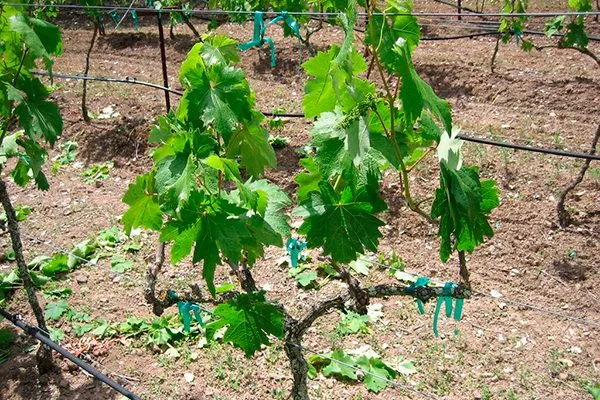
Nuances of growing the Bordeaux variety:
- It's important to regulate the number of bunches on each shoot and on the entire vine. This affects the flavor of the berries and the ripening time of the grapes.
- If 4 to 6 square meters of land are allocated for each bush, then 30 to 35 buds and 22 to 24 fruiting shoots can be left on it.
- Bordeaux grape vines should be pruned moderately—6-8 buds per shoot—or short—3-4 buds per shoot. Pruning is performed in spring and fall.
- In October, the shoots are shortened to 4-6 buds and carefully laid on the ground in the direction of growth.
- The variety tolerates cold well, but in regions with extremely cold winters, insulating the bushes is recommended. Cover the vines with a dry, light covering, leaving vents on the sides for ventilation.
Pest and disease control
The Bordeaux variety is resistant to downy and powdery mildew, mildew, oidium, and gray mold. The plant is susceptible to diseases under severe agricultural practices and extreme growing conditions (rainy and cold).
| Disease | Resistance of the Bordeaux variety | Recommended control measures |
|---|---|---|
| Mildew | Average | Treatment with copper-containing preparations before flowering |
| Oidium | Average | Use of sulphur-containing drugs at the first signs of the disease |
Benefits of Bordeaux
Bordeaux grapes are rich in anthocyanins. These red-violet pigments promote cardiovascular health, stimulate brain function, protect cells from damage, and reduce the risk of cancer, blindness, and memory loss.
Uses of grapes
The variety is used to produce red table and dessert wines, including the famous Cahors. The tasting score for the dessert wine made from Bordeaux grapes is 8.95 points.
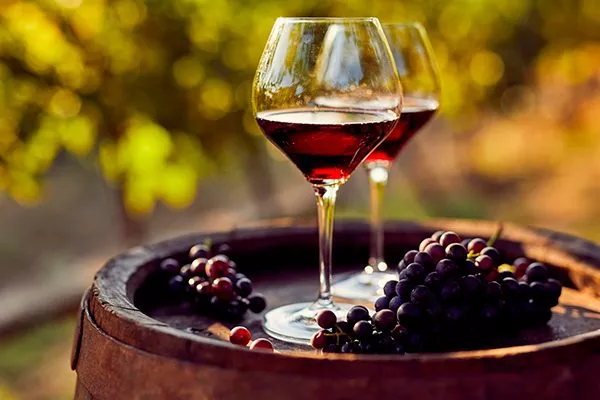
Bordeaux grapes are not only suitable for winemaking; they are quite tasty and can be eaten fresh. They are also used to make juices and compotes, preserves, marmalades, jams, and other desserts.
Bordeaux grapes are the worthy result of the painstaking work of our breeders. This variety preserves the best qualities of a crop cultivated for thousands of years and combines them with agronomic properties suitable for growing grapes in temperate climates.