
Growing grapes in private plots appeals not only to experienced but also to novice gardeners. The Baikonur variety doesn't require overly complex care, but it does have certain agricultural requirements. By following simple cultivation guidelines, you'll enjoy consistent and abundant fruiting every year.
History of selection
First introduced in 2012, thanks to the efforts of the distinguished breeder E. G. Pavlovsky, this hybrid resulted from crossing two popular grape varieties: Talisman and Krasotka, pollinated with the latter's pollen. Both parents imparted their best qualities to the vine.
Cultivation regions
Baikonur adapts well to various climatic conditions and can be successfully grown in the following regions: Northwest, Central, Middle Volga, Volga-Vyatka.
Description of Baikonur grapes
This is an early table variety with berries ripening in 100-115 days. The plants are vigorous and tall. By August, the shoots are fully ripened along their entire length, forming several buds. The flowers are bisexual.
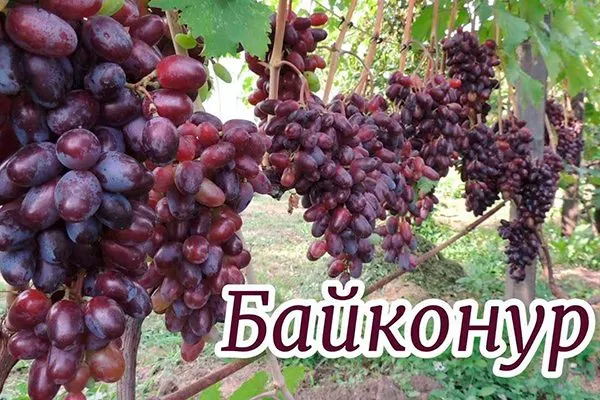
Bush
It is characterized by a consistently vigorous and robust bush with bright green leaves. The flowers are bisexual, and after 3.5 months of their appearance, large, juicy berries form on the shoots. The sturdy stems are densely covered with extensive foliage.
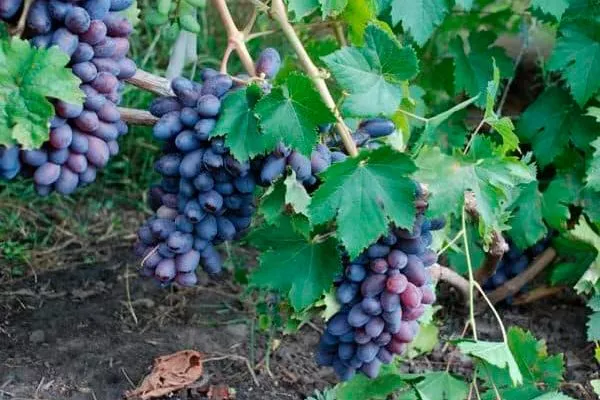
The initial leaf blades acquire a rich green hue and are finely dissected. Subsequent leaves become more refined, and the apical ones acquire a light green tone.
Vine
The vine is strong and vigorous. It matures quickly, and by winter, about 80% of its annual growth has become woody. A three-year-old plant produces shoots up to 4 meters long in a single season. Its powerful root system provides nutrition for numerous shoots and clusters.
Bunch
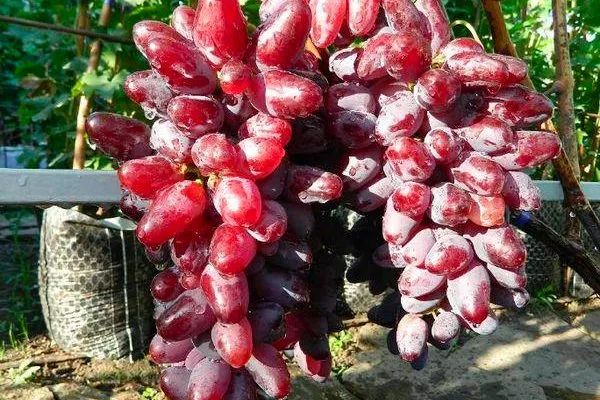
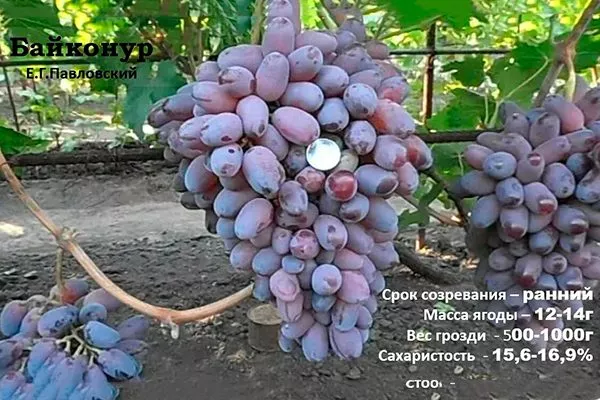
Clusters form on branches of varying order and age. Clusters weigh between 400 and 1000 g and are of medium density.
Berries
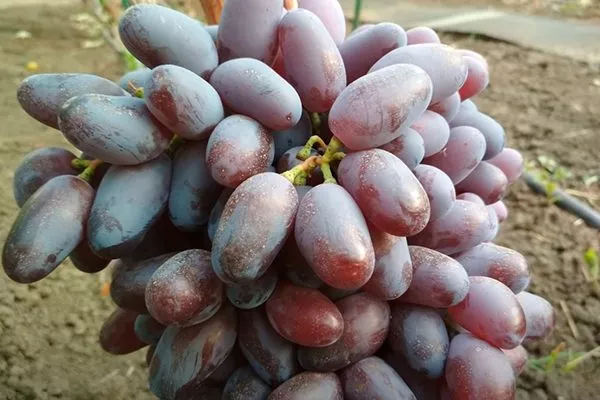
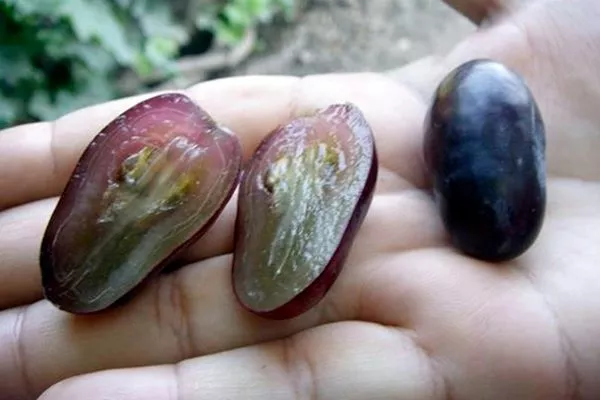
The red-purple berries weigh between 12 and 16 grams and can reach up to 4 cm in length. They are elongated oval in shape. The flesh is firm, containing only 2-3 seeds. The skin is firm but edible. The flavor is sweet with a slight tartness. The aroma is pleasant and distinct.
Caloric content
100 g of black berries contain approximately 72 kcal.
Acidity
Grapes are enriched with a variety of organic acids, including tartaric, malic, citric, and succinic. The total acid content in juice extracted from ripe berries typically does not exceed 8 g per liter.
Benefits and harms
Polyphenols are organic compounds that perform a protective function against the harmful effects of an aggressive environment and have many other beneficial properties:
- Antioxidant action: Polyphenols activate rejuvenation processes in the body, slowing down the aging process.
- Cardioprotective effect: Polyphenols, in particular resveratrol, help strengthen the heart muscle and capillary walls, improve blood composition and restore normal blood circulation.
- Protection against degenerative processes in the nervous system: Resveratrol and proanthocyanidins activate cognitive functions, improve memory and attention, preventing the development of Alzheimer's disease.
- Antitumor action: Anthocyanins, resveratrol, proanthocyanidins and some phenolic acids inhibit the growth of neoplasms, especially on the skin and in the gastrointestinal tract.
- Anti-inflammatory and antibacterial effects: Polyphenols help strengthen the immune system, reduce the risk of contracting infectious diseases and have an antipyretic effect.
Despite its positive properties, dark grapes are undesirable for certain categories of patients. It is recommended to avoid them in cases of obesity, gastric and duodenal ulcers, and enterocolitis.
Taste characteristics
The berries are characterized by a favorable balance of acidity and sugar content. They have a pleasant fruity flavor without astringency and are complemented by a delicate aroma. The skin is soft, medium-thick, tightly enveloping the juicy, jelly-like flesh and blending seamlessly with it.
Commercial qualities
The berries are held securely on the vine thanks to their dense skin, which does not crack even in high humidity or dry conditions. These characteristics ensure long-term storage and excellent transportability. After ripening, the grapes can remain on the vine, accumulating sugar for enhanced flavor.
Scope of application
Baikonur is considered a versatile variety with outstanding flavor characteristics. It's primarily used fresh, but can also be used to make juices and compotes.
The fruity berries form the basis of various dishes, such as salads and desserts. They are also used in preserves and winemaking.
Characteristics of Baikonur grapes
One of its distinctive features is its exceptional flavor, resistant to adverse weather conditions. Even in rainy weather, the berries retain their firmness without becoming watery. These high qualities make the grapes popular not only for home consumption.
Drought resistance, frost resistance
It has high climate requirements, withstanding maximum winter temperatures of -23°C. Regardless of the region where the crop is grown, it must be provided with winter shelter.
Drought tolerance is acceptable, but regular watering is essential during dry summers. The maximum permissible temperature in summer ranges from 35 to 50°C.
Resistance to diseases and pests
It is characterized by its low maintenance and high resistance to certain diseases, including mildew, gray mold, and oidium. Potential problems include attacks by powdery mildew and itch mites. Wasps can damage the presentation of the bunches.
Ripening time and yield
It exhibits continuous and full flowering. Fruit ripens on the 105th day of the growing season, and under favorable weather conditions, the first fruits can be enjoyed as early as the end of July.
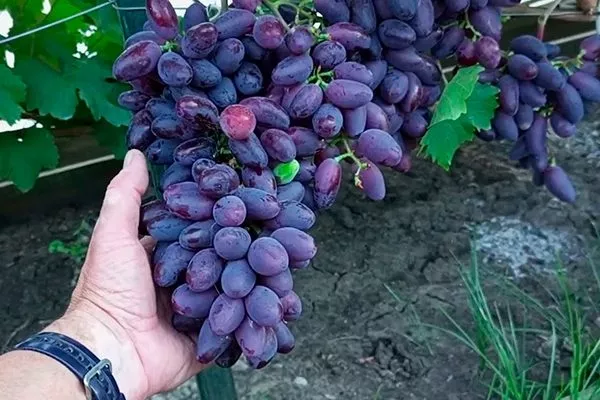
Thanks to excellent frost resistance, harvesting continues until late autumn. The yield is high, with clusters weighing between 500 and 700 g. A single bush typically yields up to 40 kg of sweet berries.
Advantages and disadvantages
The characteristics are impressive, as evidenced by gardeners' reviews and photos of appetizing bunches. Baikonur has many advantages:
Comparison with analogues
It stands out among other early black grape varieties thanks to its impressively heavy bunches, high sugar content, and unique flavor. A comparison of the varieties' characteristics is presented in the table:
| Sign | Baikonur | Gala | Jupiter | Codryanka |
| Ripening period | 110-115 days | 110-115 days | 110-120 days | 110-120 days |
| Frost resistance | -23°C | -22°C | -29°C | -24°C |
| Productivity | 20-30 kg | Up to 23 kg | 20-30 kg | Up to 50 kg |
| Clusters | 0.7-3 kg | 0.5-1.5 kg | 300-500 g | 400 g - 1.5 kg |
| Taste | Fruity notes | Sweet and sour, simple | Notes of strawberry and nutmeg | Harmonious |
| Color | Dark purple | Dark blue | Dark purple | Dark purple |
| Disease resistance | Average | Above average | Above average | Above average |
| Shelf life | 3 months | 3 months | 3 months | 3 months |
| Sugar accumulation | 19-20% | 16.50% | 21% | 18-19% |
| Acidity | 6-7 g/l | 6-8 g/l | 5-6 g/l | 6-7 g/l |
Methods of reproduction
Propagation is possible using any vegetative method. There are three ways to increase the number of seedlings:
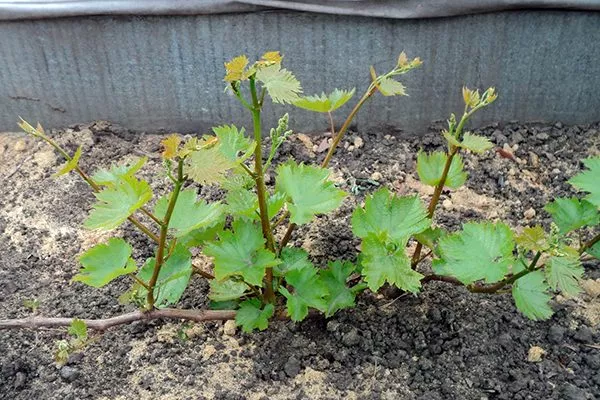
- Cuttings. In spring, select a strong, healthy shoot from a mature bush. Divide it into sections approximately 30-35 cm long. Each cutting should contain buds or green leaves. Treat the lower end with a growth stimulant and root in fertile soil.
In the fall, transfer the rooted seedling to open ground and insulate it well before winter, or postpone planting until spring.

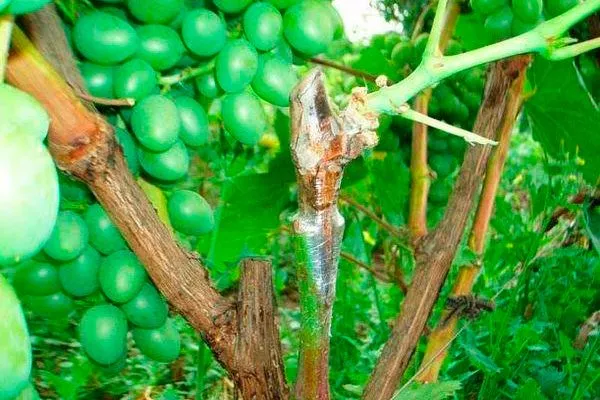
- By vaccination. To graft onto the rootstock of an old bush, use the same cuttings. Split the bark of the bush, insert the prepared cutting into the hole, and secure it with special tape or materials.
- By layering. In late spring, select the lower, strong shoots from a mature bush and bend them to the ground. Cover them with fertile soil, leaving the tip of the shoot exposed. In the fall, the shoot will develop its own roots. Cut the seedling from the mother bush and transfer it to a separate planting hole.
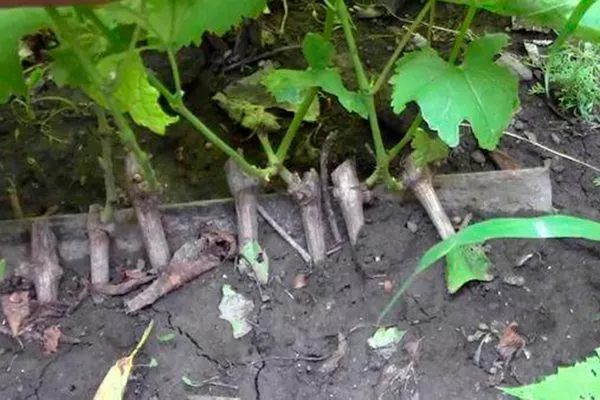
- ✓ The optimal length of the cutting should be at least 30-35 cm with 3-4 healthy buds.
- ✓ The lower cut of the cutting should be made at an angle of 45 degrees to increase the area for moisture absorption.
Propagation is available through a variety of methods, all of which provide a high success rate.
Planting grapes in Baikonur
The health and productivity of the crop depend on the correct selection of seedlings and competent planting. Perform the procedure on small, well-lit slopes, protected from northerly winds and drafts.
Follow the recommendations:
- Deadlines. Plant in spring or fall. While cuttings root successfully in spring, they become more susceptible to pests, which can impact their survival.
Autumn planting, from September to October, has advantages: moist soil and infrequent watering. Baikonur develops more quickly in autumn, but the chances of cuttings taking root are significantly reduced. - Selecting a location. Consider sunlight exposure. To prevent berries from burning from direct sunlight, it's recommended to protect them from northerly winds. A southwest-facing planting site is preferred, and walls of buildings, large trees, and fences provide wind protection.
- Preparing the soil. This is a key stage of planting. The variety prefers light, fertile soil that provides sufficient moisture and nutrients for the roots. Soil improvement methods include adding peat or manure to sandy soil.
If the area has a higher clay content, mix the soil with peat, manure, and sand. Creating a drainage system using gravel, expanded clay, or brick fragments will ensure optimal water supply. - Selection and preparation of seedlings. When selecting and preparing seedlings, consider certain criteria. Choose cuttings at least 20 cm long, approximately 1 cm in diameter, and containing 5 to 7 buds.
Graft the vine by cutting it from the central vine of the parent vine. The cut should be smooth, without dents, and the petioles should be free of visible spots. The ideal age for grafting is considered to be 2-3 years.
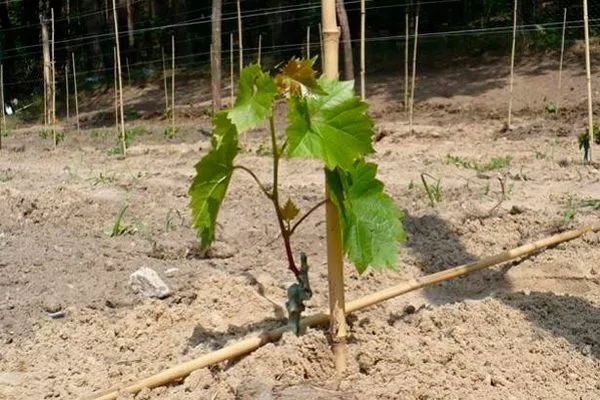
Before planting, treat the cuttings with sulfur dioxide or methyl bromide. Store the seedlings in a cool place at a temperature of 5-7°C, preventing moisture loss from the trunks. - Landing algorithm. Prepare holes 60-80 cm deep. Add drainage and fertile soil, and center the seedling, spreading its roots out. Cover with soil and compact. Water generously and cover with a layer of mulch.
- ✓ No visible damage to the bark and root system.
- ✓ The presence of at least 5-7 buds on the cutting.
When planting a vineyard consisting of several plants, space the seedlings at least 3 m apart, with a distance of about 4 m between rows. This will ensure the vines develop well and receive maximum space.
Caring for grapes in Baikonur
Careful and professional care is essential for the health, fruiting, and abundant harvest. Carefully tend to your crop:
- Watering. Mature plants require 3-4 waterings throughout the growing season, while young plants require more frequent watering – 2-3 times per month. Pay particular attention to watering before flowering and during fruit formation. In late autumn, apply up to 70 liters of water per plant.
- Top dressing. In the spring, add nitrogen-containing organic matter, and potassium and phosphorus before flowering and during fruit formation. After harvest, add organic matter and a mineral complex to the soil.
- Trimming. Perform sanitary pruning at the beginning and end of the growing season, removing old, weak, and broken branches. Adjust the load on the bushes annually.
- Mulching. Loosen the soil, weed, and mulch immediately after watering and fertilizing, providing the roots with oxygen, moisture, and essential vitamins.
- Garter. Tying the vine to the supporting structure should be done in early spring before the fruit buds open, using soft, elastic materials.
- Protecting crops from birds and insects. Use reflective objects and sound devices to scare away birds, and use chemicals and newspaper shelters to control insects.
- Preparing for winter. Water the bushes generously, mulch the trunk circle with a thick layer of humus or compost and cover with spruce branches.
- Rodent control. Use various means, such as spruce branches, chemicals and treated grains placed in bait under the cover of bushes.
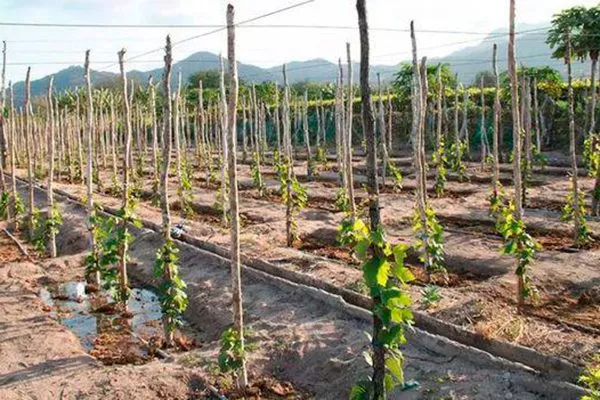
Agronomic practices play a key role in ensuring crop health and productivity, influencing crop quality. Regular procedures help maintain optimal conditions for growth and development.
Harvesting and storage
The berries ripen unevenly, necessitating a staggered harvest. The first bunches are picked in mid-August, but the main harvest reaches full maturity by early September.
To extend shelf life, store ripe grapes in the refrigerator or special chambers for up to three months; they will not lose their taste or appearance.
Diseases and pests
Baikonur exhibits high resistance to various diseases. Despite its strong immunity, preventative measures are recommended, drawing on the experience of gardeners who have encountered various diseases and pests:
- Mildew (mold disease). A fungal infection that manifests as brownish spots and a grayish coating on various parts of the plant. For treatment and prevention, use sulfur-based products.
- Powdery mildew. A whitish coating on the above-ground parts of the plant, causing fruit drop and berry rot. Use fungicides and sulfur-containing products.
- Gray rot. A fungal disease that can spread quickly, destroying crops and damaging plant health. It appears as spots and a gray coating. Use biological and chemical pesticides for treatment and prevention.
- Anthracnose. A fungal infection affecting the green parts of the bush and grape clusters. Gray spots appear on the leaves and shoots. Pruning and destruction of affected areas, as well as the use of strong fungicides, help control the disease.
- Pests. Phylloxera is a dangerous pest that attacks both above-ground and underground plant parts. Control involves the use of professional pesticides.
Gardeners' reviews of Baikonur grapes
Baikonur has successfully maintained its leading position for several years, enjoying popularity among gardeners and winemakers. This choice is due to the variety's positive characteristics, including its resistance to cold climates and diseases. The pleasure of tending the grape vines is rewarded with a bountiful harvest.