
Augustine grapes attract gardeners with their early ripening and good productivity. The variety is disease and cold-resistant, making it an excellent choice for a variety of climates. Large, dense-skinned berries retain freshness for a long time, and a flexible harvesting period allows for convenient harvest planning.
General information about the variety
Augustine is one of the most popular and easy-to-grow grape varieties. Experienced gardeners successfully grow it without any hassle, while beginners often have doubts: is its price justified and will its care be too difficult? It's worth carefully weighing all the pros and cons of this variety.
Story
The Augustin variety first became known in the 1980s thanks to breeders at the Bulgarian Institute of Viticulture and Winemaking in Pleven. The hybrid was developed by crossing the Pleven and Villard Blanc varieties. It became available to the general public much later.
Until 1999, the variety underwent state testing in Russia, and in 2002 it was officially entered into the Rosreestr. It was recommended for cultivation in the North Caucasus regions. The variety is also known by an alternative name, Phenomenon.
Bushes
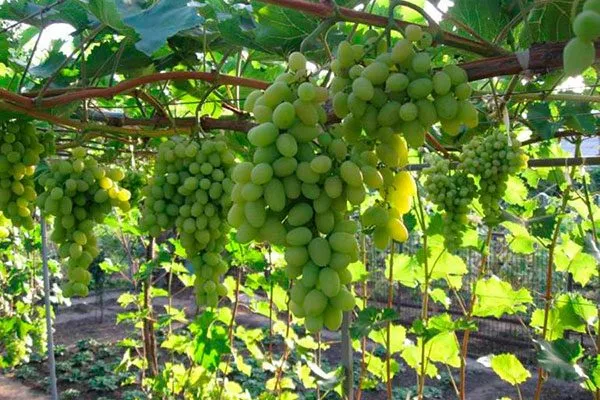
The plant is characterized by rapid growth and vigor, making it often used for landscaping arches and arbors—it easily twines around any support. Key characteristics:
- The variety's flowers are bisexual, ensuring reliable pollination even in unfavorable weather conditions. Furthermore, it can serve as a pollinator for other varieties planted nearby.
- The shoots ripen well, the vines are colored reddish-brown with characteristic spots.
- The leaves are round, slightly dissected, and richly dark green.
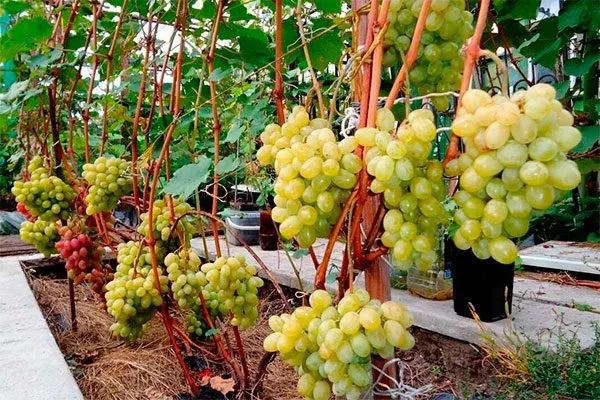
If the grapes are overloaded with fruit, ripening of the vines may be delayed for a week or more, so it is recommended to thin the bunches by removing smaller ovaries.
Clusters
They have a conical shape and weigh on average about 400 g. The berries are large, with visible seeds, and can crack if left damp for a long time.
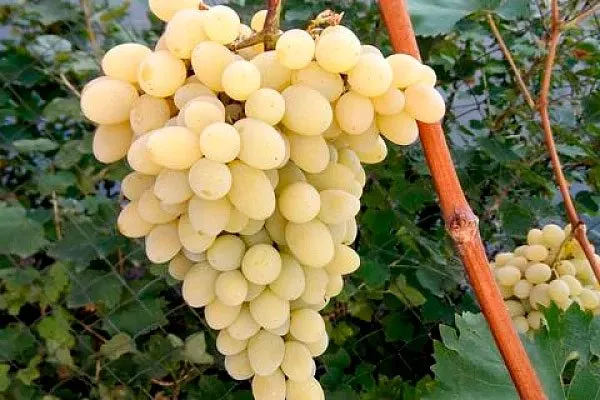
Ripe bunches look spectacular: they acquire a beautiful amber hue and seem to glow in the sun. The thick skin protects the berries well from wasps, yet is barely noticeable when eaten.
Fruits, their taste and uses
Augustine is characterized by juicy flesh and a harmonious balance of sweetness and slight tartness. Features and distinctive characteristics:
- This variety has a pleasant aroma and is rich in nutrients. Sugar content reaches 17.5 g per 100 cm3, of which 67.5% is fructose and 32.5% is glucose. It also contains vitamin C, pectin, free amino acids, and valuable minerals.
- Ripe berries weigh from 6 to 10 g. The variety's taste received a high rating – 8.2 points out of a possible 10.
- Grapes are primarily used as table grapes. They are not considered a good choice for juice or wine production. However, the bunches are well-suited for transportation and retain their marketable appearance for a long time, making them attractive for sale in supermarkets and markets, including exports outside the growing region.
Drought resistance, frost resistance
This variety is renowned for its relatively good frost resistance—the plant can tolerate temperatures as low as -26°C for short periods. However, in regions with harsh winters, the bush may suffer without reliable shelter, so protection during the cold season is essential.
When growing, it is important to consider the crop's sensitivity to sudden temperature fluctuations—such changes can negatively impact the plant's productivity and overall health.
The variety has average drought tolerance. Although the plant can tolerate short periods without rain, prolonged droughts require regular watering to maintain the health of the vines and the quality of the grapes.
Productivity and fruiting
Augustin is an early-ripening variety, ripening in just under four months. In southern regions, the first ripe clusters appear by the end of August, sometimes even earlier. The berries can remain on the bush for up to two weeks without losing their flavor or attractive appearance.
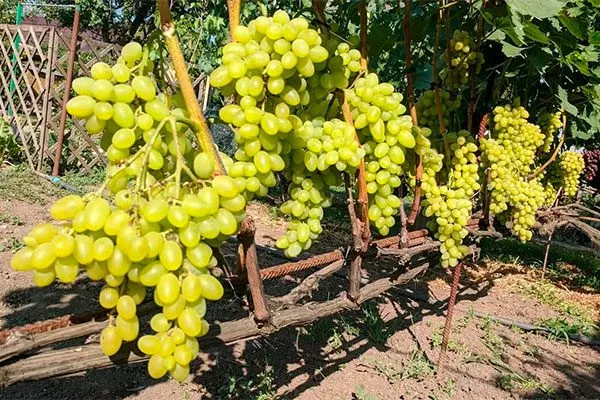
In cooler climates, full ripening occurs in September. Thanks to their good shelf life, the grapes can be harvested gradually.
The variety produces its first small harvest in the second year after planting, and full fruiting begins in the fourth year. Under favorable conditions, a single mature bush can yield up to 30 kg of berries.
Resistance to diseases and pests
The crop is resilient to extreme weather conditions, but is vulnerable to a number of diseases and insects. Experts estimate its infection resistance to be around 2.5-3 points on a five-point scale.
The most dangerous for Augustine are:
- gray mold;
- phylloxera;
- oidium;
- mildew;
- nail gun;
- birds.
To protect plants from fungal diseases and parasites, use preventative and curative treatments: Bordeaux mixture, copper or iron sulfate, slaked lime and insecticides.
Methods of reproduction
There are several options for increasing the number of grapevines at home. Choose the most suitable propagation method:
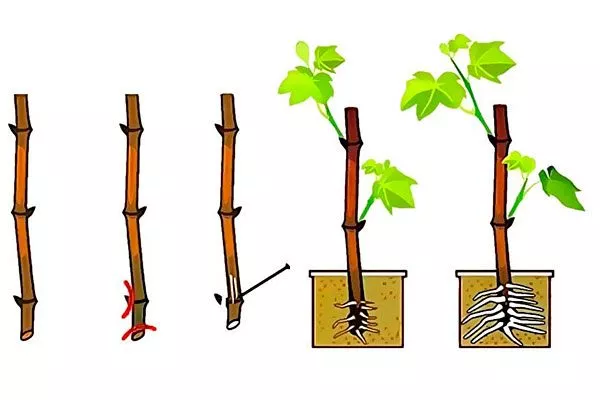
- Cuttings. Prepare cuttings in the fall, choosing one-year-old shoots up to 1 cm in diameter with at least four buds. Tie them into bundles, wrap them in cloth, and store them in the cellar. Pre-treat them with a solution of potassium permanganate or copper sulfate to protect them from mold.
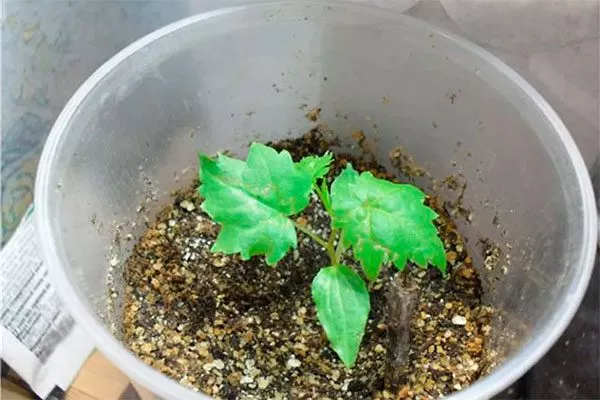
In spring, in March, soak the cuttings for 48 hours (you can add honey to stimulate root formation), then plant them in a nutritious substrate of humus, sand and garden soil.
To create a greenhouse effect, place a plastic bottle on top. By May, the rooted seedlings are ready for transplanting to their permanent location.

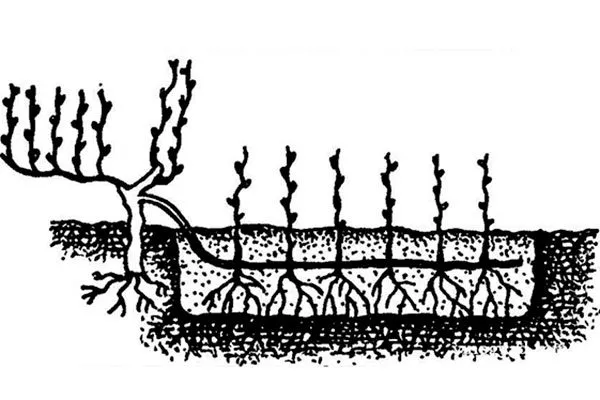
- By layering. This is a simple and effective method. Select a healthy shoot from the base of the bush, bend it to the ground, bury it, and secure it. Moisten the rooting site and mulch it. After two seasons, separate the shoot from the mother plant and replant.
- Seeds. It's used extremely rarely. Obtaining a fully developed seedling takes a long time, and fruiting only begins 5-6 years after planting. Furthermore, varietal characteristics may not be preserved.
Features of cultivation and care
The Augustine grape is easy to care for and unpretentious, making it an excellent choice even for novice gardeners. Proper cultivation is key to successful cultivation—it largely determines the future harvest and the health of the plant.
Planting dates
The optimal time for planting Augustine grapes is considered to be spring and fall, while summer is not recommended. Follow these recommendations:
- In colder regions, begin preparing cuttings in late August and plant them in their permanent locations in September or October. In the fall, plant only those plants with well-developed vines and a well-developed root system—the shoot should have at least 8-10 buds.
- If the vine is still green and the roots are not fully formed, it is better to leave the seedlings until spring.
- Spring planting will help the vineyard establish itself more quickly and prepare it for winter frosts. Planting should begin when the soil warms to 10-12°C, which usually occurs in late April.
Choosing a suitable location
For Augustine grapes to produce a good harvest and reach their full potential, they require fertile, light soil with a high nutrient content. Black soil or loamy soil are ideal for planting.
To increase the sugar content of the berries, plant the bushes in the sunniest areas. Ideally, plant fruit trees or shrubs nearby on the north side to protect the crop from cold winds and drafts.
Preparing for landing
Purchase Augustine grape seedlings from nurseries or specialty stores, where they are already prepared for planting. You can also take cuttings yourself or grow them from seeds, although in the latter case, fruiting will only begin after 4-5 years.
Basic requirements:
- Before planting, carefully inspect the quality of the planting material: the trees should not crack when bent, and there should be no damage. Each bush should have several buds and a well-developed root system.
- Immediately before planting, soak the roots for 24 hours in a growth stimulator to speed up rooting.
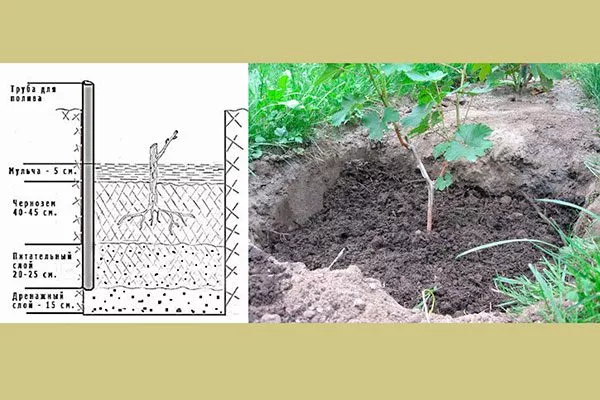
- Start cultivating the plot well in advance. If spring planting is planned, it's best to prepare the holes and soil in the fall. If this isn't possible, dig the holes 2-3 weeks before planting. For a good harvest, the depth and width should be at least 80 cm.
- Carefully set aside the top fertile layer, 15-20 cm thick, and later mix it with 20 kg of humus, compost, and mineral fertilizers to obtain a nutritious soil mixture for planting.
Algorithm for planting seedlings
Cultivating grapes isn't particularly difficult, but it does require certain requirements. Planting grapes involves several stages:
- Place a drainage layer of crushed stone or gravel at least 20 cm high at the bottom of the hole.
- Add fertile soil with fertilizer on top in a layer of 30-35 cm.
- Carefully place the seedling in the center of the hole on the small mound that has been formed.
- Fill the remaining space with nutrient mixture, with the root collar slightly raised above ground level.
- Compact the soil and mulch the tree trunk area.
- Moisten with warm water, water again after a week.
- To prevent the vines from breaking in the wind, install supports for young plants immediately after planting.
Watering
The Augustin variety is resistant to short-term droughts, but prolonged lack of moisture negatively affects the quality of the harvest.
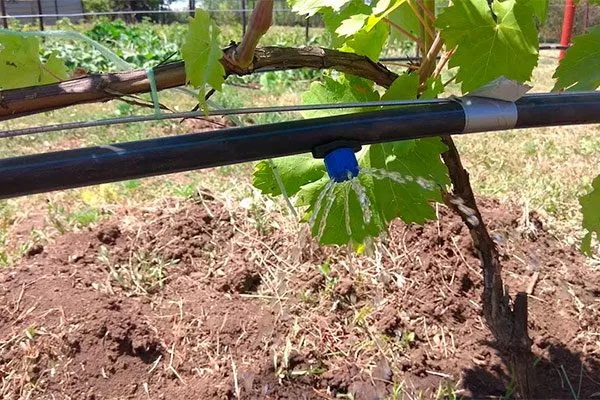
The frequency and volume of irrigation depend on several factors:
- age of the bush – young shoots need more moisture than adult plants;
- soil type – grapes grow worse on swampy or over-dried soils;
- vegetation phases – The greatest need for moisture occurs during the period of active growth and berry formation.
To retain moisture in the soil for longer, apply mulch. Reduce watering during the ripening period, as overwatering can cause the fruit to crack.
How to feed the Augustine grapes?
The plant requires only three feedings per season: at the beginning of the growing season and a few weeks before and after flowering. For spring feeding, use the following solution:
- 10 liters of water;
- 20 g Superphosphate;
- 10 g each of ammonium nitrate and potassium salt.
Water the bushes with the mixture at a distance of 30-35 cm from the base.
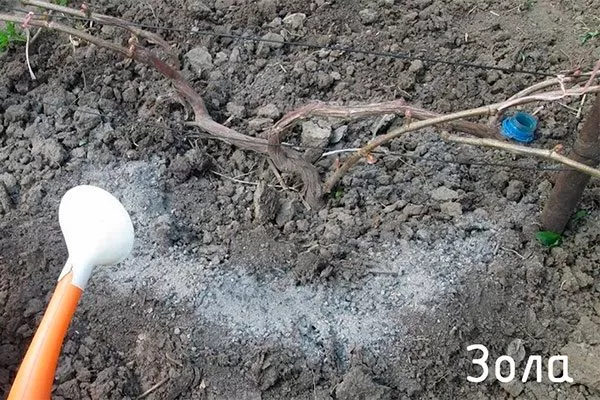
In the fall, use nutrient mixtures with a predominance of potassium for feeding, for example:
- 20 g Superphosphate;
- 10 g potassium salt;
- 1 g boric acid;
- 1 g potassium iodide;
- 2 g zinc sulfate;
- 2 g manganese sulfate.
You can prepare this composition yourself or replace it with ready-made complex fertilizers, for example, Kemira or Florovit.
How to trim correctly
Vineyards require regular sanitary and decorative pruning to maintain high yields. When growing the Augustine variety on a trellis, follow this pruning pattern:
- In the second year after planting, leave the 2 strongest shoots, and in the fall, shorten them so that there are 3-4 buds.
- By the third year, there should be four vines, which should be lightly pruned in the fall. During this period, form a fruiting shoot and a replacement shoot.
- In subsequent years, leave a new arrow and shoot on the replacement branch, removing the old ones.
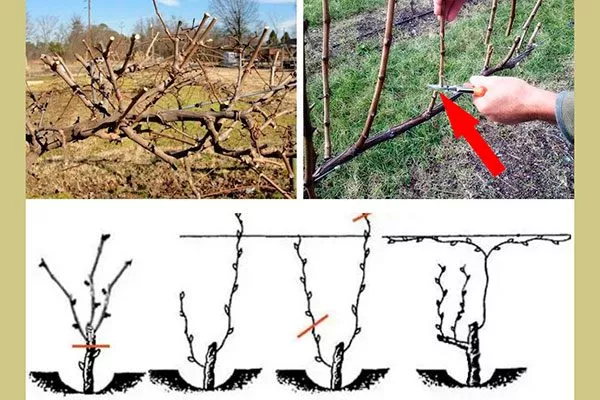
This variety is perfect for creating a living arch—a true garden decoration. To ensure the vines quickly wrap around the frame, it's important to prune it correctly:
- in the first year, prune the bush, leaving two vines with 12-14 buds on each;
- Monitor the growth of the sleeves annually – it should not exceed 50 cm;
- On each sleeve, form more than 5 shoots, leaving 2-4 buds.
Pinch out side shoots periodically throughout the summer. Leave no more than 5-6 leaves on each bunch, and remove any side shoots completely. At the end of August, prune the tops of the shoots—this promotes faster ripening of the grapes.
Standardization
This is an important agricultural practice that helps maintain the high quality of the harvest and ensure the vines mature fully. The crop is characterized by high yields and a tendency to overgrow, especially under favorable conditions.
If rationing is not carried out, the plant begins to waste energy on an excessive number of ovaries, which leads to a deterioration in the taste of the berries, a delay in the ripening of the fruit, and a weakening of the bush.
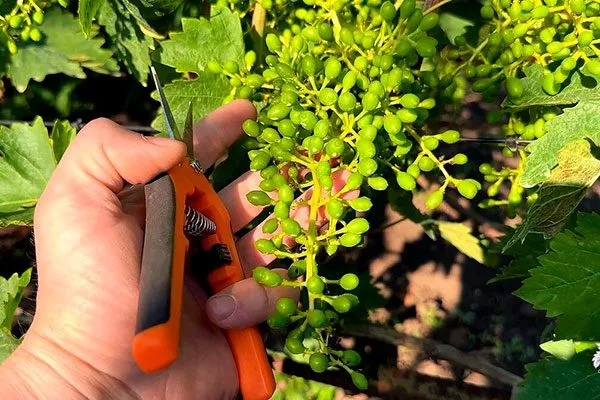
Key recommendations:
- After flowering, carefully inspect the clusters and remove excess ovaries, leaving no more than one, maximum two full clusters on each shoot.
- Give preference to large and well-formed ovaries, and remove small and weak ones without regret.
- Partially thin out clusters that are too dense, especially if wet weather is expected, to reduce the risk of berry cracking.
Shelter for the winter
Wrap the vines thoroughly to protect them from frost. They can withstand short-term temperature drops to -26°C. In southern regions, grapes can be grown without additional winter protection.
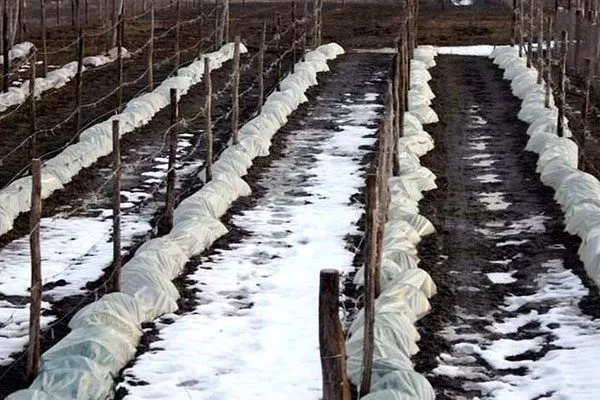
When covering, it is important to create a warm and dry environment for the crop – moisture must not be allowed to get in, otherwise the bush may rot and die under the influence of cold.
For insulation, use the following materials:
- polyethylene;
- spruce branches;
- sackcloth.
Carefully twist the vines and lay them in a pre-prepared trench. Place spruce branches or straw on top, then cover with burlap and plastic.
Diseases and pests
The Augustine grape variety is rarely affected by diseases and pests. The vine is renowned for its good resistance to common diseases such as mildew and oidium. However, if agricultural practices are not followed or unfavorable growing conditions are present, damage to the vines and fruit may occur.
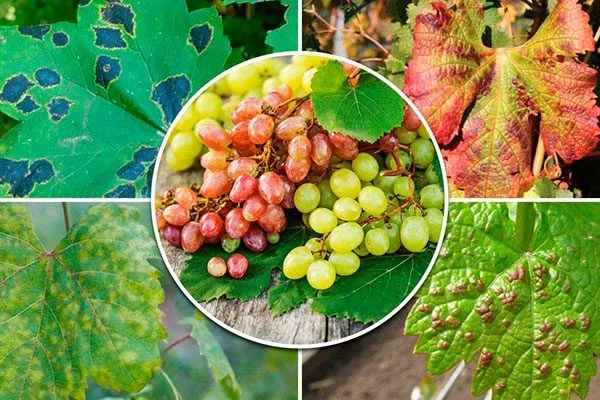
To protect your vineyard, follow these recommendations:
- plant seedlings in well-lit areas protected from drafts;
- observe the watering regime;
- In early spring, carry out preventative treatment with fungicides;
- fertilize plants regularly, primarily with mineral substances;
- avoid dense plantings;
- Cover the vines carefully for the winter to protect them from frost.
Harvesting and storage
Augustine is a table grape variety, and the harvest is gradual as the bunches ripen. Harvest in dry, clear weather using sharp pruning shears. Once ripe, the berries can remain on the vine for up to two weeks without losing quality, thanks to their thick skin.
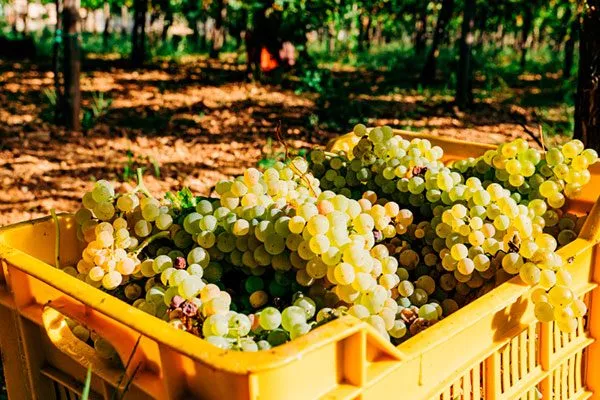
This variety doesn't have a good shelf life: the berries lose their pleasant flavor when stored for long periods. Refrigerated, grapes stay fresh for about two months, while frozen, they stay fresh for considerably longer.
Pros and cons
Reviews
Augustine combines reliability and excellent flavor. It is suitable for both fresh consumption and processing. Frost resistance and high pest resistance make it easy to care for, and its ability to be transported over long distances makes it suitable for commercial purposes. Proper care ensures a consistent, high-quality harvest every year.