
Avatar grapes continue to win the hearts of gardeners with their unique flavor and characteristics. Known for their long clusters and richly colored berries, this variety has become popular in various parts of the world, including Russia. Proper care is essential to ensure the best possible harvest. Also known as Black Sapphire.
History of selection
Researchers at the International Fruit Genetics breeding station in California (USA) developed this variety. At the beginning of this century, experts conducted manual hybridization between the C22-121 and Beita Mouni varieties.
The culling of weak bushes and propagation of Avatar by cuttings were successfully completed in 2006. Active introduction into American agriculture began in 2013.
Description of the variety
In some countries, the hybrid has become known as "Sweet Sapphire" or "Black Sapphire." Another common name for it is "Moon Drops."
Bushes
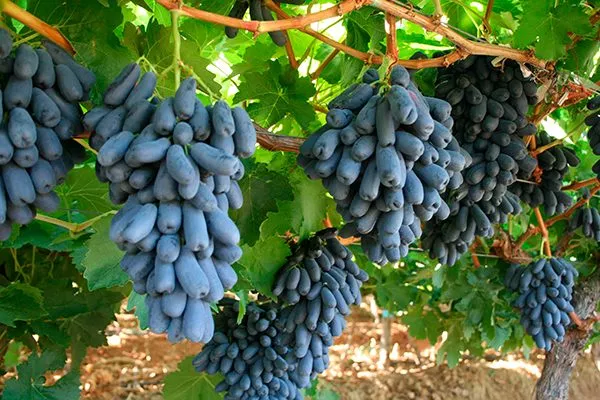
The bush is characterized by medium vigor. The flowers are bisexual. The internodes are short, measuring only 10.6 cm. The plant produces few side shoots, and the vines do not mature well.
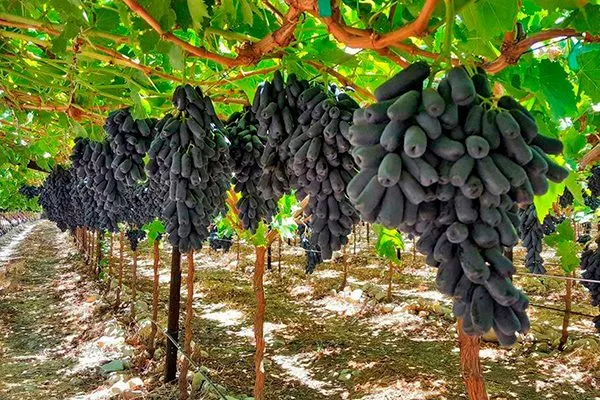
- ✓ The berries have a unique shape with a dimple at the end, which is a distinctive feature of the variety.
- ✓ The vine requires additional care due to poor ripening.
Berries
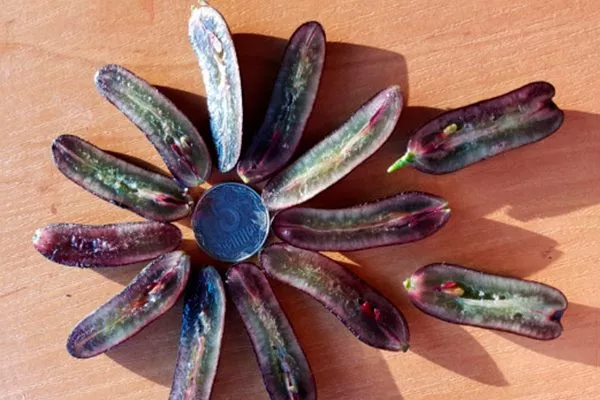
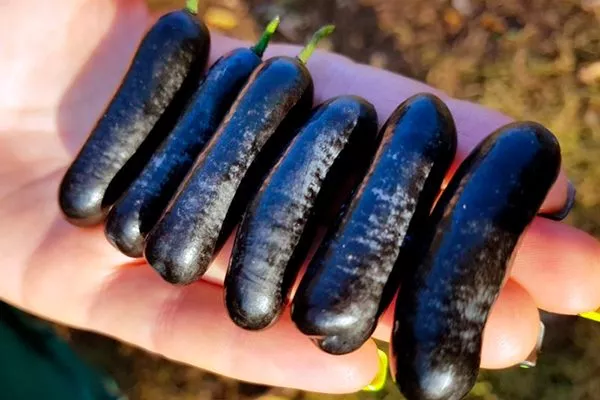
The fruits are a rich, dark blue, almost black, color. They are elongated, with a dimple at the tip. The skin is firm and seedless. The flesh is firm and slightly crunchy.
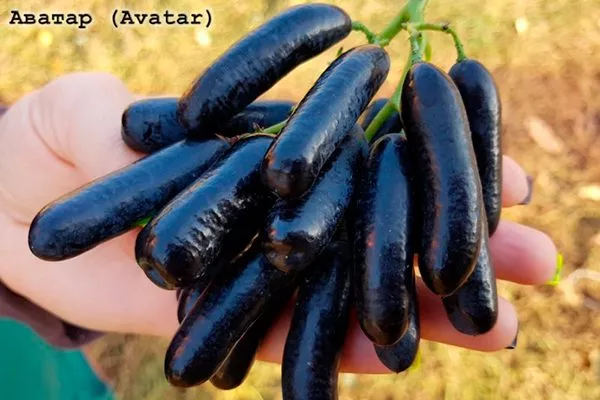
The berries are cylindrical and elongated, with an average weight of 10 g. Ripe fruits reach a length of 45-50 mm and a diameter of 18-20 mm.
Clusters
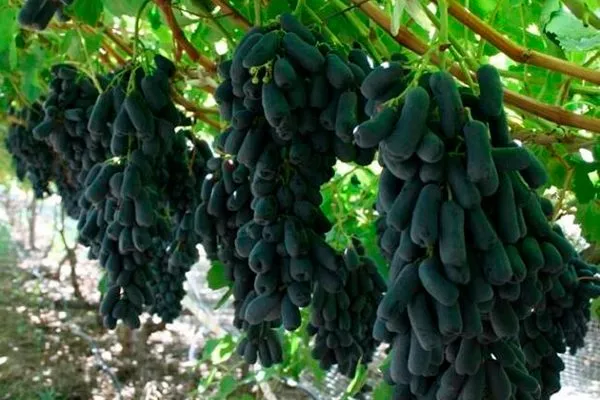
The cluster, excluding the peduncle, measures up to 29 cm in length and slightly less in width. The average cluster weight is 0.7-1 kg. The cluster does not require thinning, as the fruits are neatly arranged on a dense comb.
Characteristics
Ripe clusters are very attractive, with berries of uniform shape and length. Despite average yields, this variety produces a consistent harvest when cultivated according to proper agricultural practices.
Taste qualities
The grapes are juicy and moderately soft, with a sweet, refreshing flavor. The acidity is 3.88 g/dm3, and the sugar content reaches 19.4%.
Methods of application
Avatar is excellent for fresh eating and can be refrigerated. The berries are used to make juice, compote, and wine. This versatile variety offers a variety of culinary uses.
Growing regions and frost resistance
Grapes are successfully grown not only in the United States but also in various countries around the world, including South Korea, Africa, Asia, and Europe. In Russia and Ukraine, winegrowers began cultivating them almost 10 years ago and have recognized their positive characteristics.
The hybrid's frost resistance is limited, and in regions with winters where temperatures drop below -21ᵒC, shelter must be provided.
Disease resistance
It is characterized by insufficient resistance to most diseases, including mildew, powdery mildew, white rot, and anthracnose. Grapevines may be susceptible to harmful insects such as spider mites, aphids, and others.
Drought resistance
It is drought-resistant but responds favorably to irrigation, especially in regions with insufficient rainfall. Supplemental irrigation is required if annual rainfall is less than 300 mm.
Ripening period
The bushes begin to bloom in May. In southern regions, the variety is characterized by mid-early ripening of the bunches—approximately 3.5 months pass from bud break to harvesting of the ripe bunches.
In warmer regions, ripe grapes are typically consumed starting in mid-August. In northern regions, grapes typically don't ripen until late August.
Productivity
Avatar produces fruit consistently and annually. Under Californian cultivation conditions, yields are typically quite high. When grown in Russia, yields vary significantly depending on the specific region and climate.
Pros and cons of Avatar
Before planting a new variety in your garden, it's important to consider its pros and cons. This variety has many positive qualities, but there are some negative characteristics that are important to consider.
Advantages
The excellent flavor and vibrant fruit appearance make this grape increasingly popular among gardeners and consumers. Winegrowers highly value this variety for the following advantages:
Another positive feature of Black Sapphire is its ability to be stored for a long time.
Flaws
The crop has some disadvantages. These include poor frost resistance, high seedling cost, mid-late ripening, low disease resistance, and insufficient vine maturity.
Growing and care
The Black Sapphire variety was developed in California, but given the right conditions and careful site selection, it can also produce successfully in Russian climates. Proper care is essential.
- ✓ The optimal soil acidity for Avatar grapes should be within 6.0-6.5 pH.
- ✓ The distance between rows should be at least 3 m to ensure sufficient ventilation and lighting.
Choosing a location
Place seedlings on the south side of buildings or fences to protect them from northerly winds, create a sunscreen, and act as a natural heat sink. Groundwater should be at least 2 meters above the ground. Avoid planting shrubs in the shade of trees or close to them to avoid competition with tree roots for nutrients.
Plant in fall or spring?
There's virtually no difference. Seedlings with closed root systems can be planted even in summer. When planting in spring, take your time; wait until the soil has warmed up thoroughly and the risk of frost has passed. In autumn, plant a few weeks before the first frost.
Planting technology
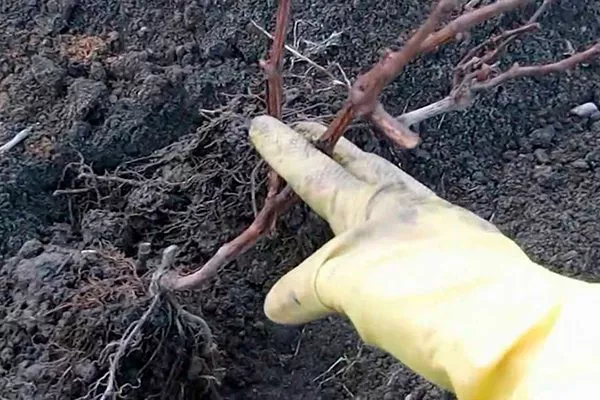
Prepare planting holes, allowing for a 2.5 m distance between bushes and rows. The dimensions are 60 x 60 x 60 cm. To prepare the nutrient-rich soil, use a mixture of two buckets of rotted manure, soil, sand, a liter jar of ash, and a faceted glass of superphosphate. Water with 30 liters of water after planting.
Watering
Avoid watering grapes after August 1st. Water a week before and after flowering, and also before the berries turn color, and in late fall to ensure ample moisture replenishment. Water young seedlings approximately once a week with 10-20 liters of water, skipping irrigation during rainy or cool weather.
Top dressing
Follow this principle: use nitrogen fertilizers in the first half of the season, and focus on potassium and phosphorus in the second half. The nitrogen fertilizing schedule includes: late May, mid-June, and late June.
To feed, dissolve 10 kg of mullein in 10 liters of water and mix thoroughly. Form a 10 cm high border of soil around the bushes, then apply the diluted mullein, adding approximately 2 kg to the water.
Starting August 1st, pay special attention to potassium, given the vines' lack of maturity. Options include applying ash (1 kg per 10 liters of water) or potassium monophosphate at a concentration of 30-50 g per 10 liters of water for the first feeding, 50-60 g for the second, and then regularly every 10-14 days.
Green operations
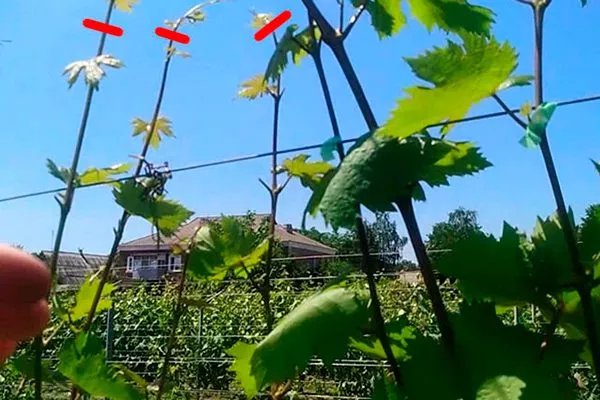
This includes removing side shoots, pinching (removing the tops), and standardizing the yield and shoots. Pinching occurs when the shoots reach the top wire of the trellis, and standardizing the clusters after flowering, leaving one cluster per shoot.
Loosening, mulching, weed control
Loosen the soil the day after watering. Use sawdust, fallen leaves, straw, and other materials for mulching. They help reduce watering and loosening and suppress weed growth.
Pest and disease control
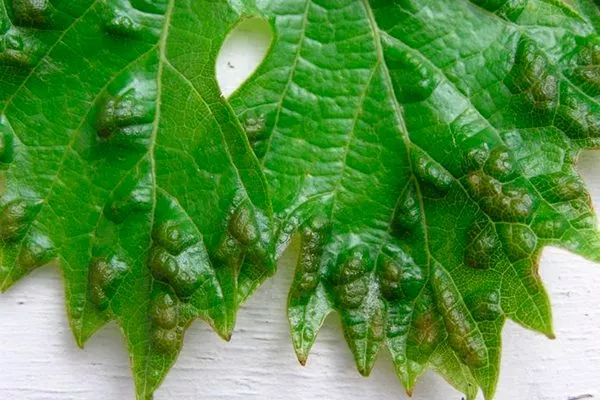
Preventative measures are required. Apply treatments in three stages: when each shoot has 4-5 leaves, a week before flowering, and at the pea stage of grapevines. Use products such as Bordeaux mixture, Falcon, Ridomil Gold, Strobi, Topaz, and others according to the instructions.
Shaping, pruning
In the first year, grow one shoot from the seedling, removing all side shoots, and in the fall, prune it back to normal growth, leaving three buds. In the second year, shoots begin to develop from the buds. At this stage, remove side shoots throughout the season and prune them again in the fall. Adjust the length of the shoots so they don't overlap.
In the third year, place the grown sleeves horizontally on the bottom wire (vertical shoots will grow on them and the first harvest will be formed), grow several new sleeves from the head of the bush.
Harvesting and storage
Grapes are harvested as they ripen, carefully stacking them in single layers in crates. The fruit transports well without losing its flavor or appearance. For long-term storage, place the berries in the refrigerator or another cool place, where they will keep for at least three months.
Preparing for winter
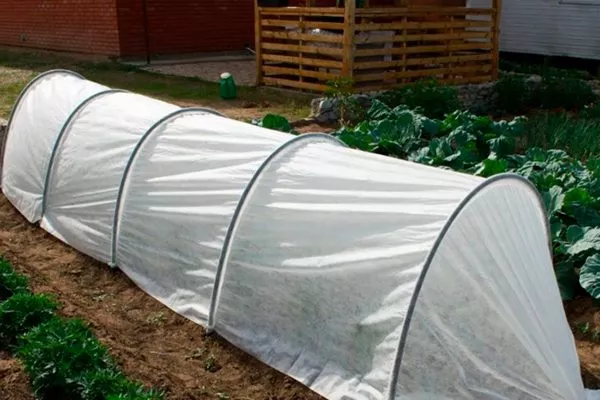
Bend the shoots toward the ground and cover with a 15-20 cm layer of soil. Use Ultrasil or spunbond for additional protection from severe frosts.
Reproduction
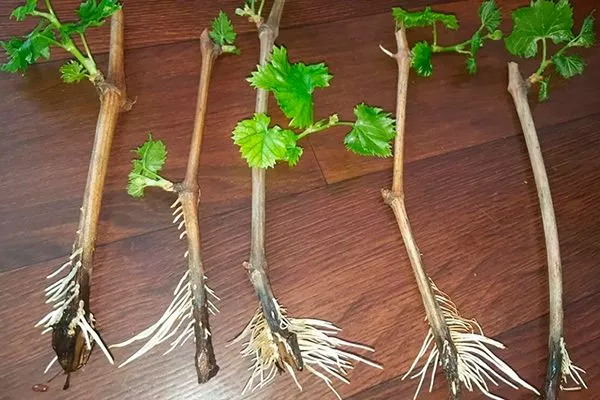
During fall pruning, a significant amount of grapevine material is removed, which could serve as planting material. Cut the vines into sections, leaving three buds on each.
Reviews
Avatar belongs to the sultana category. This grape has a pleasant flavor, but many gardeners note the plant's low resistance to various diseases and its late ripening period. The variety has numerous characteristics and, with proper care, performs well.