
The Alyoshenkin grape is a Soviet "old-timer" characterized by high sugar content, high yields, and large clusters of amber-colored berries. It is a table grape variety, not a hybrid, but requires winter protection and crop regulation. Other names include Alyosha, Alyoshenkin Dar, Alyoshin, and No. 328.
History of the origin and spread of the Alyoshenkin variety
The cultivar was developed at the Volgograd Experimental Station by the renowned scientist and breeder P. E. Tsekhmistrenko. Development was completed in 1956 after crossing Madeleine Angevin (an ancient French variety) and Vostok grapes. The name was given in honor of the author's grandson.
Description of the plant
The Alyoshenkin variety is a fast-growing shrub with a powerful root system capable of independently drawing moisture from groundwater. Its shoots mature fully even under unfavorable weather and climate conditions.
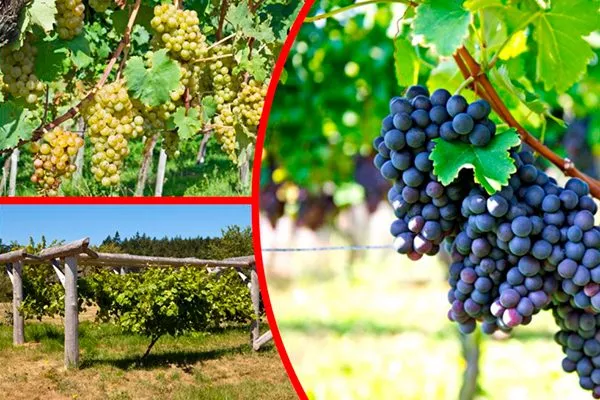
Bushes
The plant is characterized by abundant flower clusters and dense foliage. The bushes can also be identified by other characteristics:
- leaves are dark green, five-lobed, medium dissection, glossy surface;
- flowers are bisexual, small in size and greenish in color;
- stems - initially green, becoming reddish-brown by the end of the season;
- height - 3-5 m;
- Up to 2 inflorescences are formed on one shoot.
Almost 70-75% of shoots are considered fruit-bearing, which is why the bush is subject to significant stress.
Berries
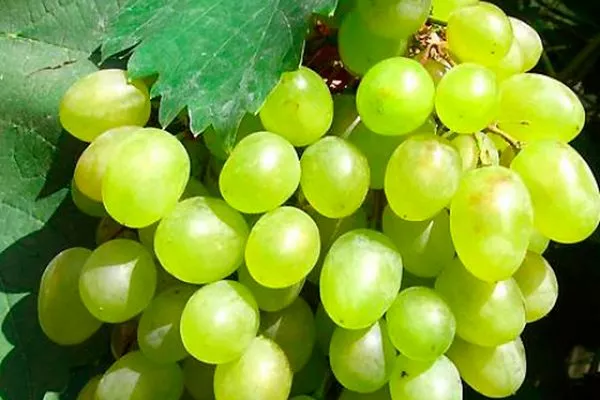
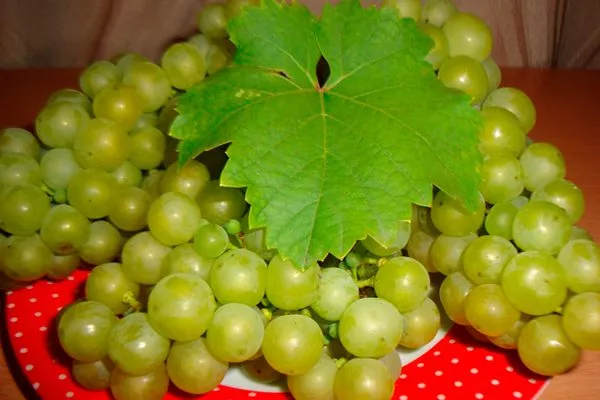
The berries have a beautiful amber hue and a matte, pruinose coating. Other external characteristics:
- size – medium-small, therefore the weight does not exceed 4.5 g, if agricultural requirements are not met, pea-shaped fruits occur;
- the peel does not crack due to its compacted structure, but at the same time it is quite thin and easy to bite through;
- the pulp is dense, crunchy, juicy;
- seeds – maximum 2 pcs., but many berries do not have them at all;
- shape – oval or oval-ovoid.
Clusters
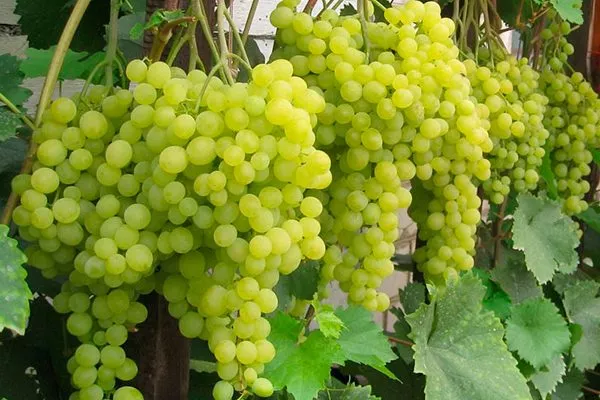
The clusters are large and conical, mostly winged. The density is medium in looseness, but the berries are firmly attached, preventing them from falling off. The minimum bunch weight is 500 g, and the maximum fixed weight is 2 kg.
Taste
The pulp lacks additional or muscat notes, so the flavor can be considered classic grape. Based on the tasting score, Alyoshkin received an 8.8 out of 10. The flavor is considered harmonious. The berries contain:
- sugar – 200 g/cu. dm;
- acids – from 3 to 5 g/cu. dm.
Characteristics
This variety has excellent characteristics, which is why it is prized by gardeners and experienced winegrowers. Before planting it in your garden, be sure to pay special attention to these characteristics. The success of grape growing depends on them.
Growing regions
When developing the variety, the originator intended to create a grape variety suitable for cultivation in moderate climates. However, over time, the seedlings spread rapidly throughout Russia, reaching Belarus and Ukraine. It is now grown primarily in Belgorod, Ryazan, Tver, Novgorod, Transbaikalia, the Urals, the south, and Siberia.
Fruiting and yield
This variety is characterized by high yields—a single bush can yield approximately 25-30 kg. In southern regions, during sunny summer weather, the bush can produce even more fruit—up to 50 kg.
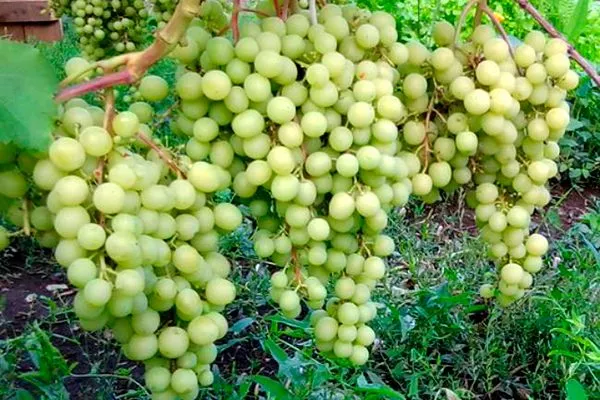
Fruiting is early—you can harvest your first crop as early as the following year after planting. Peak fruiting occurs when the bush is five years old. To maintain fruitfulness for at least 15 years, rejuvenate the plant by pruning it every four to five years.
Ripening time
Alyoshenkin is distinguished by its very early ripening period – the clusters can be picked from the bush as early as 110-120 days, but this requires a cumulative temperature of 2000 degrees Celsius throughout the season. Experts recommend regulating the harvest, which allows the crop to be harvested within 100 days.
Resistance to diseases, pests, drought
The variety tolerates dry weather well, but periods without watering should not be prolonged. Otherwise, yield will decrease, the berries will become smaller, and their flavor will be lost.
The plant has average resistance to diseases and pests; most often it is affected by gray mold, powdery mildew, wasps and birds.
Frost resistance and the need for shelter
Grapevines only need to be covered in regions where winter temperatures drop below -26°C (-28°F). This mostly affects the root system, while the shoots are capable of self-healing. However, it's best to prevent them from freezing.
Beneficial properties
Alyoshenkin grapes aren't high in calories, unlike many other varieties—100 grams of berries contain only 60 kcal. According to Roskachestvo, the berries contain significant amounts of vitamins K and C, antioxidants, polyphenols, fiber, and various micronutrients. Therefore, doctors recommend consuming these grapes in the following cases:
- for rejuvenation;
- removal of cholesterol and other harmful substances;
- acceleration of digestion;
- for cardiovascular diseases;
- to strengthen the immune system;
- elimination of inflammatory processes;
- improving the metabolic process;
- relieving fatigue;
- for colds.
Scope of application
The berries make delicious and nutritious juices, compotes, and jams. The fruits can be frozen and used to make raisins, but the variety is not suitable for wine, as it lacks muscat notes.
Subspecies of the Aleshenkin variety
| Name | Ripening period | Disease resistance | Frost resistance |
|---|---|---|---|
| Alyoshenkin | 110-120 days | Average | Up to -26°C |
| Alyoshenka's gift | 100-110 days | High | Up to -28°C |
| Alyoshenka's red | 105-115 days | Average | Up to -27°C |
| Alyoshenka's white | 100-110 days | High | Up to -26°C |
| Alyoshenka's pink | 110-120 days | Average | Up to -26°C |
The most popular subvariety is Alyoshenkin Dar, which was registered in the state registry in 2006. The clone was bred in Orenburg, resulting in a distinct dessert flavor.
There are also other hybrids with the prefix “Alyoshenkin”:
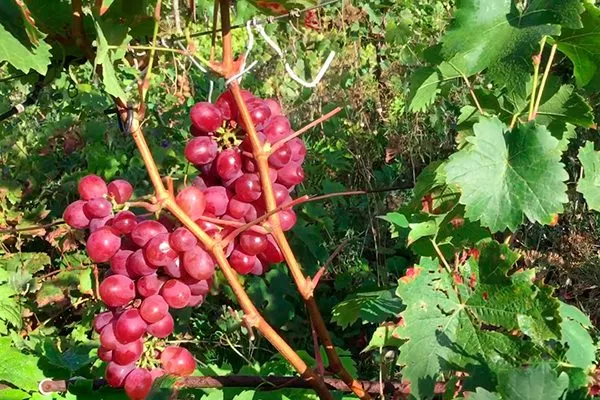
- red – has red berries and a rich sweet taste;

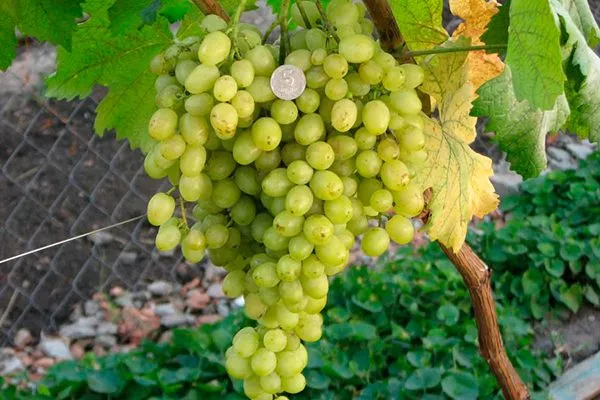
- white – combines fruity notes, in appearance it is no different from the original variety;
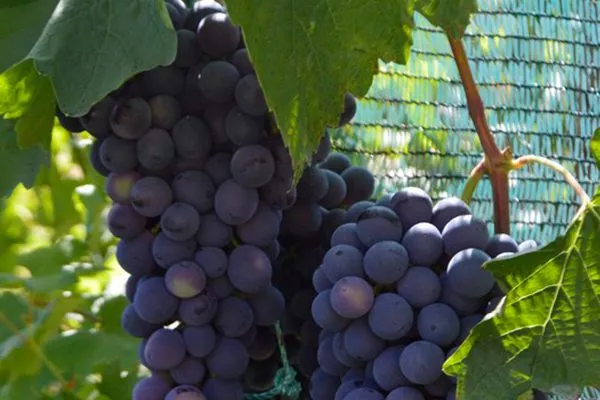
- pink - characterized by a higher level of acidity.
Advantages and disadvantages of the variety
The main advantage of this variety is its early fruiting and ripening, but it also has many other positive qualities:
There are also some downsides that are important to know about in advance:
Landing
The Alyoshenkin variety is characterized by rapid rooting and excellent survival rates—even if a seedling is purchased in the south and planted in northern regions, the bush will still adapt quickly. Note other characteristics that will help fruiting begin earlier:
- Locality. The plot should be as sunny as possible – this will maximize the sweetness of the berries. The groundwater table should be no higher than 2 meters above the ground, otherwise the risk of root rot increases. It's best to choose elevated, draft-free sites.
- Neighborhood. This variety pairs well with peas, radishes, beets, spinach, and onions. Avoid planting near tomato, horseradish, corn, and sunflower beds.
- Soil. The optimal soil conditions are chernozem, loam, and sandy loam with increased fertility. Therefore, three months before planting, enrich the soil by adding 10 kg of organic matter per square meter. The soil pH should be around 6.
- Planting time. Daytime air temperatures should be consistently 17-18 degrees Celsius, and soil temperatures should be 10-12 degrees Celsius. This work is best carried out in the spring.
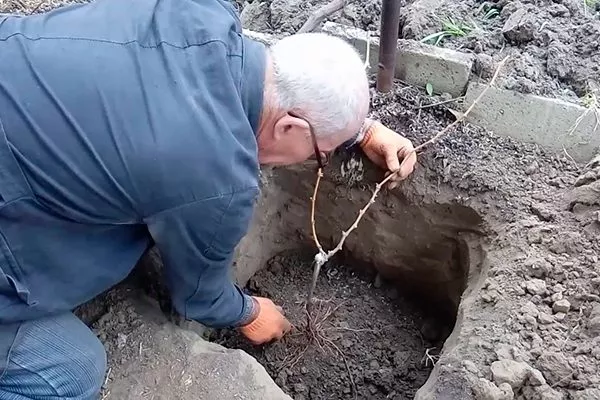
- Landing. When planting, add 200 g of superphosphate to the holes. The planting pattern is 150 cm between plants and 250 cm between rows. The hole depth is 80 cm, and the diameter is 70 cm.
- ✓ The soil pH level should be strictly within the range of 5.8-6.2 for optimal nutrient absorption.
- ✓ The root system depth requires a minimum distance of 1.5 m to groundwater to prevent rotting.
Growing and care
The Alyoshenkin variety has its own requirements that must be strictly adhered to:
- Spraying and watering. The measures are standard: up to three years of age, the bushes are watered frequently, but after that, it is enough to water them three times - in spring, summer and autumn.
- Top dressing. This variety requires ample fertilizing to ensure consistently high yields. What to use:
- in spring – urea, ammonium nitrate, chicken manure;
- at the beginning of budding – Superphosphate;
- when ovaries appear - wood ash, potassium salt;
- further, you can add mineral complexes as needed.
- Pruning and shaping. Due to the rapid growth of shoots, pruning and shaping of the bush have their own characteristics:
- In spring. In mild climates, leave up to five strong, older shoots; prune the rest. In northern regions, form the bush into a fan shape—this will allow the trunks to be more easily enveloped in the fall.
- In the fall, the current year's growth is shortened to 7-8 buds, and those that bore fruit are reduced to 4 buds.
- Standardization. To protect the bush from overload, the harvest is rationed. During fruit set, all but the two or three most abundant clusters are removed.
- Tying up. Due to the lush harvest, the vines must be supported. To do this, create a multi-tiered trellis structure, as this variety is characterized by long shoots. Large clusters also require support, otherwise the bunches will droop under their own weight.
For this purpose, you can use mesh material, which will additionally serve as protection against wasps and birds. - Topping. Another mandatory step for the Alyoshenkin variety is to prevent vines without fruit from absorbing all the nutrients—the fruiting shoots need them more. The former are removed completely, while the latter are pinched back until the stem is 150 cm long.
- Preparing for winter. It is required in all regions. It is necessary to carry out moisture-recharging irrigation, add potassium, carry out sanitary and shortening pruning, hill up the trunk and lay down mulch material to prevent the roots from freezing.
To do this, use rotted manure or humus, and sprinkle sawdust on top. The layer should be 20 cm. If shelter is required, the bushes are wrapped in non-woven material or a structure is created, inside which the vines are placed on a warm mat.
Pest and disease control
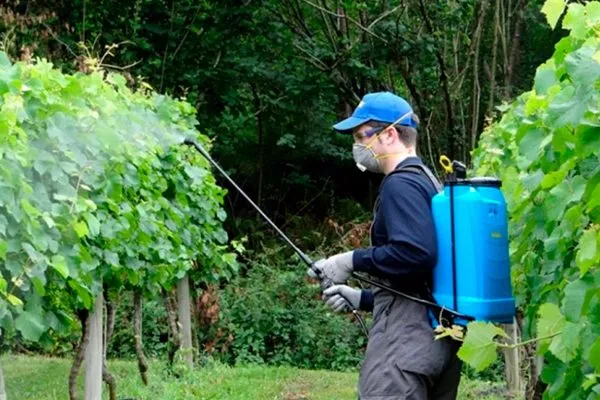
The Alyoshenkin grape variety is susceptible only to fungal diseases, which occur in high soil moisture. To avoid this, avoid overwatering and only apply enough water to allow it to be fully absorbed within half an hour. Fungicides such as Topaz, Ridomil Gold, and Strobi are used for prevention and treatment.
Pests that may attack include spider mites, leaf roller larvae, and brown marmorated beetles. To control them, use insecticides such as Actellic, Aktara, Talstar, and Zolon. For prevention, it's best to use Grom or Bazudin.
Harvesting and storage
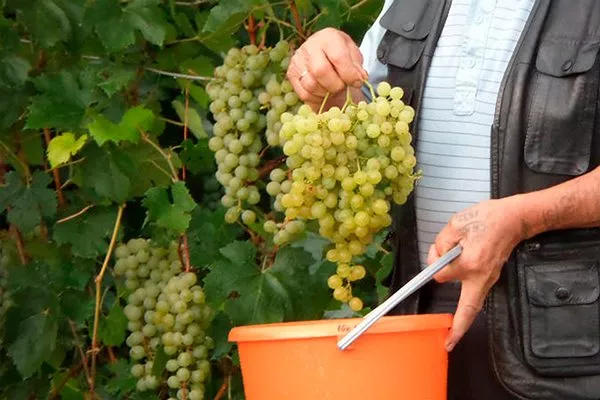
Transporting this variety over long distances is impossible, as the berries retain their marketable appearance for no more than 30 days in the refrigerator. If you're eating the grapes fresh, pick them when they're fully ripe; if you're storing them for storage, pick them 10 days before they're ripe. Use sharp pruning shears for this.
Reproduction
Alyoshenkin reproduces in different ways:
- vaccination;
- layering;
- cuttings.
All three methods are simple and quick, making them popular among gardeners.
Reviews from winegrowers
The Alyoshenka grape variety is high-yielding and popular among gardeners. It's easy to care for, but proper pruning and shaping are essential. Avoid overwatering frequently and fertilizing three times a year. Only under these conditions will you achieve maximum sweetness in the berries and high yields.