
There are many amazing grape varieties, each with its own unique characteristics. Among them, one stands out, recognized by gardeners for its incredible resilience and large fruit – Alinka. This grape requires timely care to produce regular, abundant harvests.
Main characteristics
Beginner and experienced gardeners alike choose the Alinka grape for its many advantages. It's easy to grow and doesn't require much time for planting and care.
Origin
It is the result of breeding work by scientists at the North Caucasus Research Institute of Horticulture and Viticulture. It was created by crossing two varieties: Madeleine Angevin and Muscat Hamburg.
Climate conditions
The crop successfully withstands low temperatures, especially when covered with film.
Application
This table grape variety is ideal for both fresh consumption and wine production. Its high commercial qualities make it an excellent choice for market presentation and sales.
Landing
The optimal periods for planting are autumn and spring. This process is not recommended in summer. In colder regions, preparation begins as early as August. The actual process of transplanting the seedlings into the ground occurs in late September or early October.
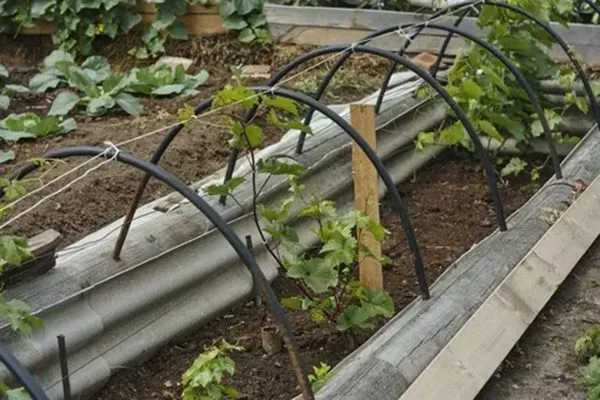
- ✓ The seedling planting depth should be at least 50 cm to ensure wind resistance.
- ✓ The distance between seedlings should be 2-2.5 m for optimal development of the root system.
Helpful tips:
- For light- and heat-loving grapes, a southwest, south, or west exposure is considered optimal. Planting seedlings near buildings is preferable, as this provides additional warmth for the shoots at night.
- When planting, basic fertilizers are essential – organic fertilizers such as humus or compost. Apply generously, up to 70-100 liters per hole, creating a nutrient-rich environment for the plants. Add dry complex fertilizers (superphosphate, potassium, or potassium-magnesium mixtures) directly to the soil at a rate of 300-500 g.
- To correct the acidity of heavily limed soil, use wood ash and ashes at a rate of 3 liters per 1 sq. m.
Care
Care involves using a variety of mineral and organic fertilizers. Alinka grapes are extremely sensitive to overcrowding. Excessive berry density on the vines can hinder pollination, so remove vine tips and leaves around the blossoms during flowering.
| Disease | Alinka's resilience | Control measures |
|---|---|---|
| Oidium | Average | Treatment with sulfur-containing preparations |
| Phylloxera | Low | Using grafted seedlings |
Diseases and pests
The variety's resistance to fungal diseases is comparable to that of its parent, Muscat Hamburg. Its resistance to phylloxera is rated as average. For prevention, treat planted plants with specialized preparations containing an anti-powdery solution.
Reproduction
Grapes are successfully propagated through own-rooted seedlings, which show more active growth compared to seed planting.
Berries and bunches
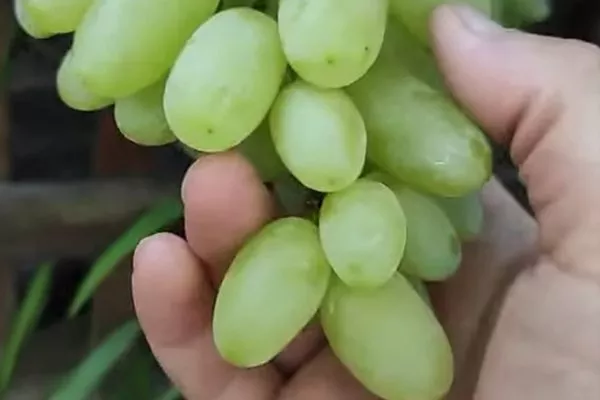
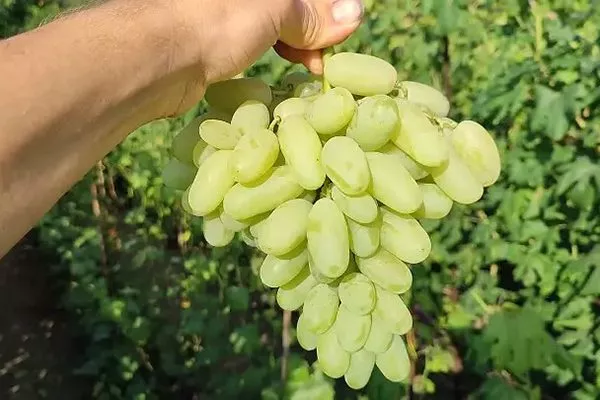
The clusters are cone-shaped, wide, sometimes double, and of medium density. The clusters weigh between 300 and 350 grams. The grapes themselves are large and round, reaching approximately 5-5.5 grams in weight and containing 1-2 seeds.
Taste
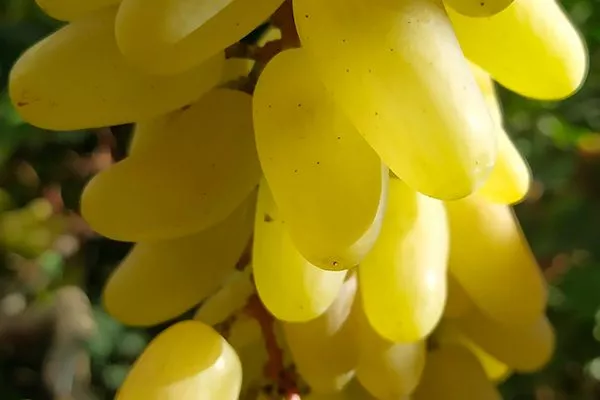
The fruits have a harmonious and rich flavor, an interesting varietal aroma, and a pleasant sweetness. The flesh is meaty, dense, and crunchy, adding additional texture.
Ripening period
This variety is considered very early, with fruit ripening just 100-110 days after the first shoots emerge. Thanks to this short ripening period, this variety can be successfully grown even in regions with challenging climates.
Features of cultivation
Characterized by its resistance to low temperatures, it can withstand frosts down to -23°C without damage. This is especially valuable for regions with cold winters, where this variety is an ideal choice.
The Alinka grape variety has positive qualities that will be appreciated by both novice and experienced gardeners. Its resistance to temperature fluctuations, excellent characteristics, and marketable appearance make it an ideal choice for those seeking regular harvests.
"This is the result of breeding work by scientists and plant breeders at the North Caucasus Research Institute of Horticulture and Viticulture. It was obtained by crossing two varieties – Madeleine Angevin and Muscat Hamburg." This is a description of a different variety, most likely Alina (these are the parents of this variety). The originator of the Alinka grape variety is Vladimir Oleynik.
Parental pair GF Alinka - Talisman x Smaragd