
The Academician grape variety attracts attention with its unique combination of characteristics. It is characterized not only by its resistance to various climatic conditions but also by its excellent taste. This is why the variety continues to win the hearts of winemakers and gardeners.
Breeding history
The history of the Academician grape began in Crimea. The variety was developed by crossing two hybrid varieties—Richelieu and Podarok Zaporizhzhya. This grape was first discovered in the early 2000s. It was officially registered in the State Register in 2014.
Description of the variety
Gardeners prefer to grow various varieties in their plots for future consumption and use. The Academician variety is also popular, so it's important to know the key features of this hybrid's appearance.
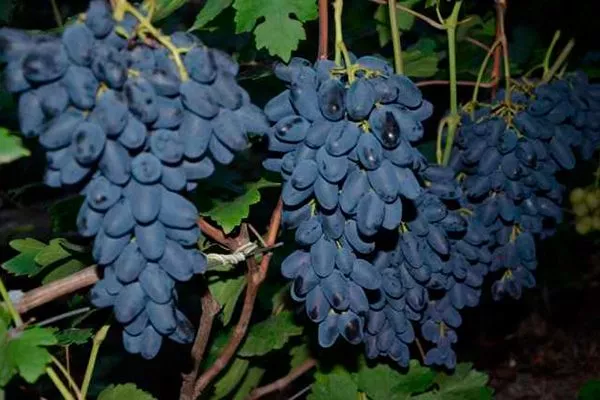
Bushes
A distinctive feature is the vigorous growth of the shoots, which can reach 3 meters in height, sometimes more. The shoots are covered with medium to large, five-lobed, emerald-colored leaves. The outer surface is smooth and even, while the reverse is lightly pubescent.
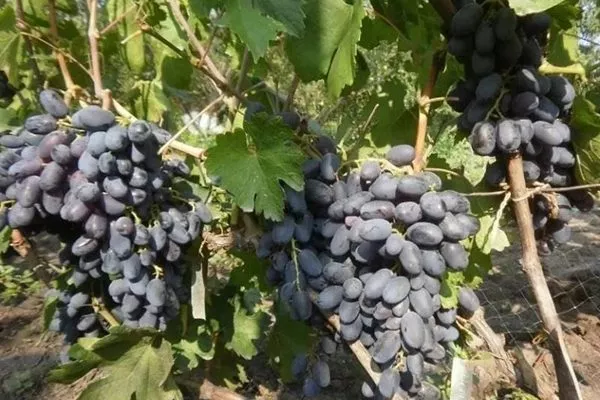
Berries
Ripe berries are oval in shape, averaging 3.3 x 2 cm in size and weighing between 9 and 12 g. The skin is thin, smooth, and almost invisible when eaten. It has a blue-black color with a light bloom. The flesh is juicy and crisp, with a pleasant, harmonious flavor. It contains seeds, usually up to three per berry.
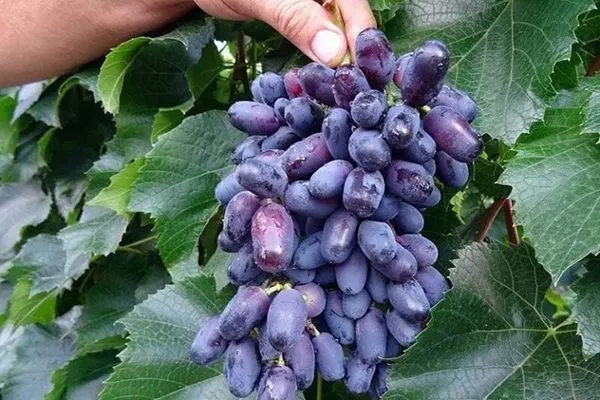
Clusters
The Academician produces large, cylindrical-conical clusters with a medium degree of looseness. Ripe clusters typically weigh between 0.7 and 1.2 kg.
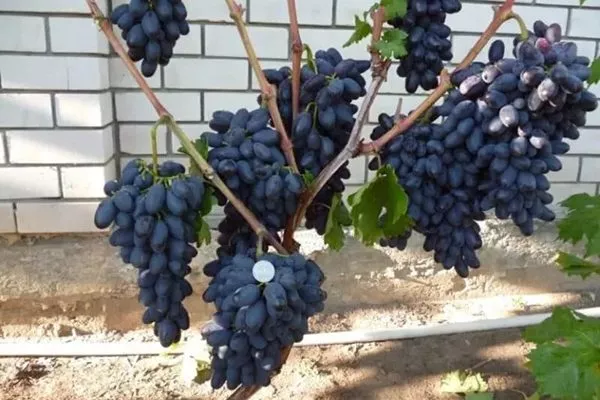
Taste
Ripe grapes reveal unique flavor nuances, including chocolate and muscat aftertastes. Sugar content in the fruit reaches up to 220 g/dm3, and acidity levels are approximately 6.5 g/dm3. Ripe grapes receive a high tasting score of 9.8 out of 10.
- ✓ High resistance to powdery mildew and mildew, which reduces the need for chemical treatments.
- ✓ Ability to quickly recover from frost, which makes it suitable for growing in cold regions.
Brief description
Culture has its own characteristics and features. The main qualities are described below:
- Productivity. Fruiting shoots form on the shoots, each of which can develop up to three clusters. Fruiting is stable and occurs annually. Yields are estimated to be average, with up to 25 tons of ripe fruit harvested per hectare.
- Resistance to diseases and pests. It boasts good resistance to most diseases common to various species and hybrids, including powdery mildew and mildew. Preventive measures are essential to completely eliminate the likelihood of disease occurrence.
- Where it is used. Ripe fruits are used for food. Some gardeners make jam, juice, compotes, and marinades in winter.
- Growing areas. Initially, the Academician variety was intended for cultivation exclusively in the North Caucasus. Later, it was successfully cultivated in more northern regions, provided it was effectively protected before the onset of cold weather.
- Ripening periods. Flowering begins in late April or early May, depending on the climate of the growing region. It is an early ripening variety, with up to four months passing from the emergence of young leaves to harvest.
- Frost resistance. It has high frost resistance, inherited from its parents, allowing it to withstand temperatures down to -23-25°C without cover. In colder climates, especially in the north, it is important to thoroughly cover the bushes before frost sets in.
Advantages and disadvantages
Gardeners take a responsible approach to planting new crops in their gardens. They first study the positive and negative qualities of the species.
Growing and care
Planting seedlings isn't particularly difficult and can be done even by beginners. The process does require a few special considerations.
- ✓ Soil pH should be between 6.0-7.0 for optimal grape growth.
- ✓ The seedling planting depth should take into account the climatic conditions of the region: in colder regions, deep planting is recommended to protect the roots from frost.
Landing
Choose sunny locations for planting. Marshy areas are unsuitable, and the groundwater level in the area should be no closer than 1.5 meters. When planting, arrange the plants in rows oriented north to south, ensuring each bush receives sufficient light.
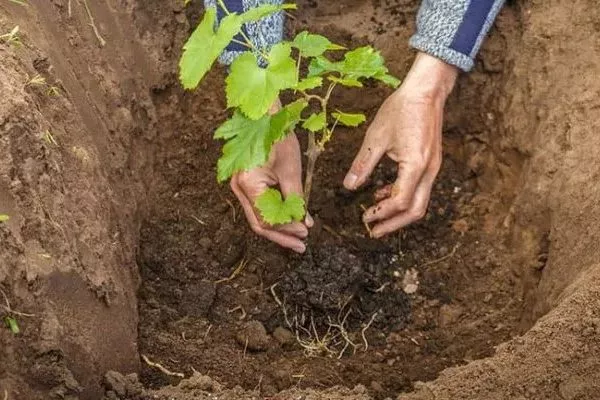
Maintain a 2.5 m space between rows and plants. Plan planting for spring, when the soil temperature reaches 10°C and the air temperature reaches 15°C. In autumn, plant the crop a month before the onset of frost.
Step by step process:
- Mark out the area in advance.
- For each bush, dig a hole measuring 60x60x60 cm.
- Add a mixture of garden soil, sand, rotted manure (10 kg each), wood ash (1 l) and 200 g of superphosphate to the holes.
- Sprinkle a light layer of soil on top of this mixture, and place the young plant on top, with its roots located a few centimeters into the soil.
- Fill the hole with the remaining nutrient soil, 20 cm deep.
Water the young plantings with 30-40 liters of water and install agrospan protection over them. Secure it with arches.
Top dressing
Fertilize the plant two seasons after planting. In the third year, add nitrogen to the soil using nettle infusion, bird droppings, or cow manure in equal parts. Pour 2 liters of the resulting mixture under the bush after the soil has been moistened as usual.
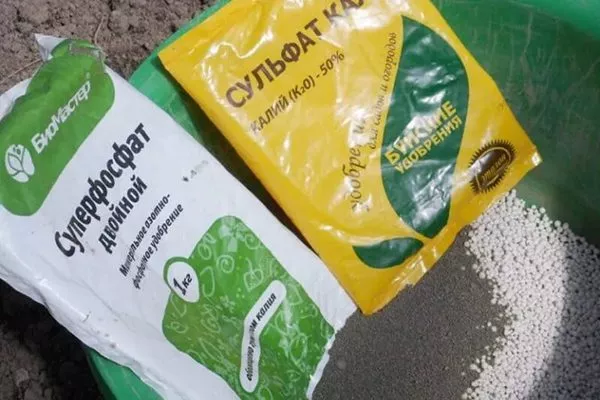
In midsummer, phosphorus-potassium fertilizers are needed. For this, use a solution containing 400 g of wood ash diluted in 10 liters of water. Commercially available fertilizers labeled "autumn" are also acceptable.
Watering
Water seedlings planted this season weekly, while more mature ones should be watered every 10-14 days. The bush does not require irrigation after bud break, during berry coloring, and once August arrives.
Loosening, weed control
Crop plants constantly compete with weeds for water and nutrients. Weeds not only draw valuable elements from the soil but also pose a potential source of fungal infections.
Control excess vegetation throughout the growing season, and weed the area at the first sign of growth. Loosen the soil around newly planted vineyards 5-6 times during the summer. Use a hoe or tiller to destroy weed roots.
For mature plantings, reduce the number of treatments to 4, and cultivate to a depth of 8 cm. In the spring, after the snow melts and warm weather sets in, deeply loosen the soil – cultivate the soil between rows to a depth of 20 cm. This will make the soil looser and allow it to retain moisture.
Treatment against diseases and pests
Even insect- and disease-resistant plants are susceptible to attack during heavy summer rains. Follow the standard schedule for preventative measures for all plantings. This includes three treatments during the growing season:
- In early spring, when five leaves form on the vine.
- Before the buds open.
- When the berries develop to the size of peas.
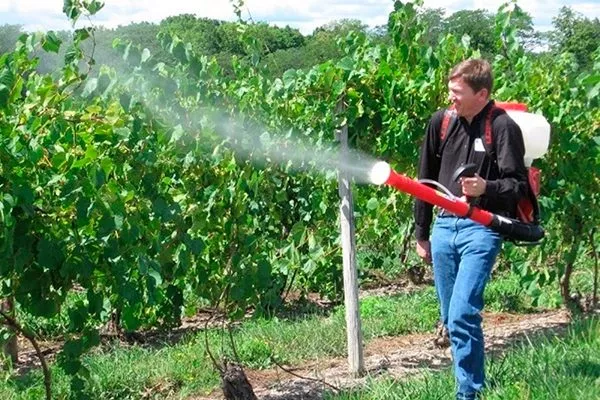
Carry out prevention using various means:
- 1% Bordeaux mixture with the addition of Ecosil;
- Preparations Acrobat Top, Ordan, Quadris for the prevention of mildew;
- Preparations Topaz, Horus, Skor for combating oidium;
- Strobi is a complex drug for protection against two types of infections.
Tick control includes the use of such drugs as Vertimek, Danadim, Apollo, etc.
Summer pruning
Academician exhibits vigorous growth, requiring pruning throughout the growing season. Prune as follows:
- For stepsons - on the first leaf.
- For weak, repeating shoots - taking into account the distance between vertical branches of 15 cm or more.
- For overgrown branches that have grown beyond the top wire of the trellis, remove the tops.
Leave no more than one cluster on the vine, and remove the grapes during the inflorescence stage. Keep only the best pollinated varieties. This method promotes accelerated ripening, reduces stress on the vines, and ensures a good harvest next year.
Formation of grapes
Many beginning gardeners are often apprehensive about pruning, considering the process complex and requiring precise adherence to numerous instructions. You don't need to know every method—you can choose one and reap a successful harvest.
Useful tips for shaping the bush:
- In the spring, after planting the seedling, remove all the side shoots by the fall so that the plant develops as a single vine, capable of reaching a length of 1.5-2 m or more.
- In October-November, prune the long vines, leaving only 2-3 lower buds. This stimulates the root system, and the plant will grow rapidly the following year.
- In the second year, in the spring, shoots develop from the remaining buds, which will become the future branches. Remove all side shoots throughout the season, and by autumn, 2-3 fruiting branches up to 2 m long will have formed.
- In the third year, place the sleeves horizontally on the first wire of the trellis, and fruiting vines will grow vertically from the sleeve buds. Closer to the head, leave 2-3 more shoots, which will serve as future sleeves.
- In the fall of the third year, perform an important pruning: leave one mature fruiting branch on each branch, preferably closer to the head, and remove all other fruiting shoots. This will become the basis for growth and development next year.
Follow the rules to simplify the formation process and get a successful harvest.
Shelter for the winter
Planting pre-tied shoots in bundles is a simple method for protecting plants from winter cold. Place the shoots in a 20-cm-deep trench dug near the bushes. Then fill the trench with soil, covering the vines. Perform this procedure at temperatures between -1 and -5°C, a couple of days after hardening off.
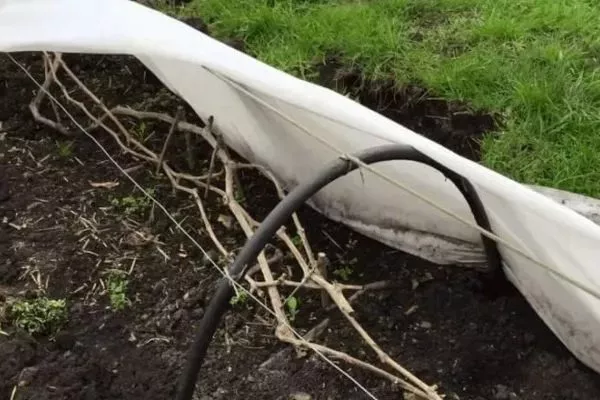
To protect plants, you can use the tunnel method—creating a shelter made of spunbond material mounted on poles. Cover the bottom of the shelter with boards or sawdust, and lay tied vines on top. This method is less commonly used due to the potential risk of damage to shoots by mice.
Reproduction
Grape propagation can be accomplished using various methods, with high seedling survival rates using grafting or cuttings. Let's look at each method separately:
- Graft. Cut a strong, healthy shoot almost to the root, leaving a small stump 2-3 cm high. Make a transverse cut in the stump where the cutting will be inserted.
Take cuttings from healthy vines, making the bottom cut at an acute angle and the top cut at a right angle. Insert the cutting, sharply angled, into the cut on the stump, seal with clay, and tie it with cloth.
The graft usually takes root in about a month to a month and a half. This method can be used to propagate grapes even if the cuttings have become woody. - Cuttings. Cut the cuttings from healthy vines during spring pruning. Each cutting should have five buds, with the bottom cut sharp and the top cut straight. Prepare the planting site in advance, with the soil dug over and enriched with river sand and organic fertilizer.
Plant the cuttings 25 cm apart, planting them two buds deep into the soil and the third at ground level. Water the cuttings regularly during the rooting period. The appearance of foliage on the plants indicates successful rooting, and they are ready for transplanting to their permanent location.
Choose the most suitable propagation method for you to increase the number of plants in your garden.
Reviews of the variety
The Academician grape combines high yields with disease and pest resistance. It is disease-resistant and characterized by a pleasant flavor. Experienced winegrowers and novice gardeners alike can easily grow it.