
Golden currant is an easy-to-grow crop that combines fruitfulness and ornamental beauty. This interesting plant isn't particularly popular among gardeners, and many even mistake it for a currant-gooseberry hybrid. Let's learn as much as possible about this crop, how to plant it, how to care for it, and what uses it has.
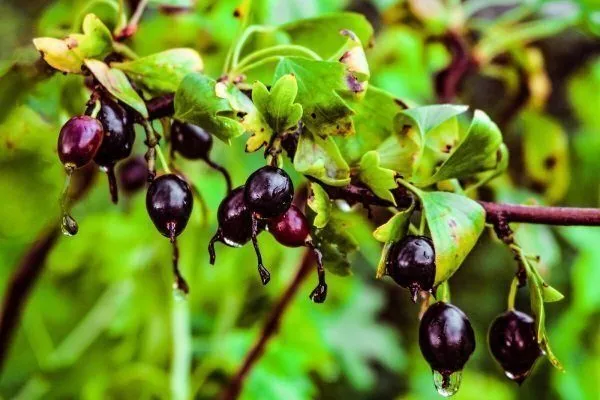
How did Goldencurrant appear and spread?
Golden currant is an easy-to-grow and productive berry bush from the gooseberry family, commonly found in the wild. Due to its distinctive leaves, golden currant is often confused with jostaberry, a gooseberry-currant hybrid. However, it is a distinct botanical species native to North America. Here, the bush thrives on riverbanks and rocky slopes. In America and Canada, this plant is found in virtually every garden.
Golden currants were brought to Russia in the late 19th century. For a long time, they were unpopular with gardeners until I. Michurin took up the cause. This great breeder created the first variety, Seyanets Krandalya. This variety became the progenitor of most golden currant varieties developed by Soviet breeders.
Thanks to Michurin's varieties, the new currant species spread throughout Russia. The plant's biological properties allowed it to be used for a variety of agricultural purposes. With its excellent adaptability to a variety of conditions, the crop has spread to almost all climatic zones. Today, golden currants grow in Belarus, the Baltics, Central Asia, the Czech Republic, and England, in addition to Russia.
Description and characteristics
Golden currant is a perennial deciduous shrub that gets its name from its abundant production of golden-yellow flowers.
Botanical description
- Bush. A weakly branching, multi-stemmed tree, reaching 2.5-3 m in height. The central stem produces the most shoots. The branches are erect, reaching 2.5 m in length. The weight of the berries causes the branches to bend toward the ground. The bark is red and may be slightly pubescent.
- Root system. The rootstock is vigorous, penetrating to a depth of 2 m or more. In young shrubs, it reaches 50-60 cm. The rhizome also grows horizontally. The bulk of the roots are concentrated in the surface soil layer, at a depth of approximately 30 cm.
- Leaves. They resemble the carved leaves of gooseberries. They are green in color, with three to five lobes and a wedge-shaped base. The leaves are 5 cm long.
- Fruit. Oval, round-oval, or teardrop-shaped, mostly black. Diameter: up to 1 cm. Flavor: reminiscent of blueberries. Other varieties with other berry colors include burgundy, yellow, or orange. Weight: 1.5-3 g. Skin: firm. The flesh is sweet and sour, with a nutmeg or blueberry aftertaste.
- Flowers. The diameter is 1.5 cm. A single inflorescence consists of 5-15 flowers. The flower is yellow, tubular, with small petals and a reddish or greenish corolla in the center. The flowers exude a pleasant fragrance.
Main characteristics:
- Flowering is long and profuse, beginning in late May and lasting 10-20 days.
- Fruiting begins at the age of three. The most productive shoots are those aged five to seven years.
- Ripening period: mid-late (for most varieties). Berries ripen 35-45 days after flowering.
- The blooms are abundant, attracting honey-producing insects. Bees collect almost a hundred kilograms of honey from one hectare of plantings.
- The crop is self-sterile. To obtain a harvest, three different varieties of golden currant are planted simultaneously.
- The yield is high – one bush produces from 5 to 15 kg of berries.
- Annual shoot growth is 30-40 cm.
Watch the video below for a description of the "Zolotistaya" currant variety:
Golden currant varieties
| Name | Ripening period | Yield per bush (kg) | Color of berries |
|---|---|---|---|
| Muscat | Average | 4-7 | Black |
| Shafak | Mid-late | 5-8 | Dark burgundy |
| Isabel | Average | 4-6 | Black-brown |
| Ermak | Average | Up to 8 | Black |
| Laysan | Average | 8-9 | Golden |
| Kishmishnaya | Early | Up to 10 | Black |
| Amber | Average | 7-8 | Bright orange |
| Michurinskaya | Average | 1.5-2.5 | Dark burgundy |
| Silvery | July | 5-6 | Black |
| Siberian sun | Mid-July | 1 | Amber or golden |
| Black Pearl | Mid-early | Up to 4.5 | Black |
| Caucasian | Average | Not specified | Black or brown |
| Venus | Average | Up to 8 | Black |
Golden currants come in a wide variety. They are selected based on their growing characteristics and local climate. Let's look at the most popular varieties:
- Muscat. This variety is considered a mid-season variety. The bushes are tall yet compact, with very large yellow flowers. The berries are large, black, round, and sweet, with a honey-like flavor and muscat aroma. A single bush yields 4-7 kg of berries.
- Shafak. A mid-season variety, resistant to heat, drought, frost, diseases, and pests. The bushes are medium-height, with drooping stems. The clusters are 4 cm long and bear numerous berries. The berries are large, pubescent, and dark burgundy, with a distinctive gray color. The flavor is sweet and sour. The yield per bush is 5-8 kg.
- Isabel. Tall, low-spreading bushes. Fruit is black-brown, sweet and sour. Increased resistance to diseases and pests. A bush yields 4-6 kg of berries, each weighing 2 g.
- ErmakA mid-season variety. The bushes are dense and vigorous. The flowers are bright yellow and fragrant. The berries are sweet and sour. Weight: 1.5 g. Yield per bush: up to 8 kg.
- Laysan. A frost-, heat-, and drought-resistant variety with medium-sized bushes. The berries are golden, oval, and gooseberry-like. Clusters contain 5-6 berries. The taste is sweet with a slight tartness. Good transportability. Each bush produces 8-9 kg of berries.
- Kishmishnaya. One of the earliest varieties. The bush is spreading, reaching a height of up to 1.8 m. The berries are black, medium-sized, and heart-shaped. Fruit weight is up to 4 g. The flavor is dessert-like, with a hint of tartness. Yields are up to 10 kg. There are several subspecies of Kishmishnaya currant, including those with black berries, those with oval raspberry berries, and others.
- Amber. The fruits are bright orange. Weight – 1.3 g. The taste is refreshing. Yield – 7-8 kg per bush.
- Michurinskaya. Vigorous bushes with straight shoots. Berry weight 1.5-2.5 g. The fruits are round, dark burgundy, sweet and sour, and aromatic. This is a mid-season variety.
- Silvery. The bush is vigorous and sparsely branched, reaching 2.4 m in height. It ripens in July. Fruit weight is 1-1.5 g. Yield: 5-6 kg.
- Siberian sun. This variety is winter-hardy and highly resistant. It grows tall. The fruit is amber or golden in color. It ripens in mid-July. Weight: 1 g. The flavor is pleasant, refreshing, with a subtle acidity.
- Black Pearl. Low, sparsely branched bushes – up to 1 m. Frost-hardy. Mid-early variety. Weight from 1.5 to 6 g. The fruits are black, similar in taste to blueberries, with sweet and sour notes of currant. Yield: up to 4.5 kg.
- Caucasian. There are two varieties of Caucasian currant. One variety produces black, sweet-and-sour fruits, 1.5 cm in diameter, and bushes up to 2.5 m tall. The other variety produces brown berries, 1.2 cm in diameter, and bushes no more than 2 m tall.
- VenusIt is highly heat- and drought-resistant. It can withstand temperatures down to -40°C. One bush produces up to 8 kg of fruit. The shoots are short, straight, and slightly pubescent. The clusters contain 6 berries. The fruits are round, black, juicy, and sweet and sour. The skin is thin. Ripening is uniform.
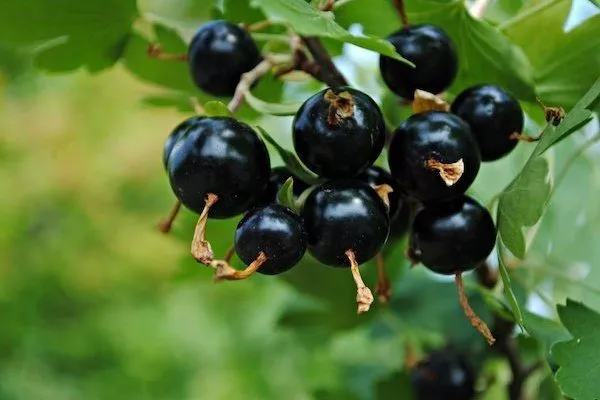
golden currant "Muscat"
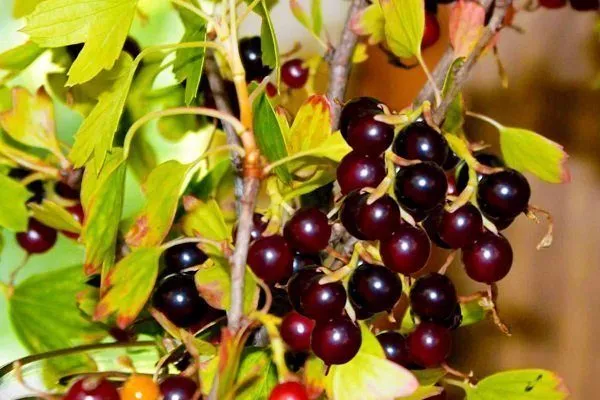
currant “Shafak”
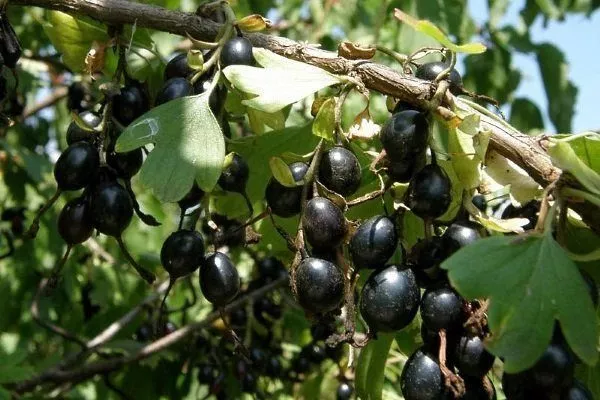
currant "Isabella"
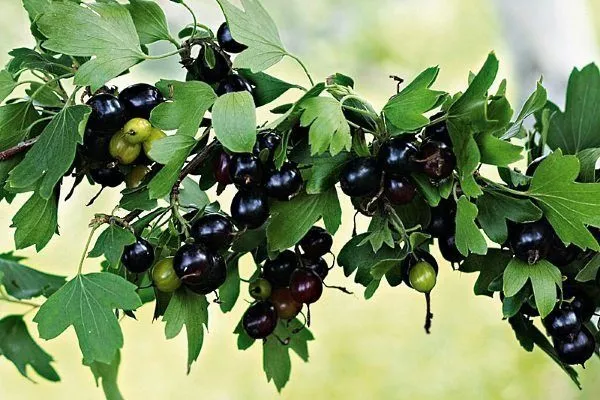
currant "Ermak"
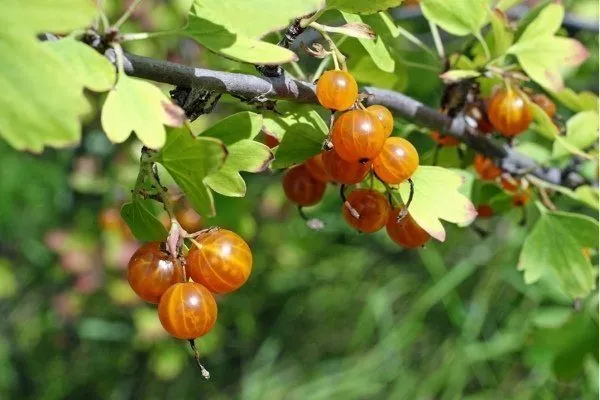
currant “Laysan”
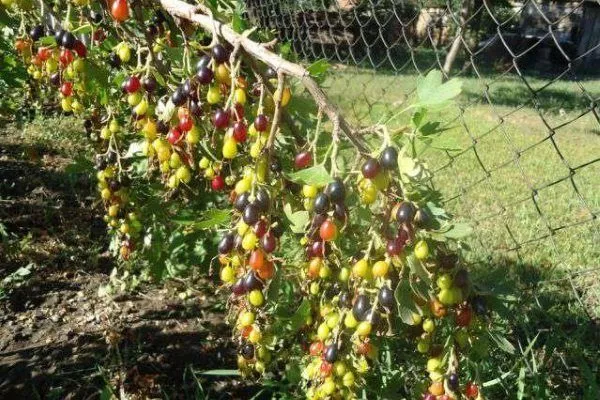
currant "Kishmishnaya"
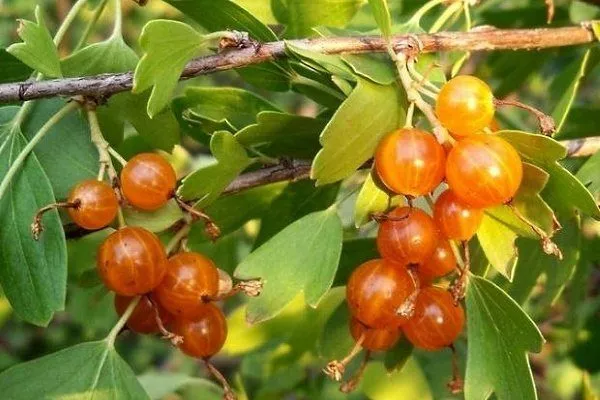
currant "Amber"
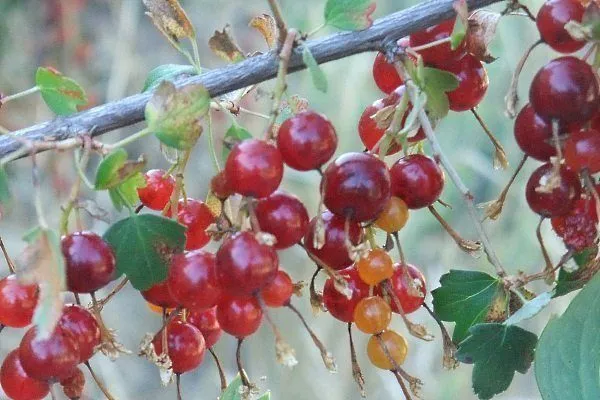
Michurinskaya currant
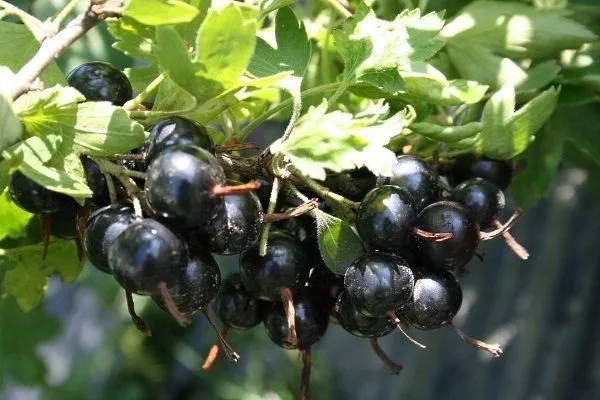
currant "Silver"
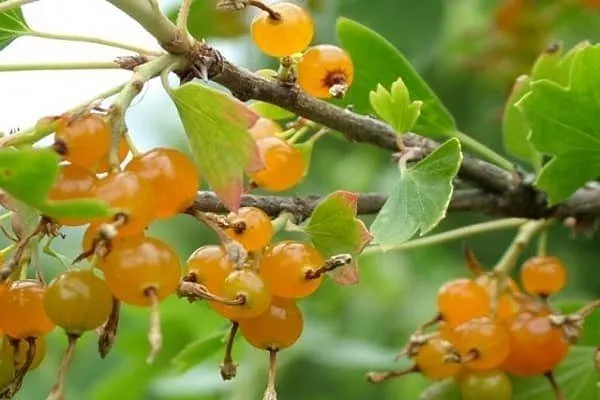
currant "Siberian Sun"
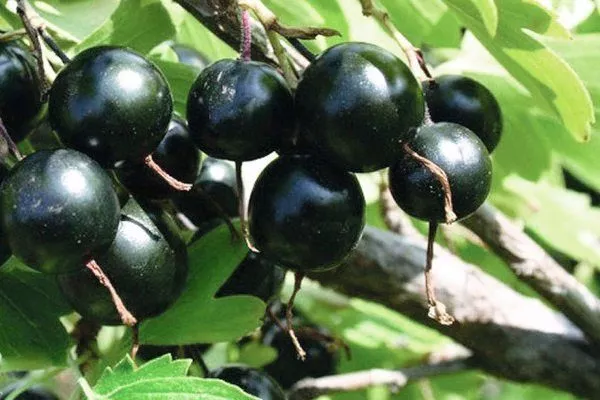
Black Pearl currant
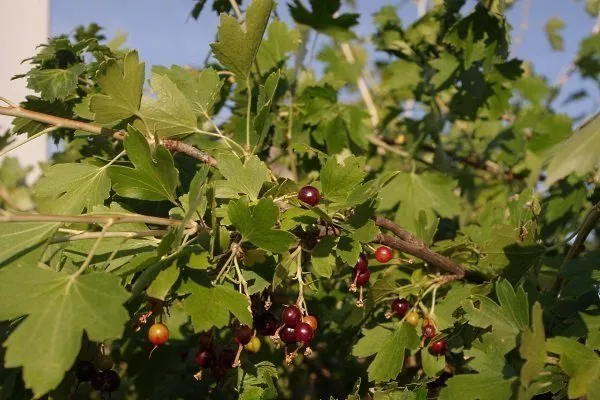
Caucasian currant
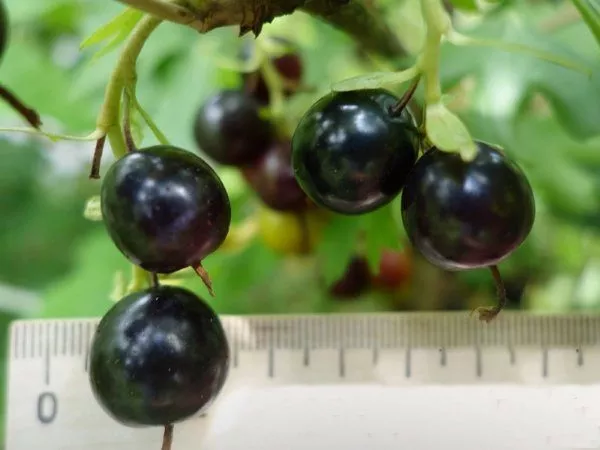
currant “Venus”
How to choose seedlings?
Choose a variety based on frost resistance and winter temperatures in your region. If planting in central Russia, choose varieties with frost resistance down to -40°C.
Rules for choosing golden currant seedlings:
- The recommended age of seedlings is 2-3 years.
- The seedling should have 3-5 main roots 20 cm long each, and well-developed fibrous rootlets. There should be no dried or rotted roots, no signs of disease, or pests.
- It is desirable to have two shoots 30-40 cm long. The bush should be intact, without cuts or broken branches.
- Planting material that has been lying in the sun all day is not suitable – the bushes may not take root.
- When transporting seedlings, wrap the roots in a damp cloth. If the root ends are damaged during transport, carefully trim them.
It is advisable to purchase seedlings only from specialized nurseries and centers that grow and sell planting material.
How to grow golden bush?
For an experienced gardener, planting and growing golden currants is easy. The key is to choose good planting material and plant it correctly—allow plenty of space for the bushes, as they spread out and can grow 2 meters or more in width.
Suitable climate
All golden currant varieties are suitable for central Russia and the southern regions. The crop experiences problems at temperatures below 40°C; if frosts reach higher, the bushes will freeze. However, currant varieties easily tolerate the heat and drought of the southern regions.
Optimal timing
Golden currants are planted in the fall and spring. When planted in the fall, the seedlings are planted from September to October, but no later than a month and a half before the first frost. In the spring, currants are planted early – immediately after the soil thaws.
Selecting a location and landing plan
Experts claim that golden currant is surprisingly unpretentious – the plant can grow where no other type of currant will survive.
Features of site selection:
- Lighting. Any area is suitable - sunny and shaded.
- Relief. You can plant it on a flat surface or a slight slope. It's best to choose a site facing west or southwest. Ideally, a site facing away from the wind is best.
- Economic use. Suitable for areas requiring a natural hedge. When planting near fences, space the plant 1 m from the fence.
- Ecology. Suitable for polluted industrial areas and gas-polluted cities.
- Soil. It grows in all types of soil—acidic and alkaline, dry and moist, sandy loam and clay loam. The main requirement is a water table no higher than 1 meter from the surface.
- ✓ Soil pH should be between 6.0-6.5 for optimal growth.
- ✓ The depth of groundwater is at least 1 meter from the surface.
Golden currant planting scheme:
- between adjacent pits – 1-1.5 m;
- between adjacent rows – 2.5-3 m.
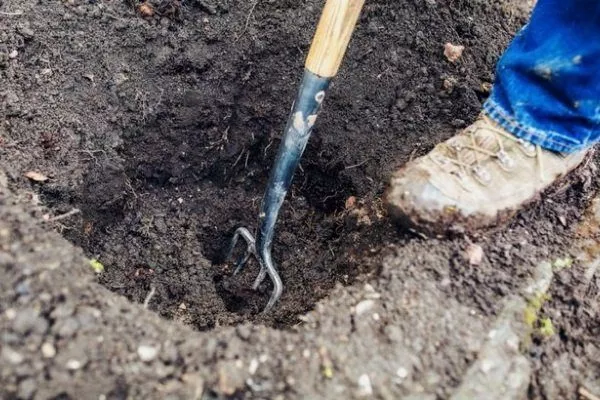
Step-by-step planting instructions
Step-by-step instructions for planting golden currants:
- Level the ground, remove weeds and dig the soil to a depth of a shovel blade.
- Fertilize the soil 2-3 weeks before planting. Add 6-8 kg of compost and 30 g of potassium salt per square meter. Before digging the soil for planting, scatter wood ash over the area.
- Dig a hole 0.5 m wide and deep.
- Prepare and fill the soil mixture into the holes:
- humus – 1 part;
- fertile soil (the top layer of soil removed when digging a hole) – 1 part;
- superphosphate – 200 g.
- You can also add nitroammophoska to the planting hole, after mixing it with fertile soil.
- Soak bare-root seedlings in a bioactive solution for 2 hours or in water for 2 days. Water closed-root seedlings generously to help them emerge from their containers.
- Place the seedling in the hole. Cover the roots with the prepared soil mixture so that the root collar of the seedling is buried approximately 5 cm deep—this is necessary to allow for the formation of adventitious roots.
- Place the seedling at an angle to encourage new roots to form. If you place it strictly upright, new stems may not emerge. Firm the soil down, pressing firmly against the trunk.
- Water the planted seedlings. A 3-year-old seedling needs 3-4 buckets of water.
- Cut back the seedlings, leaving 5-6 buds.
It is recommended to plant golden currant seedlings in holes; if they are planted in trenches, their roots will become intertwined.
The first berries will appear on young bushes next year.
Principles and nuances of care
Caring for golden currants is not much different from growing other currant varieties. The differences are primarily due to the plant's exceptional hardiness and undemanding nature.
Read the article about How to properly care for currants in the spring.
Watering
Young plants are watered once a week, while mature bushes don't require frequent watering. Watering currants 3-5 times during the growing season is sufficient. The key is to provide moisture during the fruit formation period.
Water is poured into specially dug furrows, taking care not to splash water on the leaves. One to two buckets of water are poured under each young plant, and three to three and a half buckets under mature bushes. Larger plantations are watered using sprinklers, adjusting the pressure to the desired level.
To harden the bushes and ensure future fruit production, currants are watered moderately before bud break and after the leaves fall. During dry periods, the bushes are watered regularly to maintain a productive harvest.
Application of fertilizers
Golden currants are hardy and undemanding, requiring little fertilizing. Compost placed in the planting hole is sufficient for at least two years. In the third year, the bushes begin receiving additional fertilizer. A mixture of manure or poultry manure and complex mineral fertilizers is applied to the root furrow.
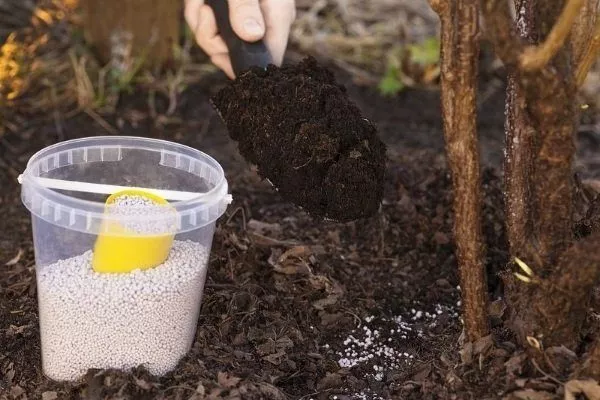
Currants they feed in the spring nitrogen fertilizers, andtop dressing in autumn Fertilization is carried out with compost or humus. For each bush, apply 4 kg of organic fertilizer. Also add 120 g of superphosphate and 2 teaspoons of potassium sulfate. Or, wood ash can be added instead.
Digging between rows
The row spacing is dug in the fall. This is essential if the soil is heavy and compact. If the soil is light, a thorough loosening will suffice.
The soil near the crown is dug to a depth of no more than 5 cm, otherwise the roots may be severed. Further from the crown, dig deeper – up to 10-15 cm.
You can learn about caring for currant bushes in the autumn from this article.
Weeding and loosening
Weeds are removed as needed. It's best to loosen the soil around the tree trunks after each watering—fluffing the soil ensures oxygen reaches the root system. The spaces between the rows are loosened twice: in spring and fall.
Several times per season tree trunk circles mulch With peat or sawdust. After 5-6 years of planting, you won't need to weed the currant bushes—they'll grow so much that there'll be no need for it.
Shaping a currant bush
Pruning is carried out in the spring, before the buds have swollen, or currants are pruned in autumn – when the leaves fall. A full harvest is reaped 3-4 years after planting. This characteristic of the crop should be taken into account and the plant should not be pruned in the first year. The first pruning is recommended in the second year of planting.
Shoots up to 5-6 years of age are productive. Pruning principles:
- The weakest basal shoots are removed to allow the remaining shoots to grow and develop better. When basal shoots stop growing, this indicates a halt in natural rejuvenation – the bush begins to age rapidly.
- In the spring, weak one-year-old basal shoots growing near the trunk are pruned. They are cut back to the ground. This is necessary to prevent the bush from becoming too dense. More has been written about pruning currants in the spring. here.
- Remove one-year-old growth, leaving 4-5 strong branches. Removing new growth promotes rejuvenation of the bush.
The following year, in May-June, pinch the tips of the basal shoots to encourage branching. These branches will form fruiting branches the following year.
After another year, formation continues as in the previous year. Then, sanitary pruning is performed annually, removing diseased and dead branches. The bush will be fully formed by 4-5 years. It should consist of 17-25 main branches of varying ages.
The first rejuvenating pruning is carried out 12 years after planting.
Preventive treatment against pests and diseases
Golden currants are highly resistant to diseases and pests, so preventative measures are usually sufficient for normal growth and fruiting. Disease prevention principles and features:
- Before pruning and before the sap starts to flow, water the bushes with hot water (80°C). Use a watering can with a shower head. One bucket per two bushes.
- Before the buds open, spray the bushes with Karbofos and 2% Nitrofen.
- When green growth begins, the bushes are treated with Fundazol. To enhance the effect, the plants are sprayed with Bordeaux mixture (up to 2%).
- In autumn, after pruning, the soil around the trunks is treated with colloidal sulfur (1%) or Karbofos (2%).
- Regularly prune diseased and dry branches, collect and destroy old leaves.
How to propagate a culture?
There are no problems with propagating golden currants – the plant can be easily propagated by any of the existing methods.
Methods of propagation of golden currant:
| Method of reproduction | How to perform? |
| Seeds | This method is not recommended. Seedlings grown from seeds do not inherit varietal characteristics. |
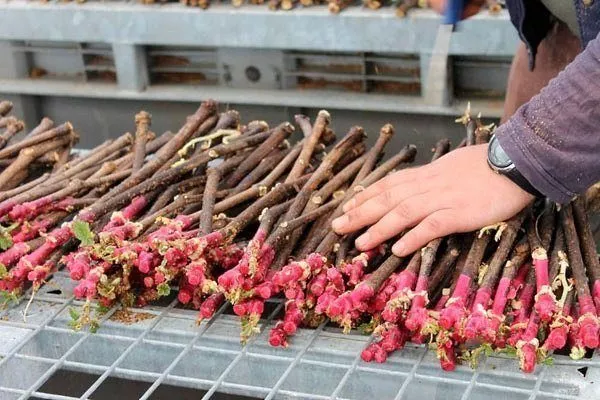
| Cuttings |
|
| By dividing the bush | In spring or fall, dig up the bush and divide the rhizome into several parts. The separated parts are planted in prepared holes. |
| Layering | In the spring, a two-year-old shoot is taken from the mother plant. The shoot is buried in a furrow, leaving a 20-cm tip. Once secured, it is grown until autumn, then replanted. |
Cuttings prepared in the fall for spring planting are “preserved” for the winter:
- The sections are dipped into melted paraffin.
- The branches are wrapped in wet wipes and placed in plastic bags.
- The bundles are placed under the snow until spring.
Golden currant, unlike red currant, is not propagated by vertical layering.
Diseases and pests and their control
Golden currants are generally disease-free. If left untreated, the plant can be susceptible to rust, septoria leaf spot, gray mold, and other berry diseases. The most common pests are: currants are attacked by aphids and spider mites.
| Diseases/pests | Symptoms/harm | How to fight? |
| Powdery mildew | This fungal disease causes a powdery coating to appear. The bushes stop growing and do not bear fruit. | Before the buds open, spray the plants and soil with 3% Nitrafen. |
| Anthracnose | There are brown spots on the leaves. The leaves dry up and fall off. | Spraying with Nitrafen and 1% colloidal sulfur – after flowering. |
| Septoria | The leaves become covered with small white spots, surrounded by a brown border. The leaves fall off. | Similar to the treatment of anthracnose. |
| Aphid | The shoots become deformed, the leaves curl, and the growth of the bush is inhibited. | Pre-flowering treatment with insecticides based on Pirimiphos-methyl. Or use Karbofos. |
| Spider mite | The leaves dry up, the berries ripen late. The leaves turn brown in May, then whitish. | Spray with 50% Karbofos. Sulfur preparations or garlic infusion are also used. |
| Currant bud mite | The buds become swollen and the apical leaves curl. | Treat with colloidal sulfur during the flowering period. |
Harvesting and storage
Some varieties have uneven ripening berries. But this is a minor drawback. Even when ripe, the berries don't fall off – they hang on the branches until frost sets in. You can pick them gradually, or wait until all the berries are ripe and pick them all at once.
Before processing, golden currants are trimmed on both ends. On one end is the stem, on the other is the dried flower remnant.
Application
Unlike red and black currants, golden currants are planted not only for their berries but also for ornamental purposes. This versatile plant yields 4-6 kg of fruit per bush, decorating and fencing a garden, and requires little care.
As a fruit and berry crop
In Russia, growing golden currants hasn't yet gained the popularity it has in its native America. Unlike black currants, this crop doesn't carry powdery mildew, the main berry scourge.
Its fruits are not rich in vitamin C, but they are low in acid and high in carotene. The berries are used to make juice, compote, jam, wine, and liqueur. They can be frozen and used as a filling for baked goods.
Golden currants have less acid than black currants, but they contain more sugar, carotene and some other useful substances, and their vitamin B content is many times higher than that of their competitors.
Use in landscape design
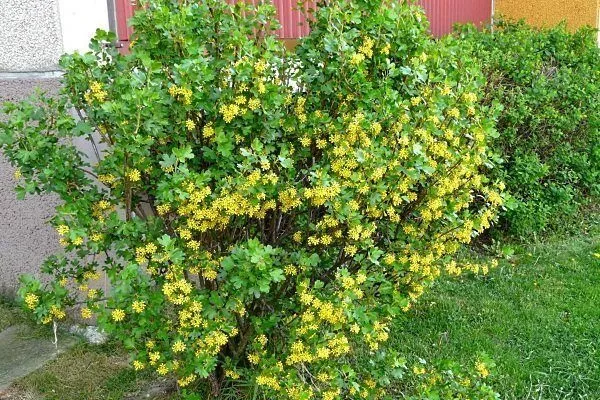
The plant is prized for its ornamental value. The shrub is particularly beautiful during flowering. Even after flowering, the currant bush retains its ornamental beauty. But it is especially beautiful in autumn, when the bushes turn a multitude of colors: green, yellow, and crimson. Golden currants are excellent for hedges. The plant can be grown as a standard.
Advantages and disadvantages
Advantages:
- Undemanding, resistant to diseases and pests.
- Frost resistance – the plant can withstand temperatures down to -30°C (-90°F) and even colder. Frost damage typically affects only the very tips of the shoots.
- Heat and drought tolerance. Leaves remain undamaged at temperatures of 40-42°C.
- Resistant to temperature changes.
- Flowering begins late, after the risk of recurrent frosts.
- It can grow in any soil and thrives in any location, including steep slopes.
- High yield.
Flaws:
- Due to lack of moisture or nutrition, the ovaries may fall off.
- Wet fruit removal.
- The fruits crack when overripe and in high humidity conditions.
- Young leaves contain a glycoside, a derivative of hydrocyanic acid. Because of this, the leaves are not suitable for brewing tea.
- Often young shoots do not complete their growing season before frost sets in, and therefore freeze.
Reviews of Golden Currant
Golden currant's popularity is likely yet to come. It's sure to appeal to "lazy" gardeners—this versatile crop requires minimal care, easily survives even the most severe drought, and is rarely susceptible to disease. However, if you're hoping to harvest large berries from the plant in addition to its decorative qualities, you'll need to devote some attention to it.