
The Zhemchuzhina currant variety is characterized by high winter hardiness, good productivity, and undemanding nature. It tolerates frosts down to -35°C and is resistant to anthracnose and bud mites. The berries are suitable for transportation, freezing, and storage. Despite its obsolete status, Zhemchuzhina remains a popular choice for many gardeners.
Features of the Black Pearl
| Name | Disease resistance | Ripening period | Size of berries |
|---|---|---|---|
| Black Pearl | High | Average | Up to 3 g |
| Pink Pearl | Average | The second half of July | 0.9-1.5 g |
| White Pearl | High | Mid-July | 6-9 mm |
The variety has become popular and sought after due to its consistent fruiting and sweet-tasting berries. It is frost-resistant and has a strong immune system.
Description of the plant and fruits
A medium-sized shrub, reaching no more than 1.3 m in height. Distinguishing characteristics:
- The branches are spreading. Young shoots are light green and slightly curved. Branches over two years old become gray with a yellowish tint and acquire a geniculate structure.
- The plant produces fruits on one branch, 9 pieces each, located on petioles.
- The lifespan of the shrub is about 15 years, and it grows successfully in the southern and eastern regions.
- The leaves are a rich green, angular, and five-lobed. The surface is smooth and matte, with slightly curved edges. The serrated edges are large and have white, saw-shaped tips. The low foliage density allows the shrub to receive good light.
- Buds form not on shoots, but on the stems from which they emerge. The future flowers have an elongated shape and pink scales.
- The fruits vary in size from medium to large (up to 3 g) depending on growing conditions. The berries have a perfect round shape, firm skin, and a glossy black color reminiscent of pearls.
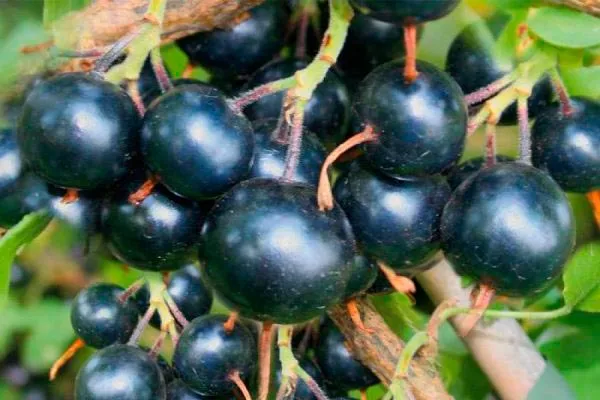
The flavor is rated 4.2 points due to its slight acidity, especially in larger specimens. The fruits ripen evenly, preventing them from falling off. The dense, dry skin allows for long-distance transport.
Useful properties and uses
Blackcurrant ranks third after lemon and rose hips in vitamin C content. It also contains other components:
- They are rich in vitamins P, K and B9, which makes them an excellent means of replenishing vitamin balance, especially in the spring.
- Due to the high content of biologically active substances, the fruits help with vitamin deficiency, increased mental and physical stress, colds and infectious diseases.
- Berries help strengthen the immune system, improve vision, prevent Alzheimer's disease, reduce the risk of diabetes, and normalize the digestive system.
- Currants are good for liver and kidney health.
- The leaves contain large amounts of vitamin C, phytoncides, tannins, essential oils, as well as elements such as magnesium, manganese, copper, silver, and others. A few leaves added to a teapot will enrich the drink with beneficial substances and impart a rich currant aroma.
The berries are versatile in use: they are eaten fresh, frozen, made into jams and preserves, and added to desserts and drinks.
Characteristics of the variety
Pearl is a mid-season variety. Flowering begins in May, and the harvest begins in July, beginning around the 20th.
Features of black currant:
- The maximum yield is reached in the fifth year of cultivation, with up to 6 kg of berries being harvested from a single bush. The average yield is 4-5 kg, which is a good result, as some varieties can yield up to 8-10 kg. Harvest the berries when they reach a uniform size.
- The crop is self-pollinating, but to increase productivity it is recommended to plant pollinator varieties nearby.
Currant bushes easily tolerate temperatures down to -35°C without cover. However, because the root system is located close to the soil surface, the plant's drought tolerance is low. When growing, pay special attention to regular watering.
Other types of Pearl
Currants come in two varieties: pink and white. Both are distinguished by their sweet taste, decorative appearance, and numerous beneficial qualities.
Pink Pearl
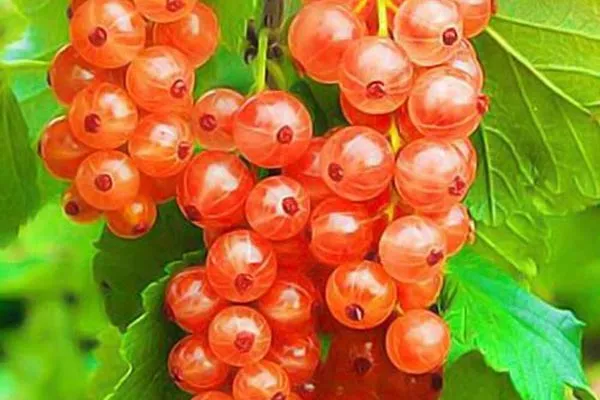
The compact, uncluttered bush makes care much easier. The fruits are a delicate shade of pink, and weigh between 0.9 and 1.5 g.
Characteristics of pink currant:
- The harvest ripens in the second half of July.
- The berries have thin skin, a fleshy texture and a rich aroma.
- Thanks to its slight acidity, this variety is considered one of the best dessert wines and is highly prized by gourmets.
One bush yields 4 to 6 kg of berries, and the plant does not require complex care.
White Pearl
The crown is medium-sized, rounded or slightly irregular in shape. Characteristic features include the following:
- The plant is highly resistant to fungal diseases and pests.
- The crop bears fruit in mid-July.
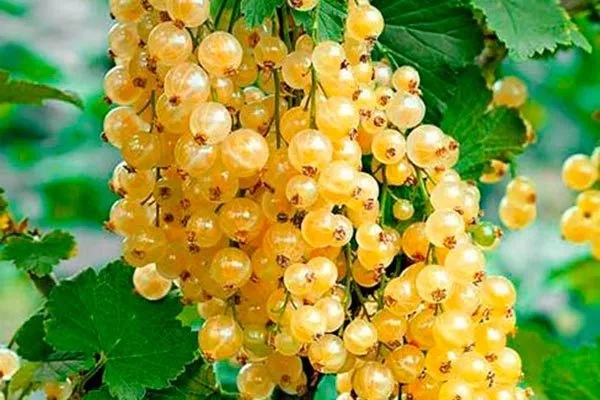
- The yield reaches 10 kg per bush, and the cream-colored fruits, 6-9 mm in size, are covered with a strong, translucent skin.
- The berries are used for home processing, freezing or making drinks.
- White currants are distinguished not only by their creamy color but also by their delicious flavor. They are especially popular among older people due to their ability to slow the progression of infectious diseases.
The berries are suitable for making fruit drinks, preserves, and refreshing drinks. This perennial shrub is well adapted to cold climates.
Landing features
Proper seedling cultivation plays a key role in its development and productivity. It's important to choose a well-lit location, prepare fertile soil, and plant the root collar 5-7 cm deep to ensure proper rooting.
- ✓ The planting depth of the root collar should be exactly 5-7 cm for optimal rooting.
- ✓ The soil temperature during autumn planting should not be below +10°C for successful rooting before frost.
The best time
Berry bushes can be planted throughout the growing season. In the fall, plant in late September or early October. For successful rooting, temperatures should be at least 10°C before frost sets in. This will allow you to harvest the first berries as early as mid-summer.
In spring, carry out this procedure before the buds open, allowing the bush time to begin growing. In this case, the first fruits are expected only in the second year, with a young seedling yielding about 2.5 kg.
Selection of seedlings and their preparation
When selecting planting material, inspect it carefully. Pay attention to its appearance:
- absence of unhealthy changes and growths;
- moist texture under the bark, indicating the plant's youth;
- well-developed root system, reaching 30 cm;
- smooth shoots without wrinkled areas.
If transporting a seedling, wrap its roots in a damp cloth or plastic wrap. Plant it immediately in the ground if possible, but if that's not possible, temporarily bury it in the soil at an angle and water it. This method will ensure the plant's survival for two weeks.
Before planting, carefully prepare the planting material:
- trim damaged or dried roots;
- trim the shoots if they are too long.
Soak the root system in water for several hours to ensure it is well moistened.
Soil, location and preparation
Choose a sunny or partially shaded location. The soil should be fertile, loamy or sandy, with a neutral or slightly acidic reaction (pH 5.5-6.5).
Prepare the soil:
- 2-3 weeks before planting, dig the soil to a depth of 30-40 cm.
- Remove weeds and apply fertilizer: 10 kg of humus or compost, 200 g of superphosphate and 40 g of potassium sulfate per 1 sq. m.
- Dig a planting hole 50-60 cm in diameter and 40-50 cm deep.
Avoid areas with stagnant water to avoid damaging the root system.
The landing process
Add a layer of fertile soil and fertilizer to the bottom of the hole (mix the soil with humus). Then follow the instructions:
- Place the seedling at a 45° angle to encourage additional roots and shoots to form.
- Fill the hole with soil, gradually compacting it so that there are no voids.
- Water the bush generously (10-20 liters of water).
- If the ground has settled, add a little soil.
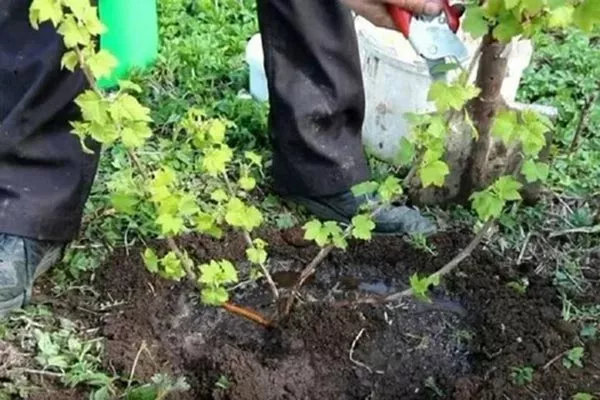
Cover the tree trunk circle with a 5-7 cm layer of mulch (peat, sawdust or humus) to retain moisture and protect the roots.
Care
Caring for the Zhemchuzhina currant variety is key to achieving a stable and abundant harvest. Standard agricultural practices are essential to maximize productivity.
Watering
Intensive watering of currants is necessary in the following cases: during fruit set, when the fruits are actively filling out, and during heavy autumn leaf fall. Before watering, make a furrow around the bush and pour the water into it.
Pruning and shaping the bush
Properly trained plants directly impact yield, the appearance of the hedge, and the quality of the fruit. Remove excess branches and shoots to direct nutrients to the fruiting parts.
The main stages of the event include the following steps:
- After planting the currants, cut each shoot, leaving a few buds to stimulate the growth of lateral branches.
- Over the next two years, remove unwanted annual branches from the base of the plant. This is the initial stage of bush formation.
- By the fifth year, complete the structuring process, but continue to prune.
Top dressing
Currants require additional fertilization, especially if the soil is low in fertility. Follow these recommendations:
- The crop responds well to organic compounds such as bird droppings and mullein infusion. However, if the mulch layer already contains organic elements, their effectiveness will be reduced.
- During and after the formation of ovaries, feed the currants with high-quality potassium and phosphorus minerals.
- In April, apply urea at a rate of 20 g per bush to stimulate growth.
- At the beginning of October, apply superphosphate (40 g per bush) and potassium sulfate (20 g per bush) to prepare for winter.
- After the 4th year of cultivation, add organic fertilizers (humus or compost) in spring and autumn.
If the soil was pre-fertilized at planting, then for the first 3-4 years, it's sufficient to apply urea in April and superphosphate in early October. After this period, resume regular fertilizing to maintain growth and fruiting.
Reproduction
You can increase the number of seedlings in your garden at home. Propagate currants only from healthy bushes, using one of three methods:
- dividing the bush;
- through layering;
- cuttings.
The most common method is division. In the spring, generously mound the plant and water it regularly in the summer. After the autumn leaves fall, it's ready for propagation. Divide it into sections with developed roots and shoots, then plant them separately. Fruit usually appears the following year.
Potential problems, diseases and pests
The blackcurrant variety "Zhemchuzhina" has low resistance to powdery mildew, a fungal disease that can completely or partially destroy the plant. Symptoms include the appearance of a whitish coating that eventually turns brown. The infection leads to leaf drop and the death of the bush.
Common diseases:
- Anthracnose: Slows the growth of young shoots and reduces crop quality. Use Bordeaux mixture or Topsin-M solution.
- Terry: A virus spread through plant sap. The disease is incurable.
- Septoria: Characterized by the appearance of white spots with a brown border on the foliage. At the first sign of the disease, remove the affected leaves and shoots and burn them away from the garden. Treat the plant with Bordeaux mixture (100 g per 10 liters of water) or a copper sulfate solution (50 g per 10 liters of water).
- Goblet rust: Causes rusty spots on leaves. The following products are effective: Topaz, Skor, Previkur, and Fitosporin.
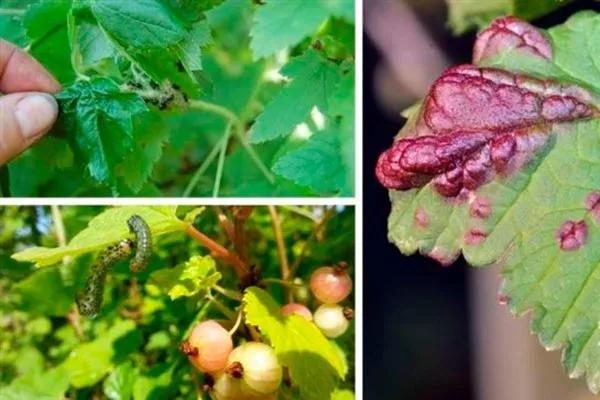
Main pests:
- Leaf gall midge: small mosquitoes that feed on plant sap.
- Spider mite: It weaves a web around the bush and sucks out the juices.
- Kidney mite: affects the kidneys.
Despite the plant's overall resistance to insects, aphids and spider mites may appear if not properly cared for. To combat these, inspect the plant regularly and treat it with insecticides if necessary. To prevent diseases, inspect the shrub regularly and promptly eliminate signs of infestation.
Advantages and disadvantages
Pearls have a number of advantages. Among the most notable are the following:
- High winter hardiness. The crop can withstand temperatures down to -35°C thanks to selection carried out in the harsh conditions of Siberia.
- Disease resistance. The variety is not affected by anthracnose and bud mite.
- Stress resistance. Temperature fluctuations and drought do not have a negative impact on the plant.
- Stable yield. Ensures a reliable harvest over a long period of time.
- Excellent condition. The berries tolerate transportation and freezing well.
Some gardeners note the crop's shortcomings as susceptibility to powdery mildew and the average sweetness of its berries. This is an outdated variety, inferior to newer, improved hybrids, but it continues to attract attention due to its excellent varietal characteristics.
Reviews
The Zhemchuzhina currant combines resistance to harsh climates, good productivity, and versatility. It remains a reliable choice for northern and central regions. Proper care minimizes potential problems and yields a bountiful harvest. This variety is suitable for both novice and experienced gardeners.