
Jostaberry is a hybrid crop that has become popular due to its hardiness and low maintenance. This plant rarely gets sick and grows into dense hedges. Let's learn about all the characteristics of this hybrid, how to plant and propagate it.
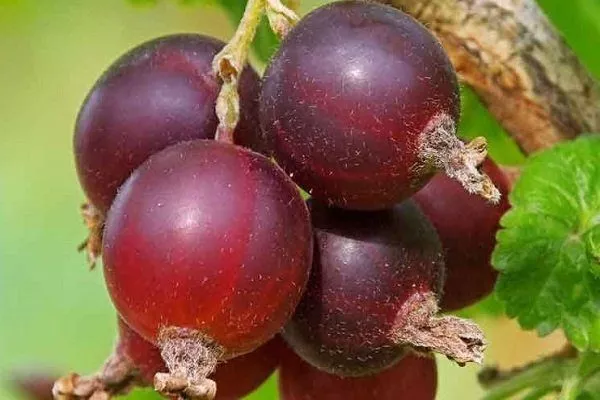
Yoshta
There are no thorns on the yoshta
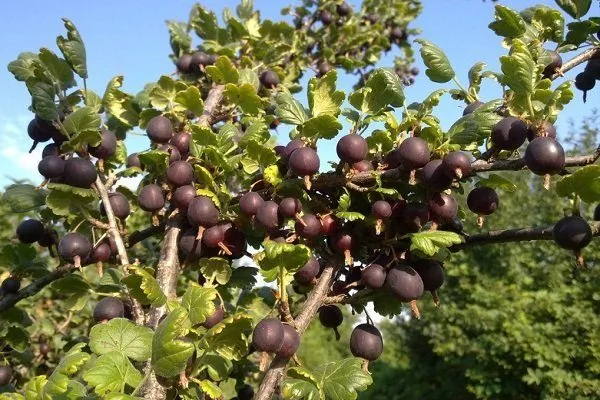
Jostaberry is undemanding to care for.
The history of the hybrid's emergence
At the beginning of the 20th century, enthusiastic breeders decided to cross black currants with gooseberries to create a hybrid that would inherit the best qualities of their ancestors.
The breeders expected to obtain a crop:
- thornless;
- high-yielding;
- with vitamin berries;
- resistant to terry and bud mites.
Breeders from several countries—Germany, the USA, Hungary, and Sweden—attempted to create a hybrid. In Russia, I.V. Michurin was involved in this work. But all attempts ended in failure—the hybrids either died or were sterile.
A successful result was only achieved in 1970, when genetic engineering, radiation, and chemicals began to be used in breeding. The hybrid was created by German breeder Rudolf Bauer.
The hybrid got its name, yoshta, by combining the first letters of the words Johannisbeere and Stachelbeere, which in German mean currant and gooseberry, respectively.
Jostaberry is a hybrid obtained by crossing the following crops:
- black currant;
- gooseberry spreading;
- Common gooseberry.
Description of the culture
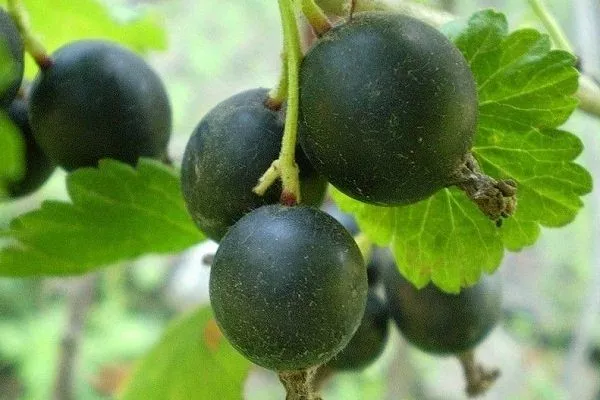
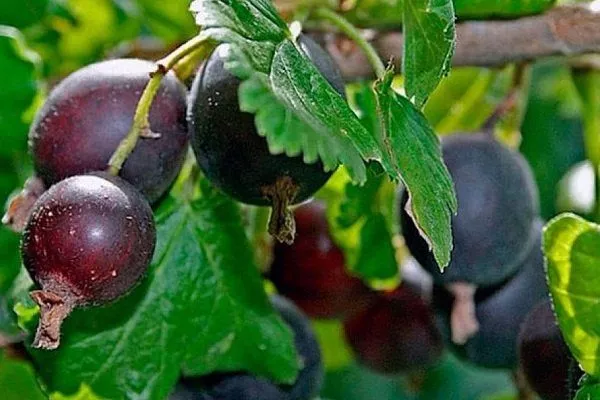
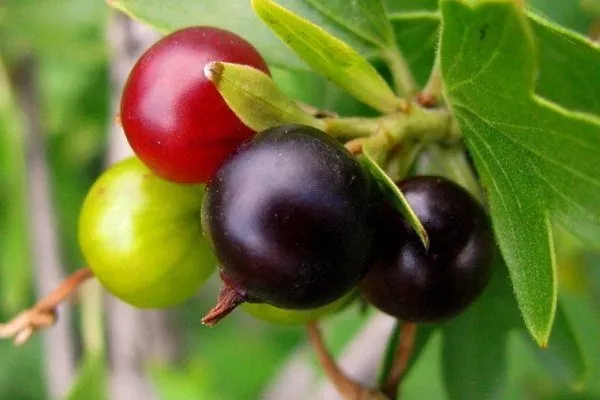
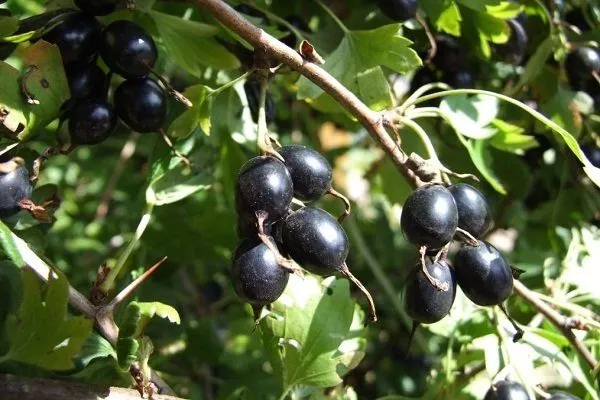
The jostaberry has significantly surpassed its ancestors in size. From a distance, the bush looks more like a currant due to its dark berries. But upon closer inspection, the hybrid reveals numerous differences from both its ancestors.
Appearance
The main feature of the yoshta is its dense and tall bushes with a wide crown, which is what allows the plant to be used to create hedges.
What does the bush look like:
- height – up to 2.5 m;
- number of branches – up to 20 pieces;
- roots are powerful, reaching a depth of 35-40 cm;
- flowers – five-petalled, bright yellow or burgundy (color depends on the variety);
- leaves - large, glossy;
- the buds are collected in inflorescences, with which the branches are densely strewn;
- The fruits are collected in clusters, each containing 4-6 fruits.
Jostaberries have few branches, so they don't require constant pruning, unlike many other garden shrubs. Flowering lasts 14-18 days, followed by berries.
Berries
Jostaberries begin bearing fruit in their second year, reaching peak production in the third or fourth year. The first berries are harvested as early as July, and the full harvest begins in late July or early August.
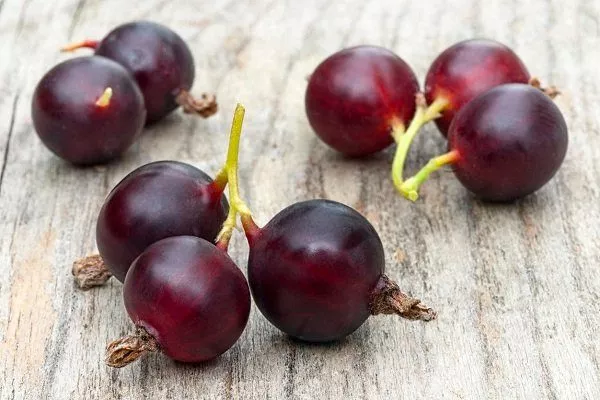
The average jostaberry yield is 4-6 kg per bush. However, some varieties yield 10-12 kg. Jostaberry berries are firmly attached to the stalks. The fruits have a pleasant aroma, vaguely reminiscent of currants, and contain small seeds inside.
Fruit characteristics:
- weight – 4-6 g;
- shape – elongated, oval or round;
- the skin is dense, glossy, black-purple in color;
- taste - sweet, with a hint of nutmeg.
Advantages and disadvantages
The hybrid developed by the Germans turned out to be less successful than the breeders who wanted to create the ideal crop had hoped. While the jostaberry has its advantages, it also has a number of disadvantages.
Yostaberries contain less vitamin C than currants, but 2-4 times more than gooseberries – approximately 1000 mg per 100 g of berries.
Pros:
- powerful bushes can serve as a hedge - dense and not requiring special care, including special pruning;
- ease of picking berries due to the absence of thorns;
- resistance to diseases and pests;
- sweet taste of fruits with a slight sourness;
- fruits that can be stored and transported easily;
- rapid adaptation to the environment;
- undemanding to care;
- Ripe berries remain on the branches and do not fall to the ground.
Cons:
- low yield (half as much as gooseberry);
- genetically modified product – for many gardeners this factor is important;
- the bush requires significant space to grow;
- refers to partially pollinated plants.
You can see what yoshta looks like and learn about its benefits in the following video:
Yoshta: benefits and harms
Breeders sought to create a hybrid whose berries would combine the beneficial properties of both their "parents"—currants and gooseberries. And to a certain extent, they succeeded.
The fruits of jostaberry contain:
- ascorbic acid – improves immunity, restores tissues, rejuvenates the body;
- rutin – a powerful antioxidant that slows down aging and improves vascular elasticity;
- potassium – normalizes the functioning of the musculoskeletal system, nervous and vascular systems, activates brain activity;
- iron – gives the body energy;
- iodine – normalizes hormonal levels.
Jostaberry fruits also contain a lot of copper, pectin, glucose, sucrose, phytoncides and natural acids.
Useful properties of yoshta berries:
- increase hemoglobin;
- accelerate metabolic processes;
- promote the formation of collagen (the elasticity and firmness of the skin depends on it);
- normalize the functioning of the gastrointestinal tract;
- prevent periodontal disease, pain in bones and joints;
- have anti-inflammatory and bactericidal effects;
- normalize blood pressure;
- promote weight loss.
Diabetics can consume yoshta because it has a low sugar content.
Contraindications:
- individual intolerance and allergic reaction;
- tendency to thrombosis;
- ulcer, gastritis, colitis, Crohn's disease.
If a person is allergic to gooseberries or currants, it is better not to eat jostaberries.
Popular varieties
| Name | Disease resistance | Ripening period | Bush size |
|---|---|---|---|
| Yohini | High | Average | Up to 2 m |
| Moro | Very high | Early | Up to 2.5 m |
| Rext | High | Late | Up to 1.5 m |
| Kroma | Average | Average | Up to 2.5 m |
| EMB | Low | Early | Up to 1.7 m |
If you're planning to plant jostaberry in your garden, keep in mind that there are several varieties of this hybrid crop. When choosing, consider not only the characteristics of the varieties but also the purpose for which you're planting the shrub.
Popular varieties of yoshta:
- Yohini. Height – 2 m, width – 1.5 m. The leaves are similar to currant leaves, but unscented. The fruits are sweet, round, with a dessert flavor. Yield – 10 kg per bush.

- Moro. This variety tolerates frost well. Height: 2.5 m. It's very productive, yielding up to 12 kg per bush.
- Rext. A frost-hardy variety, resistant to bud mites and diseases. Height: up to 1.5 m. Leaves resemble gooseberries. Fruits are black, round, weighing 3 g. A single bush yields up to 5 kg of berries.
- Kroma. This variety has thick branches and grows up to 2.5 meters tall. Its leaves resemble gooseberries. Kroma has an interesting characteristic: the berries initially taste like gooseberries, then like currants.
- EMB. A drought-resistant variety. Height – 1.7 m, width – 1.8 m. Fruits weigh 5 g each. The taste is reminiscent of gooseberries. Susceptible to bud mites.
Features of planting and growing
To get the most out of growing jostaberries, consider all the planting details. Choose a site based on their preferences, then prepare the soil and purchase healthy seedlings.
Choosing a location
Most jostaberry varieties thrive in well-lit areas, free from wind and drafts. However, direct sunlight is not recommended for this shrub.
What kind of soil does jostaberry prefer?
- Nutritious and loose, with good air and moisture permeability. Enriched with organic matter and high in potassium. The best soils for jostaberries are black soil and fertile loams.
- The crop grows well in moist, but not marshy, soil. Dry soil causes the fruit to become smaller and the shoots to dry out, while excess moisture leads to root rot.
- ✓ Soil pH should be between 6.0-6.5 for optimal growth.
- ✓ The groundwater depth must be at least 1.5 m to prevent root rot.
No special soil preparation is required for jostaberry. However, there are exceptions, such as when the site is overgrown with weeds and the soil is extremely infertile. It is recommended to dig the soil and add rotted manure at a rate of 15 kg per square meter.
Some nurseries selling jostaberry seedlings recommend not making special planting holes, but adding humus and mineral fertilizers during digging in the fall – 1-2 buckets of organic matter and 1 liter of ash.
Selecting a seedling
The nursery sells both closed-root and open-root seedlings. Open-root seedlings allow for the assessment of the root system's condition.
How to choose a good seedling:
- Avoid plants with dry or weathered roots—even if they do take root, they will grow very slowly. The root system must be fresh and moist.
- Check the bark – lightly pry it away; if it's green, the seedling is alive. High-quality planting material will have smooth and firm bark; if it's wrinkled, the seedling was dug up a long time ago.
- ✓ The presence of at least three well-developed roots at least 15 cm long.
- ✓ No signs of fungal diseases on the bark and leaves.
For seedlings purchased in the fall, be sure to trim all leaves. Do this carefully to avoid damaging the buds in the axils. Before transporting bare-root seedlings to the planting site, wrap them in a damp cloth and place them in a plastic bag.
It's best to select spring seedlings with unopened buds. Jostaberries can be planted in containers throughout the growing season, as long as it's warm outside. However, if it's hot, the young plant should be shaded with a protective screen.
Planting dates
There are no exact planting times for jostaberries, as they depend on the region's climate and current weather conditions. In southern and middle latitudes, planting begins earlier, while in northern latitudes, it begins later.
Jostaberry is planted in open ground twice a year:
- In the springBefore sap begins to flow. This begins when the soil temperature at a depth of 0.5 m reaches +6 to +9 °C. In temperate latitudes, this period occurs in April.
- In autumn. It is recommended to plant in the first weeks of September.
Preparing the planting hole
The holes are prepared 2-3 weeks before the expected planting of the seedlings. This allows the fertilizer to dissolve well and be absorbed into the soil.
How to prepare planting holes:
- Dig holes measuring 50x50x50 cm. Leave a distance of 1.5-2 m between adjacent holes if the crop is planted for its fruit, and 0.5 m if it is planted for a hedge.
- When digging a hole, set the removed soil aside. The top fertile soil layer will be used to cover the roots.
- Prepare a mixture of a bucket of compost/humus, 100 g of superphosphate, 500 ml of wood ash, and fertile soil. Mix the mixture thoroughly.
- If the soil is sandy, add clay to the planting hole to create a 2-3 cm layer. If the soil is clayey and heavy, add 2.5 liters of coarse river sand, and most importantly, create drainage, such as using broken brick. The drainage layer should be 15 cm thick.
Landing
If the site has been prepared in advance and the weather is favorable, proceed to planting the seedlings in the ground. But don't forget to prepare them first.
If the seedling is container-grown, place it in water for 10-20 minutes. For bare-root seedlings, soak them in water for 24 hours, then dip them in a liquid manure-clay mixture just before planting.
The procedure for planting yoshta in the ground:
- Inspect the root system of the seedlings. Trim off any dry or damaged roots. Make transverse cuts to minimize wounds. Try to leave as many rootlets as possible.
- Pour 2-3 buckets of water into the hole.
- When the water is completely absorbed, place the seedling in the center of the hole and spread out its roots, placing a support nearby.
- Spread the roots of the seedling and place it so that the root collar is a couple of centimeters above ground level.
- Tie the jostaberry to the support with soft twine and fill the hole with fertile soil obtained from digging. Firm the soil slightly and water again.
- Shorten the shoots, leaving no more than 3-4 buds.
If planted incorrectly, voids will form between the seedling's roots, which will subsequently cause soil settlement. This will cause the root collar to become buried, which may rot, and the plant will die.
An experienced gardener will explain the rules for planting jostaberries in the following video:
Care instructions
Caring for jostaberries is easy, even for the most inexperienced gardeners. The main tasks are fertilizing and watering. Periodically, jostaberry bushes require loosening, spraying, and pruning.
Watering
Jostaberry thrives on moisture, but this often becomes its downside if the summer is dry and hot and watering is inconsistent. Water shortages lead to stunted growth and development.
How to water jostaberry:
- It's best to keep the soil slightly moist at all times, so during hot summers, water the plant generously. The soil should be moist to a depth of 40 cm.
- Water carefully, avoiding contact with the shrub. Dig a trench 10-15 cm deep and 20 cm wide around the tree's trunk, and pour water into this trench.
- Watering frequency depends on the weather and the presence of mulch. The recommended watering rate is 30 liters per square meter.
After watering, loosen the soil as soon as it dries out slightly. If the soil is mulched, loosening is not necessary.
Top dressing
Jostaberries can grow without fertilizer, especially when used as a hedge. However, if a gardener is hoping for a good harvest, they should be fed several times throughout the season.
How to feed jostaberries:
- In the spring, after the snow melts, apply a nitrogen-containing fertilizer—urea or saltpeter (40-50 g per square meter)—or superphosphate (30 g) combined with potassium sulfate (20 g). These fertilizers will ensure enhanced foliage growth.
- After flowering, around the beginning of summer, apply a solution of monopotassium phosphate – 10-15 g per 1 sq. m. In summer, jostaberries can receive additional nutrition from organic mulch.
- In July, feed the bushes with organic matter - cow dung or bird droppings (1 liter per 1 sq. m).
- In the fall, after the berries have been picked, add superphosphate (30 g per 1 sq. m) or humus (2 buckets per 1 sq. m).
As the bush grows, the fertilizing doses change slightly. Starting in its fourth year, more potassium fertilizer is applied, and less phosphorus.
Pollination
Gardeners often plant currant or gooseberry bushes near jostaberries to ensure cross-pollination and good fruit production. Jostaberries are partially self-fertile, so the harvest depends on the presence of pollinators.
For jostaberries, the best pollinators are representatives of the parent forms – various varieties of gooseberries and black currants.
Pruning and shaping the bush
Jostaberry does not require pruning, but gardeners still have to do this procedure.
Features of pruning:
- In the spring, sanitary pruning is performed, removing damaged, dry, and diseased branches. Healthy shoots are shortened if they have been slightly frozen. This procedure is carried out in April, before the buds open.
- Shoots that have reached 7-8 years of age are shortened, leaving 6-8 buds.
- In the fall, repeat sanitary pruning is performed immediately after the plant enters dormancy, in October-November. Broken branches are removed, as well as shoots infested with glasswings—the larvae of this moth chew the shoots from the inside.
Jostaberries grown for hedges are pruned to form the desired shape.
Mulching
Gardeners call covering the soil with natural materials mulching. This simple agricultural practice solves several problems at once.
Benefits of mulching:
- due to the reduction of water evaporation, the frequency of watering is reduced;
- weed growth slows down - under a layer of mulch they grow much more slowly;
- overheating of the roots is prevented if light-colored mulch is used;
- If the soil is mulched with organic matter, the plant receives additional nutrition from its rotting.
Mulching is used not only during the growing season but also during winter. A thick layer of mulch is spread over the soil near the trunks, preventing freezing, weathering, and erosion.
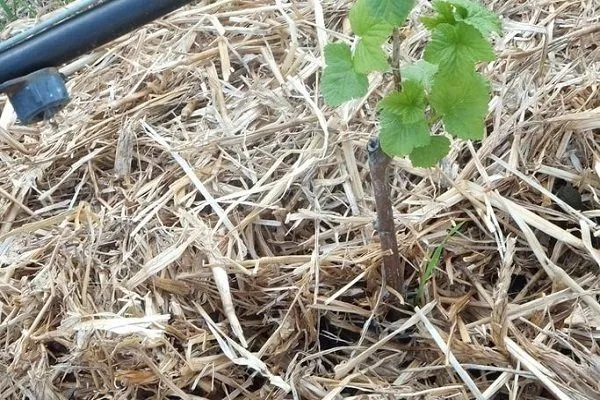
Gardeners use a wide variety of materials as organic mulch. They add grass, hay, straw, shredded paper, sawdust, shredded cardboard, compost, bark, wood chips, or leaves to the soil.
Inorganic materials are also used for mulching. They don't decompose and don't provide additional nutrition for plants. However, they don't attract slugs, mice, and other pests.
Examples of inorganic mulch:
- gravel;
- pebbles;
- sand;
- geotextile;
- non-woven polypropylene materials.
Reproduction
Jostaberry propagates well vegetatively—by division, layering, and cuttings. Each gardener chooses the method they find most convenient and effective.
By division
Jostaberry is propagated by division in the fall, and only when transplanting to a new location.
The order of reproduction by division:
- Dig the bush out of the ground. Shake the soil off the roots.
- Using pruning shears or a sharp knife, cut the bush into sections. Each section should have 1-2 stems and well-developed roots.
- Sprinkle the cuts with crushed charcoal.
- Plant the parts of the divided bush in the prepared holes.
Layering
Jostaberry is propagated by horizontal and vertical layering. This is done in the spring, when the soil has warmed up well.
The procedure for propagation by layering:
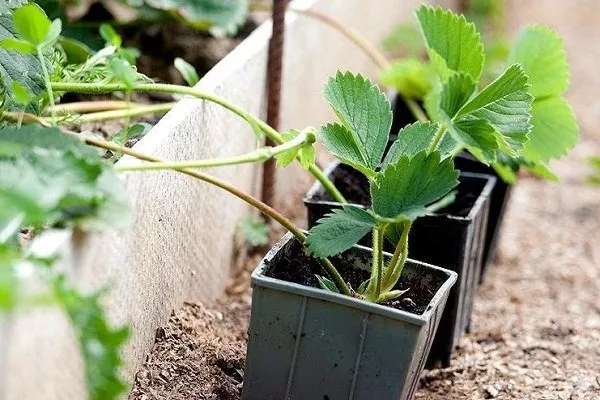
- Bend a one- or two-year-old lateral branch down to the ground into prepared furrows (depth – 10 cm). Secure with metal staples.
- Cover the branches with nutritious soil and pinch off the tops.
- As the shoots grow, hill them up several times.
- In autumn, separate the cuttings from the mother bush and transplant them to a permanent location.
Cuttings
Jostaberry propagation is accomplished using green or woody cuttings. The latter are taken from 2-4 year-old branches in late September. The cuttings are 15-20 cm long and contain 5-6 buds. The upper, immature portions of the shoots are used for harvesting.
The procedure for propagation by cuttings:
- Cut the shoots. Make the lower cut at a 45-degree angle, and the upper cut 1 cm above the bud.
- Plant the cuttings in a dug-up bed in partial shade. For clay soils, add sand or vermiculite—one bucket per square meter.
- Place the cuttings into the soil at an angle, spacing them 10-15 cm apart. Water and sprinkle with peat or compost to retain moisture.
Care for the planted cuttings – water, loosen the soil, and remove weeds. In the spring, the cuttings begin to grow vigorously. Rooted seedlings are nurtured further and transplanted to their permanent location.
Preparing for winter
In regions with mild winters, jostaberries don't need to be covered for the winter—they survive the winter well thanks to their excellent frost resistance. In areas with harsh winters, the plant needs to be insulated.
How to prepare jostaberries for winter:
- Water the bushes generously after harvesting.
- Mulch the tree trunk circle with a thick layer of mulch (7-8 cm).
- 2-3 weeks before the first frost, cover the trunks of the bushes with a covering material that allows air to pass through (for example, burlap or agrofibre).
- When snow falls, rake the snowdrifts up to the trunks of the bushes.
Diseases and pests
One of the goals of yoshta breeding is high resistance to diseases and pests. But even this shrub is not immune to all diseases, especially if poorly cared for.
The most dangerous diseases of yoshta:
- Anthracnose. The main symptom of the disease is red and white spots on the leaves. Treatment is with Bordeaux mixture.
- Powdery mildew. Typically affects weak shrubs. Treated with Fitosporin.
- Terry. This disease is caused by a virus. It has no cure and manifests itself over time—over the course of 4-5 years.
- Mosaic. The leaves become covered with yellow and brown spots. The bush dries up and dies. This viral disease is incurable.
- Rust. Rusty spots appear on the leaves. Affected bushes dry up and lose their leaves. Treatment is with Fitosporin.
Most diseases can be prevented with preventative spraying. It is recommended to treat bushes in early spring, before buds open, and in autumn, after the leaves have fallen.
Preventive spraying agents:
- urea – 70 g per 1 liter of water;
- Bordeaux mixture – 1% solution;
- copper sulfate – 10 g per 1 l.
Pests that affect jostaberry:
- Kidney mite. This is the most dangerous pest, carrying viral diseases. Swollen buds are picked and burned, as they harbor mites.
- Aphid. Insects suck the sap from the leaves. They curl up, and branches develop poorly. The bushes are sprayed with Fitoverm.
Harvesting and transportation of crops
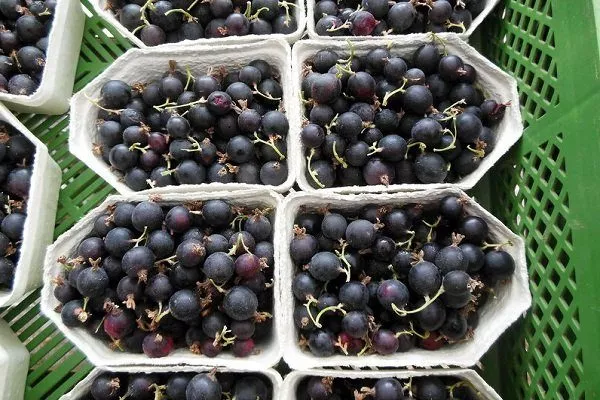
The berries ripen gradually, but mass harvesting begins in mid-July, when they reach biological maturity. The harvest is carried out in dry weather. The best time to pick berries is morning or evening. The berries are collected in plastic or wooden containers.
Jostaberries, with their dense, crack-resistant skin, travel well in transit. They don't get crushed, don't leak juice, and retain their marketable appearance. Just remember not to overstuff the container with berries; a 15-cm layer is sufficient.
Features of consumption and storage of yoshta:
- The berries are eaten fresh and processed. They are used to make jams, preserves, compotes, and other preserves.
- To preserve berries fresh, they are frozen. The optimal storage temperature is -16°C. Under these conditions, the berries will last for about a year.
This currant-gooseberry hybrid evokes mixed reviews. Some gardeners rave about it, while others believe it's inferior to its parent varieties in terms of taste, aroma, and appearance. In any case, this hardy plant deserves the close attention of our gardeners and summer residents.