
Versailles white currant is a variety renowned for its productivity and disease resistance, as well as its ability to quickly adapt to new conditions. The berries are characterized by a delicate flavor and rich aroma. Before purchasing, it is important to carefully review the characteristics of the crop and the planting conditions.
History of selection
The white currant variety (ribe niveum) is a respected species developed in France in the 19th century. In 1959, it was officially included in the Russian State Register.
This variety is well-suited for growing in mild climates, but can also be cultivated in the south and even northern parts of the country. It is recommended for breeding in the following regions:
- Northern and Western Federal Districts;
- Volga-Vyatka and Central Chernozem regions;
- Middle Volga and Ural regions.
Description and characteristics
To learn about the characteristics of the Versailles variety, you need to consult detailed descriptions, photographs, and the opinions of experienced gardeners. The appearance of the bushes, leaves, and berries is the only way to accurately identify this variety.
| Name | Disease resistance | Ripening period | Berry size |
|---|---|---|---|
| Versailles White | High | End of June | 8-10 mm |
| Snezhana | Average | Beginning of July | 7-9 mm |
| Ural white | High | Mid-July | 6-8 mm |
Bushes
The Versailles currant has a particularly developed root system. Its horizontal shoots extend into the ground to a depth of approximately 35-45 cm and can extend beyond the crown of the bush, while the central root reaches a depth of over 100 cm.
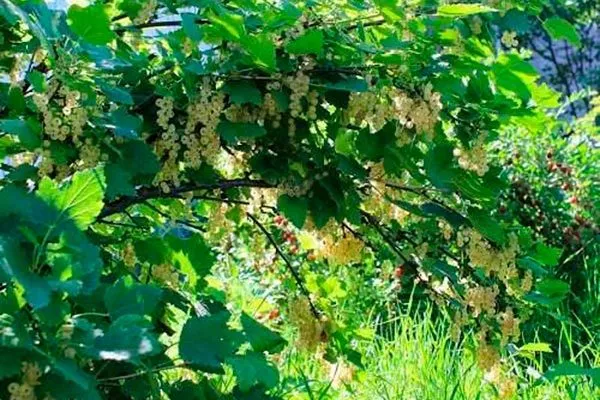
The bushes of this currant variety are tall – their height can vary from 120 to 160 cm. However, there is one peculiarity: the shoots do not have particularly vigorous growth.
The Versailles currant's leaves are large and dark green with a bluish tint. They are five-lobed, with a finely pubescent underside. The edges of the leaf blades are decorated with short, blunt teeth.
Flowers and berries
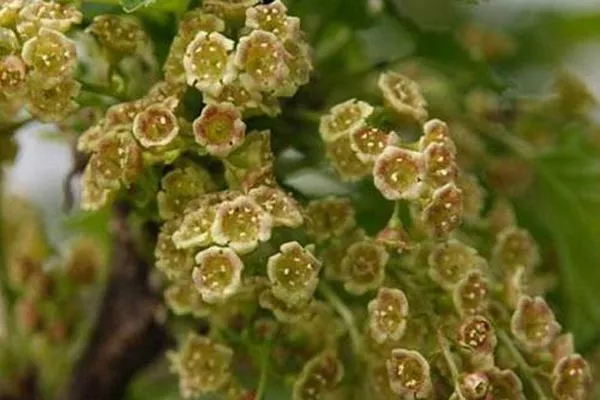
The Versailles white currant attracts attention with its yellowish bell-shaped flowers that spread along long branches. Flowering leads to fruiting, and the berries grow on long, straight stems.
Other varietal characteristics:
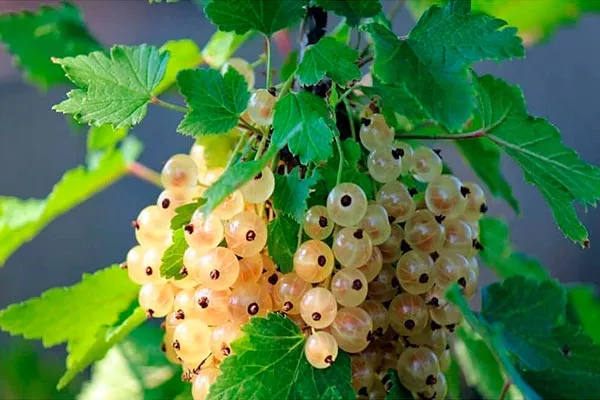
- The fruits are large – up to 8-10 mm and weigh up to 1.2-1.4 g. They have a transparent, delicate creamy skin and sweet and sour juice.
- One brush can contain up to 9-10 berries.
- The Versailles currant has a hardened skin, which ensures its resistance to transportation.
- Plants of this variety are frost-resistant, and caring for currants does not require much effort and is no different from the procedures for other berry bushes.
- The berries of this currant are approximately the same size.
Drought resistance, cold resistance
The Versailles white currant is frost-resistant and can withstand temperatures down to -35 degrees Celsius, but in the absence of snow cover during the winter, it is recommended to protect the root system.
This variety can easily tolerate short periods of drought. During hot, dry summers, regular watering is necessary, especially during fruit formation.
Productivity
The average yield per bush is 3.8-4 kg. The Versalskaya variety's berries are firmly attached to the stalks and retain their quality, flavor, and color in the sun. Thanks to their dense skin, the berries can withstand long transportation without loss of quality or volume.
When do the berries ripen?
From the moment of planting, currants begin to bear fruit in the third year, with the peak harvest occurring in the sixth year. Versailles white currants ripen in late June and ripen synchronously, allowing for harvesting from a single bush in a single harvest.
Application
Versailles currants have a higher dry matter content (18%), sugars (7.5%), and acidity (2.3%). These berries are distinguished by a rich, sweet and sour flavor.
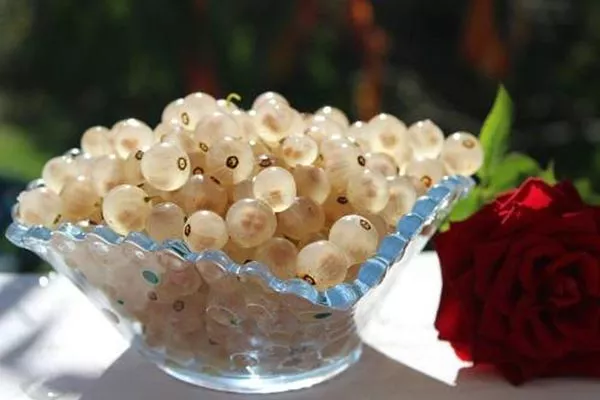
The Versailles currant's uniqueness lies in its versatility: it can be used both fresh and processed. Its sweet and sour flavor is especially distinctive when used in preserves, jams, and marshmallows.
White Versailles currants are recommended to be stored in the refrigerator, but no longer than three days. For transportation, the fruits should be packaged in sturdy, tightly sealed containers.
Methods of reproduction
Versailles is propagated by various methods, but only two are considered the most effective: cuttings and layering.
Layers
This is one of the most popular methods for propagating the Versailles white currant variety, carried out in early spring, before the plants begin to sap. It involves the following steps:
- Using a shovel, dig a trench about 10-12 cm deep around the most fruitful currant bush.
- Fill it with fertilized soil.
- Next, select several young shoots, which can be either one-year-old or two-year-old.
- Bend them so that the top remains on top.
- Secure the shoots with metal staples, cover with soil, and moisten. After a while, the shoots will root and begin to develop into new plants.
- When they reach a height of 10-15 cm, earth them up with soil to half their length. After 14-16 days, repeat the earthing process, but this time to the middle of the shoot.
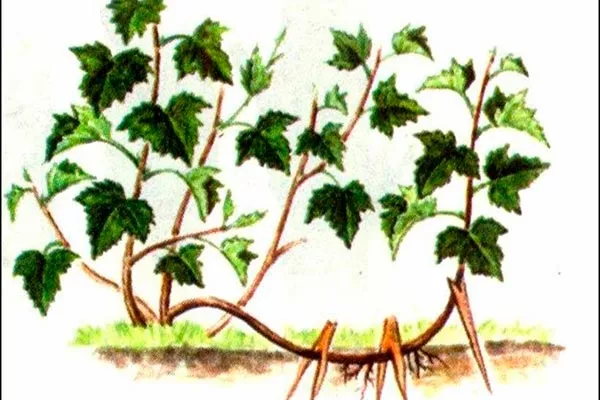
By autumn, mature white currant seedlings form on the layers, which can be used for transplanting to a permanent location or for further cultivation in a separate bed. Seedlings grown from the layers begin to bear fruit in the second or third year.
Cuttings
Versailles currants are propagated by cuttings. In February, cuttings are taken from shoots growing in the center of the bush and are between one and two years old. They should be at least as thick as a pencil. Each cutting consists of five to seven buds and is approximately 20 cm long.
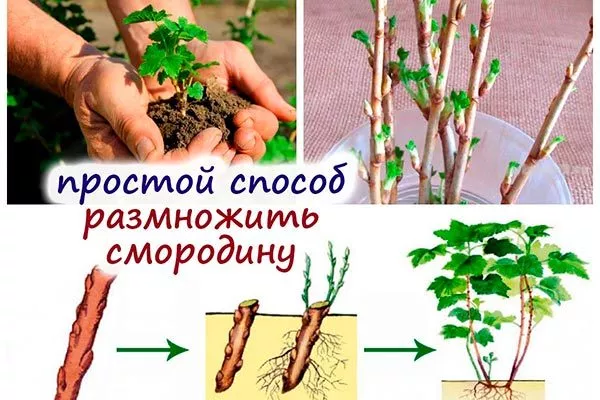
Next, do this:
- Cut the ends of the currant cuttings at an angle and treat them with wood ash.
- Then immerse the bottom of the cutting in water to stimulate root formation.
- When the weather warms up, place the cuttings in a bed of loose soil at a 45-degree angle. Protect them from direct sunlight by placing plastic jars on top to create a greenhouse-like microclimate.
- After two years, when the seedlings become strong enough, transplant them from the nursery to a permanent location.
During the period of currant growth from cuttings, it is necessary to regularly fertilize and water it.
Planting currants
To ensure the tastiest and largest Versailles currant berries grow, it's important to carefully prepare the planting site and pay attention to their care.
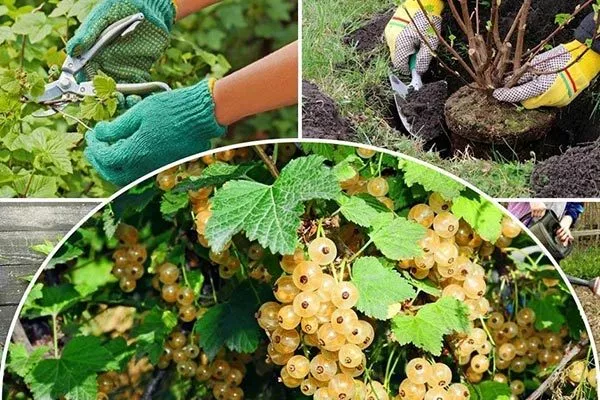
Selecting a territory
To choose the ideal location for a currant bush, pay attention to the following aspects:
- Illumination. It's important that the bush receives enough sunlight to ensure the berries are sweet and flavorful. Make sure the area isn't in the shade, otherwise the berries will become more sour, making the currants vulnerable to diseases and pests.
- No wind. Choose a location protected from strong winds and drafts to prevent the bush from being exposed to unwanted influences. It's best to plant currants on the south side of a house, fence, or other structure.
- Groundwater level. Avoid planting currants in areas with high water tables. Avoid low-lying areas and areas where snowmelt or rainwater can accumulate.
Period - spring or autumn?
Young currant bushes can be planted in the ground in either spring or fall. Experienced gardeners, however, recommend the latter option, despite beginners' concerns that the young plants won't survive winter frosts. If planted at the right time, the seedlings will have time to establish themselves and survive the winter without issue.
Autumn planting has a number of important advantages:
- Favorable temperature conditions and sufficient soil moisture contribute to better rooting of young bushes.
- Cuttings and seedlings concentrate their efforts on developing the root system, since the above-ground parts are in a dormant period, which has a positive effect on future yields.
- The risk of plant infection by diseases and pest attacks during this period is significantly reduced, as they are less active.
Depending on the region's climate, these dates can vary from early September in the northern regions to late November in the southern regions. In central regions, the optimal time for planting currants is between September 10 and October 15.
Preparing soil and seedlings
Currants prefer soils with good drainage and water permeability. Loams and sandy loams with low to moderate acidity are preferred. Site preparation for planting begins a month to a month and a half before the planned planting season.
When preparing the soil, it is necessary to thoroughly clear it of weeds, leaves, and remains of last year's plants, which can be a source of diseases and pests in the spring.
To ensure maximum fertility, it is recommended to apply the following fertilizers per 1 sq. m:
- 8-10 kg of humus or compost;
- 60-80 g Superphosphate;
- 45-50 g of potassium salt;
- 350-400 g of wood ash.
To ensure a healthy currant bush that produces fruit for many years, choosing a high-quality seedling is key. An optimal seedling should meet the following criteria:
- age – two years;
- the presence of 2-3 well-developed shoots containing fully formed and living buds;
- the roots must be healthy, flexible, at least 10 cm long, without any signs of disease or pests;
- The leaves should be green, fresh and undamaged.
- ✓ The presence of at least 3 healthy roots at least 15 cm long.
- ✓ No signs of disease on the bark and leaves.
Before planting, the seedling should be prepared a day before:
- Using pruning shears, remove dried and damaged parts of the roots, after which they are placed in water with the addition of potassium permanganate or a similar antiseptic for 20 minutes.
- Then the roots are sprayed with a solution of root formation stimulator and left in it for 6-12 hours.
- The roots are dipped into a mixture of clay and compost, which should have the consistency of a cream and tightly envelop the roots.
Technology
There are two methods used to grow currants: bush and row (strip) cultivation. In the first method, plants are placed at the corners of a rectangle measuring 1.2-1.5 m on each side. In the second method, they are planted in deep trenches spaced 2 m apart, with 80-90 cm between plants.
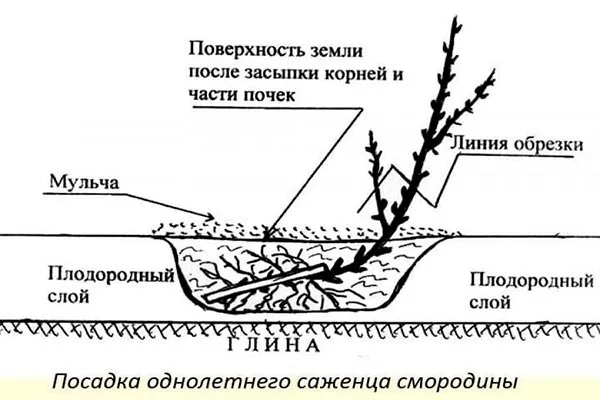
The planting process involves several key steps:
- On the prepared area, dig a hole 40 cm deep and 50 cm in diameter, or dig a trench of the same dimensions.
- A drainage layer of expanded clay or fine gravel is poured into the base of the pit or trench to a height of 10 cm, then a layer of fertile soil is placed.
- Having placed the seedling on a mound of earth, carefully distribute the roots along its entire perimeter.
- Then the hole or trench is carefully filled with the substrate, lightly compacting it to prevent the formation of air bubbles.
- The root collar of the seedling should be 5 cm above the soil level.
- A mound of earth is formed around the planted plant and the area is sprayed with 12-20 liters of water to ensure sufficient moisture.
Care Features
In order for the Versailles currant to bear fruit, it is necessary to carefully care for it: regularly spray it, fertilize the soil and destroy unwanted plants.
Watering
It is recommended to moisten the soil every three days, using 10 to 20 liters of water for each bush, depending on the size of the plant.
How to feed?
This variety is particularly valued for its ability to respond effectively to regular fertilization. Currants older than three years require additional nutrition. During the first two years after planting, the plant receives sufficient nutrients from the nutrients added at planting.
- In spring, before the buds open, apply nitrogen fertilizer at a rate of 30 g per bush.
- After flowering, feed with complex mineral fertilizer.
- In the fall, apply phosphorus-potassium fertilizers to prepare for winter.
The following are the supplementary feedings:
- At the beginning of spring, when the snow is just beginning to melt, 55 g of urea is placed under each bush.
- During the flowering period, phosphorus-potassium fertilization is carried out.
- After harvesting, spray with a solution of chicken manure (900 ml per 10 liters of water) with the addition of superphosphate (35 g) and potassium sulfate (15 g).
Trimming
It's recommended to perform the first pruning during planting, and the second one a year later, in the fall. By this time, the young bush will have formed 6-7 main shoots, of which the strongest should be left and the rest removed. This procedure should be performed annually.
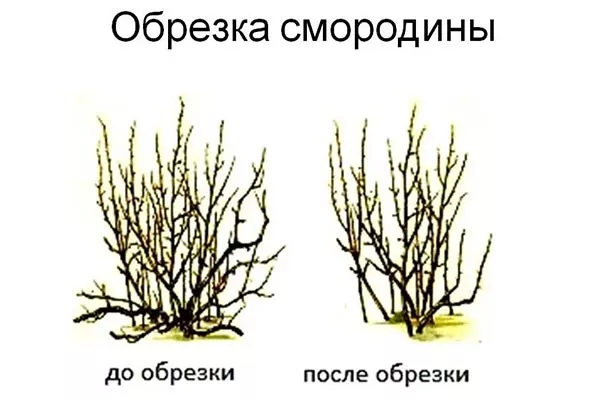
Five years after planting, the bush will be fully formed and contain 16 to 20 skeletal branches. In subsequent years, when pruning, focus less on renewing 7- to 8-year-old branches, leaving shoots for replacement.
Preparing for winter
Preparing currants for the winter months includes the following steps:
- Carrying out soil loosening and watering for the purpose of moistening.
- Cover the base of the bush with a 15 cm layer of compost, rotted leaves or humus to improve soil moisture.
- In areas with particularly cold winters, additional protective covering for branches is necessary. They are tied into bundles and wrapped with a special material.
Harvesting and storing currants
A unique feature of this variety is that the berries do not fall off the bush, allowing gardeners to wait until they are fully ripe and harvest in one sitting. Currants are harvested with the bunches.
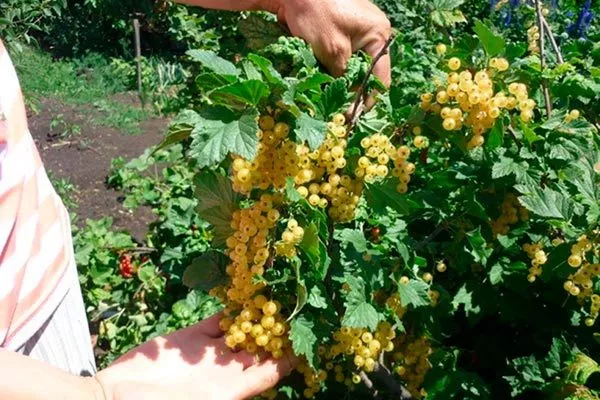
For long-term storage, berries are placed in the refrigerator, after being packed in a plastic bag or in a hermetically sealed container, where they will keep for a week or two.
Prevention of diseases and pests
Versailles boasts good resistance to common diseases such as powdery mildew. However, this variety is susceptible to various fungal infections and pests:
- Anthracnose. This disease affects currant bushes during the summer during warm, humid weather. Brown spots appear on the leaves, which eventually increase in size and merge. Topsin M and Fitosporin are used for treatment.
- Columnar rust. Fungal spores turn the upper side of leaves reddish, while raised, columnar growths form on the underside. Disease prevention is achieved in the spring by treating the leaves with Bordeaux mixture. Copper-containing preparations are used for treatment.
- Tuberculosis. This disease develops under high temperatures and high humidity. Leaves become covered with brown spots. The pathogen is controlled with Topsin M.
- Goblet rust. Leaves become covered with yellow-orange pads containing fungal spores. This pest is controlled with Tsiram and Captan.
- Shoot aphid. This pest covers young leaves and shoots, sucking their sap. One of the main signs of infestation is leaf curling. In severe cases of infestation, spraying with Rovikurt or Karbofos is effective.
- Currant sawfly. This pest becomes active during the flowering period. It colonizes flower buds, where it lays eggs. To prevent sawfly reproduction, it is recommended to treat the plant during flowering with Actellic or Karbofos.
- Spider mite. This pest becomes active in drought and heat. It leaves a white, web-like coating on the bush. For effective control, Trichlormetaphos-3 is recommended.
Similar varieties
The Versailles White is prized by gardeners, but often faces competition from other white berry varieties. The Snezhana variety, developed by Ukrainian breeders, is the closest in characteristics. Some experienced gardeners claim that Snezhana has a more intense flavor and is less prone to shoot breakage.
It's worth mentioning the Uralskaya Belaya, a new variety from Russia still undergoing testing. It doesn't reach the size of the Versailles variety, but it's well-adapted to northern climates such as Siberia and the Urals.
Positive and negative qualities
This white currant variety has won the hearts of both novice and seasoned gardeners thanks to a number of its advantages:
There are also some disadvantages to consider:
Reviews
The Versailles currant is a classic French variety, developed back in the 19th century. It is known for its frost resistance, fruitfulness, large fruits, and resistance to many diseases. Caring for white currants is not particularly difficult.