
The Veloi currant is a small yet very fruitful shrub that has become a favorite of many gardeners. Its berries are sweet and appear on the tree quite early. Veloi is cold-hardy and moderately heat-tolerant, requiring little special care, making it even more appealing to gardening enthusiasts.
Historical facts
The Veloy variety was developed by a team of Russian breeders from the N. I. Vavilov All-Russian Research Institute of Plant Industry, including S. P. Khotsimskaya, N. N. Khabarova, and E. V. Volodina. It was obtained by crossing two currant varieties—Leningradsky Velikan and Odzhebin.
In 2003 (or, according to other sources, in 1993), the Veloy currant was officially registered in the State Register of Breeding Achievements of the Russian Federation.
Description
The breeders' description of the Velaya blackcurrant indicates that it is a mid-late-ripening variety. Experienced gardeners can recognize the plant by its appearance and botanical properties. Some sources refer to Velaya as "Leningradskaya Sladkaya."
Bushes
Blackcurrant bushes are characterized by a distinctive semi-spreading habit. This variety produces medium-sized plants with a compact size and high density. Healthy bushes average about 140 cm in height. The bush consists of upright shoots of varying ages:
- the first year of life have pubescence, impressive thickness and uneven pink color;
- Mature branches are grey-brown or beige in colour, and the lower part is thicker, while towards the top they become thinner.
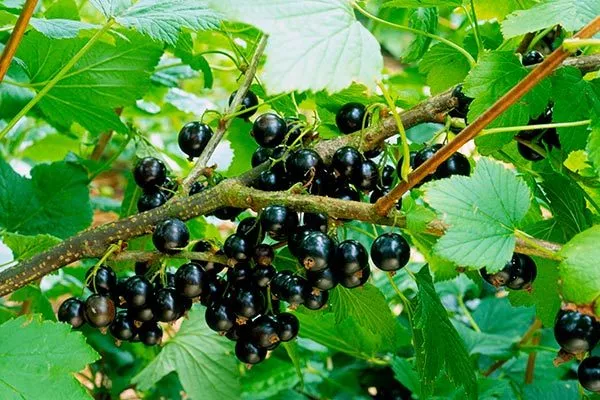
Other varietal characteristics:
- Large, thick, medium-sized buds are clearly visible on the branches of this blackcurrant. They are ovoid in shape and pink or pinkish-purple in color. The buds are arranged parallel to the shoot, with their bases closely adjacent to the branch and their pointed tips slightly tilted.
- The root system of this variety of bushes is fibrous, with roots that go shallowly into the ground (from 30 to 60 cm), which makes regular watering necessary during drought.
- ✓ The optimal depth of the root system (30-60 cm) requires regular watering during dry periods.
- ✓ To prevent fungal diseases, avoid stagnant water by ensuring good drainage.
Leaf blades
Blackcurrant leaves are rounded and five-lobed. They have a matte finish, are dark green, and have a slight bronze sheen.
Other characteristics:
- the upper surface of the leaf is pubescent along the veins, while the lower side is covered with thick hairs;
- the leaf blades are distinguished by a bubbly wrinkled texture and are dense, even rough;
- they are slightly convex, with the tips of the lobes slightly curved along the midrib;
- the veins are not highlighted in color;
- the parameters of the blades differ: the central one protrudes forward, while the side parts of the sheet are shorter;
- The leaves are attached to the stem on thick petioles, colored green.
Flowers
The Veloy currant variety features large, goblet-shaped buds with a greenish tint and subtle pink spots. The petals form an ovoid sepals, and the bisexual flowers grow on sturdy inflorescences of varying lengths.
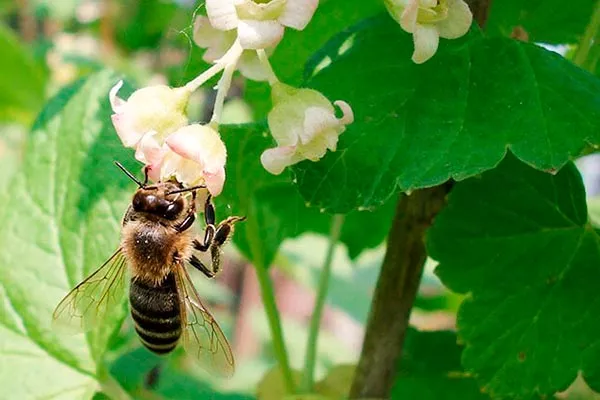
The variety is capable of producing up to 7-8 berries on each cluster, which are evenly distributed and firmly attached to the stem, with the clusters reaching 6-8 cm in length.
Fruit
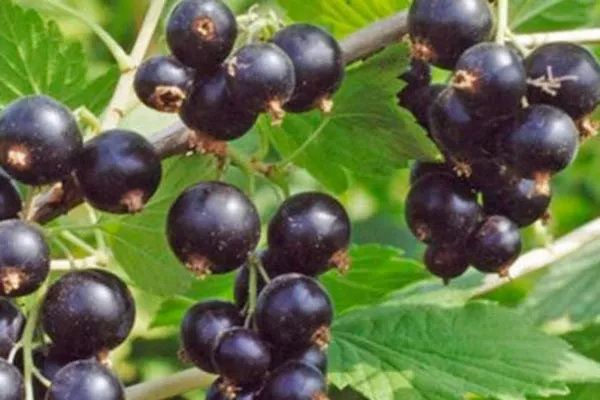
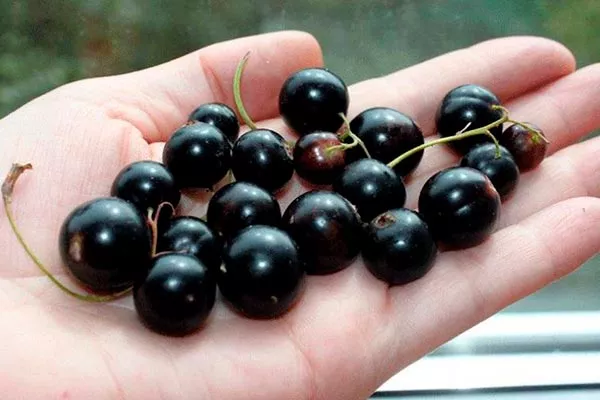
Velaya currant berries are described as large, round, with a black tint and medium-shiny skin. Other important characteristics include:
- the weight of each berry ranges from 1.6 to 3.5 g;
- they contain a lot of seeds - there are about 59 of them, medium or small in size, inside the berries;
- the peduncle is quite thick and at the same time shortened;
- ripe berries are picked without excess moisture;
- shape – regular round or flat-round;
- the skin is hardened, but not of a rigid structure.
Characteristics of culture
To understand whether it's worth planting a variety in your garden, it's important to first familiarize yourself with all the characteristic features of currants—how winter-hardy they are, what yields they produce, etc.
Flowering and pollination
Veloy is a currant variety that is self-fertile and does not require the presence of other varieties for pollination. About half of this currant's ovaries are capable of self-seeding. However, to increase productivity, other blackcurrant varieties can be planted nearby.
Fruit ripening time
Veloy is a currant variety with a medium ripening period. The berries ripen unevenly, making it impossible to harvest whole bunches. The peak fruiting period occurs in late July and early August.
Taste and yield
Currants are distinguished by their incredible sugar content and abundant juice. The pulp is rich in seeds and has a dessert aroma that perfectly complements the slightly sweet flavor. The sugar content in currant pulp reaches 9.9%. A hint of sourness may be noticeable if the plants were grown in the shade.
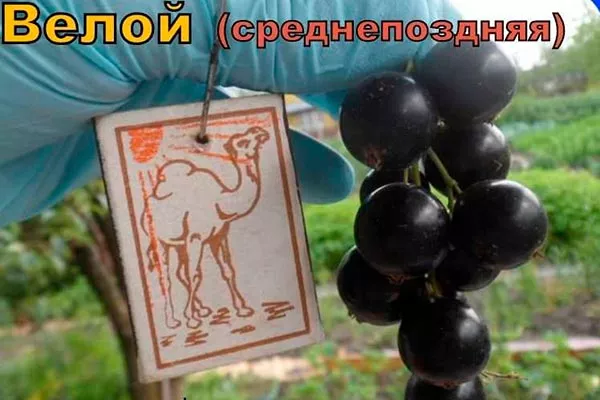
The Veloi variety contains 18.6% dry matter, 3% titratable acids, and is rich in ascorbic acid and P-active substances. The fruits are picked from the branches when semi-dry. On the tasting scale, the Veloi variety deserves a 5-star rating.
One of the main advantages of this variety is its productivity. With proper care, a single bush can yield up to 4.2 kg of berries. With proper cultivation techniques, the yield can reach 5 to 6 kg per plant.
Scope of application of berries
The Veloy variety is versatile: its berries can be eaten fresh, used in cooking, made into compotes and juices, made into jams and preserves, and even canned and dried. Transport resistance is rated as average. Harvesting the berries at the technical maturity stage extends their shelf life.
Resistance to subzero temperatures and drought
This blackcurrant variety boasts excellent winter hardiness, allowing bushes to easily survive temperatures down to -45°C without special cover. It is also drought-resistant, making it ideal for many regions of Russia.
The variety can withstand both cold winters and hot summer days, but to preserve the optimal flavor of the berries, it is necessary to avoid a lack of sunlight and excess moisture, as well as protect the plants from early spring frost, gusts of wind, and drafts.
Growing regions
Veloy currant is widely cultivated in the Northern, Northwestern and Central regions of Russia, as well as in Ukraine, where it is very popular.
Susceptibility to insects and diseases
Currants are susceptible to bud mites, aphids, anthracnose, and powdery mildew. However, this variety has good resistance to other diseases and pests. Spring treatments with nitrafen or chlorophos-malathion solutions can help prevent these.
About planting currants
To successfully grow blackcurrants, you'll need high-quality seedlings, which, unfortunately, aren't exactly cheap. However, you can limit yourself to purchasing one or two plants and then growing your own.
Preparing for landing
Currants prefer fertile, slightly alkaline soil. The planting area should be level or slightly sloping to avoid waterlogging, well-lit, and protected from strong winds.
Deadlines
The optimal time for planting is autumn, which ensures successful establishment. However, the exact timing depends on the region:
- for the Central part of Russia the best period is from October 1 to 10;
- in the Moscow region and Leningrad region – from September 20 to 30;
- in Siberia and the Urals – from September 10 to 20;
- in the south – from October 25 to November 10.
Site selection and preparation
To successfully grow the Veloy variety, it's important to select a location with adequate light and a groundwater level no higher than 45-50 cm. A slight slope is preferable to prevent water accumulation.
Peculiarities:
- The optimal directions are the southeast and south, as well as those areas where many berry crops, except currants and gooseberries, were previously cultivated.
- You should not plant currants near sea buckthorn, raspberry, apple and cherry trees, as this may lead to a deterioration in the quality of the fruit.
- Before planting currants, the soil should be dug to a depth of a shovel, adding organic fertilizer, superphosphate and potassium minerals.
- It's best to dig the holes in the fall for spring work. They should be round, 35-40 cm deep, and 40 x 40 cm in size, with expanded clay or gravel drainage, and filled three-quarters with fertile soil and fertilizer.
Preparing the seedling and planting
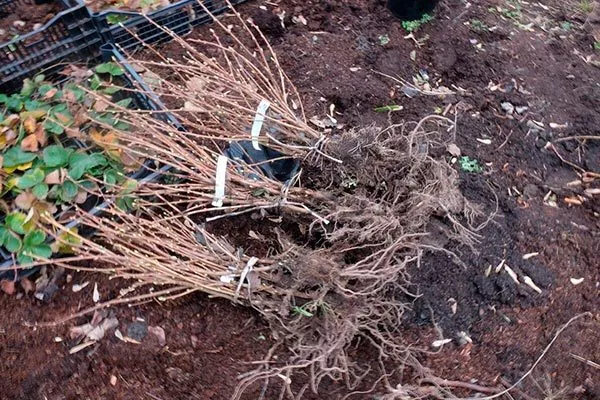
Before planting store-bought seedlings, it's recommended to soak them for 24 hours in a special growth stimulant, such as Zircon. If you don't have one, you can use regular honey, adding 1 tablespoon to 10 liters of water. This will allow the plants to absorb nutrients and reduce stress during transplantation.
Planting operations:
- Shorten the length of the roots to 15-20 cm, leaving three healthy buds.
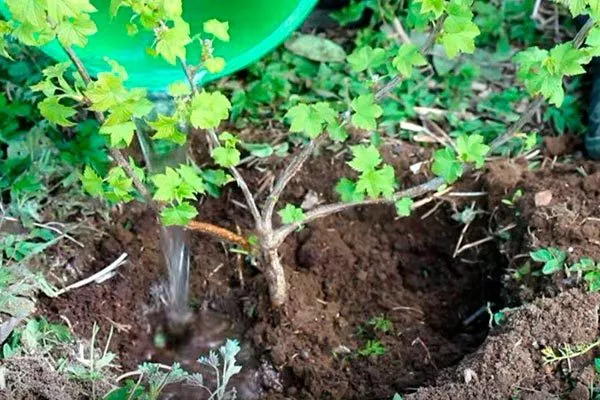
- Place some soil and place the plant at a 45 degree angle.
- Spread out the roots, cover with soil, but not completely, and water.
- After the water has been absorbed, add more substrate.
Caring for bushes
Cultivating this variety is not at all difficult – the main thing is to adhere to the rules and requirements.
Watering
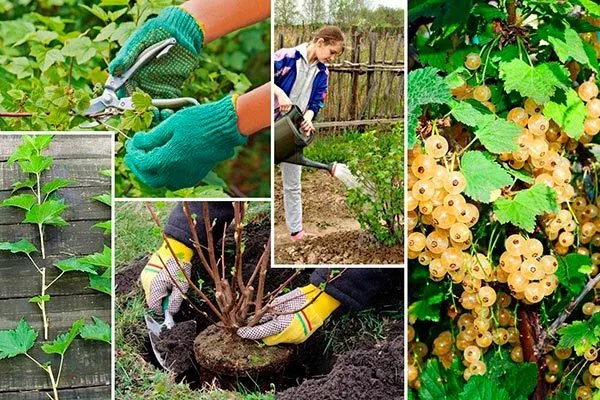
Veloy currants have moderate moisture requirements and require watering in early spring and before winter shelter. During periods of drought, sprinkler irrigation is recommended. The plant especially needs water during flowering and fruit formation.
Top dressing
Currant bushes require nitrogen fertilizer; a lack of it leads to smaller berries and stunted shoot growth. Herbal infusions, mullein, or bird droppings can be used to replenish nitrogen.
A lack of potassium also affects the taste of the berries, making them less sweet. Potassium, along with other micronutrients, is present in wood ash, which is often scattered around the bushes.
- In spring, apply nitrogen fertilizer to stimulate shoot growth.
- During the budding period, use nitrophoska and superphosphate to improve flowering.
- During fruit formation, use potassium fertilizers and wood ash to increase the sugar content of the berries.
- After harvesting, apply phosphorus-potassium compounds to prepare the bushes for winter.
Rules:
- Fertilizing should be done in spring and autumn, as well as during the period of budding and ripening of fruits.
- In the third year after planting the bushes, if all the necessary fertilizers have been used, you can apply top dressing with mullein, nettle infusion and wood ash.
- In spring it is recommended to use saltpeter and urea.
- During the flowering period, nitrophoska and superphosphate are advisable.
- When fruit formation begins, preference is given to potassium and ash, but nitrogen fertilizers should not be used.
- After harvesting, it is recommended to apply potassium and phosphorus compounds.
- Fertilizer consumption depends on the quality of the soil on the site: the poorer it is, the more is needed for correction.
Loosening and weed removal
When caring for currants, special attention should be paid to ensuring sufficient oxygen to the root system. This is achieved by maintaining a light, fluffy soil.
Loosen the soil around shrubs carefully to avoid damaging the roots, especially after irrigation or rain. Weeds should be removed at the same time.
Trimming
To ensure your currants produce a bountiful harvest every year, you need to regularly prune them in spring, summer, and fall, using garden shears.
Peculiarities:
- Autumn pruning is aimed at removing old and unproductive branches.
- In spring, damaged and diseased stems should be cut out, and healthy ones should be shortened by 5-7 cm.
- From the 6th year of life, the process of removing skeletal branches that have lost the ability to bear fruit begins.
- In summer, it is recommended to remove branches that are lying on the ground, weak, and unbranched. This promotes the formation of a currant bush dominated by strong, fruit-bearing shoots.
- Each year, after pruning, four to five branches from different generations remain on the currant bush. Over time, the bush will be covered with 15 skeletal and fertile shoots.
Diseases and pests
To ensure a bountiful harvest and continued vigorous growth, currant bushes must be carefully monitored, removing damaged twigs, leaves, and shoots. Starting from the first days of spring, before the snow has completely melted, it is recommended to treat the bushes with hot water.
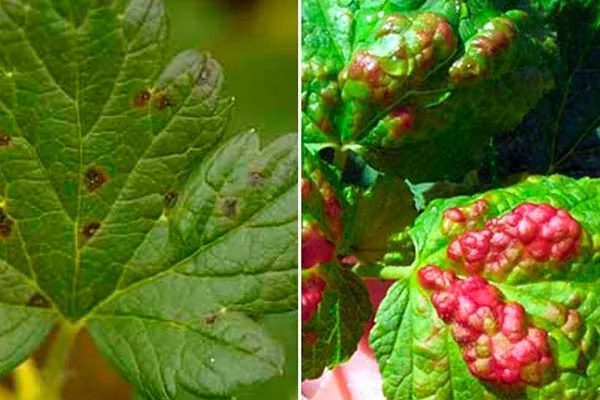
This "shower" helps kill harmful insects such as mites and scale insects, preventing powdery mildew. Bordeaux mixture, insecticides, and fungicides can be used.
Even currant varieties with increased resistance can be susceptible to disease if poor care is provided or during prolonged rainfall:
- If currants are infested with bud mites, their buds become excessively enlarged. Spraying with colloidal sulfur is an effective treatment.
- If currant leaves become wrinkled and curled, this may be a sign of aphid infestation. To combat this pest, spring spraying with a 3% nitrafen solution is recommended.
- When infected by gall midges, the apical leaves turn brown and die. Chlorophos and malathion are used to control this disease.
- In cases of anthracnose or rust, small brown spots appear on the leaves. Nitrafen or colloidal sulfur is used for treatment.
- In case of powdery mildew, when the plant is covered with a whitish coating, spraying with Karatan suspension is recommended.
- Septoria leaf spot causes currant leaves to become covered with round or angular spots with dots. Nitrafen or colloidal sulfur is an effective treatment.
How to cover plantings for the winter?
The Veloy variety has good frost resistance, but in areas with harsh winters, gardeners still prefer to protect their plantings.
To do this, adhere to the following nuances:
- The branches are tied into bundles, pressed to the ground and covered with a special blanket.
- The top is covered with tiles or bricks to prevent gusts of wind.
- Some gardeners use non-metallic slate or even cover the plants with a layer of soil to a depth of 10 cm.
- For additional protection, wrap the bushes with agrofibre or other thermal insulation material.
- It is not recommended to use polyethylene or other synthetic materials; preference is given to spruce branches or pine needles.
- You should not protect currant bushes from the cold too early to avoid the appearance of mold.
- Once the weather warms up, the snow cover should be carefully removed and the protective covering should be removed in a timely manner.
Before winterizing, it's necessary to perform routine maintenance: water, fertilize the soil, and treat the bushes. Then, tie the currant branches with rope, forming an upward spiral. This method ensures that the buds on the shoots are preserved, as they won't be damaged by contact.
Methods of propagation of Veloy currant
Currant propagation in the garden is accomplished through grafting, layering, and division. Grafting by cuttings is considered the most popular method.
When using layering for propagation, select strong young shoots before flowering, lower them to the ground, and secure them with wire hooks, planting them in grooves about 10 cm deep. Later, in the fall, cut the bent shoots from the main bush and transplant them to their permanent location.
Pros and cons
To determine whether the Veloy currant variety is worth planting in your garden, it is important to study all its advantages and disadvantages.
Reviews
Gardeners who grow Veloy currants speak highly of them. They praise their ease of care and high yield, which aligns with the cultivar's claims. With the right approach to cultivation, this currant promises a bountiful harvest of sweet berries.