
Ural Beauty is one of the most popular and time-tested red currant varieties. It has become popular among gardeners due to its excellent taste, high productivity, and frost resistance. This variety is ideal for a variety of climates, including even the coldest regions of Russia. Proper care and attention are key.
History of origin
The Ural Beauty was bred for cultivation in the challenging climatic conditions of the Urals and Siberia. The variety appeared in 1980, but was only added to the State Register in 2009.
Russian breeders V. S. Ilyin, A. P. Gubenko, and V. I. Putyatin worked on the selection. The Chulkovskaya and Faya Plodnaya varieties were used for crossbreeding.
Appearance of the bush
The plants are medium-sized, reaching 120-150 cm in height, with a compact and dense crown. Distinguishing characteristics:
- Escapes – green in color, slightly curved, thick, with a light anthocyanin coating and without fuzz.
- Leaves - five-lobed, large, with a wrinkled and shiny surface, dark green in color.
- Flowers – medium-sized, saucer-shaped, yellow-green.
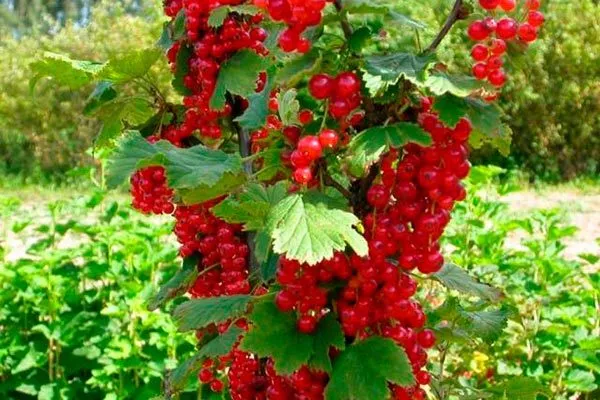
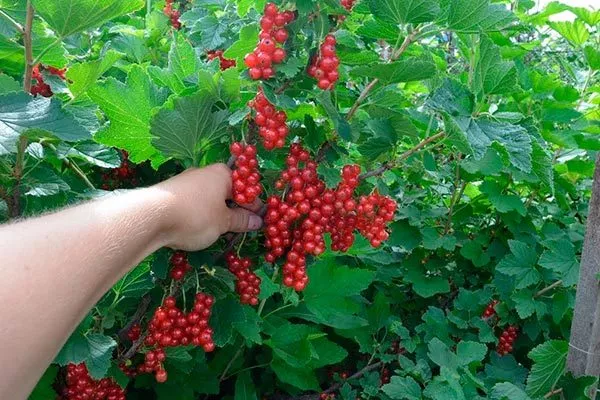
The fruit cluster is medium-length (about 7 cm) and medium-dense. Berries are evenly spaced within the cluster, with 10-17 berries per cluster.
Berries and their taste qualities
The fruits are medium-sized, bright red in color, round and uniform in shape, weighing 0.8-1.7 g. The pulp is tender, juicy, with a small number of seeds.
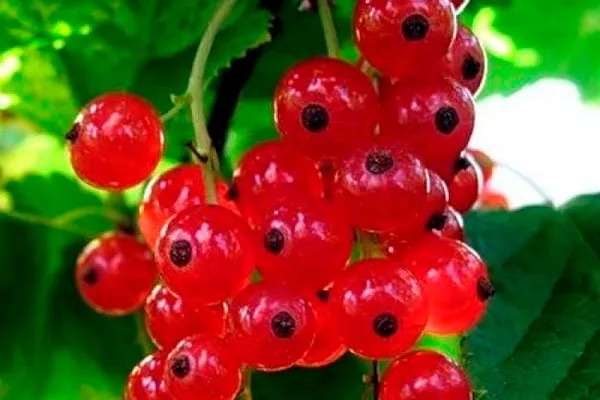
The taste is sweet and dessert-like, with a slight, pleasant tartness. Tasting score: 5 points.
Ripening period and yield
This variety is considered a mid-season variety, with the harvest period lasting from July to August. Productivity is quite high: an average of 11.7 tons can be harvested per hectare. With proper agricultural practices, yields can reach up to 51.7 tons per hectare, or 3.5 to 15.5 kg per bush.
Beneficial properties
Regular consumption of blackcurrants has a positive effect on the body. Medicinal properties:
- acts as a natural diuretic;
- has antipyretic and strengthening properties;
- helps fight inflammatory processes;
- helps cleanse the body of toxins during a diet;
- has a calming effect on the nervous system;
- strengthens blood vessels and intestines;
- used as a preventative measure against cancer;
- supports cardiovascular health.
A plant grown in the Urals is used in cosmetology. Extracts are made from its leaves, and oil and juice are made from the berries. Red currant berries are used to make cosmetics for oily and combination skin. Currant oil is effective in treating skin conditions and has a rejuvenating and brightening effect.
Pollinators
Ural Beauty is a self-pollinating variety. To achieve generous harvests, it's not necessary to plant several varieties with similar flowering times in the same plot.
Drought resistance, frost resistance
The bushes are frost-resistant, which allows them to successfully grow and bear fruit in regions with harsh winters.
The variety is characterized by good drought resistance – it can withstand long periods of drought, maintaining viability and productivity even in conditions of limited water supply.
Growing regions
Although the currant's native land is the Southern Urals, it thrives throughout Western Siberia, the Urals, and the Central Russian region thanks to its high frost resistance. The plants are successfully cultivated in regions with drier climates.
Planting red currants
The Ural Beauty doesn't require any special growing conditions. To ensure a stable harvest, it's recommended to provide the plants with sufficient light. When planting, it's important to select healthy seedlings and prepare the holes in advance, filling them with fertilizer.
Choosing a location
The plant is easy to grow, but for best growth, choose a well-lit location. A slope protected from cold winds is ideal. Lowlands are unsuitable, as they can accumulate water.
Preparing the site and seedlings
Gardeners recommend keeping a 3-meter distance from fences and buildings and planting bushes away from fruit trees. The optimal soil for the bed is black soil, loam, or forest soil. If the soil is too acidic, lime it first.
To choose a good currant seedling, consider the following criteria:
- Choose one-year-old seedlings 30-40 cm long with roots about 15 cm long or two-year-old plants 40-60 cm high.
- The roots should be well-developed, moist, and free of damage and signs of rot or dryness. If the seedling is sold in a container, check that the roots are not visible through the drainage holes.
- The shoots should be smooth, free of cracks, spots, and signs of disease. There should be no swelling on the shoots, as this could indicate a bud mite infestation.
- Buds should be firm, vibrant, and free of dried or blackened areas. Avoid plants with deformed buds, as this may indicate a viral disease.
- ✓ Make sure that the root system of the seedling is at least 20 cm long to ensure rapid rooting.
- ✓ Make sure the shoots have at least 3 live buds to ensure good branching.
If you buy at the market, give preference to trusted sellers or nurseries that can guarantee the quality of the planting material.
Work order
Plant red currants in September to allow them to establish roots before winter. If planting needs to be postponed until spring, prepare the planting hole in the fall and plan the planting for April.
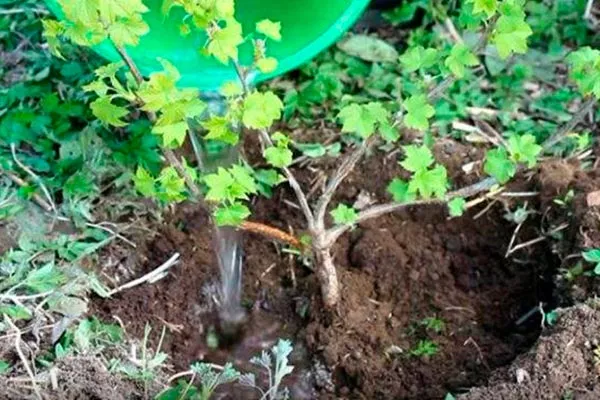
Step-by-step instructions:
- Dig a hole 50-60 cm in diameter and 40-50 cm deep. Leave a distance of 1.5 m between the bushes,
- Place a nutrient mixture at the bottom of the hole: 10 kg of rotted manure or compost, 200-250 g of wood ash, and 50-60 g of superphosphate. Mix the fertilizer thoroughly into the top layer of soil.
- Before planting, soak the seedling roots in a growth stimulant solution (such as Kornevin) for 2-3 hours. Make sure the roots are healthy and undamaged. Remove any rotted areas if necessary.
- Place the plant in the hole at a 45-degree angle (this encourages new shoots to form). The root collar should be 5-7 cm below ground level. Carefully fill in the hole with soil, compacting it in layers to avoid air pockets.
- Water the seedling with 5-7 liters of warm water. After the water has been absorbed, mulch the area around the tree trunk with peat, straw, or humus.
Trim the tops of the shoots, leaving 3-4 buds on each branch. This will reduce the stress on the roots and ensure better rooting.
Care
The Ural Beauty currant doesn't require complex care. Simple agricultural practices are sufficient to increase yields.
Regularity of irrigation of plantings
The crop tolerates short dry periods well, but prolonged lack of water slows development. Drought during fruit formation can lead to reduced yields. Stagnant water also negatively impacts growth. To avoid these problems, ensure drainage during planting.
Water the currants generously from early June to August. Apply 10-15 liters of settled, warm water under each bush. Make a circular furrow 30 cm from the plant to allow water to flow, moistening the soil to a depth of 30 cm.
In the fall, give the plants a final, deep watering. This will help protect them from frost, as moist soil doesn't freeze as deeply.
Loosening
Loosen the soil after each watering or rainfall. This is necessary to ensure air access to the Ural Beauty's roots, so this process is an essential part of caring for the plant.
Fertilizing currants
For the Ural Beauty variety, which is known for its winter hardiness and high yield, it's important to provide regular feeding. Apply fertilizer in several stages throughout the season:
- Early spring (March-April). After the snow melts, before bud break, use nitrogen fertilizers to stimulate shoot growth. Ammonium nitrate (20-30 g) or urea (10-15 g) are effective. Sprinkle the fertilizer around the root zone, then loosen the soil.
- Flowering period (May). When the bush produces its first buds, apply organic fertilizers to provide energy for flowering: mullein infusion (1:10), chicken manure (1:15), or herbal infusion. Water the bush at the root, using 1-2 liters.
- Formation of berries (June). At the beginning of berry set, potassium-phosphorus compounds can improve quality. Dissolve superphosphate (20-30 g), potassium sulfate (10-20 g), or wood ash (200 g) in water.
- After harvest (August-September). After fruiting has finished, fertilize with phosphorus-potassium fertilizers to restore the bushes and prepare them for winter. Sprinkle superphosphate (20-30 g) or wood ash (200-300 g) around the roots and dig the soil.
Regular fertilization will increase the yield and quality of the Ural Beauty currant berries.
Rejuvenating and formative pruning
Regular pruning of red currants increases yield. Prune either in early spring or late fall. Berries form at the tips of the shoots, so do not shorten fruiting branches. Prune old branches that have been bearing fruit for more than 7 years.
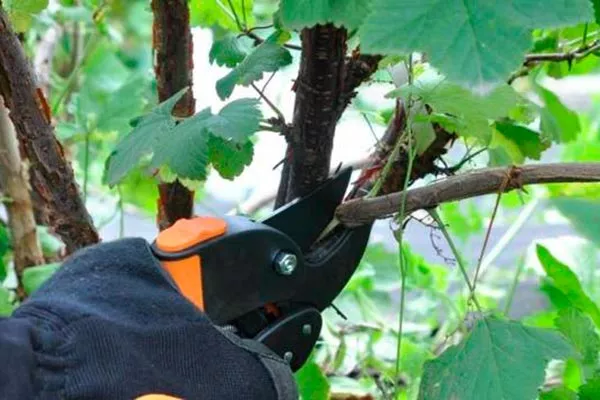
Prune away diseased, dry, and damaged branches. Light exposure directly affects the plant's yield. A bush that's too dense won't produce a good harvest, so thin it out. Ideally, it should have no more than 15 branches.
Pouring and hardening of bushes
In spring, scald the plants with boiling water before buds appear. This procedure helps get rid of pests that overwinter in the branches and shoots.
This method is an effective alternative to chemical pesticides, allowing you to protect yourself from insect attacks and prevent their spread without the use of agrochemicals.
Protection from diseases and pests
Red currants have average disease resistance, but with proper care, the risk of disease is minimal. To prevent disease, treat them with special compounds.
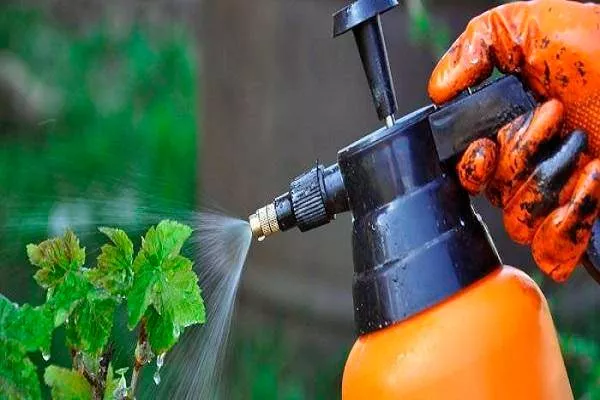
Before the buds open, spray the crop with a solution of Fundazol, and repeat the treatment three weeks after harvesting.
Currants can be susceptible to aphids, spider mites, and other pests. Apply insecticides such as Actellic or Karbofos during the budding stage. Repeat the treatment in the fall to prevent pests from overwintering.
Propagation of currants
Many gardeners increase the number of seedlings in their gardens themselves. Propagate the Ural Beauty in one of the following ways:
- By layering. Place a healthy shoot into a pre-dug trench, secure it with metal hooks, and cover with soil. Hill up and moisten the cuttings weekly. In the fall, separate the shoot from the parent plant and replant it in a new location.
- Cuttings. Cut 20 cm long cuttings from one-year-old shoots and plant them in a box filled with damp sand, maintaining a temperature of 1°C. After 4 months, store the cuttings in the refrigerator or cellar until spring, then plant them outdoors after the snow melts.
- By dividing the rhizome. If replanting is necessary, divide the plant's rhizome into sections with a sharp knife and treat the cuts with crushed charcoal. Plant the resulting bushes in the area.
Each method is popular and guaranteed to be successful. Choose the option that best suits you.
Harvesting and storage
Pick currants when they're fully ripe, usually in late July or early August. Do this carefully to avoid damaging the bush.
Store the harvest in the refrigerator for up to 5 days or freeze. For canning, use fresh fruit.
Advantages and disadvantages of the Ural Beauty variety
Before planting a crop in your garden, carefully familiarize yourself with its characteristics, pros, and cons. The Ural Beauty has many advantages:
Among the variety's shortcomings, gardeners note insufficient self-fertility and a tendency to be attacked by aphids and spider mites.
Similar varieties
Varieties similar in characteristics to the Ural Beauty include Ogni Urala and Alaya Zorka. They have good winter hardiness and produce high yields of sweet and sour berries, but their fruits are smaller.
Reviews
The Ural Beauty currant has received many positive reviews, thanks to its varietal characteristics. This variety boasts high productivity, strong immunity, and excellent taste. With proper care and simple farming practices, you can enjoy abundant harvests throughout the season.